Other lives, other rooms

I am woken every morning at dawn by the sounds of men breaking down buildings by hand. New Delhi, because of its absurd land prices is constantly being broken and rebuilt again by thousands of unskilled labourers working for a pittance. All day, every day.

This is the view of the house opposite. A view into other lives, other rooms.


India - New Delhi - Men construct a new house room by room

Verve Photo

I’m delighted to be the subject of a post at the rather excellent Verve Photo that features my work on capoeira in Brazil.

I must admit I was a little surprised to be included in such a blog that prides itself on showcasing ‘the new breed of documentary photographers’ as I seem (or feel) like I have already been around the block more than once, but no matter. Geoffrey Hiller was utterly charming and I was very pleased that he chose an image from a series that showcases work that isn’t necessarily dark and serious.

Many thanks to Geoffrey and I reproduce the short interview below.


“The story was on Capoeira, the martial art/dance once the (banned) preserve of African slaves, now a national symbol of Brazil. It was shot on assignment for a car magazine – Lexus – with whom I’ve photographed and written travel pieces on and off for nearly a decade. My fixer had arranged for five models – all expert Capoeiristas, and the idea was that in addition to photographing some Capoeira classes in the city, we’d make the main images on Copacabana and Leblon beaches. I remember it rained for a couple of days so I had to shoot the beach twice before I was happy. Initially I shot with two portable strobes but that felt too ‘fashioney’ so I went back to a much simpler set-up – shooting at dusk with available light and couple of fixed lenses: a much more traditional reportage feel. I’d worked in Brazil only once before in 1999 as part of a five country reportage about the Politics of Hunger. I’d shot a piece with the Landless Peasant’s Union (the MST) on squatted land in the far north: the Capoeira story was far removed from that and some of the images have formed the basis of a lifestyle folio that sees me work on ‘lighter’ stories away from pieces in Africa and Asia that I am perhaps more known for. A good balance, I think.”

 

Living Buddhism – Graham Harrison

I discovered photography – and specifically photojournalism – in the final year of my politics degree. The catalyst for that process was a wonderful magazine called Photography that showcased the very best work, especially from that genre, with writers from the industry interviewing and commenting on significant and interesting work and, unlike most photography magazines, almost ignoring gadgetry and equipment.

One issue stood out for me and solidified my resolve to pursue photography as a career (despite having no portfolio nor ever having taken a photograph). It featured the work of Graham Harrison, already an established photographer who had been commissioned by the British Museum to take photographs in the Far East for their Buddhism: Art and Faith exhibition in 1985. This work is on show again at the University of Edinburgh from September the 12th and I hope will inspire a reprint of the book of the same title.

Some time ago I reviewed the book (as was) and here is what I said.

“It is honest and classic reportage and I looked at the images often. Harrison’s eye is delicate and respectful and one senses a desire to engage with the people in these images and their faith. The access is extraordinary: it is incredibly rare for example to be able photograph inside Eiheji, the headquarters of Soto Zen deep in the mountains of central Japan. Harrison’s work here captures the haste of a young novice scrubbing the wooden floors of the monastery in the ‘raw cold and semi-darkness of a late winter morning’ and the formal zazen of the rows of monks. His portrait of the Abbot of the monastery is as quiet and deceptively simple as is his landscape of the Potala Palace in Lhasa. His pictures of China in the chapter ‘Decline and Destruction’ are touchingly elegant showing what remained of a great culture. I think it’s true to say that Harrison’s photographs come close to capturing the quiet power of a way of life that is very difficult to describe in words.”


Photography Magazine March 1990


Andrzej Krauze

After visiting Hackney twice in the last month for the first time in several years (once to work on a story and once to mentor a young photographer), I’m currently re-reading Patrick Wright‘s excellent ‘On living in an old country‘. Wright’s one of those brilliant cultural commentators who should be far better known and the edition I’m reading (because I lost my original copy) has illustrations by another underrated genius, the Polish cartoonist, Andrzej Krauze. I knew Krauze from his biting satire in the Guardian and a few years ago, I got to photograph him for a magazine. I remember that I had very little time (it wasn’t his fault) and that I didn’t have chance to put up the usual lighting rig. Anyway, here are two images from the job… I remembering noticing the label that reads ‘Mr Pen’ at the top right of the chest of drawers he kept his work in…

UK - London - Polish cartoonist Andrzej Krauze at his studio


British Summer Time… Standon Festival and the naked hoola hoop

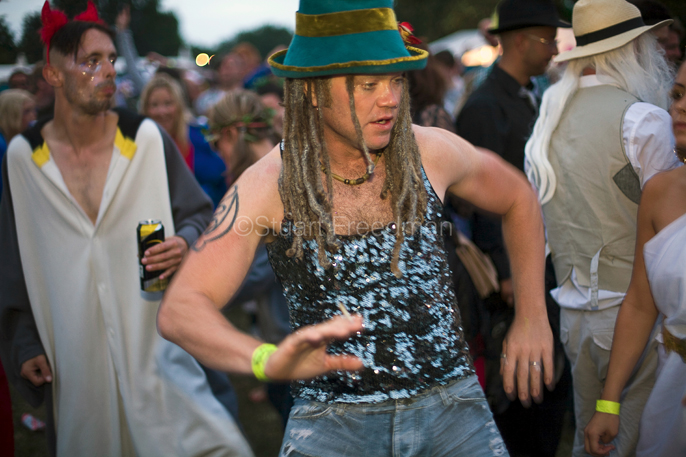
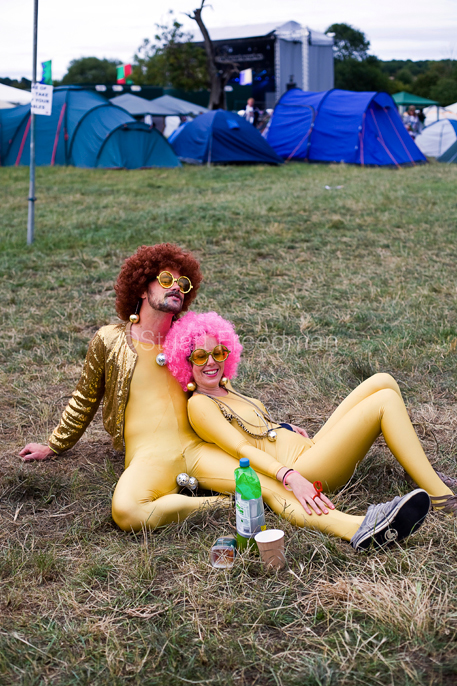
A bit more British Summertime… at the rather excellent Standon Festival in Hertfordshire. Possibly the only place to see naked hoola- hooping this year…


UK - Standon - A man dances at a portable sound system during the Standon Festival


UK - Standon - A couple dressed in gold lame costumes relax at the Standon Festival


UK - Standon - A man in gold body paint relaxes and drinks a pint of beer at the Standon Festival


UK - Standon - A man collapses clutching his groin after failing to hoola-hoop naked

Just take five…

Some good news from Pakistan. The BBC reported today on the success of Sachal Orchestra in Lahore that is thriving by reinterpreting classic jazz standards – like Brubeck’s Take Five – and giving them a South Asian twist. Pakistani musicians have seen their livelihoods collapse in recent years: musical tastes, instability and a growth of religious criticism have all impacted on them.

Their Indian cousins have also to a lesser extent seen their craft disappear and it’s from them that I find a picture in my archive taken on an Old Delhi roof.


India - Delhi - Traditional musicians play on a roof top in Chandni Mahal, Old Delhi, India. Once patronised by the Mughal rulers many now scrape a living playing weddings and social functions. Violinist Afzaal Zahoor leads Zeeshan Ahmad, a singer, Shankat Qureshi (tabla) and Shakeel Ahmad (Harmonia).