Learning something new


I’m quite a traditional photographer. To the surprise of many who see me working, I still expose my digital images the way I shot transparency film: carefully and with a hand-held meter. In this way, I’ve always had a problem with photographers that shoot real life and then work on their files afterwards to create a different, almost hyper reality. For photojournalists I find this very difficult to deal with and, as I’ve said before, I believe it can create a serious problem of authenticity and voracity. I find myself however at a stage of my career where I want to learn new things. I also find myself increasingly shooting personal projects with an eye to more commercial markets. Recently I’ve been trying to learn how to create a look that I feel happy with and that I can manipulate for a new project (that’s under wraps for now). After some deliberation and a lot of help from my friends – I have something I’m happy with. This may not be a very big step for some – very old hat to some people – but for me it’s an enormous one.

And it’s always good to learn something new. When was the last time we can honestly say that we have?

I won’t be shooting anything serious like this (in the sense of documentary work) but I may change and evolve a new process to reinvigorate things a bit on another front. Old dog/new tricks. Here’s one I made earlier.

What do you think?


before


An old man working as a scribe outside a shop in a Jaipur Bazaar, Jaipur, India
India – Jaipur – An old man working as a scribe outside a shop in a Jaipur Bazaar


and after

An old man working as a scribe outside a shop in a Jaipur Bazaar, Jaipur, India
India – Jaipur – An old man working as a scribe outside a shop in a Jaipur Bazaar


The Strange Death of the British Utopia


Britain has a housing crisis. The Queen’s speech yesterday underlined the current government’s commitment to develop Ebbsfleet as a Garden City – an idea ironically propounded in the early twentieth century by the Socialist-leaning Ebenezer Howard in Letchworth.

A year or so ago, I wrote a piece for a special edition of the German Magazine, Brand Eins (Brand Eins Wissen) where I traced the history of the British planned communities from the earliest industrial worker’s housing to Prince Charles’ architectural monstrosity, Poundbury. The piece, The Strange Death of the British Utopia (or how Britain lives in her own past) can be found on the writing section of my website here.


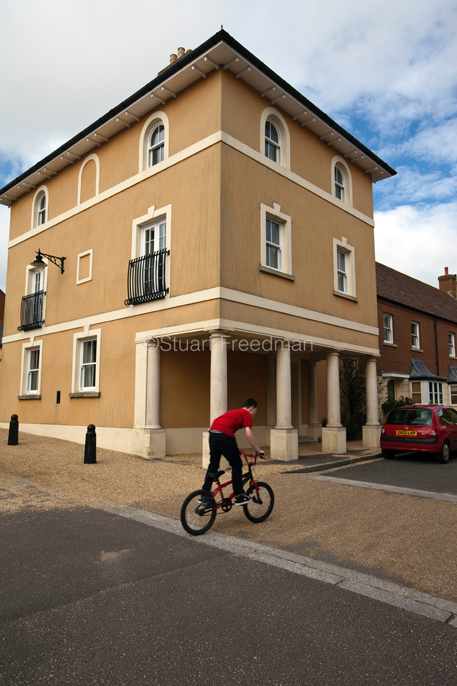
UK - Dorset - A boy rides his bicycle past a traditionally styled building in Poundbury. Poundbury on Duchy of Cornwall land is Prince Charles' attempt to create an urban extension to Dorchester famed for Its pastiche of traditional architecture.
UK – Dorset – A boy rides his bicycle past a traditionally styled building in Poundbury. Poundbury on Duchy of Cornwall land is Prince Charles’ attempt to create an urban extension to Dorchester famed for Its pastiche of traditional architecture.

The end of the Ambi


What a shame. It seems that production of the Ambassador, the first car to be made in India, has been halted. Hindustan Motors said it had suspended work at its plant outside the city of Kolkata, blaming weak demand and financing problems. There was always something reassuringly sturdy about bouncing along Indian roads in one. Never the most comfortable of cars but you could always reckon that a roadside mechanic would be able to bash, bend or replace something that had broken… Here’s a frame of a garland hanging from a mirror in one I hired in Tamil Nadu a few years ago…


India - Swamimalai - A garland of flowers hang from the mirror of an Hindustan Ambassador  car in the town of Swamimalai, Tamil Nadu, India.The car, based on a Morris Oxford has been in production since 1948 and is considered as a definitive Indian car and is fondly called "The king of Indian roads" and nicknamed the 'Ambi'..
India – Swamimalai – A garland of flowers hang from the mirror of an Hindustan Ambassador car in the town of Swamimalai, Tamil Nadu, India. The car, based on a Morris Oxford has been in production since 1948 and is considered as a definitive Indian car and is fondly called “The king of Indian roads”, nicknamed the ‘Ambi’..

The telling legacy of MF Husain


I’m delighted that the V&A in London will be hosting a new show of MF Husain’s work this Summer.

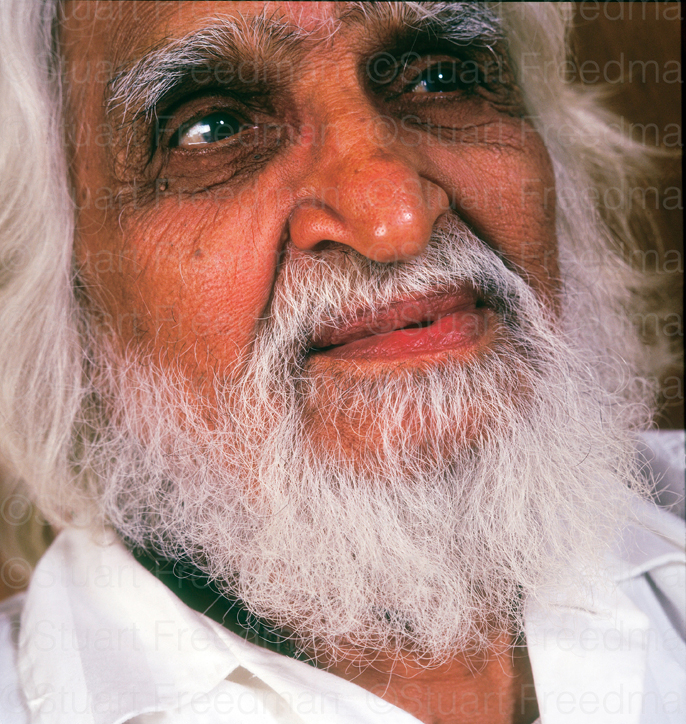
I photographed Husain many years ago in his Bombay studio (I’ve previously written about him here and here) and he was as charming as he was prolific. How awful then that his work, a mixture of European Modernism and Indian imagery, is unlikely to be seen again anytime soon in his home country. He had to flee India in 2006 as Hindu militants put a bounty on his head, charging him with “offending religious sentiment”. The London show is, in a sense, a farewell to Husain but perhaps moreover, potentially to the ideas to which his art spoke: of a secular, tolerant India. As India rushes headlong into the clutches of corporations and those that seek to divide it’s people against one another (rigidly defining those who are and who aren’t an ‘acceptable’ Indian), it ironically may take the legacy of an elderly millionaire painter to act as a metaphor for the freedoms that ordinary Indians – indeed perhaps the idea of India itself – are in danger of losing.


India - Mumbai - MF Husain (b. 1915, Maharashtra) India's foremost modernist painter at his studio in Mumbai (formerly Bombay). In the 1990s some of Husain's works became controversial because of their portrayal of naked Hindu deities. Charges were brought against him by Hindu Nationalists but were dismissed by the Delhi High Court. Husain dies in exile where his painting continued to command prices of several million dollars at auction.
India – Mumbai – MF Husain (b. 1915, Maharashtra) India’s foremost modernist painter at his studio in Mumbai (formerly Bombay). In the 1990s some of Husain’s works became controversial because of their portrayal of naked Hindu deities. Charges were brought against him by Hindu Nationalists but were dismissed by the Delhi High Court. Husain died in exile but his painting continue to command prices of several million dollars at auction.

World Water Day


By tomorrow night, according to Human Rights Watch, more than 1,800 children will have died from preventable, treatable diarrhea, largely linked to lack of clean water and sanitary conditions.

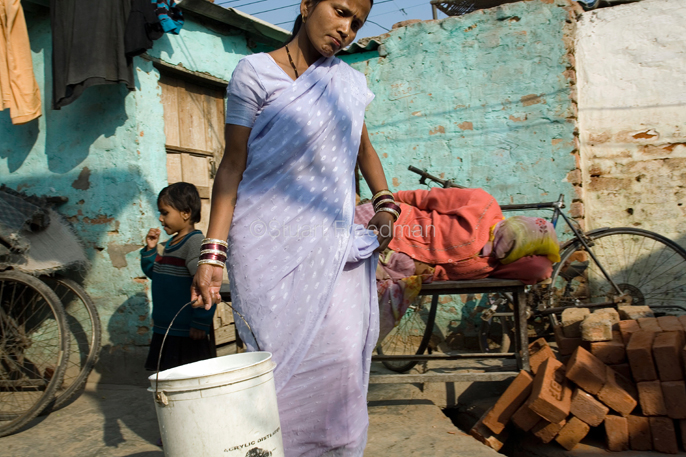
I’ve written several times about Delhi’s water wars and the struggle for its people to find any water, let alone clean water – (see here and here for a start). Here’s an image from the Kusumpur Pahari slum where that struggle for water is a daily one.


India - Delhi - A woman carries water delivered by tanker back to her home in the slum of Kusumpur Pahari. The slum, built more than thirty years ago has no running water or sewage facilities. The only water supply come from the Municipal  JAL Board water trucks that visit several times a day. The deliveries are supposed to be free but in reality, residents must pay bribes to have the water delivered.
India – Delhi – A woman carries water delivered by tanker back to her home in the slum of Kusumpur Pahari. The slum, built more than thirty years ago has no running water or sewage facilities. The only water supply come from the Municipal JAL Board water trucks that visit several times a day. The deliveries are supposed to be free but in reality, residents must pay bribes to have the water delivered.

Another one gone…


I’ve just discovered that one of my favourite Indian Coffee Houses, in Kollom, Kerala was closed in January.

I photographed there for an afternoon when I was working down there this time last year.

Over the years on this blog, I’ve written numerous times about my love for these places that hold a memory of an older, more gentle India…


India - Kollom - A waiter in the Indian Coffee House
India – Kollom – A waiter in the kitchen of the Indian Coffee House


India - Kollom - A waiter walks through the Indian Coffee House
India – Kollom – A waiter walks through the Indian Coffee House


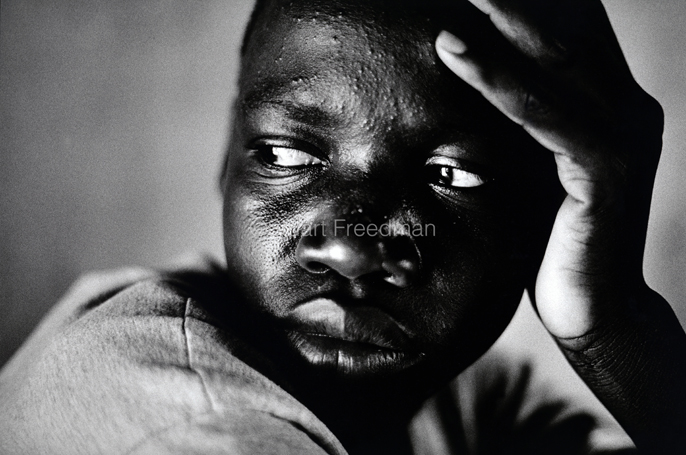
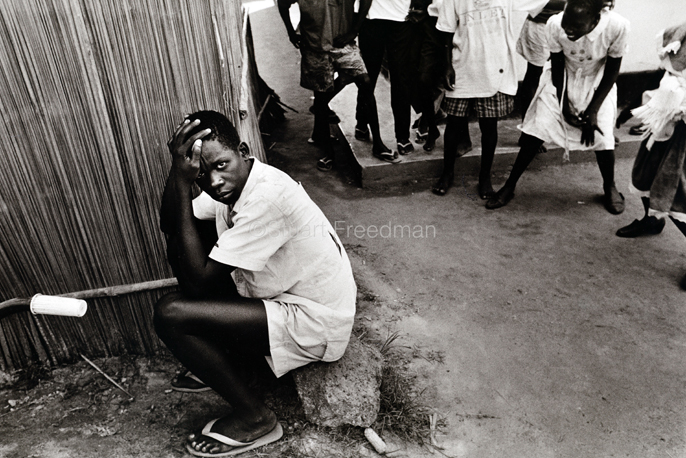
A day against child soldiers


Today is the International Day against the use of Child Soldiers, a United Nations sponsored campaign which aims at the universal ratification of the Optional Protocol on the Involvement of Children in Armed Conflict.

I spent a couple of years in the late 1990’s looking at the mental landscape of war amongst former child fighters in Africa in a series called The Lord of the Flies

Here are some images.


Liberia - Monrovia - Two former boy fighters from Charles Taylor's militia on the streets of Monrovia argue with and threaten another boy.
Liberia – Monrovia – Two former boy fighters from Charles Taylor’s militia on the streets of Monrovia argue with and threaten another boy.


Uganda - Gulu - 'Andrew', 17. A former kidnapped fighter with the Lords Resistance Army, he remembers killing at least twelve. "...but only two with a machete...". Gulu, Uganda, "We are the miracles that God made to taste the bitter fruits of Time..." Ben Okri from 'An African Elegy'
Uganda – Gulu – ‘Andrew’, 17. A former kidnapped fighter with the Lords Resistance Army, he remembers killing at least twelve. “…but only two with a machete…”.  “We are the miracles that God made to taste the bitter fruits of Time…” Ben Okri from ‘An African Elegy’


Uganda - Gulu - 'Edward', 16 sits alone at the World Vision Centre for child abductees in Gulu Northern Uganda. Forced to fight, he is deeply traumatised by his activities with the Lords Resistance Army that he is unable to mix with other children. At night like many of his contemporaries, he wets the bed and recounts his experiences as he sleeps. Gulu, Uganda
Uganda – Gulu – ‘Edward’, 16 sits alone at the World Vision Centre for child abductees in Gulu Northern Uganda. Forced to fight, he is deeply traumatised by his activities with the Lords Resistance Army and is unable to mix with other children. At night like many of his contemporaries, he wets the bed and recounts his experiences as he sleeps.