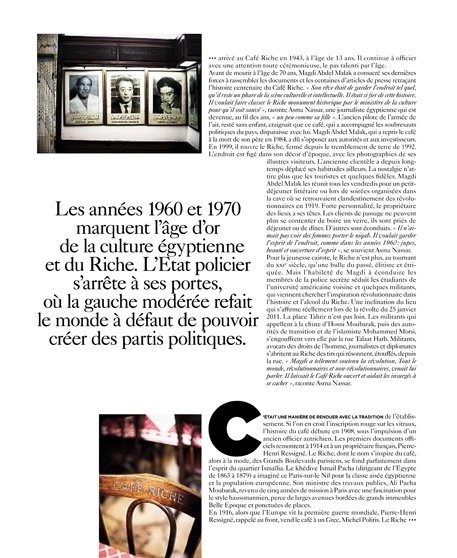
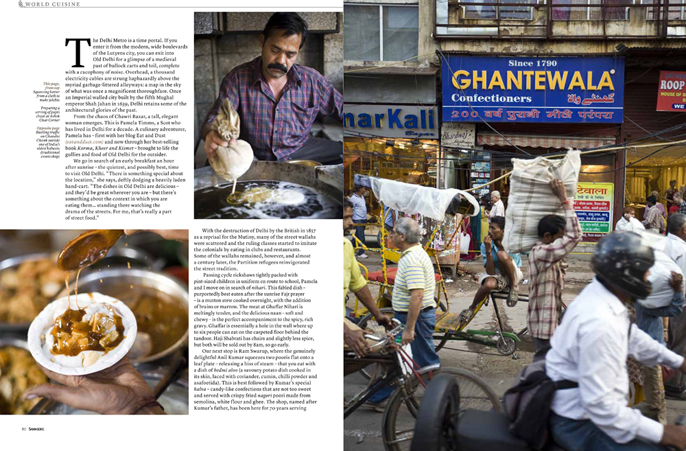
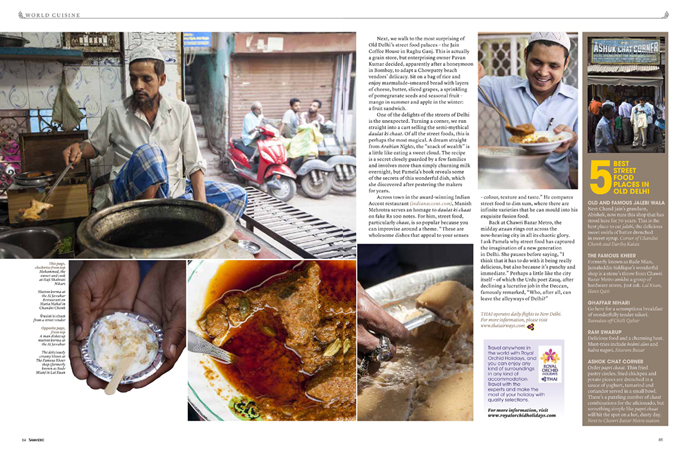
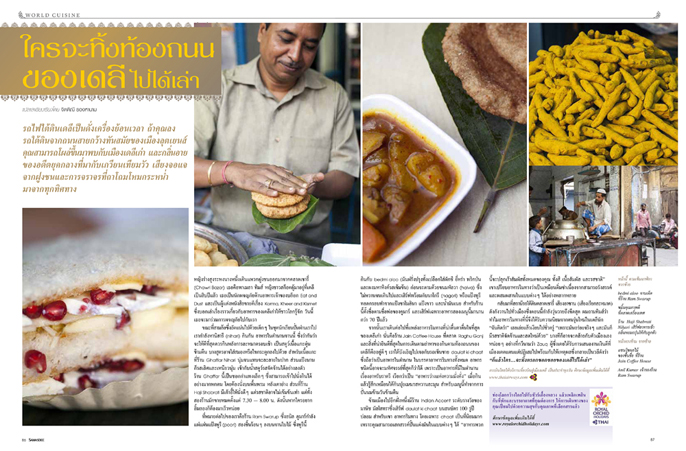
I made my original story – about the Cairo Ahwas a couple of years ago (the original tearsheet from the German Effilee Magazine is here) writing about the changing political significance of these cafés during the recent uprisings.
Always nice to have something like this re-used, especially in the context of somewhere as historically significant as the Riche – but that is tempered by the uncertainty of its future.
In 1996 I was assigned by the Independent on Sunday Magazine to photograph and write a story about Chandigarh, a city in India’s Punjab that had been entirely designed and planned along Modernist lines by the architect and planner, Le Corbusier. I first wrote about that assignment on this blog in 2010 – see here.
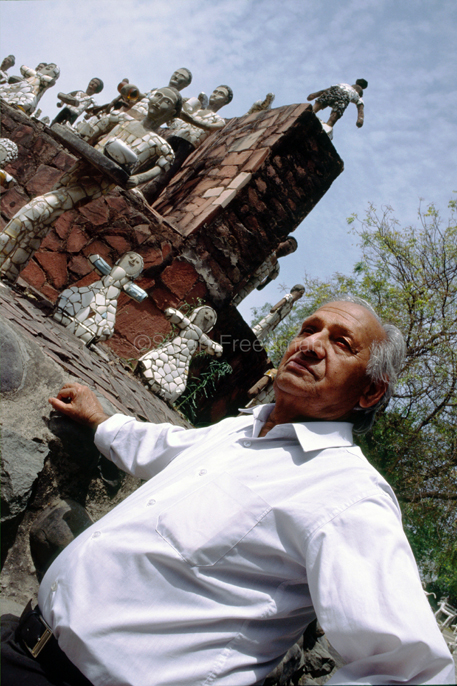
During that assignment, my driver recommended that I go and visit a rather dubious sounding rock garden that had been created. Bored and irritable under the blazing sun I turned up asking for a chap called Nick – responsible for what I believed was a inconvenience between me and my hotel room. I couldn’t have been more wrong. Nek Chand, the charming elderly man that met me had, in his spare time – in secret – over the last two decades, built the most extraordinary statue kingdom out of waste materials. By the time the authorities had discovered it, it had grown into a 13-acre complex of interlinked courtyards, each filled with hundreds of pottery-covered concrete sculptures of dancers, musicians, and animals. It was extraordinary. The garden had been embroiled in a fantastic tale of urban corruption, vandalism and official obfuscation but like all good Indian fables, right had triumphed and the forces of destruction had been defeated. The garden would become one of the most iconic sights in that city and Chandigarh would become proud of its amateur artist and his bizarre dream. This morning I learned that Nek Chand, one of the world’s dreamers had passed away at the grand old age of 90. What a sad loss.
India – Chandigarh – Nek Chand in his Rock Garden.
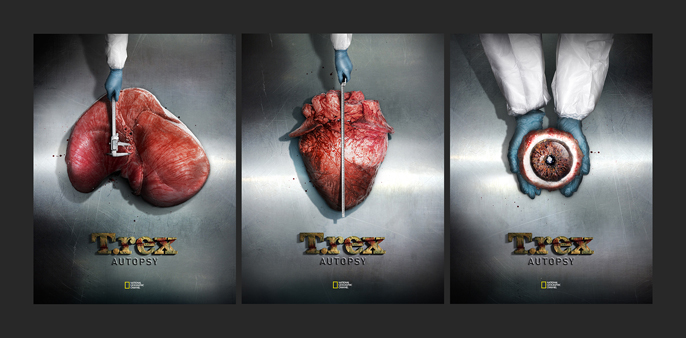
It’s not every day that I get a ‘phone call asking me to photograph a dinosaur, let alone one being cut up … but there’s a first time for everything.
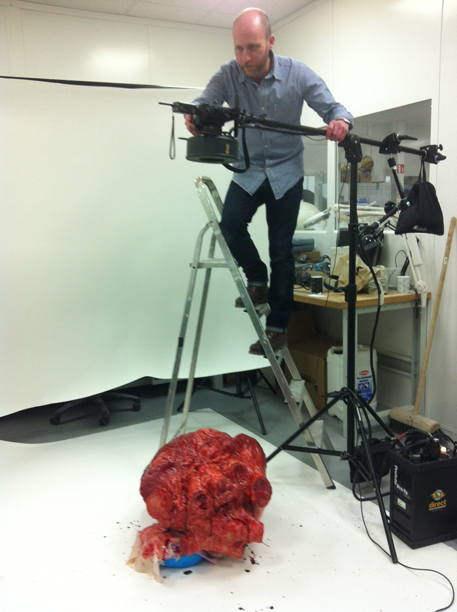
A couple of month’s ago, National Geographic Channels called and asked if I could do just that. The job, in two parts, was to photograph dinosaur ‘bits’ for the poster for the show and secondly, to photograph the unit stills. The ‘organs’ were crafted by the extraordinary Crawley Creatures company in Buckingham (responsible for models in Star Wars and a host of other screen productions) and photographed in their workshop which we (my assistant Tristan Fennel and I) converted into a makeshift studio. The client wanted a ring-flash to simulate a real forensic photography look to the images. Here’s the final poster and a set of various set-ups (with and without models and props) and one of me checking exposures and trying not to fall off a ladder.
And a gory one from the three days at Pinewood Studios with everyone knee-deep in (fake) blood.
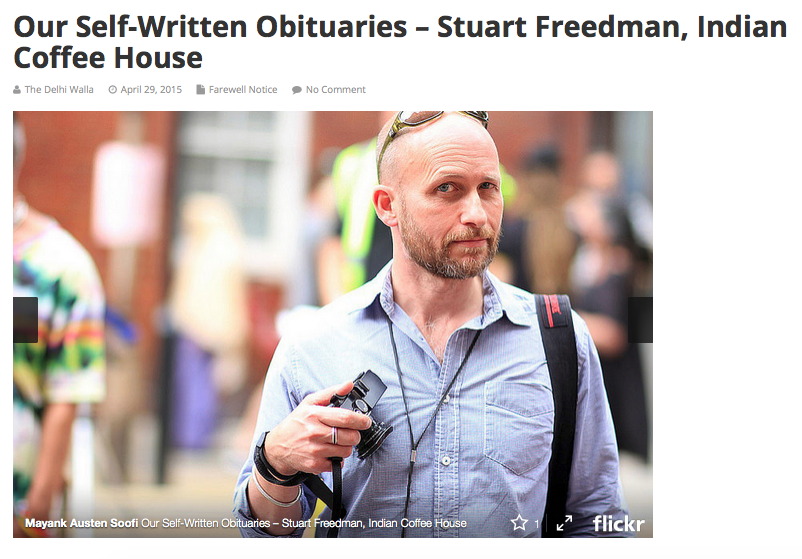
As a long time reader and follower of Mayank Austen Soofi, the Delhi flâneur, writer and photographer I was delighted, if rather daunted, when he chose me to write my own obituary as part of an occasional series on the city. It was, I must say a rather strange and sobering assignment but you can read all about it by clicking on the photograph below…
In 2013, I made a story about the now sleepy town of Chandannagar on the banks of the Hooghly River near Kolkata.
Chandannagar (or Chandernagore) was first established as a French colony in 1673 when the Nawab of Bengal gave permission to establish a trading mission. By 1730 when Joseph Francois Dupleix was appointed governor, Chandannagar had more than two thousand brick built houses and was the main European entry to the subcontinent. The British East India Company inconveniently flattened a good deal of it during its capture in 1756 but returned it to French rule in 1816. It was governed as part of France until 1950 when the inhabitants voted to join with the newly independent India.
As part of my story, I wandered into the Institut de Chandernagar, now a museum that was the original governor’s palace. Inside, amongst Colonial French artifacts, I found a mystery – and one that I found very moving and upsetting.
Here is what I wrote:
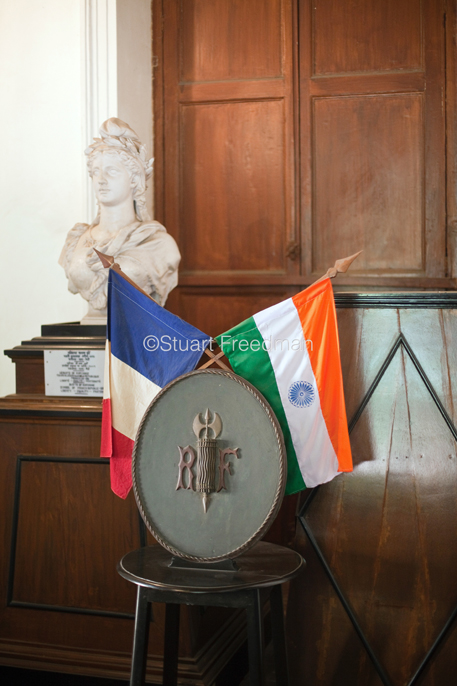
“In another dusty room a harpsichord gently decays, its keys like broken teeth, watched over by a small bust of a stern Napoleon. In a case, the last French flag, dirty and a little tattered. Dupleix’s own bed is enormous but deeply uncomfortable looking. Time has stopped here and moulders in the sticky, wet heat. Perhaps saddest of all, the shattered spectacles of Dr J N Sen MB MRCS Private West Yorkshire Regiment and a son of Chandannagar, killed in action on the night of 22/23rd of May 1916 in France. His, the dubious honour of being the first Bengali to do so. Why he was fighting for a British regiment is a mystery but how sad to die so far from the verdant splendour of the steamy jungle and the smell of jasmine oil in a woman’s hair.”
I had quite forgotten about this until this morning when I heard a short piece on the BBC Radio 4 programme, Today (if you listen it’s at 02:53:51) where Santanu Das (a reader in English at King’s College London) explains why Dr Sen was there. There is also a piece here from BBC Leeds published a few days ago that reports the story.
I remember standing there in the heat of the room feeling so utterly moved by the spectacles that I didn’t take a photograph but just jotted some words down and had to leave.
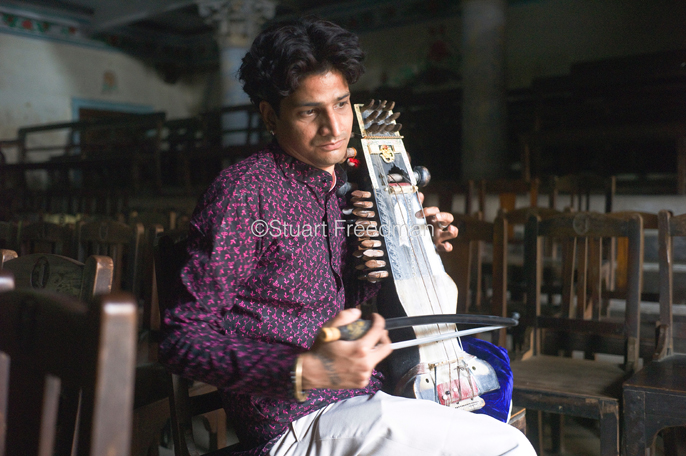
Here are some images from the story. The last frame shows the talented musician Umesh Mishra, playing his sarangi during a practice session for a concert he was giving that night in the town.
Perhaps that might be a fitting visual requiem for Sen.
India – Chandernaggar – Traffic passes the gates to the town of Chandannagar bearing the French inscription, Liberte, Egalite, Fraternite.
India – Chandannagar – A flag and a bust in the museum at Chandannagar, originally the home of Joseph François Dupleix who was appointed governor of the city in 1730.
India – Chandannagar – A statue of Liberty outside the museum in Chandannagar, originally the home of Joseph François Dupleix who was appointed governor of the city in 1730.
India – Chandannagar – Umesh Mishra, 26 a sarangi virtuoso tunes his instrument before a concert later that night at the Nrityagopal Smriti Mandir
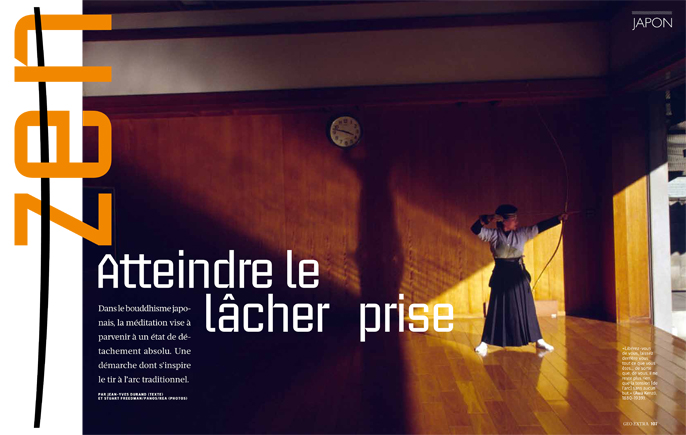
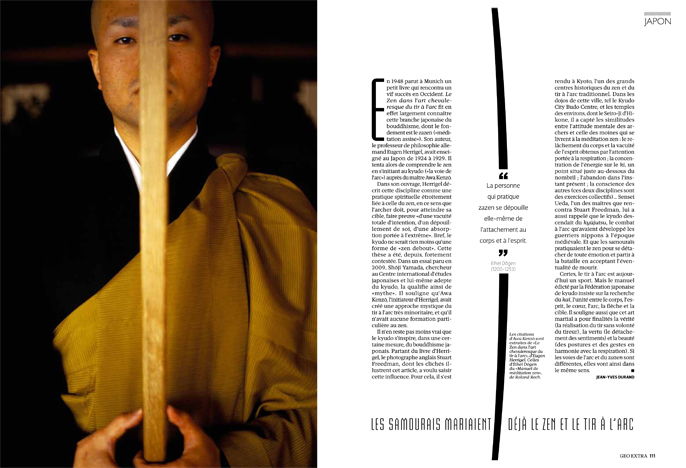
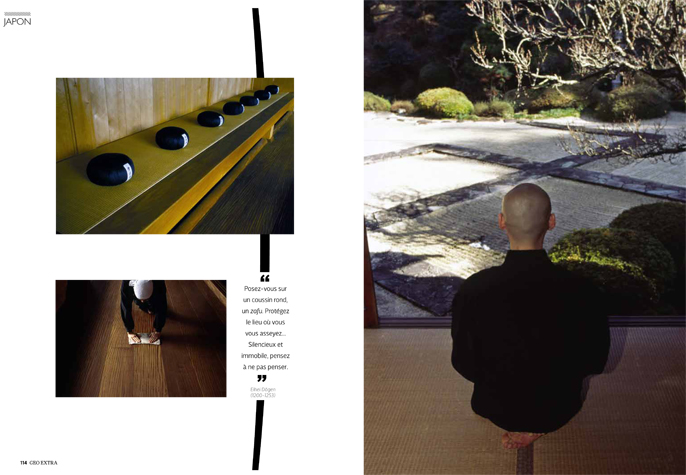
I have a lovely spread in the very first edition of this month’s Geo Extra (France) of my work on Kyudo in Japan. Focusing on the connection to Zen and the art of archery it is one of my favourite stories.
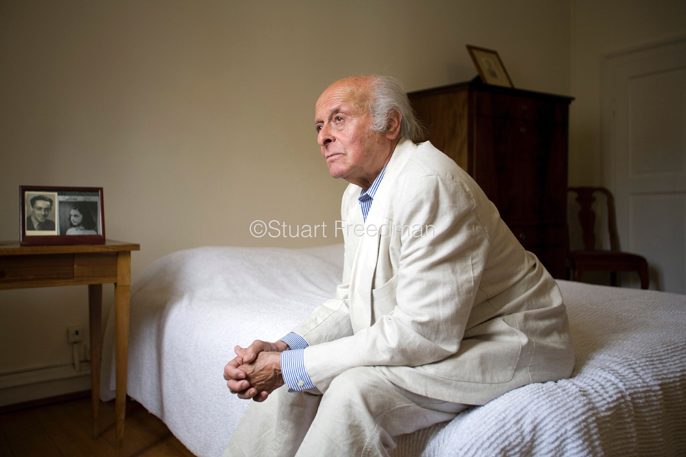
A few years ago I was delighted to photograph Anne Frank’s cousin, the mercurial Buddy Elias in Basel for the Times Magazine. Elias, the force behind the Anne Frank Foundation was charming and entertaining and we spent a very enjoyable day together.
His mood quietened only when I photographed him at his bedside where he keeps a photograph of Anne.
Switzerland – Basel – Bernhardt “Buddy” Elias, Anne Frank’s cousin. Elias sits on the bed in the room that was occupied by Otto, Frank’s father after World War Two. Behind him are photographs of Frank and himself before the war.
Here’s a recent portrait assignment for the French magazine L’Express in London. A very interesting hour chatting with British Arabist author James Barr.
Some assignments are straightforward, some take a bit more thought. When the London School of Economics assigned me to photograph Delhi for their global cities conference I was delighted but also slightly nervous.
The brief was to image the city illustrating the difficulties of living in and governing India’s sprawling, chaotic capital. My preference is always to try and make beautiful pictures – but trying to marry that with an exacting shoot list that focused on academic concepts was always going to be challenging. It was however, the shoot list (and my drivers and assistants – notably the ever-cool Sunayana) that saved me. I’m always talking about the importance of scripting what you shoot and this was a perfect example of how it can really help. This wasn’t an assignment about what I wanted to show of Delhi or interpreting the city – but clearly illustrating issues that affect it. In fact, it was a very interesting way to work – trying to find places or people that evidenced concepts as diverse as public/private space and illegal adaptions of utilities.
Born and brought up in London, I’m fascinated by cities and the way that they develop and change and Delhi for me has been a kind of surrogate city – a sort of prism through which to view myself and see how metropolises (and I dare you to find the correct plural of metropolis…) evolve and change. Delhi, like London is palimpsestic in that cities have been built on top of cities. I can walk through any number of places in Delhi and find the exact same things that Dickens wrote about for example – the very foundations of a modern industrial world – but I can also find something much older – the Vedic prayers intoned by people still worshipping on the banks of the hideously polluted Yamuna.
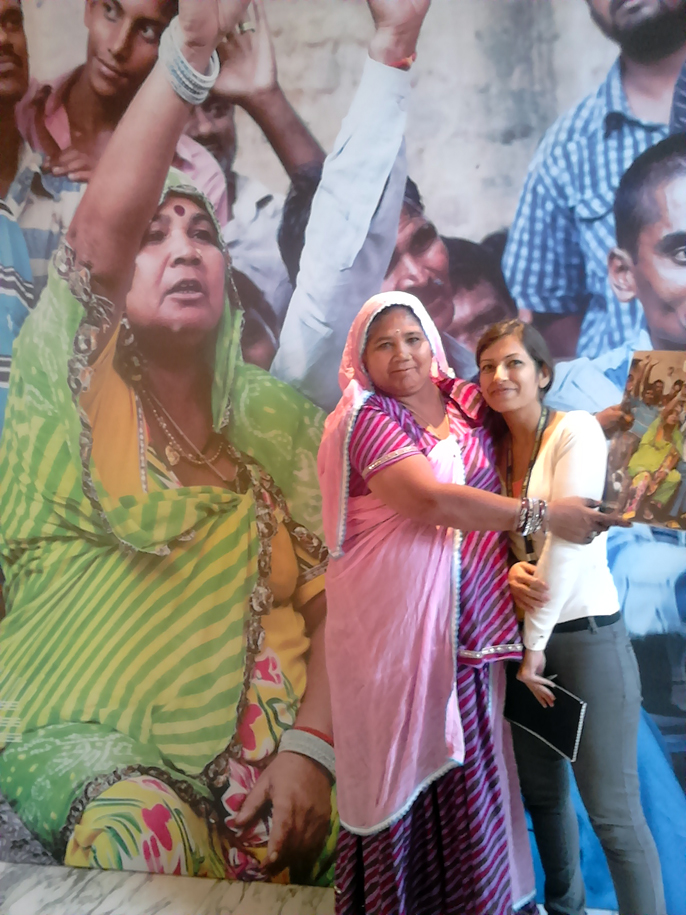
One of the highlights was returning to Kathputli Colony that I’ve written about before and making work with the people there trying to save their homes and way of life. I was delighted to be re-united with the singer Bhagwan Das and it is his wife Sarbati that’s shown at the end in the last picture here at the conference in front of a giant poster and on the cover of the magazine.
Here are some of the images that I made.
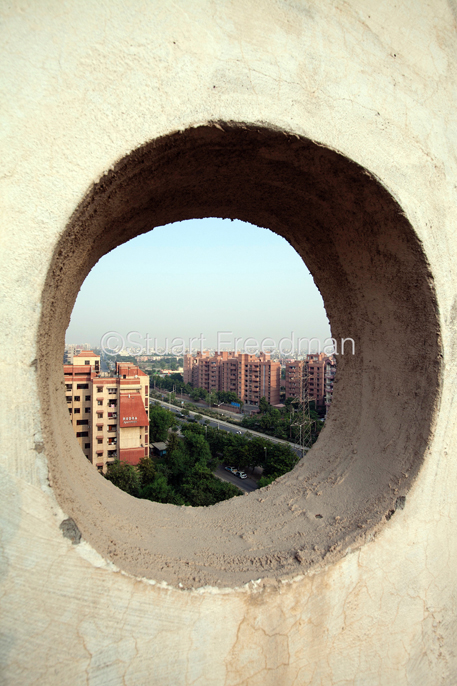
India – New Delhi – An overview of the city from an apartment block in Dwarka
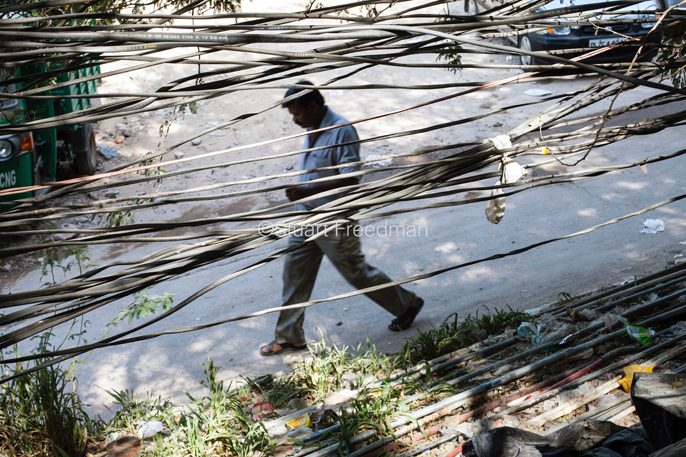
India – New Delhi – A man seen through a tangle of illegal electricity and water cables in the Munika area.
India – Delhi – A local meeting of residents and activists at Kathputli Colony that is faced with destruction and closure
India – Delhi – Crowds in Sadar Bazaar
India – New Delhi – Young people in make up perform a street dance on a road blocked to cars in a section of Connaught Place during a Raahgiri Day where traffic is halted and people take over the streets.
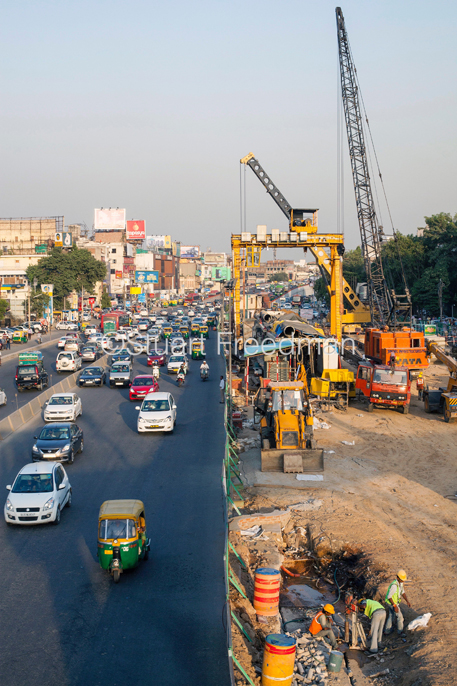
India – New Delhi – Traffic and Metro construction work at South Extension Market
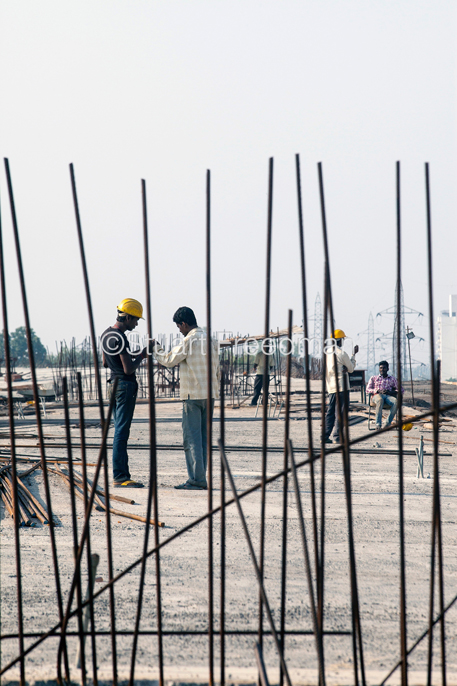
India – Delhi – Workers on the new footbridge over the Yamuna River
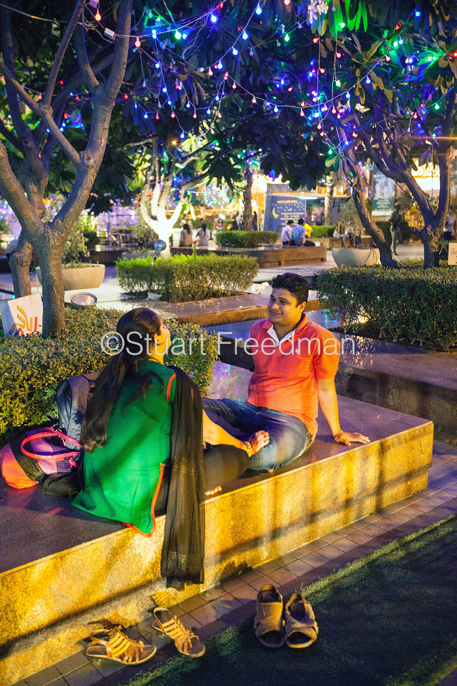
India – Delhi – A romantic couple sit in the gardens of the Ambiance Mall, Saket,
India – New Delhi – Sarbati Das from Kathputli Colony (in front of her cover image used as a poster at the LSE Cities Conference) and the brilliant Sunayana.