A big lump of red


I feel the weather turning. The mornings are colder. I hate it. I need cheering up. Here’s a picture with a big lump of red in it to do that.


India - New Delhi - A stage set for a wedding with chairs and garlands
India – New Delhi – A stage set for a wedding with chairs and garlands


Why did I choose this image? Just chatting to Michael Regnier at Panos. Sparked a thought about a lyric – John Foxx’s Hiroshima mon amour. Wonderful… “Features fused like shattered glass, the sun’s so low/Turns our silhouettes to gold/Hiroshima mon amour”

No relation to Delhi of course, but that image of light… I can feel the warmth of the late afternoon sun in the big lump of red…


Palermo Palavar


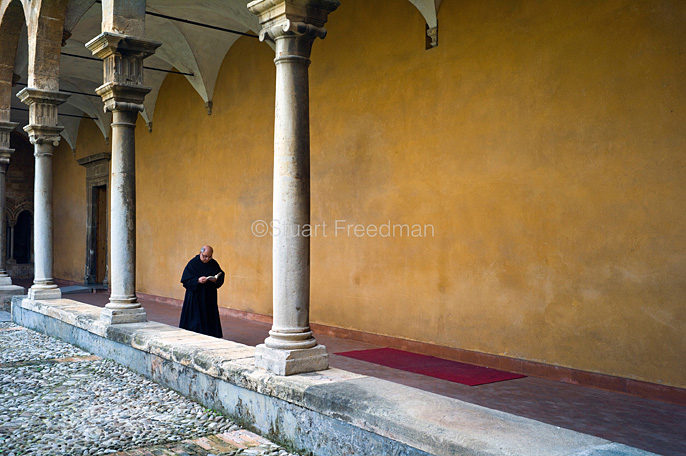
In a blog post yesterday, I showed a very quiet image of a priest reading and walking around a cloister. Below is perhaps a more typical image of Palermo and (southern) Italy in general. It’s said that Italians can only speak with their hands and the New York Times has a recent, rather prosaic piece here on that very subject.

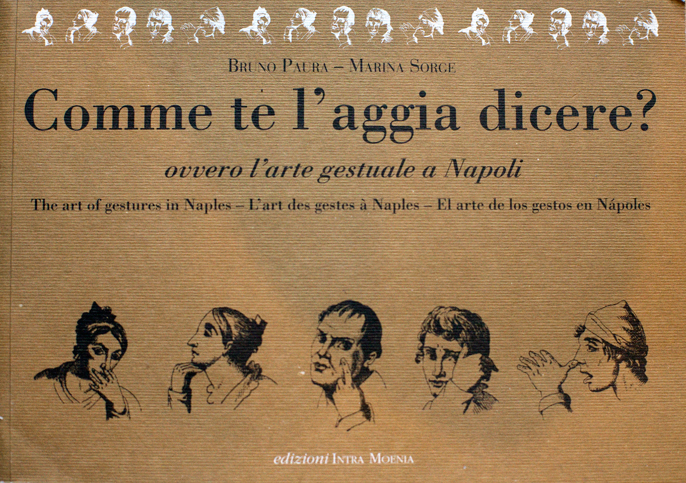
The consensus seems to be that somehow, in such crowded places people needed a further way to make themselves heard. Perhaps. Some years ago I stayed at a rather expensive hotel in Naples and they gave me as a gift, a lovely book (see below) about the secret meanings of Italian hand gestures. There are hundreds: some pleasant, some decidedly unpleasant. It occurred to me that in one sense it was a code, a language of the initiated in the way that rhyming slang was to the Victorian Cockney. A very real way to subvert authority (and of course the law) and build an identity that was separate and uncontrollable. Naples like Palermo are exquisite places full of art and beauty but are also brutal and fearful. Norman Lewis in his highly entertaining Naples ’44 recounting his time in the Intelligence Corp in that city remembers constantly being offered women by their families in order to eat. Peter Robb in his exquisite Midnight in Sicily (and later in his Street Fight in Naples) shows a labyrinthine society with bestial corruption at it’s very heart and violence meted out by mafiosi at every level. A society moved by an unofficial nod of the head, parallel governments. Secrets. Robb lived in Southern Italy, the Mezzogiorno for years. He immersed himself in the language and the culture and his writing shows the depth and commitment of that effort.

A photographer wandering the streets is usually a little different. He walks and sees a moment developing in the chaos of colour and movement and steps towards it. He takes two pictures and the image changes. He might have recorded something significant, something trivial but he has little hope of understanding anything on a deeper level than the symbol in the image – a gesture between two (or in this case three) people. The words he hears don’t mean anything – the gestures might be theatre. He might be ignored, or as in this case, sworn at and threatened. The language he is trying to communicate is equally symbolic as the hands of an Italian yet inevitably painted with a thicker, less subtle brush. He just sees the signs the hands make, not necessarily the subtlety of the meaning. He might interpret those signs as meaning something completely different – something as part of a visual culture that he has absorbed. Photography is as valuable but blunter than words. A more democratic code. Perhaps.

By the way, the title of this post comes from yet another language. Another collected word from another country. Palava(r). A word that I used to hear in West Africa all the time. Apparently it is Portuguese in origin. I didn’t know. Non capisco. So many words, so many countries. A mixture, an argument, a conversation. A beautiful mess. Just like Palermo.


Italy - Palermo - A man and a woman in a heated conversation in a lane behind the Capo Market
Italy – Palermo – A man and a woman in a heated conversation in a lane behind the Capo Market


jhvjhvdjhw
The Art of Gestures in Naples


Kissing in Sicily


… seemed to be a good deal of kissing on the island recently…


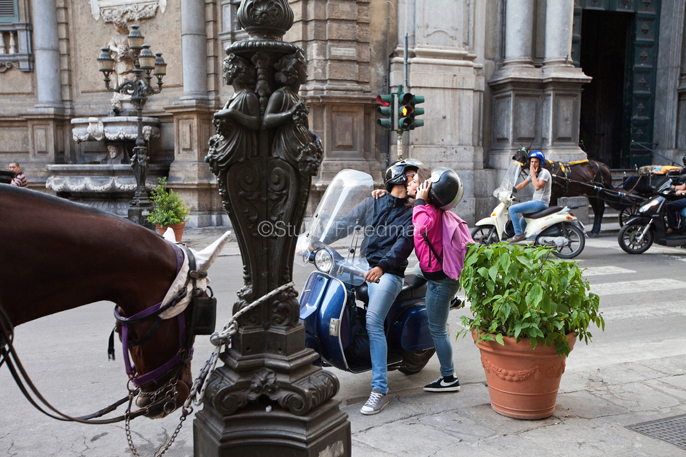
Italy - Palermo -  A young couple kiss as they part by horses used to ferry tourists at the Quatro Canti (officially known as Piazza Vigliena) a Baroque square
Italy – Palermo – A young couple kiss as they part by horses used to ferry tourists at the Quatro Canti, a Baroque square


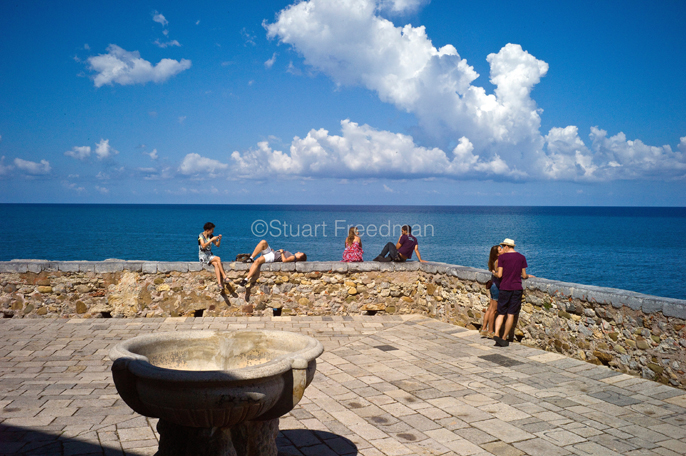
Italy - Cefalu - Tourists photograph, chat and kiss on the sea wall
Italy – Cefalu – Tourists photograph, chat and kiss on the sea wall


Visa pour l’Image


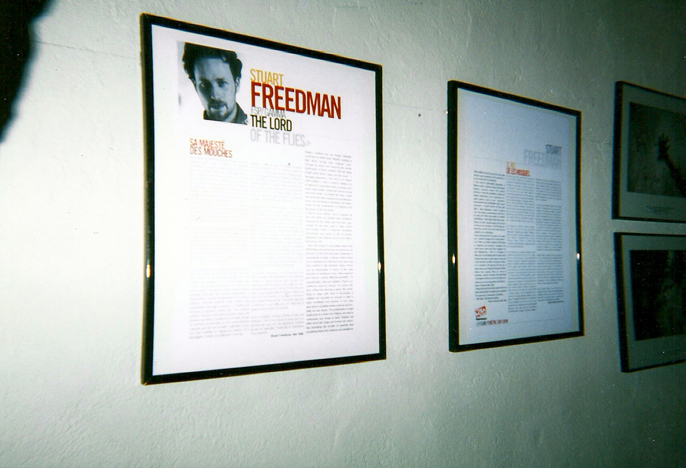
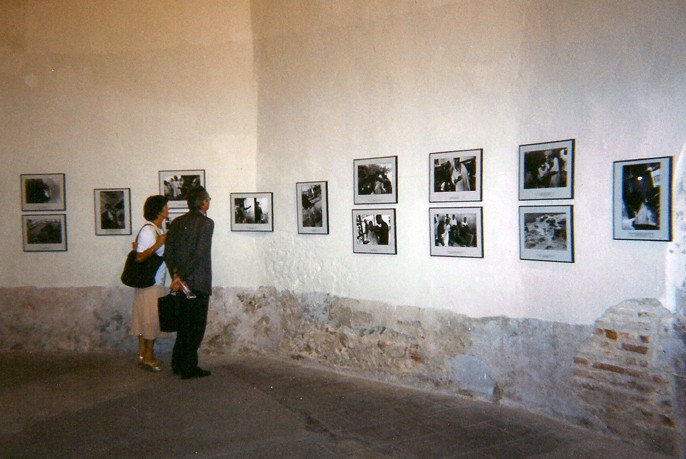
This year is the 25th anniversary of the photojournalism festival held every year in Perpignan: Visa pour l’Image. In 1998 I had a show there with a two-year body of work from Africa called The Lord of the Flies. Since then, some of my work has also been  projections but that first show was a really special moment and meant a great deal to me. I remember that I arrived in Paris to see the enigmatic founder of Visa, Jean Francois Leroy clutching a box of fibre prints under my arm. After he saw the first three images he stopped and said, “OK, you have the exhibition…” I was so shocked that I thought he was joking and I told him so. He assured me that he wasn’t and we signed a contract there and then. I walked around Paris that day at least a foot taller. It marked a turning point in my career and the first real recognition that I was on the right path professionally.

Subsequently, I’ve had an uneven relationship with Visa. I think it’s true to say that I find the whole networking aspect pretty uncomfortable and certainly it seems to bring out the worst in terms of ego in some people in the industry. Because of that, I haven’t been since the demise of Network. It might well be said that the exhibition selections also conform to a very rigid view of the world and of photojournalism. As I am writing this however, it occurs to me that although that certainly is problematic, I’m probably more on the side of Visa than I am of the narcissistic trend in what I’d call personal reportage about/within the world. I mean by that a self conscious style – a bleed from the art world that I see a good deal now. This is generally medium format, generally about close focus on objects and a melancholy that seems to me like a teenage angst. “Oh the world is so terrible/Oh, but it’s so beautiful/I’m so original and important” In a funny way, despite the protestations of ‘artists’ who photograph like this, stylistically it has more to do with them than what they purport to be photographing. I wouldn’t shoot The Lord of the Flies in the same way now (I probably wouldn’t shoot it in black and white for a start because of the connotations I think that has in terms of the West reporting Africa now) but serious stories that never get anywhere near a magazine do have a home at Visa and I hope that that continues. If nothing else and despite all its faults, Visa does stand for an engagement even if that is a little blunt and simplistic. The selection is purely down to Leroy and good luck to him. As he says in a very interesting interview with Time here, “You can like my taste or not, but at least you can see that there is a strong line”. He is also – absolutely correctly – critical of young photographers who have no idea of the heritage within the industry in which they are working. As Leroy points out “It’s very difficult to do a reportage about prostitutes in India, if you’re not familiar with the work of Mary Ellen Mark”. The internet generation may have more cameras and more opportunity to take pictures but they seem to have, according to Leroy, very little ability to tell stories. I agree. A random set of images are not a photo essay. This is worth quoting in full:

“It’s not because I have a pencil that I’m Victor Hugo or Shakespeare. It’s not because you have a camera, that you are a photographer. There is currently a trend in photography to cover specific communities, like poor people in Ohio, or very poor people in Connecticut, or really, really poor people in Arkansas etc. Where is the story? The other favorites are: my mother has breast cancer, my father has Alzheimer’s, my brother is a schizophrenic. I know these kind of stories. It’s personal, yes, but I’m not sure it makes good work”

Crucially for me, when Leroy is asked about advice for young photographers, he says “Work, work, work. Read everything done before you”. I couldn’t agree more. One’s work, although unique, is in a continuity; a flow of humanity and journalism gone before that is bigger than each of us but one that by adherence to an ethical framework, should be there to bear witness not simply to suffering but a better world. That multi-faceted, outward-looking storytelling is what is sorely lacking in much of visual journalism today and what Visa – with all it’s problems, it’s cliches and idiosyncrasies  – is still largely about. Personally, I can’t stand the ‘Scarf and Leica brigade’ with their egos and delusions about being heroes but at least that tradition (although I’m the first to admit it needs a re-invigoration) is about reporting and not about photographing dying flowers as metaphor. In a world where print media and funding have almost disappeared, at least Visa is still there.


Here are a couple of images from my show at the Couvert des Minimes, Visa Pour L’Image all those years ago.


SFE_perp_001a


SFE_AP_002a

Tearsheet – The Ahwas of Cairo


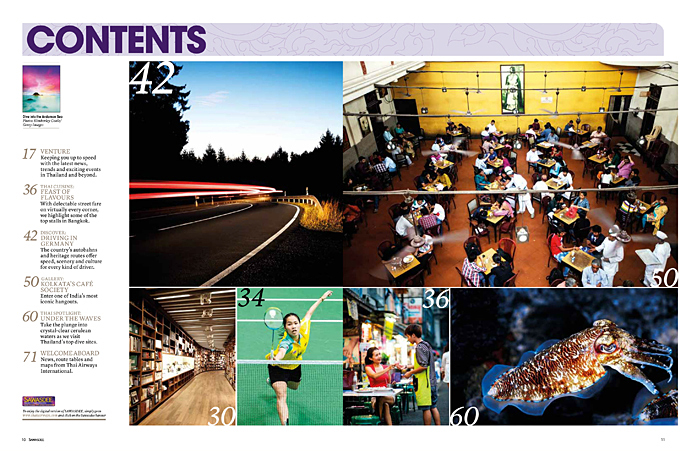
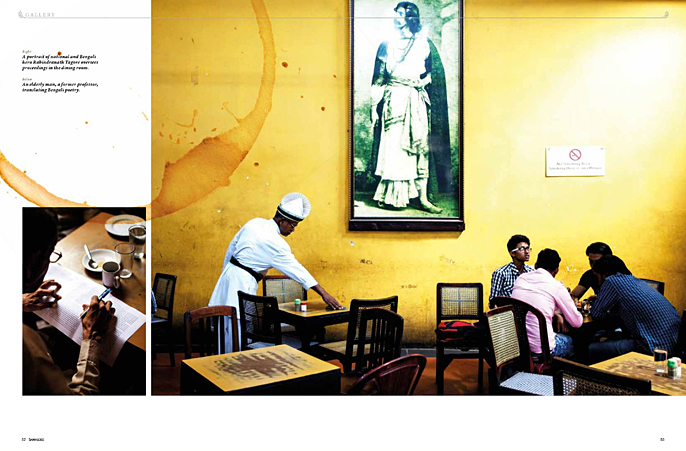
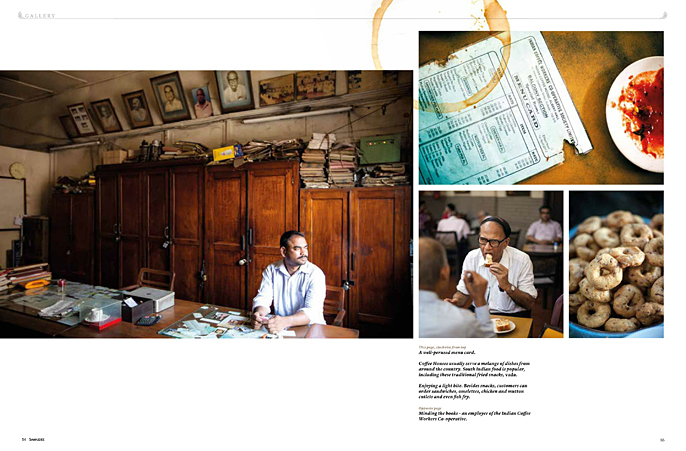
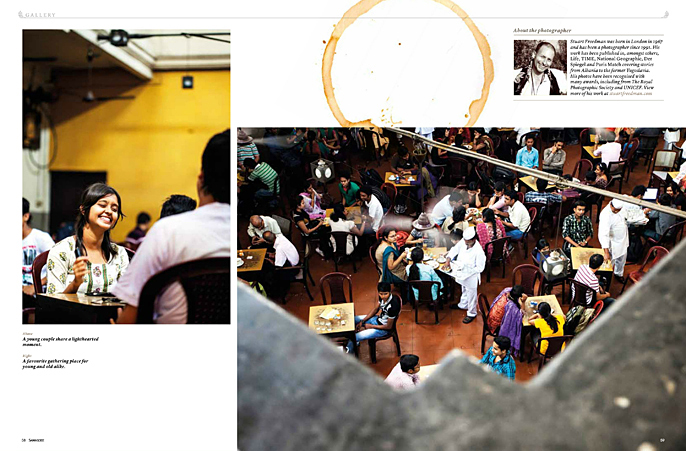
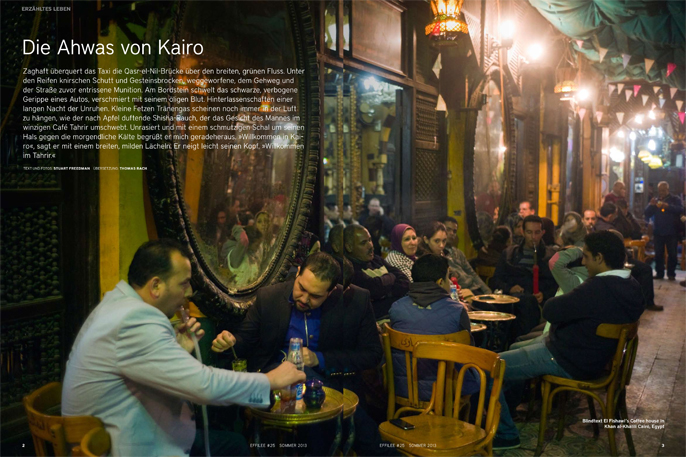
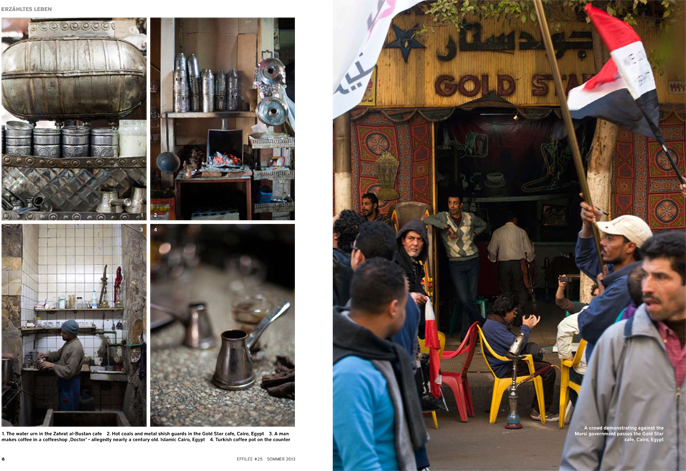
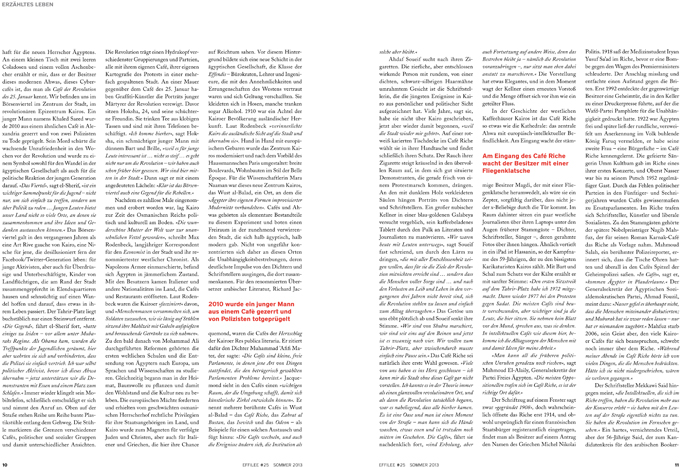
Here is a recent tearsheet from the wonderful Effilee Magazine for whom I wrote and photographed a really unusual piece about the Ahwas (coffeehouses) of Cairo. I wanted to write about the situation in Egypt without watching people fighting and using the prism of the Ahwas allowed me to examine protest and the way that the Revolution has evolved through them. The piece is an historical look at the heritage of the coffee houses and their resurgence after years of political repression. Under Nasser, Sadat and Mubarak, dissent and free thought were controlled. Networks of informers and secret policemen used cafes as an access point to the Arab Street. Novelists and poets like Naguib Mafouz still patronised them but had to write and speak in metaphor. Despite this coffeehouses had and continue to hold a significant rôle in Arab (and specifically) Egyptian literature and culture.
The Revolution of 2011 was sparked at least in part by the killing of a young man by the security forces outside an Ahwa that was used as an internet cafe. The cafes have become political again and, in this work, I’ve tried to explore the downtown splendour of the Art Nouveau, Cafe Riche that is home to a new generation of political activists, the street cafes of the Bourse (Cairo’s Left Bank during the Revolution) as well as a survey of Ahwas less well known – simple backstreet cafes and those of the Zaballeen (the Christian minority). Interviews include (amongst others) political commentator and Booker Prize nominated novelist Ahdaf Soueif, Arab Booker nominee (also head of Al-Dar publishing house) and flâneur Makkawi Said and Max Rodenbeck, the Economist’s correspondent and author of the encyclopaedic, ‘Cairo, the City Victorious’. Currently, a new Egyptian soap opera called Coffee Shop is attracting very negative attention from Egypt’s secularists about the way women are (or actually not) portrayed within the programme. The debate goes to the heart of what society was being created under the Morsi government.

Here’s the tearsheet:


11418_ahwa-copy-1a


11418_ahwa-copy-2


11418_ahwa-copy-3


11418_ahwa-copy-4


11418_ahwa-copy-5


11418_ahwa-copy-6

World Street Photography Day

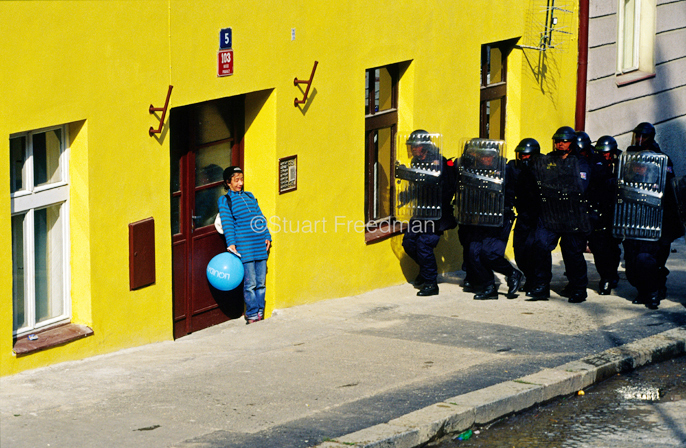
… was apparently yesterday. I didn’t know but supposedly it’s celebrated every year to mark the birthday of some well known painter called Cartier-Bresson… I also missed World Photography Day on August the 19th. Who knew? Far be it from me to suggest that there is a little too much photography in the world but I happened to be showing work to a new client yesterday and he found the image below hilarious so I thought I’d post it here. It’s a good enough reason. It’s taken on the street so I guess that it qualifies… True, it’s not exactly an homage to Winogrand and it was unusually for me, taken on a 80-200 but I was just pulling a gas mask off at the time and it is on tranny, so I think I’m excused… On assignment for Newsweek at the time covering the anti Capitalist protests in Prague. Just as I was taking it I remembered the Don McCullen shot from Derry (see here). Same but different.


Czech Republic - Prague - A drunken protester attempts to hide in a doorway as riot police charge demostrators during the protests surrounding the World Bank and International Monetary Fund meetings
Czech Republic – Prague – A drunken protester attempts to hide in a doorway as riot police charge demostrators during the protests surrounding the World Bank and International Monetary Fund meetings


The iPad folio revisited


I wrote last year on this blog about the iPad as a portfolio tool and specifically about an app called Foliobook. I was particularly impressed by the customisation features that it offered and that it allowed me to be flexible with changing content. I decided last month to freshen up my presentation and I contacted Paul Freeman the app’s designer. He very quickly set about rearranging the architecture and sent me customisable templates into which I could drop work. I have to say that I am not terribly technically minded when it comes to computers but Paul’s help and assistance was first class. I very rarely recommend anything on this blog but I can honestly say that Foliobook is an excellent product and that the support from Paul was brilliant.

In terms of the folio, I wanted a clear delineation between editorial and commercial work and in terms of stories and new work, the ability to change material quickly to suit different clients. I think it works very well.

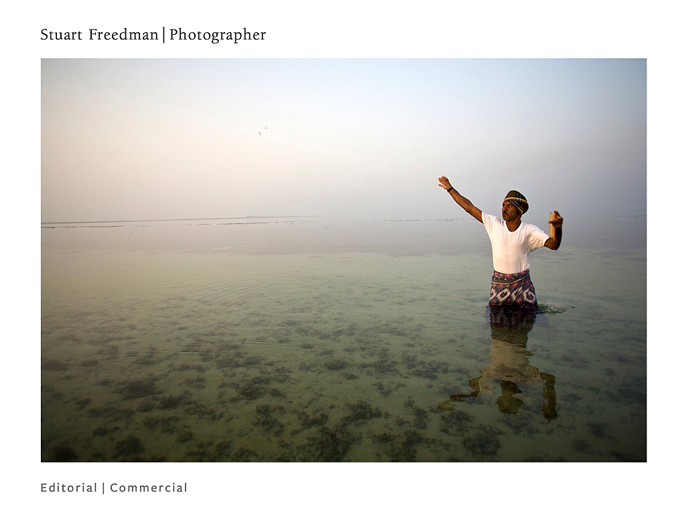
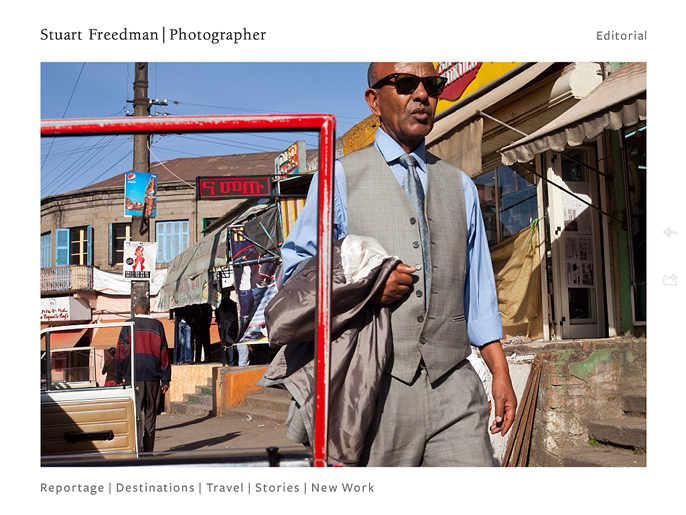
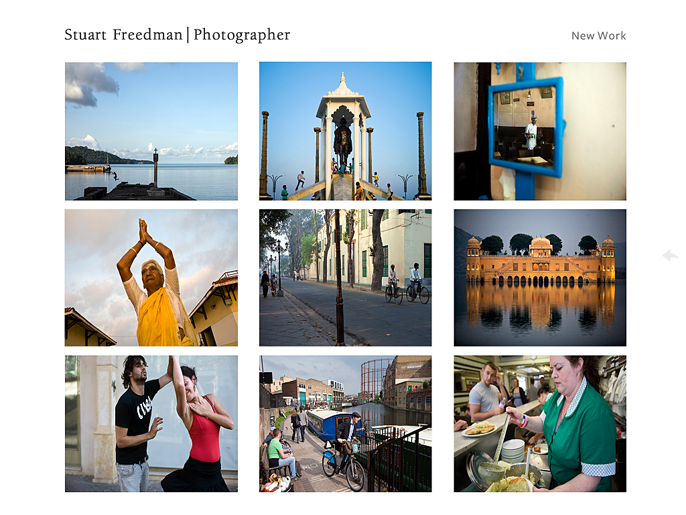
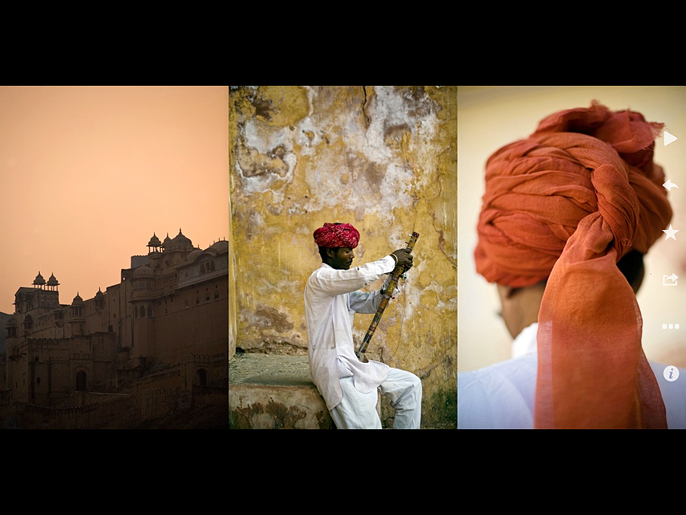
Here’s a selection of screenshots of the current set-up.


1


2


4


5


3


6


David beats Goliath


I was delighted to read over the weekend in a piece by Dean Nelson and Simon de Trey-White in the Daily Telegraph of the decision by Vedanta Mining to respect the wishes of the Dongria Kondh tribe and cease mining their sacred mountain for bauxite.

Vedanta Resources, a UK-registered ftse -100 company wanted to mine the Niyamgiri Hills in Orissa which are sacred to  Dongria Kondh, a protected tribal group of ‘original’ Aboriginal peoples. The Orissa state government had agreed to the destruction of the Tribal peoples land in 2005 but the decision was eventually overturned by the Supreme Court after a tortuous appeals process. The final decision was made by the Dongria Kondh themselves at a gathering at the weekend.

I covered the story in 2007 and wrote about it for the Indian magazine Tehelka (see here).

In a blog post on this site in 2009 I wrote that,

“I am no romantic when it come to India. I don’t share a Raj view of the colonial apologists (despite inevitably by dint of being British having reaped the indirect rewards of the subjugation of that country). I don’t yearn for quaint, underdeveloped communities full of poverty and colour. I want to see India progress. But I know the stink of international corporate power when I smell it… India had no colonies from which to steal resources so it’s stealing them from its own weak and vulnerable. The profits of this mine will not be spread evenly to benefit the Indian economy – it will be hoarded in the off-shore bank accounts of those corrupt politicians and corporate executives who already think that India is theirs by right.

A new middle class India has been brought up to believe that a successful society means a consumerist society. Greed and nationalism go hand in hand: it is not the poor of India calling for war with their brothers and sisters in Pakistan.”

It is a deeply significant victory for the Dongria Kondh but as Nelson correctly points out the flow of modernity is inevitable.

As I also wrote in 2009,

“Traditionally, Indians have protested injustice in a dignified Ghandian way with hunger strikes and marches. While the Western media and much of India has been marvelling at ‘Shining India’ it has failed to notice that a good deal of India is now under (mostly Maoist) rebel control. In Kashmir, Manipur, Nagaland, Bihar, Andhra Pradesh, Chhattisgarh and Jharkhand the Indian state is fighting a battle it might not win.”

I’ve used before Arundhati Roy‘s metaphor of India ‘eating its own people’ to describe that country’s unfettered race to Market Capitalism’. I hope that the Dongria Kondh’s victory for their peaceful, traditional way of life in harmony with the land of their fathers will last for as long it can.


India - Orissa - Dabu Limajhi, a tribal woman in her home in Kankasarpa village, India – Orissa – Dabu Limajhi, a tribal woman in her home in Kankasarpa village,