The future of the rag-pickers


According to a piece in the Guardian, it seems that authorities in Delhi are piloting a project to tackle the city’s enormous waste problem but the solution may affect those whose livelihood depends on it. Currently, waste is sorted manually by an informal army of men, women and children and then passed on to middle-men to sell or recycle. Three new plants (one at Ghazipur) will, it is hoped, sort the 8000 tonnes of Delhi’s daily waste automatically. It is estimated that more than 50,000 people work in this informal sector (known as ‘rag-pickers’) in and around the capital. The work is terrible and dangerous but for a significant section of the transient population of one of the world’s fastest growing cities, it is at least a living.

Over the years, I’ve photographed and written about many of the city’s rag pickers who exist in a twilight, Dickensian world ignored by almost everyone, quietly making the city function in a most human but terrible way.

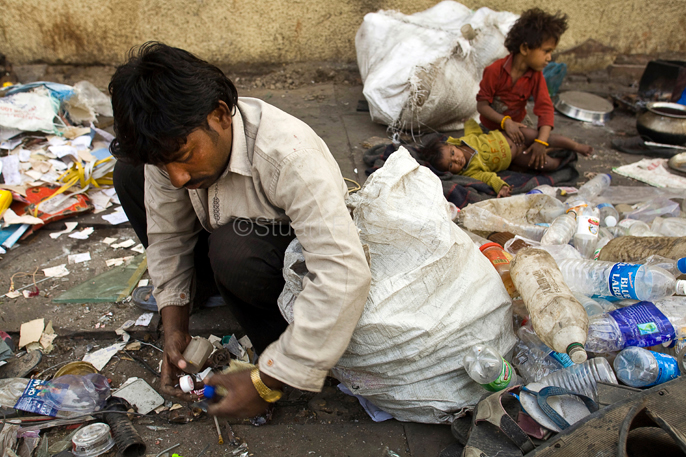


India – New Delhi – Buddhi Lal, 30, a rag-picker, works before dawn collecting refuse to recycle and resell. On a good day he can make perhaps Rs150-200


India – New Delhi – Buddhi Lal, 30, a rag-picker with his small children playing behind him on the pavement, sorts the refuse that he has collected during his dawn round to sell


India – New Delhi – A child rag-picker collecting plastic bottles (and anything else he can scavenge) from the carriage of a train at New Delhi Railway station


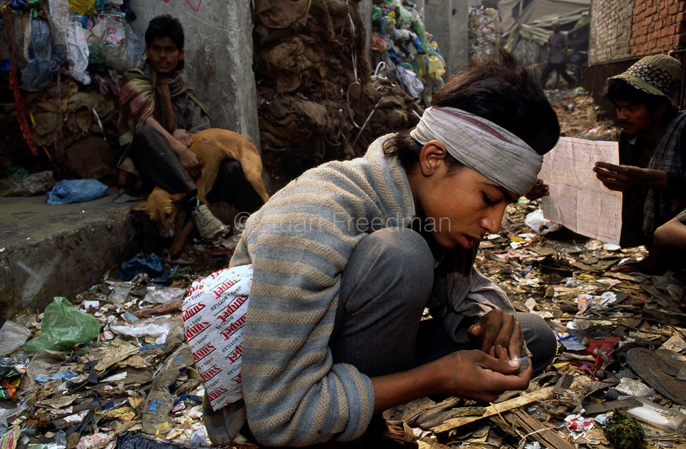
India – Delhi – A child rag-picker cleans his fingernail with an old razor blade at a rubbish depot in Old Delhi


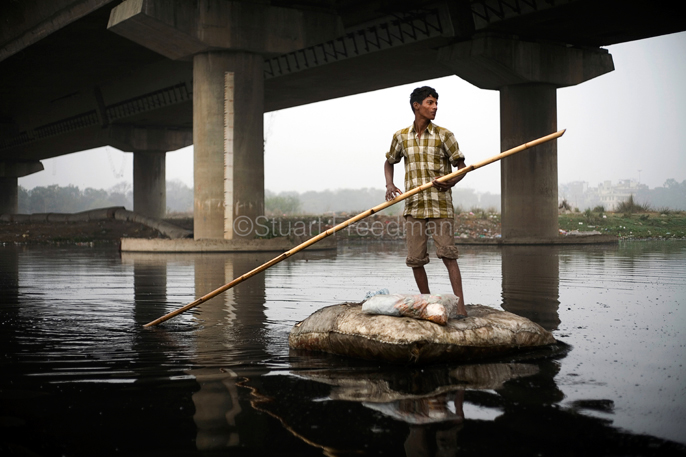
India – Delhi – A boy scavenger on the Yamuna River on a home-made raft of sacking and polystyrene. By dragging a magnet through the filthy water he collects scrap metal to sell


London sees a rise in rough sleepers

UK – London – Friends, Claire, 36 and Edwin, 61, both homeless, talk after a soup run organised by a Christian Charity on the Strand


The Broadway Homeless charity have just reported that London has seen a 43% increase on people sleeping rough in the capital from last year. The only glimmer of home in this figure is that 70% of those aren’t sleeping out for the second night due largely to the actions of charities like Broadway and increased work from outreach teams. This, despite Boris Johnson’s pre-election pledge to ‘end rough sleeping by 2012’. According to a Guardian report in April this year, £5m – underwritten by central government – was diverted from the Mayor’s budget for rough sleepers, to ‘other purposes’. Expect worse to come if proposals to remove housing benefit for under 25’s come to fruition.

There is a clear link between London’s rents becoming more and more unaffordable for large sections of the population and these figures. London is often referred to as a divided city. It isn’t. It is now many cities. Extraordinarily wealth in the centre, guarded and cosseted by technology and private security (tested and honed on the battlefields of Iraq and Afghanistan) swimming in an ocean of increasing poverty – material and aspirational – that finds its dreams impossible. All of this underwritten by a facetious, poisonous narrative of unfulfilled personal responsibility and fecklessness.

According to Stuart Hall, cities of the nineteenth century and twentieth centuries were monuments to Imperial power: motors of industrial production and trade. Globalisation has significantly reshaped London and the people sleeping on its streets (or the thousands a breath away from it) as inconvenient dislocations from an industrial to a service economy dictated to by modern day robber barons fixated on personal wealth and profit. I write so much about the Developing World, Delhi in particular (and recently Athens) that it is easy to neglect what is literally under my feet.


Alhambra


Spain – Grenada – Detail of the hammam in the Palace of the Alhambra


Spain – Grenada – Architectural detail of the Palace at the Alhambra


Spain – Grenada – Details of Arabesque columns inside the Alhambra Palace


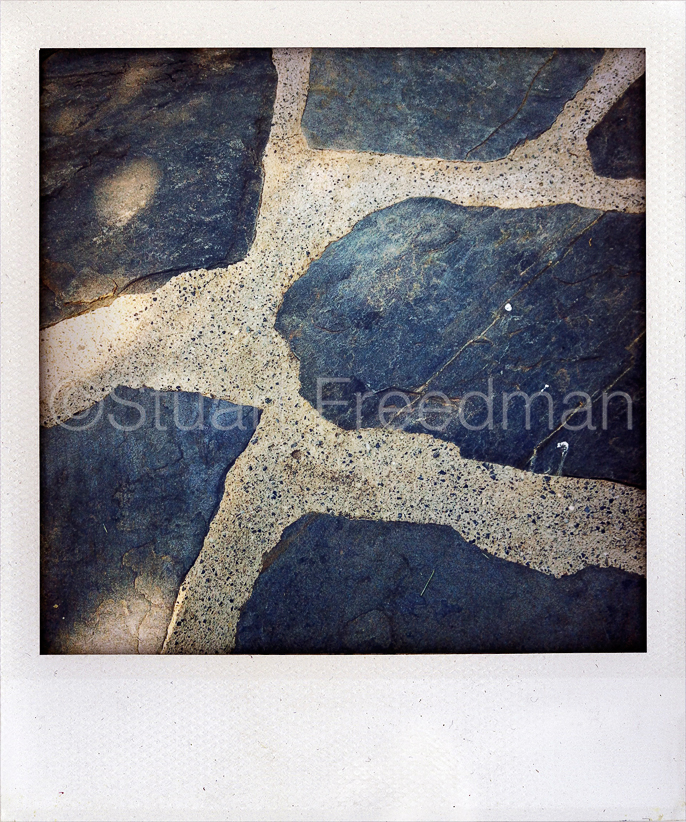
Spain – Grenada – Detail of a stone path


Spain – Grenada – Detail of an arch in the Court of the Lions, Alhambra Palace


Spain – Grenada – Detail of Arabesque arch, Alhambra Palace


Spain – Grenada – Detail of Arabesque arch, Alhambra Palace


Spain – Grenada – Detail of the pool of the Partal in the Alta Alhambra


Spain – Grenada – Shadow of roof tiles on a wall at the Alhambra Palace

Delhi’s water mafia

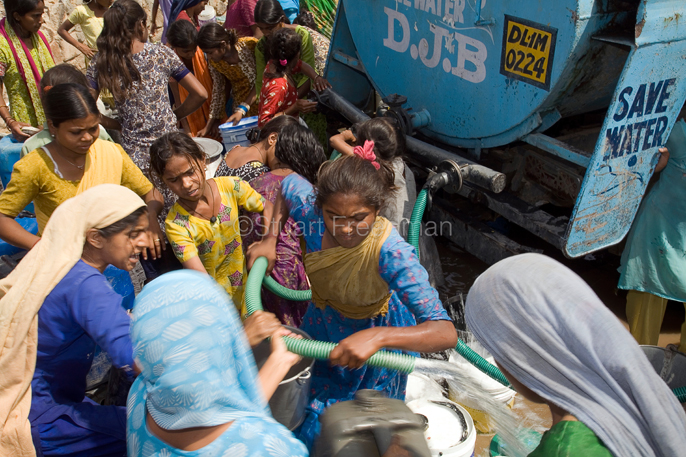
As Delhi labours under relentless 45 degree heat, the availability of water is as ever, a battleground. According to India Today (quoting an investigation by The Mail) reporters have uncovered a nexus of corrupt Delhi Jal Board (the local authority that looks after water in the city) employees and private tanker operators offering water for sale at inflated prices. Delhi, like many Developing World cities has a particularly rickety infrastructure when in comes to water supply. Illegal drilling of underground aquifers and horrendous pollution mean that at the best of times water supply is erratic. Add in seemingly endless low-level corruption and you have a perfect storm. I made a film about Delhi’s water wars a couple of years ago for Channel 4. You can see it here. As I said at the time, for the middle classes, access to water is an expensive and miserable inconvenience but to the poor and the slum dwellers, it is literally a daily fight. As my images show…


India – New Delhi – Slum dwellers scramble for water in Jai Hind Camp. The camp is home to perhaps 3000-4000 migrant workers from all over India. It has no water supplies at all so once a day, the Municipal JAL Board truck delivers some water. There is never enough for the expanding population to go around and some are left with nothing.


India – New Delhi – Women at the Kusumpur Pahari slum fight for water after a tanker delivery. Built more than thirty years ago the slum has no running water or sewage facilities. The only water supply come from the Municipal JAL Board water trucks that visit several times a day. The deliveries are supposed to be free but in reality, residents must pay bribes to have the water delivered.


India – New Delhi – A woman pushes her bike home after filling many cans from a water tanker in Kusumpur Pahari.


India – New Delhi – Middle class housewives in the Vasant Kunj area wait for water to be pumped into their water tanks from a JAL Board tanker. Vasant Kunj is one of many places in New Delhi that has frequent loss of mains water and relies on such infrequent tanker deliveries


Dart Centre Retreat

Some weeks ago I was invited by the Dart Centre, an extraordinary resource for journalists who cover trauma in their work, to participate in a long weekend retreat in peaceful hotel the English countryside. The Dart Centre is a project of the Columbia University Graduate School Programme and seeks to promote best practice in the fields of reporting and understanding of trauma, human rights and conflict world wide. I was accompanied by a lovely group of very experienced journalists from amongst others, the BBC, Channel 4, Al Jazeera, The Sunday Times and The Associated Press. It was an honour to be part of this and my thanks to Dart for inviting me on such an informative and helpful weekend.

My special thanks to my colleague Lefteris Pitarakis who kindly provided an image of me during my presentation talk.


Dart Centre Europe weekend retreat in Weymouth, England, Saturday April 27, Sunday April 28, 2012. (Photo ©Lefteris Pitarakis)


The reckoning

Delighted that at least some justice has been served today for the people of Sierra Leone and Liberia after Charles Taylor was  found to have “aided and abetted” war crimes” by a United Nations-backed tribunal in The Hague.


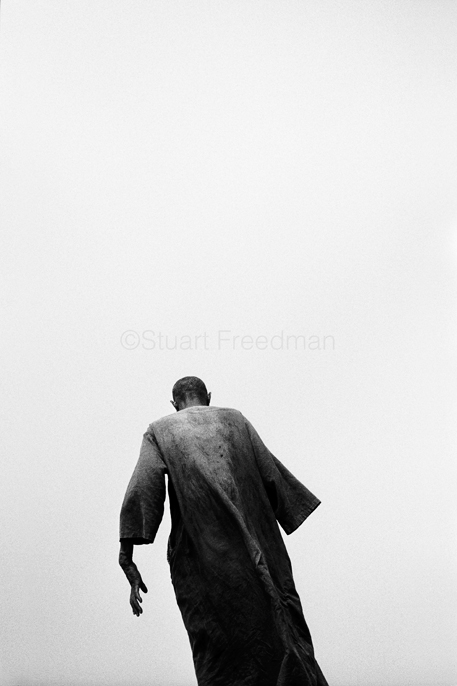
Sierra Leone - Freetown - Ibrahim, a victim of the rebels amputation policy during the Sierra Leonian civil war. Ibrahim was amputated in Freetown in 1999 when the rebels occupied the Waterloo area. They tried to hack off his other hand but were unable to. Hastings resettlement camp