Hooray for Bollywood…


This month marks the centenary of Bollywood – the garish, larger-than-life dream factory that enraptures Indian audiences worldwide. Five years ago I was commissioned by the Sunday Times Magazine to photograph Ronnie Screwvalla, the millionaire film producer and founder of the UTV group over a couple of days in Mumbai. Screwvalla proved charming if extraordinarily busy. I photographed him at home and at his studios but realising that he would make a good potential cover, pursuaded his nervous PR staff (they’re always nervous aren’t they?) to let me have twenty minutes with him at a Mumbai beach near where he grew up. Originally, I’d wanted him walking along the beach but it soon became clear that that wasn’t going to happen. I arrived early and had my star-struck driver hold a single strobe as Screwvalla emerged from his limo. The picture lasted no more than five minutes before he had to leave. It never made the cover but I’ve always liked it.
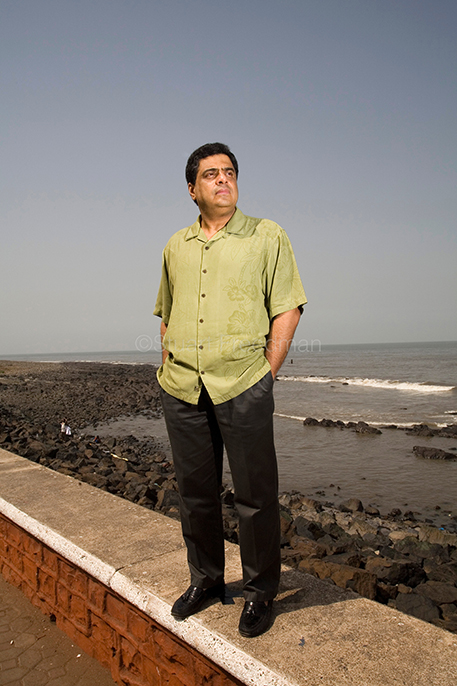


India - Mumbai - Ronnie Screwvala, CEO of UTV, at Sea Face Bay  in Mumbai (formerly Bombay), India..As a producer and businessman, over the past five years Screwvala has led the transformation of India's prolific but chaotic film industry to become a crossover figure in Hollywood and Bollywood...
India – Mumbai – Ronnie Screwvala, CEO of UTV photographed at Sea Face Bay. As a producer and businessman over the past five years Screwvala has led the transformation of India’s prolific but chaotic film industry to become a crossover figure in Hollywood and Bollywood.

My best tearsheet… probably


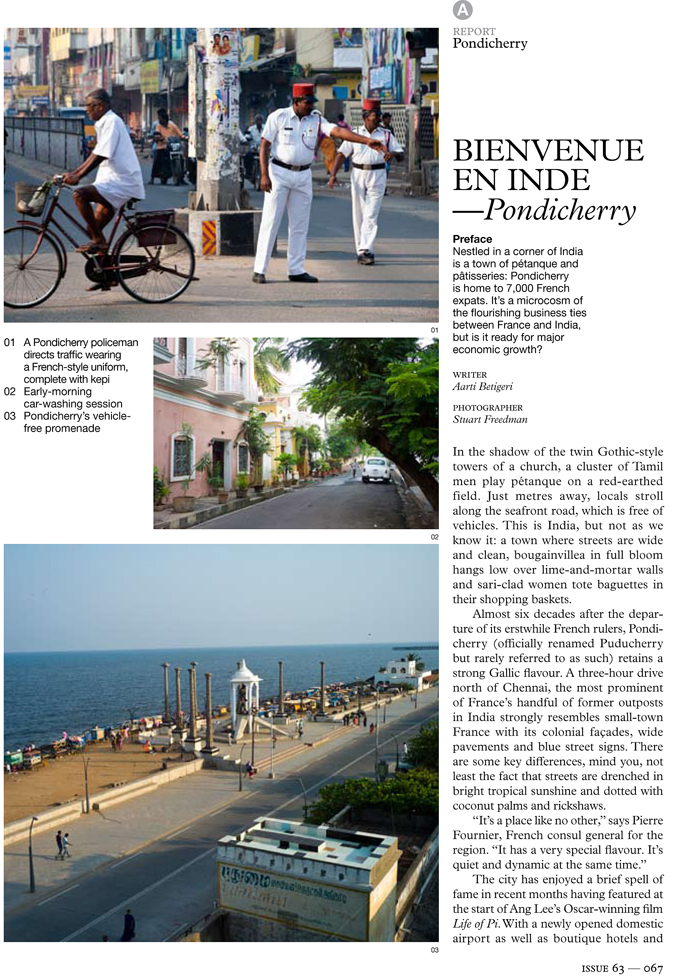
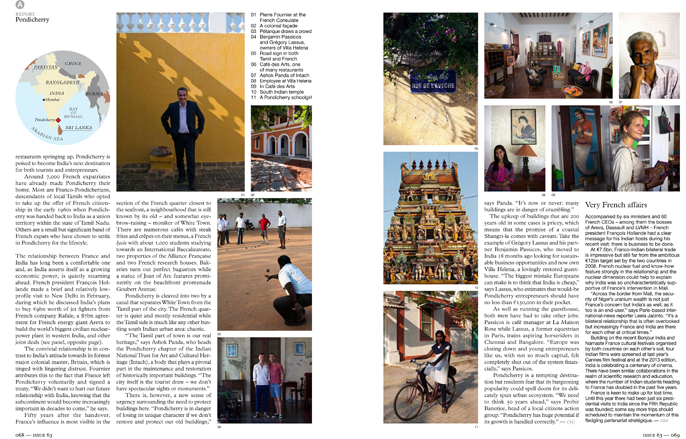
Last week I was on assignment for a magazine in Pondicherry, Tamil Nadu photographing the French influence on the place.

As you can see, my presence didn’t go unnoticed… The local newspaper decided that me laying on the floor to get a better angle on a military band was front page news… as was the arrest of the poor chap who, slightly worse for wear on the local hooch, chose that moment to have a little dance in front of me and then squared up to the band leader – presumably for not playing his favourite tune…

In any case, I made a frame and clearly gave the local newsroom a laugh.


frontpagesmall


Tearsheet – Eating Pests


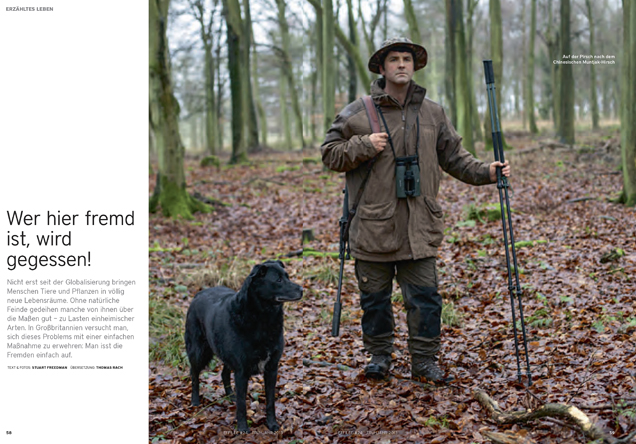
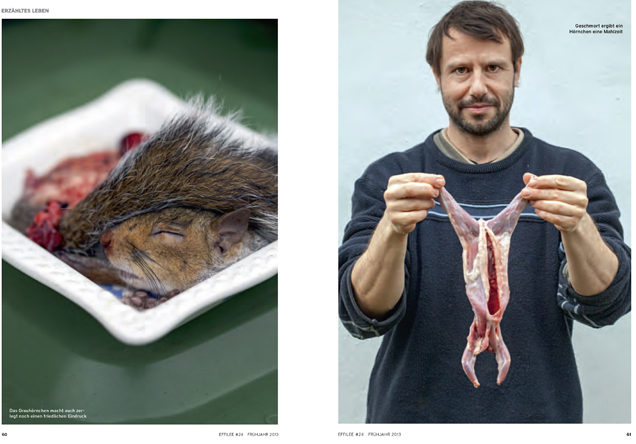
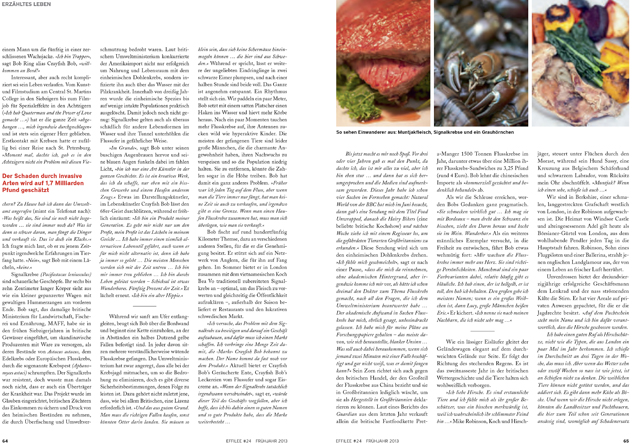
Here’s a recent tearsheet for the German Magazine, Effilee of an article that I wrote and photographed about a particular response to non-native invasive (alien) species – Muntjac Deer, Grey Squirrel and American Crayfish… the German headline has it best – something like, “Who is a stranger here is eaten”. Less sensationally, the piece explores the environmental fallout of introduced species and a discussion about both ‘speciesism’ and, the realization that we now live in an age that may come to be known as the Anthrocene.

Many thanks to the very excellent Crayfish Bob, Fergus Drennan (aka Fergus the Forager) and Mike Robinson


pest01

pest02 pest03 pest04

I have to be happy in the present…

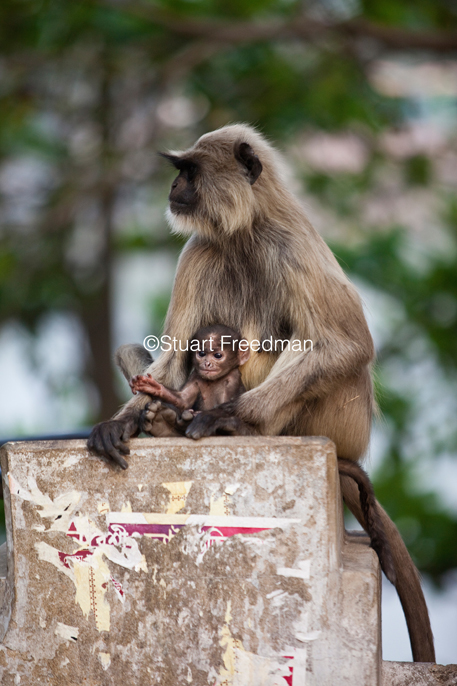
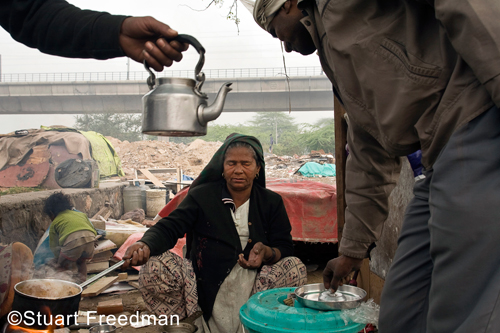
I’m usually a day or so late with things and the centenary of International Women’s Day is obviously no exception… A week or so  ago on assignment I photographed an extraordinary woman, Sheela, who runs a tiny tea stall that backs onto a rag-pickers’ colony.


India - New Delhi - Sheela, a widowed tea stall owner keeps a steely eye on a customer dropping a coin onto a steel plate

I can’t tell her story any better than see did.


“I came to Delhi a long time ago. I came here with my husband and he was working as a chowkidar. That was in 1981. A long time. Then it all went bad. From the beginning I stayed on this piece of land. My husband died here 21 years ago. My eldest son then became sick and he also died. That was sixteen years ago and then my youngest (son) died I think six years ago. We spent a lot of money to save them all but despite the medicines they all died. I couldn’t save any of them. I don’t know why I am still here. But I am here alone and I must survive.

At my tea stall I get up very early and serve the rag pickers who work on the dump behind me. I have had this business since the children died. I am not happy but I don’t have the means to change my life. I am alone. I am a woman. It is not easy. I don’t make so much money – tea is Rs5 a cup and I have to buy the tea and the sugar and recently all this has increased in price.

I suppose Delhi’s a good a place as another: there’s work, you can survive. I can’t think about the future can I? It’s a waste of time <laughs>.

I have to be happy in the present.”