Delhi’s century and the case of the missing statues…


“We are pleased to announce to Our People that on the advice of Our Ministers tendered after consultation with Our Governor-General in Council, We have decided upon the transfer of the seat of the Government of India from Calcutta to the ancient Capital Delhi….” (Quoted in New Delhi Making of a Capital, Malvika Singh and Rudrangshu Mukherjee, Roli Books, 2009)

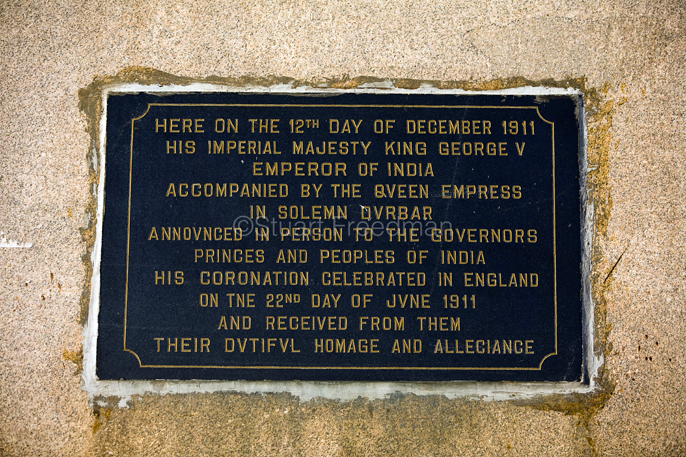
With that on 12 December 1911, George V sealed Calcutta’s fate as British India’s capital city. Delhi, itself a city of seven (perhaps more) kingdoms became the new political centre of India.

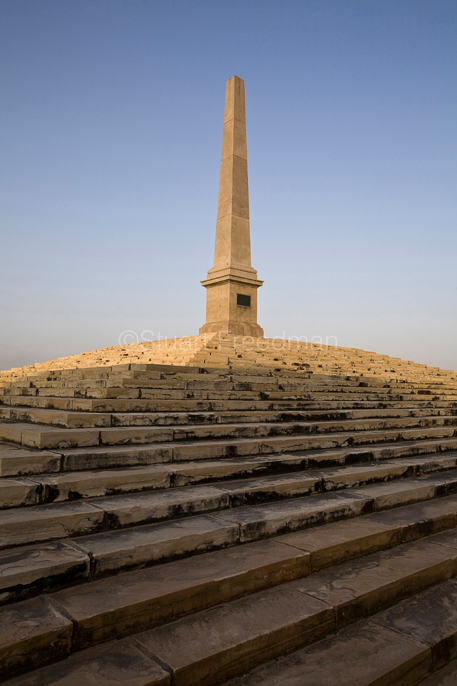
Today, a forgotten, dusty patch of land is all that remains of the Delhi Durbar site; an obelisk marking the spot where George made his speech, Ozymandias like now in its echo. Most Delhi-wallahs know nothing about it, nor the park adjacent which holds statues of Imperial notables and a likeness of the King himself that, until the 1960s, stood beneath a Chhatri next to India Gate.

I first visited the place in 2005 and found, with some difficulty, a silent park off a minor road next to the main highway. Last week, in search of story about New Delhi’s first century as capital I drove out again only to find the place in ruins. Much to my and my taxi driver’s amazement the place was being demolished by hand by day labourers. It seemed to me that some of the statues had gone or were at least moved (although I cannot confirm if this is true or indeed how many) and certainly some of the plinths had been destroyed.

I am by no means a fan or apologist for the Raj – indeed as I’ve written before I hold very little truck with romantic India but I was  dismayed that such a crucial piece of India’s history looked so … desolate. I haven’t had chance to ascertain exactly what the plans for this remote graveyard of empire might be but I sincerely hope that they are, as the foreman told me, to restore the place. If true, it is, like the Commonwealth Games building saga, a very furiously last minute – very Indian – job.

It could all of course be a dastardly case for Delhi’s detective extraordinaire, Vish Puri


The first image was taken in 2005 – the rest are as I found the site last week:
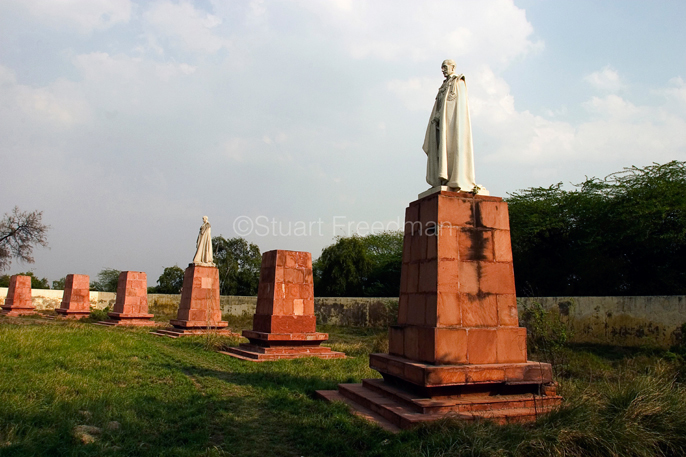
India - Delhi - Statues of British Imperial notables, with Lord Hardinge, Viceroy Of India (1911-1916) to the right at the Coronation Park next to the site of the Delhi Durbar of 1911


India - Delhi - Commemorative obelisk at the Coronation Park marking the throne of George V during the Delhi Durbar of 1911
India - Delhi - Commemoration Plaque below the Obelisk that gives the date of the Delhi Durbar of 1911


India - Delhi - Statue of Sir Guy Fleetwood Wilson at the Coronation Park next to the site of the Delhi Durbar of 1911


India - Delhi - Women construction workers demolishing the Coronation Park next to the site of the Delhi Durbar of 1911


India - Delhi - Security guards watched over by the statue of George V next to the site of the Delhi Durbar of 1911


Finally, the Chhatri that originally housed the statue of George V in the shadow of India Gate –


India - New Delhi - The empty canopy next to India Gate that originally held the statue of George V

An Old Delhi facelift

No – not some mediaeval torture method but a proposal that after years of delay, the Chadni Chowk redevelopment plan will finally get under way under the auspices of the Shahjahanabad Corporation. Many Delhi residents will of course be skeptical that this will prove to be the success its champions claim. However, if it means preserving at least something of the faded and broken beauty of the Walled City then I wish it very, very good luck. My only concern is that this is not some run-down inner city in the West being gentrified: it’s a vibrant and working area where thousands and thousands of people make a living. The imperative to preserve its heritage, whilst obviously critical, should be tempered at least by a consideration for those that call Old Delhi home. Although I suspect one can guess how that will turn out…


India - Delhi - Heavy traffic on the congested streets of Old Delhi looking towards the Jama Masjid, Delhi, India


India - Delhi - Traffic on Chadni Chowk looking towards the Red Fort, Old Delhi


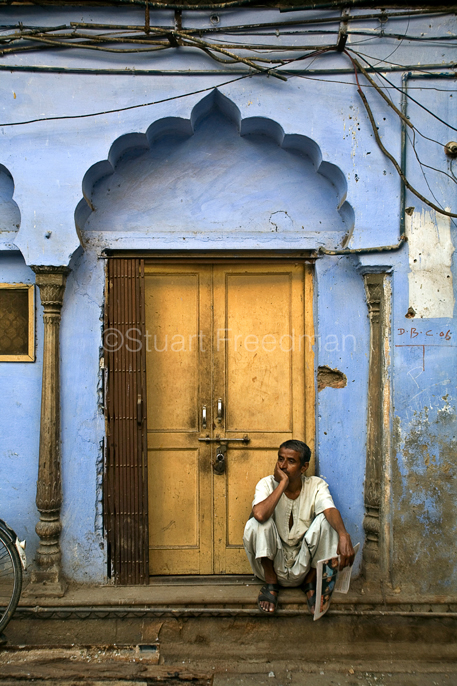
India - Delhi - A man lounges inside the remains of the Sultan Singh Ghar ki Haveli. Much of Old Delhi's historical architecture has been lost to new development.

Widows

According to Hindu tradition, widows are a curse. Many are dumped by their families in a dusty north Indian town called Vrindavan, supposedly the birthplace of Khrishna. Here the widows sing and chant for long periods of the day in ashrams where they are paid small amounts of money – the only employment open to them.

India - Vrindavan - Hari Das, 60. A widow abandoned by her family she lives in a small hut along with 40 others women in a slum on the outskirts of Vrindavan. Ostracized by society, thousands of India's widows flock to, or are forcibly dumped in the holy city of Vrindavan waiting to die and receive a meagre pittance of food and money by chanting in ashrams


India - Vrindavan - Widows chant in an ashram for a meagre allowance of money


India - Vrindavan - A Widow chants in an ashram for a meagre allowance of money

Verve Photo

I’m delighted to be the subject of a post at the rather excellent Verve Photo that features my work on capoeira in Brazil.

I must admit I was a little surprised to be included in such a blog that prides itself on showcasing ‘the new breed of documentary photographers’ as I seem (or feel) like I have already been around the block more than once, but no matter. Geoffrey Hiller was utterly charming and I was very pleased that he chose an image from a series that showcases work that isn’t necessarily dark and serious.

Many thanks to Geoffrey and I reproduce the short interview below.


“The story was on Capoeira, the martial art/dance once the (banned) preserve of African slaves, now a national symbol of Brazil. It was shot on assignment for a car magazine – Lexus – with whom I’ve photographed and written travel pieces on and off for nearly a decade. My fixer had arranged for five models – all expert Capoeiristas, and the idea was that in addition to photographing some Capoeira classes in the city, we’d make the main images on Copacabana and Leblon beaches. I remember it rained for a couple of days so I had to shoot the beach twice before I was happy. Initially I shot with two portable strobes but that felt too ‘fashioney’ so I went back to a much simpler set-up – shooting at dusk with available light and couple of fixed lenses: a much more traditional reportage feel. I’d worked in Brazil only once before in 1999 as part of a five country reportage about the Politics of Hunger. I’d shot a piece with the Landless Peasant’s Union (the MST) on squatted land in the far north: the Capoeira story was far removed from that and some of the images have formed the basis of a lifestyle folio that sees me work on ‘lighter’ stories away from pieces in Africa and Asia that I am perhaps more known for. A good balance, I think.”


Andrzej Krauze

After visiting Hackney twice in the last month for the first time in several years (once to work on a story and once to mentor a young photographer), I’m currently re-reading Patrick Wright‘s excellent ‘On living in an old country‘. Wright’s one of those brilliant cultural commentators who should be far better known and the edition I’m reading (because I lost my original copy) has illustrations by another underrated genius, the Polish cartoonist, Andrzej Krauze. I knew Krauze from his biting satire in the Guardian and a few years ago, I got to photograph him for a magazine. I remember that I had very little time (it wasn’t his fault) and that I didn’t have chance to put up the usual lighting rig. Anyway, here are two images from the job… I remembering noticing the label that reads ‘Mr Pen’ at the top right of the chest of drawers he kept his work in…

UK - London - Polish cartoonist Andrzej Krauze at his studio


British Summer Time… Standon Festival and the naked hoola hoop

A bit more British Summertime… at the rather excellent Standon Festival in Hertfordshire. Possibly the only place to see naked hoola- hooping this year…


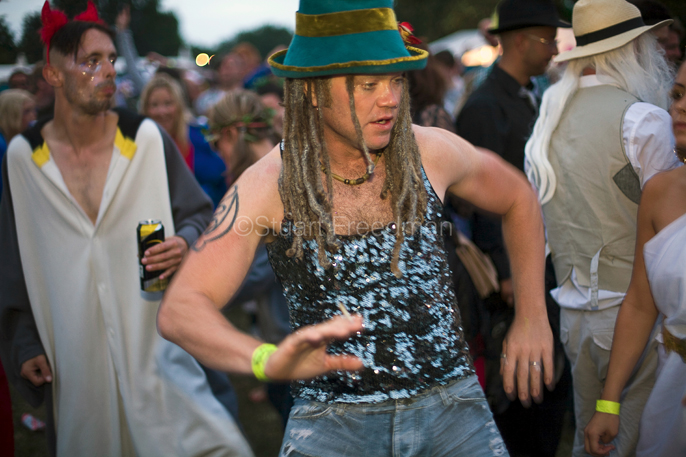
UK - Standon - A man dances at a portable sound system during the Standon Festival


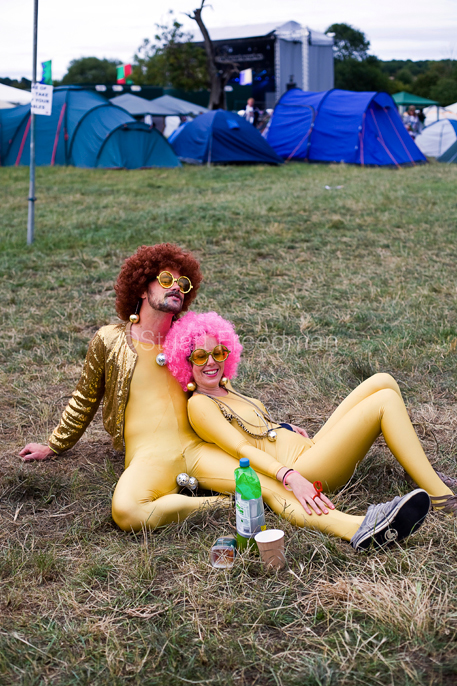
UK - Standon - A couple dressed in gold lame costumes relax at the Standon Festival


UK - Standon - A man in gold body paint relaxes and drinks a pint of beer at the Standon Festival


UK - Standon - A man collapses clutching his groin after failing to hoola-hoop naked