Delhi at 100

There’s a rather charming slideshow on the BBC here on the changing face of Delhi by one of its elderly residents. A shame that the city authorities haven’t made more of this to be honest. Delhi remains an enigmatic and petulant youth amongst other capitals: certainly for me infuriating and engaging at the same time.


Of course, as Kanika Singh, Convener of Delhi Heritage Walks told Tehelka magazine, not everyone shares that view, “Only last year, we evicted all street hawkers while preparing for the Commonwealth Games—and now we are celebrating their contributed (sic.) to our ‘heritage’. I don’t feel like celebrating this occasion. Whose Delhi are we celebrating?”.

The point is surely that cities only belong to their inhabitants when they feel they have some stake in them. I agree that most of Delhi is too busy trying to earn a crust to survive to be bothered about the anniversary but surely (and, if you’ve read this blog before you will know that I am the very last person to romanticise or excuse the Raj) the city is the sum of it’s parts: Hindu, Muslim and the British all have legacies that has made Delhi what it is and decrying any of those for some neo-nationalist point is surely counter-productive. Delhi is what it is and pretending that the city – or indeed much of India for that matter, doesn’t have some English blood is as pointless and saying it isn’t a melting pot of past empires. Selective cultural memory is a very dangerous thing for all societies (remember Ayodya?) and only by melding the various strains in a city (certainly one as large and anarchic as Delhi) can you hope to create a genuinely inclusive society…

Anyway, lecture over. Here’s one I made earlier…

India - Gurgaon - Bricklayers constructing a house in the shadow of an exclusive new development


abstract

I’ve just photographed and written another piece on Delhi street food and as I was walking through Chawri Bazaar yesterday I spotted a chai wallah plying his trade. On the wall next to the stall he’d hung some of his teacup frames. It looked so odd that I made a picture.

I wonder how many cups of tea these holders have held over the years?


India - Delhi - A chai wallahs tea glass holders pinned to a wall

Mehrauli Flower Market

I’m sad to report that the Mehrauli Flower Market seems to have finally closed. There had been rumours that this and the one in central Delhi were to be moved to an industrial area in Okhla but I’m certain this hasn’t happened. A real shame – not least for those poor people that worked here. I’d photographed the Mehrauli market a little bit for my ongoing work Public Spaces, Private Lives and here are two of my favourite images from there from the set.


India - New Delhi - A bag of petals in a sack at the end of the day at the Mehrauli Flower Market


India - New Delhi - A phoolwallah on his tricycle collecting a delivery of flowers from the Mehrauli flower market

World Homeless Day

This post is a little late as World Homeless Day was on Monday 10/10/11 and although several kind people (Laurence Watts, Justin Leighton, Panos and Duckrabbit) Tweeted some of my work but I was away and so missed the opportunity to write something.

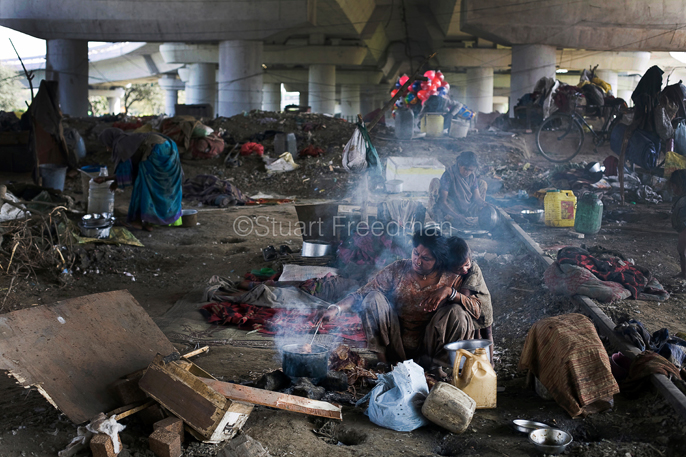
The work here is from an ongoing piece about Delhi and it’s people – where some 100000 people just happen to be homeless. I’m always cautious these days about doing another story about the homeless – you know the nameless victims staring up at the camera but  the sheer scale of Delhi’s problem is so significant, so enormous it became inevitable. The work was an assignment from ActionAid (thanks to Laurence who believed in my proposal) and was made through the invaluable assistance of Aashray Adhikar Abhiyan from whom I must thank the wonderful Paramjeet Kaur and Prakash, my invaluable guide and I hope now, friend. I tried very hard to make work that showed people as individuals coping in very difficult circumstances but one that is surprisingly easy to fall into. Normal, ordinary people in difficult situations. These are just three of my current favourite images – you can see a larger set via my archive or the Panos site.


India - New Delhi - Patti Das and his child Khrisha on a piece of waste ground beneath a flyover near Okhla station. New Delhi, India.


India - New Delhi - A mother picks at her child's hair for fleas as a train passes behind them on a piece of waste ground where they live beneath a flyover near Okhla station. New Delhi, India


India - New Delhi - A homeless mother, hugged by her small child, cooks breakfast by the railway tracks where her family live. Okhla, New Delhi, India

Delhi’s century and the case of the missing statues…


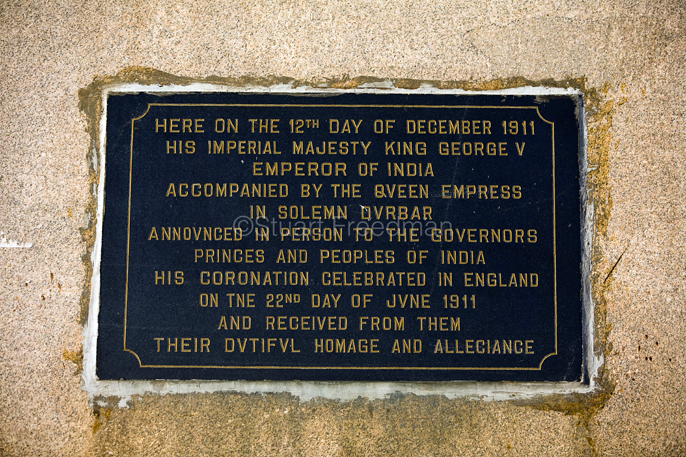
“We are pleased to announce to Our People that on the advice of Our Ministers tendered after consultation with Our Governor-General in Council, We have decided upon the transfer of the seat of the Government of India from Calcutta to the ancient Capital Delhi….” (Quoted in New Delhi Making of a Capital, Malvika Singh and Rudrangshu Mukherjee, Roli Books, 2009)

With that on 12 December 1911, George V sealed Calcutta’s fate as British India’s capital city. Delhi, itself a city of seven (perhaps more) kingdoms became the new political centre of India.

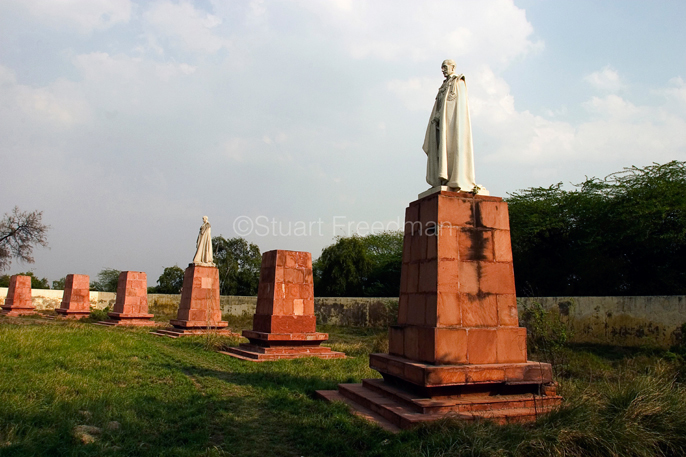
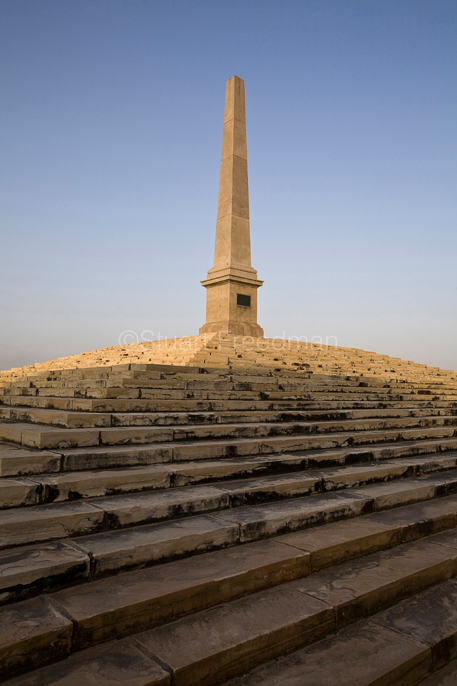
Today, a forgotten, dusty patch of land is all that remains of the Delhi Durbar site; an obelisk marking the spot where George made his speech, Ozymandias like now in its echo. Most Delhi-wallahs know nothing about it, nor the park adjacent which holds statues of Imperial notables and a likeness of the King himself that, until the 1960s, stood beneath a Chhatri next to India Gate.

I first visited the place in 2005 and found, with some difficulty, a silent park off a minor road next to the main highway. Last week, in search of story about New Delhi’s first century as capital I drove out again only to find the place in ruins. Much to my and my taxi driver’s amazement the place was being demolished by hand by day labourers. It seemed to me that some of the statues had gone or were at least moved (although I cannot confirm if this is true or indeed how many) and certainly some of the plinths had been destroyed.

I am by no means a fan or apologist for the Raj – indeed as I’ve written before I hold very little truck with romantic India but I was  dismayed that such a crucial piece of India’s history looked so … desolate. I haven’t had chance to ascertain exactly what the plans for this remote graveyard of empire might be but I sincerely hope that they are, as the foreman told me, to restore the place. If true, it is, like the Commonwealth Games building saga, a very furiously last minute – very Indian – job.

It could all of course be a dastardly case for Delhi’s detective extraordinaire, Vish Puri


The first image was taken in 2005 – the rest are as I found the site last week:

India - Delhi - Statues of British Imperial notables, with Lord Hardinge, Viceroy Of India (1911-1916) to the right at the Coronation Park next to the site of the Delhi Durbar of 1911


India - Delhi - Commemorative obelisk at the Coronation Park marking the throne of George V during the Delhi Durbar of 1911
India - Delhi - Commemoration Plaque below the Obelisk that gives the date of the Delhi Durbar of 1911


India - Delhi - Statue of Sir Guy Fleetwood Wilson at the Coronation Park next to the site of the Delhi Durbar of 1911


India - Delhi - Women construction workers demolishing the Coronation Park next to the site of the Delhi Durbar of 1911


India - Delhi - Security guards watched over by the statue of George V next to the site of the Delhi Durbar of 1911


Finally, the Chhatri that originally housed the statue of George V in the shadow of India Gate –


India - New Delhi - The empty canopy next to India Gate that originally held the statue of George V

An Old Delhi facelift

No – not some mediaeval torture method but a proposal that after years of delay, the Chadni Chowk redevelopment plan will finally get under way under the auspices of the Shahjahanabad Corporation. Many Delhi residents will of course be skeptical that this will prove to be the success its champions claim. However, if it means preserving at least something of the faded and broken beauty of the Walled City then I wish it very, very good luck. My only concern is that this is not some run-down inner city in the West being gentrified: it’s a vibrant and working area where thousands and thousands of people make a living. The imperative to preserve its heritage, whilst obviously critical, should be tempered at least by a consideration for those that call Old Delhi home. Although I suspect one can guess how that will turn out…


India - Delhi - Heavy traffic on the congested streets of Old Delhi looking towards the Jama Masjid, Delhi, India


India - Delhi - Traffic on Chadni Chowk looking towards the Red Fort, Old Delhi


India - Delhi - A man lounges inside the remains of the Sultan Singh Ghar ki Haveli. Much of Old Delhi's historical architecture has been lost to new development.

Other lives, other rooms

I am woken every morning at dawn by the sounds of men breaking down buildings by hand. New Delhi, because of its absurd land prices is constantly being broken and rebuilt again by thousands of unskilled labourers working for a pittance. All day, every day.

This is the view of the house opposite. A view into other lives, other rooms.


India - New Delhi - Men construct a new house room by room

Just take five…

Some good news from Pakistan. The BBC reported today on the success of Sachal Orchestra in Lahore that is thriving by reinterpreting classic jazz standards – like Brubeck’s Take Five – and giving them a South Asian twist. Pakistani musicians have seen their livelihoods collapse in recent years: musical tastes, instability and a growth of religious criticism have all impacted on them.

Their Indian cousins have also to a lesser extent seen their craft disappear and it’s from them that I find a picture in my archive taken on an Old Delhi roof.


India - Delhi - Traditional musicians play on a roof top in Chandni Mahal, Old Delhi, India. Once patronised by the Mughal rulers many now scrape a living playing weddings and social functions. Violinist Afzaal Zahoor leads Zeeshan Ahmad, a singer, Shankat Qureshi (tabla) and Shakeel Ahmad (Harmonia).