The Indian Coffee House to close…again…again

The Hindustan Times has reported that the Indian Coffee House in New Delhi, my favourite haunt for a dozen or more years, will now finally close because of unpaid rent. According to the ‘paper, “…the civic agency has finally told them to vacate the premises by the end of the month.” Pratap Singh, manager of Indian Coffee House is quoted as saying “We owe them nearly Rs 55 lakh as rent and interest apart from the monthly rent. We don’t have so much of money as our sales have dipped over a period of time.”

I first wrote about the Coffee House on this blog in June 2009 when I compared it to the great post-war classic cafes in London. Only last month Effillee magazine in Germany published a spread of my work shot over two years in the place. In that piece I tried to explain how I felt that the Coffee House was a kind of critical aide-memoire to Post Independence Delhi. I said that:

The Indian Coffee House is buried deep in the collective memory of Delhi. Perhaps never as flamboyant as its cousins in Calcutta on Bankim Chatterjee Street and Chittaranjan Avenue where Satyajit Ray et al held court, its presence is like a reincarnating deity. Stuck on a corner of one of the radials of the Colonial city, seen from above it is like a spur, preventing the wheel of Connaught Place fully turning and making itself into a Western High Street. It locks down an older geometry like a portal to the past. It will not let Delhi, always a city of trauma (from the destruction of Old Delhi to the Sikh riots of 1984) forget itself. Delhi is a palimpsest of cities (seven, eight, nine?) and if you look carefully the past is barely below the surface.

I am sad that a place that I cherished so dearly will close but sadder – and more concerned for the staff – cut adrift in a cruel city that has no time for the poor and those down on their luck. I am also sad because the Coffee House with a little imagination could  have worked. Malvika Singh, that most extraordinary of Delhi-wallahs (and publisher of Seminar) who I interviewed for the Effillee piece argued, quite simply that with a little imagination (and a bit of a paint-job) someone could turn the place into something special and profitable whilst preserving the character of the place. Only last week I ate in Dishoom – a very good pastiche of a Mumbai street cafe in London. Someone recognised that people will pay good money to eat somewhere that is not an Americanised chain selling plastic, mediocre food and expensive coffee. Someone obviously realised that people might want to spend time in places like this that have at least a stab at a cultural resonance…

The loss I think will be keenly felt – the last time they tried to close the cafe there was a minor public outcry. I can only hope that this will happen again and someone will step into the breach. I suspect however, that, as the unnamed official in the Hindustan Times piece salivated, “Once they vacate we will start the procedure of renting it out and we are hoping to get a rent at a rate of at least R400 per sq ft”, this really will be the end. The shame is of course that the coffee shop’s closing is a metaphor for what India and Delhi in particular, is running headlong into: a mishmash of Market-led, corporate half-truths that will be the disaster that this short term, only-for-profit thinking has brought all across the world. Delhi doesn’t need another fake Western, air conditioned soulless hang-out that caters for the tiny minority that can afford to eat there living out some 1980’s fantasy of wealth. It has plenty of those already.

The plain truth is that the closure marks the victory for an imported mindset that knows the price of everything but the value of nothing.
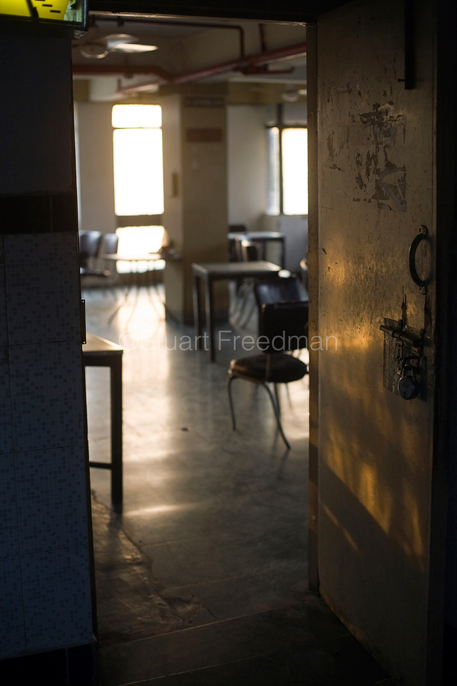
 

India - New Delhi - The door to the Indian Coffee House


India - New Delhi - A stained, wet table in the Indian Coffee House


India - New Delhi - A waiter's rag in a pool of late afternoon sunlight


India - New Delhi - Mr Baldev Kumar, smoking in the afternoon in the Indian Coffee House


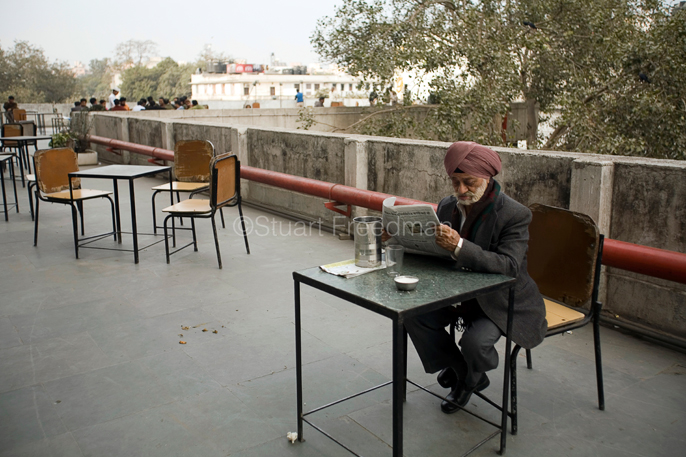
India - New Delhi - A man reads his morning newspaper on the terrace of the Indian Coffee House

Copy.Right?

I’m a big fan of The Travel Photographer’s blog and indeed I’ve been lucky enough to have my work featured there several times. It’s a lovely showcase.

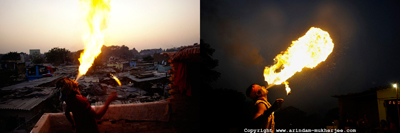
Imitation as they say, is the sincerest form of flattery. So imagine how flattered I felt when I saw a similar set to one that I’d previously had shown on that blog on a link to another photographer’s archive page who has also just been featured. Lovely. And published too – in M Magazine, the weekend supplement of The National in the UAE.

I shot my story about a decade ago on transparency film… seems like another age really, though I see that one of subjects, the wonderful Bhagwan Das Bhatt has lost a bit of hair. Obviously not his love of life (or a drop of the hard stuff – of which I remember joining him for one morning…) although I see he has decorated…

Actually, from the selection that I have here – my images are on the left by the way – very little seems to have changed. In fact what struck me was how similar, how… familiar they looked. An homage I’m sure…

Of course I am not suggesting that I am the only photographer that has ever shot in Shadipur – far from it –  Zackary Canepari shot it recently as I am sure have lots of people. For me though, the much underrated Australian photographer Philip Gostelow did it best (and before me) in black and white.

What links them though is their unique vision. Their ability to see things their way.

It was all their own work too… and so easy to find on the internet…


I suppose if you were interested in seeing original work then you could look at the set on my website here and you could also read my reportage here… all the words are, please note ©Stuart Freedman.

That’s copyright Stuart Freedman.

Thank you for your time.


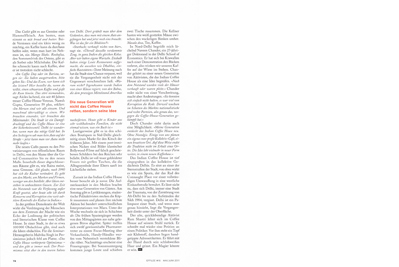
Effilee Magazine spread

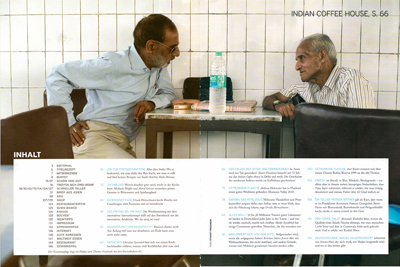
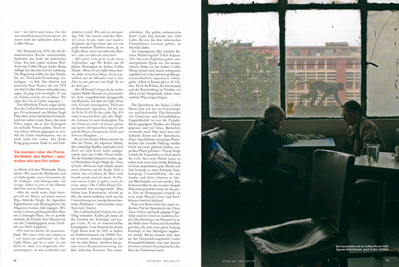
Here’s a recent tearsheet from the May/June 2011 edition of the rather lovely German Magazine, Effilee with my long term piece about the Indian Coffee House in New Delhi.

Effilee is a food and lifestyle magazine who commissioned the images and a 5000-word piece from me. The English translation can be found under the Writings section of my website here.

The piece is called The Palace of Monkeys and Memory


Delhi’s Red… errr… White Fort…

Well, according to the Daily Telegraph, conservation architects in Delhi have discovered that originally, a good deal of the Red Fort was originally… white. Quoting KK Mohammad, head of the Architectural Survey of India said the ‘Red Fort’ is a “misconception” because although its exterior ramparts are red sandstone “more of the Red Fort is white than people realise.” Apparently, the giant red stone sundial that is the Jantar Mantar was also originally all white too… ooops.


India - Delhi - Judduchkra Iqbal, a magician from the Kathiputli Colony in the Shadipur Depot slum dresses for a show behind the Red Fort
India - New Delhi - A garden seen through the arches of the Janar Mantar

New New Delhi

My good friend and colleague, Findlay Kember is having an exhibition of his work entitled New New Delhi in a couple of weeks and I urge you, if you’re in town to go and have a look. Findlay’s an old Delhi hand and a very talented photographer. Without his logistical and moral support over the last few years I certainly couldn’t have shot half of my work in the city.

Cricket!

In case you hadn’t heard – or had been made deaf by the firecrackers and screaming – India won the Cricket World Cup

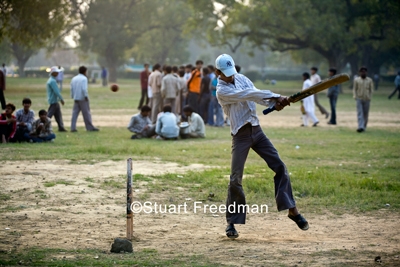
Not a huge fan myself but who can argue with 17% of the world’s population? Here’s a few of them in Delhi playing… cricket… the batsman here being a little less successful than a certain Mr Dhoni

India - New Delhi - Boys play cricket in the park at India Gate on a Sunday afternoon