Kathputli Colony’s last stand


I’ve written several times over the last few years about Delhi’s Kathputli Colony (or as I knew it, Shadipur Depot) – that Dickensian maze of street performers and magicians that somehow floats on the imagination of the city. This time however, it looks like the city will finally swallow the place. According to Tehelka Magazine, residents of the ‘illegal’ slum – some 3500 families that have been there for forty years – may have to move soon to a re-development far to the North. The site at Shadipur where the land was once worthless is now, as the city grows, worth a fortune. It was sold by the the Delhi Development Authority in 2009 to the Mumbai-beased Raheja Builders however, at what Tehelka suggests was seriously undervalued price to make way for a high rise developments. These would, it was promised, include social housing for the performers families. It seems though that even on paper, the proposed number of dwellings for the artists is far short of the actual number needed. Perhaps with some good reason, the artists families don’t believe that the authorities will make good on their promises to allow them back to the area when it is developed. The project is now stuck in limbo as the Delhi Urban Arts Commission has objected to it. The traditional performers are caught. If they move, they lose their homes and their livelihoods. If they stay, they are likely to be evicted and from previous scenarios that may well be violent. They know however that they are simply powerless actors in a city’s development, caught as they are between tradition and a very cruel version of modernity. Since I made a story in Shadipur nearly a dozen years ago, quite a few photographers have worked here and a film was even made of the struggles of the residents. In some senses it was an easy story; a fairy tale in a bleak metropolis. Most people’s recent treatment of it completely ignored the fact that as Delhi grows and divides even more sharply between those that produce it’s wealth and those that exploit it, the story is no longer about a quaint tinsel-town slum. It is about how Delhi will look in the future. It is about what kind of society India wants for its cities and its people.

In 2010 I wrote about the city’s sweeping of street vendors off the pavements before the Commonwealth Games and I mentioned the excellent book, Trickster City, a collection of writings by those at the sharp end of the slum clearances. As I wrote then

The irony is that many countries celebrate their street culture … and make them a tourist attraction: one has only to think of Singapore and Vietnam. Delhi’s depressing desire to imitate a corporate driven monoculture is certain to lead to a lessening of the city’s heritage.

As I’ve said many times here, I have no sentimental attachment to poverty and no Raj-tinted spectacles through which I view Delhi. I both hate and love the city but the scales are now tipped so far against certain sections of its people that I find it difficult sometimes to walk it’s streets and look some people in the eye.

You can see my original set from Shadipur here

I’ve decided to show some less well known images from the set – some that I have rediscovered. I hope you like them.
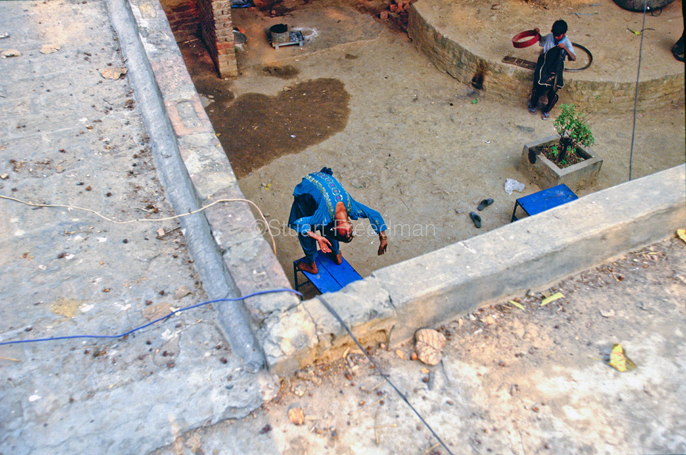
 

India - New Delhi - Reenu, 15 and her brother practice their contortions. Reenu and her family are trained by her mother, herself a former acrobat. The children, when babies, were stretched and contorted to make their bones pliable for the act. Shadipur Depot, New Delhi, India.The Kathiputli Colony in the Shadipur Depot slum is home to hundreds of (originally Rajasthani) performers. The artistes who live here - from magicians, acrobats, musicians, dancers and puppeteers are often international renowed by always return to the Shadipur slum.
India – New Delhi – Reenu, 15 and her brother practice their contortions. Reenu and her family are trained by her mother, herself a former acrobat. The children, when babies, were stretched and contorted to make their bones pliable for the act. The Kathiputli Colony in the Shadipur Depot slum is home to hundreds of (originally Rajasthani) performers. The artistes who live here – from magicians, acrobats, musicians, dancers and puppeteers are often international renowed but always return to the Shadipur slum.


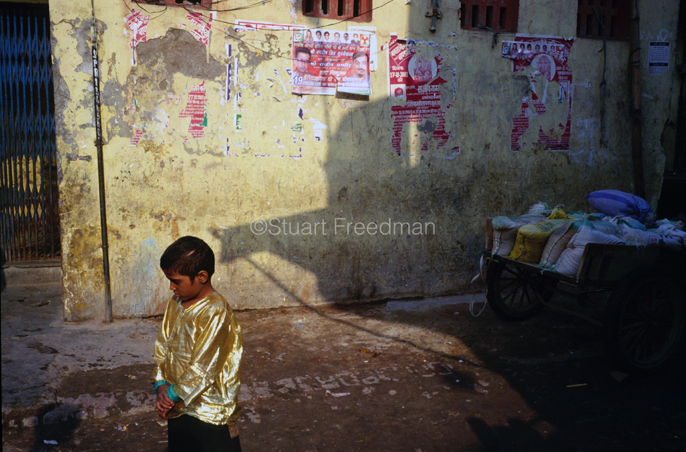
India - New Delhi - A performers son in a gold shirt, Shadipur Depot,
India – New Delhi – A performers son in a gold shirt, Shadipur Depot,


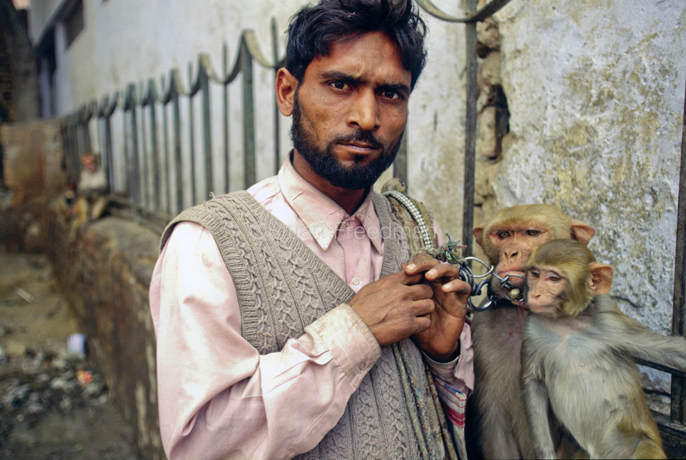
Indian - New Delhi - A man and his performing monkeys. The Kathiputli Colony in the Shadipur Depot
Indian – New Delhi – A man and his performing monkeys. The Kathiputli Colony in Shadipur Depot


India - New Delhi - Chand Pasha, a magician produces a bird from his sleeve
India – New Delhi – Chand Pasha, a magician produces a bird from his sleeve


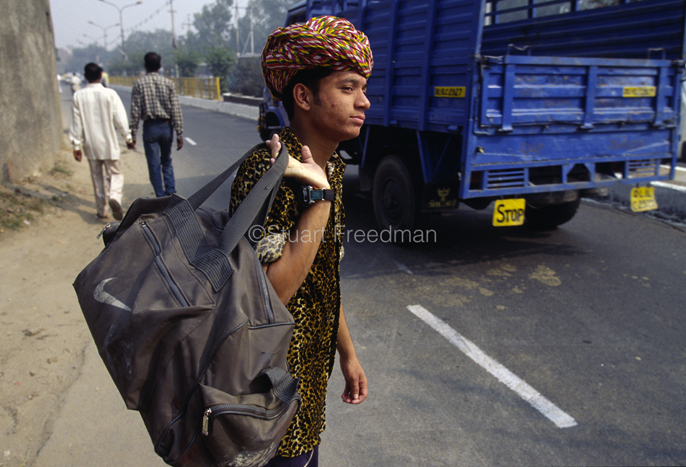
India - New Delhi - A boy on his way to perform his magic act at a wedding waits for a lift by the side of the road
India – New Delhi – A boy on his way to perform his magic act at a wedding waits for a lift by the side of the road, Shadipur Depot


London Traffic Wardens ‘dirty tactics’


The BBC have reported on dastardly ‘dirty tactics’ by London’s much loved and universally admired traffic wardens – I of course find it hard to believe that this could possibly be true of such a fine body of professionals – a bastion of fair play and decency…


UK - London - An argument with a wheel clamper during a training exercise where clampers are taught to diffuse a potentially violent situation
UK – London – An argument with a wheel clamper during a training exercise where clampers and traffic wardens are taught to diffuse a potentially violent situation

National Geographic – Miracle on the Hudson


As an increasingly nervous flyer, imagine my delight when I was commissioned last year to work as the still photographer for National Geographic TV’s film about the miraculous emergency landing on the Hudson river by US Airways Flight 1549…

I used to work a great deal for Channel 4 as a stills photographer in the ‘Nineties and early 2000s and there is a specific skill set that you need. You have to be quiet, you have to be quick and on this occasion, you had to be fine with paddling around inside (and outside) a plane submerged in a 3.5 million litre water tank in the middle of a field in the English countryside.

The truth is, on a set like this, you are suddenly the least important figure but you have to make sure that you shout loud enough to get the time and space for what your client needs. In that regard, Simon George the director was utterly charming and was generous with both time and crew. It also isn’t really about pictures that one personally likes because you are trying to make engaging images that will inform the viewer but here are a couple that I liked…


UK - Hampshire - Production stills from the making of "Miracle on the Hudson"
UK – Hampshire – Production stills from the making of “Miracle on the Hudson”

Special thanks to picture editor Nicole Cappello for being so lovely on the assignment organisation.

There are more images here but I leave you with an image far scarier than any plane crash…


photobbc


Tearsheet – Renegade Magazine


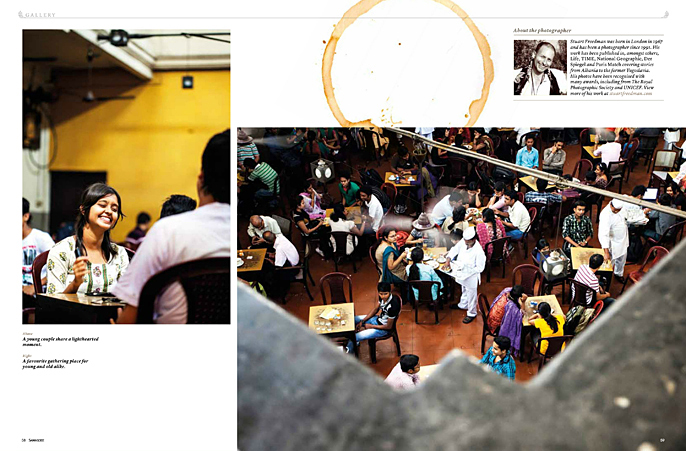
I’m delighted that one of my images is featured in a new travel magazine called Renegade. It’s small, beautiful and full of interesting stuff. Here’s my double page – an image The Tree of Life in Iraq.


Iraq - Basra - Boys climb the tree of Adam at Al Qurnah near Basra. The tre, according to legend marked the Garden of Eden, at the convergence of the Euphrates and the Tigris Rivers
Iraq – Basra – Boys climb the tree of Adam at Al Qurnah near Basra. The tree, according to legend marked the Garden of Eden, at the convergence of the Euphrates and the Tigris Rivers

A big lump of red


I feel the weather turning. The mornings are colder. I hate it. I need cheering up. Here’s a picture with a big lump of red in it to do that.


India - New Delhi - A stage set for a wedding with chairs and garlands
India – New Delhi – A stage set for a wedding with chairs and garlands


Why did I choose this image? Just chatting to Michael Regnier at Panos. Sparked a thought about a lyric – John Foxx’s Hiroshima mon amour. Wonderful… “Features fused like shattered glass, the sun’s so low/Turns our silhouettes to gold/Hiroshima mon amour”

No relation to Delhi of course, but that image of light… I can feel the warmth of the late afternoon sun in the big lump of red…


Palermo Palavar


In a blog post yesterday, I showed a very quiet image of a priest reading and walking around a cloister. Below is perhaps a more typical image of Palermo and (southern) Italy in general. It’s said that Italians can only speak with their hands and the New York Times has a recent, rather prosaic piece here on that very subject.

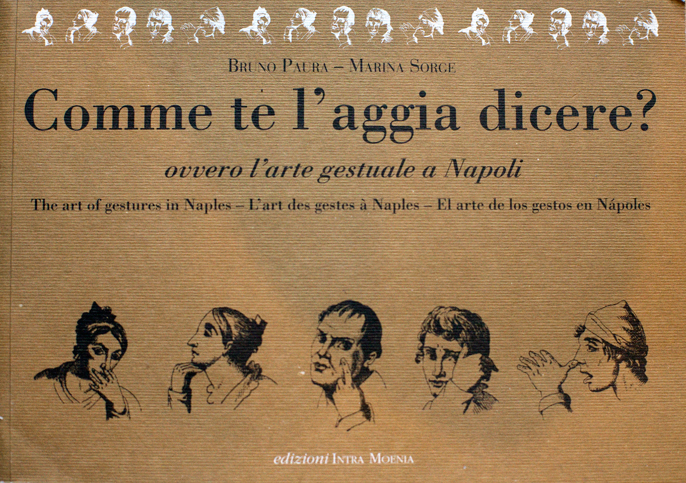
The consensus seems to be that somehow, in such crowded places people needed a further way to make themselves heard. Perhaps. Some years ago I stayed at a rather expensive hotel in Naples and they gave me as a gift, a lovely book (see below) about the secret meanings of Italian hand gestures. There are hundreds: some pleasant, some decidedly unpleasant. It occurred to me that in one sense it was a code, a language of the initiated in the way that rhyming slang was to the Victorian Cockney. A very real way to subvert authority (and of course the law) and build an identity that was separate and uncontrollable. Naples like Palermo are exquisite places full of art and beauty but are also brutal and fearful. Norman Lewis in his highly entertaining Naples ’44 recounting his time in the Intelligence Corp in that city remembers constantly being offered women by their families in order to eat. Peter Robb in his exquisite Midnight in Sicily (and later in his Street Fight in Naples) shows a labyrinthine society with bestial corruption at it’s very heart and violence meted out by mafiosi at every level. A society moved by an unofficial nod of the head, parallel governments. Secrets. Robb lived in Southern Italy, the Mezzogiorno for years. He immersed himself in the language and the culture and his writing shows the depth and commitment of that effort.

A photographer wandering the streets is usually a little different. He walks and sees a moment developing in the chaos of colour and movement and steps towards it. He takes two pictures and the image changes. He might have recorded something significant, something trivial but he has little hope of understanding anything on a deeper level than the symbol in the image – a gesture between two (or in this case three) people. The words he hears don’t mean anything – the gestures might be theatre. He might be ignored, or as in this case, sworn at and threatened. The language he is trying to communicate is equally symbolic as the hands of an Italian yet inevitably painted with a thicker, less subtle brush. He just sees the signs the hands make, not necessarily the subtlety of the meaning. He might interpret those signs as meaning something completely different – something as part of a visual culture that he has absorbed. Photography is as valuable but blunter than words. A more democratic code. Perhaps.

By the way, the title of this post comes from yet another language. Another collected word from another country. Palava(r). A word that I used to hear in West Africa all the time. Apparently it is Portuguese in origin. I didn’t know. Non capisco. So many words, so many countries. A mixture, an argument, a conversation. A beautiful mess. Just like Palermo.


Italy - Palermo - A man and a woman in a heated conversation in a lane behind the Capo Market
Italy – Palermo – A man and a woman in a heated conversation in a lane behind the Capo Market


jhvjhvdjhw
The Art of Gestures in Naples


Kissing in Sicily


… seemed to be a good deal of kissing on the island recently…


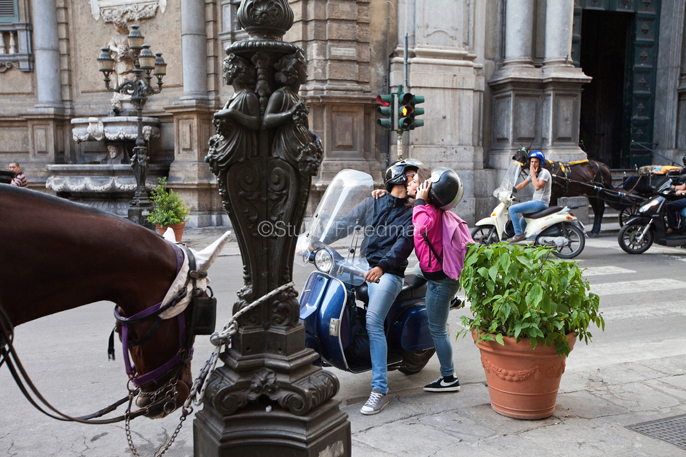
Italy - Palermo -  A young couple kiss as they part by horses used to ferry tourists at the Quatro Canti (officially known as Piazza Vigliena) a Baroque square
Italy – Palermo – A young couple kiss as they part by horses used to ferry tourists at the Quatro Canti, a Baroque square


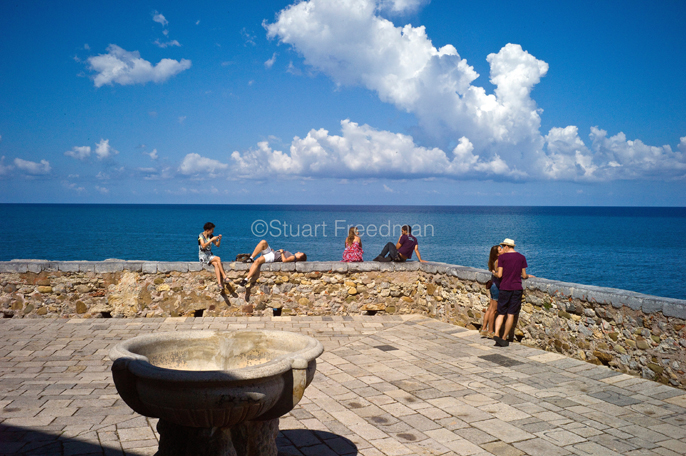
Italy - Cefalu - Tourists photograph, chat and kiss on the sea wall
Italy – Cefalu – Tourists photograph, chat and kiss on the sea wall