Suffer little children

According to NATO’s senior civilian representative, Mark Sedwill, children are safer in Kabul than in Glasgow.

Of course the statement is nonsense – the NATO propaganda machine in full spin mode – but he actually raises some interesting points.

There is appalling child poverty in Glasgow (as there is in much of the UK) but little from bombs or direct warfare. As Justin Forsyth from the NGO Save the Children put it, one in four children living in Afghanistan will die before they reach the age of five.

“Last year was the deadliest for children since late 2001, with more than a thousand killed because of the conflict” and “a staggering 850 children die every day, many from easily preventable diseases such as diarrhoea or pneumonia, or because they are malnourished”.

Actually, what Sedwill meant was that significant and direct violence was not the greatest risk for (especially) Kabul’s children despite them living on the edge of a live war zone. In other respects of course Kabul children illustrate perfectly the issues of young lives in the Developing World. They are forced by and large to forego what a childhood looks like to us.

A significant issue that divides children in Glasgow and Kabul is work and Afghanistan has a large proportion of working children. The development of the idea of childhood as we know in the West is a product of the Enlightenment and Victorian social reform. For many of the world’s children, work is not a matter of choice and going to school is an unaffordable dream. Families send their children to work through economic necessity not profit. We may find this deeply unpalatable but the world is as it is, not as we wish it to be. In recognition of this situation, there are small scale moves to unionise child workers and give those who have no choice, a voice and some rudimentary protection. The National Movement of Street Boys and Girls in Brazil is one example, there is another in Delhi. A basic conviction of these movements is that through community participation and the development of democratic practice, poverty can be challenged. All of these schemes involve lengthy intervention by social workers but represent a real-life (if partial) solution to the reality of working children.

Here are some pictures from Kabul and Delhi that illustrate the issues…

Afghanistan - Kabul - a boy sells snacks and drinks on a stall in the street with his mother
Afghanistan - Kabul - A child mechanic welds a metal frame in a car breaker's yard
India - New Delhi - A child worker scavenges for plastic to recycle (and sell) from a train carriage in New Delhi Railway Station
India - Delhi - A meeting of a Child Trades Union on the streets facilitated by adult outreach/social workers

A small step

It seems that the Pope has signaled that condom use might be justified to stop the spread of HIV and AIDS. A brave, welcome and clearly significant decision that will certainly save thousands of lives.

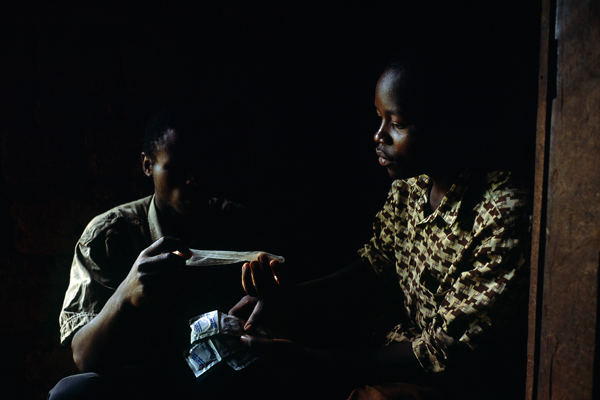
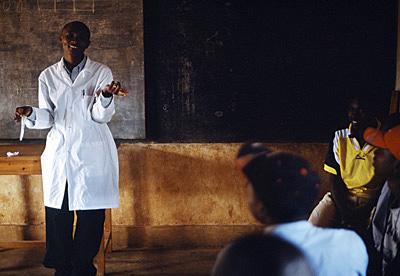
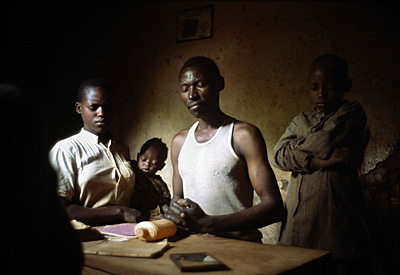
Rwanda - Kibileze - Emmanuel Singizumakiza, a health educator shows a boy how to use a condom

David Cameron and the Leni Riefenstahl moment…

Roger Tooth in today’s Guardian makes an excellent point when he comments about David Cameron, the Prime Minister appointing two visual journalists as ‘vanity photographers’.

“Yes, we know what their kitchens look like, thank you”

“But we’ve had a surfeit of “behind the scenes” pictures of both coalition leaders; too many pictures of Cameron gurning at his new baby have led to this sort of material becoming a devalued currency”.

Quite. As if having the majority of the unquestioning press having bought into the ‘spending review’ to pay for an economic crisis caused by the gamblers of international finance wasn’t enough, Cameron’s ’embeds’ – both of whom have done extensive work for the Conservative Party – have been paid for from the public purse. At a time of alleged attrition. Both have been recruited as civil servants on short-term contracts thus avoiding the normal competitive employment process.

As the true heir to New Labour spin, Cameron (whose only other job was as a PR executive at Carlton) has similarly surrounded himself with ‘advisors‘. The issue here is that unlike the White House Press corp or Presidential photographers, there is little explanation about the context, the voracity or the quality of the ‘historical’ archive that these two will produce. Artists have always had wealthy patrons and the excuse is usually vanity, but to have such control of images at the heart of government seems to me a paranoia par excellence.

I’m sure that the images will be carefully crafted to show just how much the former PR man, married to an Astor and his chancellor (a man who will inherit a knighthood and the fortune of the present Baronet of Ballintaylor) are really just like us and are also having to tighten their belts. We are all in it together … I’m also sure that the images will be used by lazy picture desks clamouring for ‘intimacy’. Interesting though that the prevalence of military embedding in the wars in Iraq and Afghanistan has spread and, in the age of ‘citizen journalism’, just how much the Centre is able to get its message out in exactly the way that it wants.

Sometimes however, there are more important things than photography and journalism. At a time of the dismantling of the post-war consensus, the welfare state and perhaps the very idea of a society perhaps we as citizens should ask of these appointments: cui bono – who benefits?

Here are some pictures from an assignment for the Times Magazine on David Cameron that I think were intimate, human and, despite my personal opinions, I gave what I felt to be a fair and balanced impression.

Because that was my job.

As a journalist.

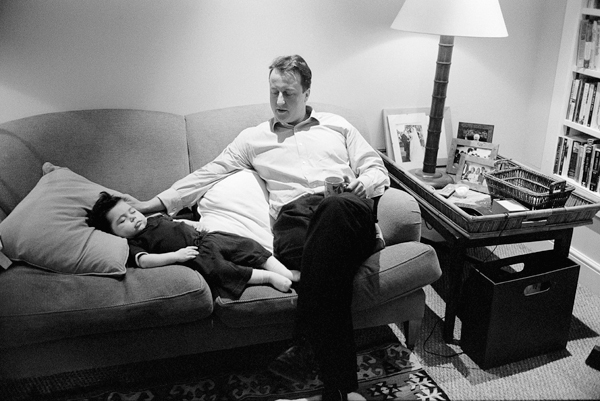
UK - Oxfordshire - David Cameron, Prime Minister and leader of the Conservative Party, with his late son Ivan, who suffered from cerebral palsy and epilepsy

UK - Oxfordshire - David Cameron, Prime Minister and leader of the Conservative Party

UK - Oxfordshire - David Cameron, Prime Minister and leader of the Conservative Party carries his daughter whilst pouring coffee at home
UK - Oxfordshire - David Cameron, Prime Minister and leader of the Conservative Party at a local meeting

UK - Oxfordshire - David Cameron, Conservative Party Leader and Conservative MP for Whitney in his constituency office

“I am not a witch…” Well, actually I am…

So it’s Halloween. Rather than mentioning the ideologically incoherent ramblings of Republican Senate contenders embarrassed by youthful dabblings, I thought I’d dig through the archive and find someone who actually had a coherent world view, albeit a Pagan one.

Step forward the rather brilliant Shan Jayran, pagan scholar, therapist and mum who ran the House of the Goddess temple in Balham during the ‘Nineties. I photographed her for a Channel 4 documentary and then again as part of a project about British Pagans at Home. She was terribly helpful and gave me lots of contacts in the Pagan world.

UK - London - Shan Jayran, Pagan High priestess at the House of the Goddess

Contrary to it’s serious spiritual roots, Halloween is now an American, corporatised globalised money pot that from my curmudgeonly vantage point gives children a dubious moral ability of being able to demand something from you at point of a threat. But I digress…

Here’s a couple of more pictures from the series

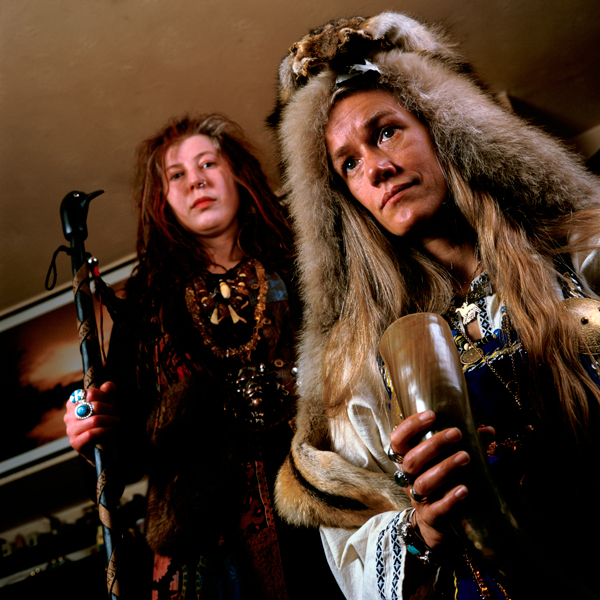
UK - London - Freya Aswin, a follower of the Norse God, Odin

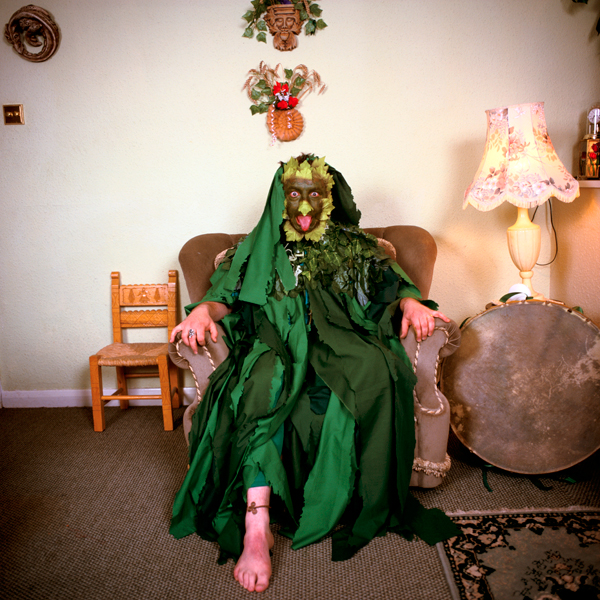
UK - London - The Green Man of Catford

It’s been a long while since I looked at these images but what I remember from meeting these people was how charming and generous they were. These were people who, whether you agreed with them or not, had immersed themselves in a spiritual search to find their own personal understanding of the world. Unlike the deluded minions in the Tea Party movement doing the unwitting bidding of real dark masters like the Koch brothers.

Selling the family silver

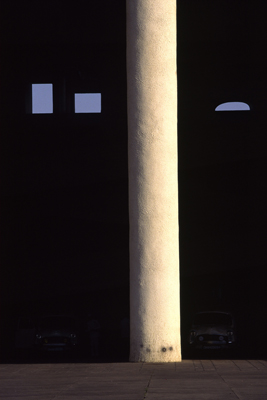
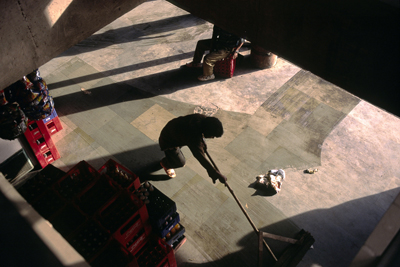
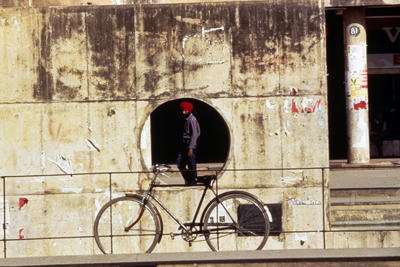
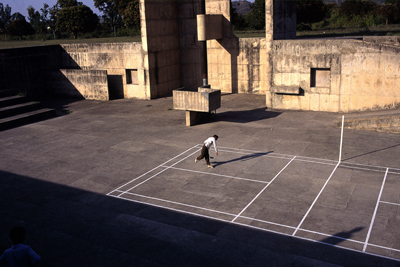
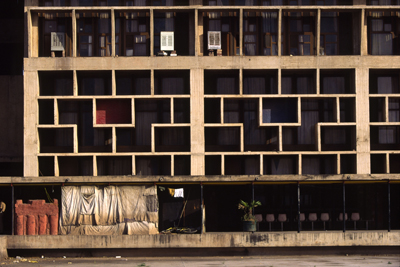
I first went to Chandigarh in 1996 to shoot a story for the Independent on Sunday Magazine. A fascinating place, it was chosen as the capital of the Punjab after India lost Lahore to Pakistan after Partition. Nehru famously said that Chandigarh should to be “unfettered by the traditions of the past, a symbol of the nation’s faith in the future.” The originally commissioned architect, Matthew Nowicki, died in a ‘plane crash and the rather difficult Charles-Édouard Jeanneret-Gris replaced him. Jeanneret-Gris was better known as Le Corbusier. He made a bold modernist statement of concrete and angles and by the time I got there, it had started to decay nicely under the unforgiving Indian sun. It was however a rather wondrous if slightly odd beauty to behold: a thoroughly Indianised but planned city that worked. Recently it has transformed itself again into a successful metropolis of New India: plush bars, hotels and now has India’s highest per capita income. However, shortly after I left (and I had nothing to do with this, honestly) some enterprising wags started selling off anything that wasn’t bolted down to Western collectors desperate for anything Corbusier. Lamps, manhole covers and as much furniture as could be, ahem… ‘lost’ have been turning up in auction houses mostly in the UK. Andrew Buncombe in today’s Independent has a good write up on it and how many in the Indian government have been trying to lobby to stop this rather sad episode.

Anyway, here’s some of my favourite pictures…

India - Chandigarh - A man cycles past The Open Hand statue
India - Chandigarh - A column and window of the Parliament Building
India - Chandigarh - A man carries a bundle of clothing past the High Court building
India - Chandigarh - In the middle of the day, an Indian man sleeps amidst the concrete of Chandigarh
India - Chandigarh - Chief architect Jaspreet Prakash and map of Chandigarth
India - Chandigarh - A man sweeps the pavement in Chandigarh
India - Chandigarh - A man walks through a pedestrian zone in Chandigarh
India - Chandigarh - A man sleeps under some stairs in the modernist city of Chandigarh
India - Chandigarh - A man bowls a cricket ball to his friend in a car park
India - Chandigarh - A man rests by a concrere pillar in Chandigarh
India - Chandigarh - Detail of the High Court building

Good news from Africa

I was heartened by the news on Friday that Sub-Saharan Africa is leading the global decline in new HIV cases. It seems that countries in this region have seen an infection rate drop of 25% apparently due to better education and preventative measures.

A few years ago, I was commissioned by Positive Lives to spend a month on the Rwandan/Burundian border looking at the lives of those affected. The Rwandan government had made great strides in their efforts to get people tested and educated about the risks but crucially about how to live and cope with the illness. The work won the Amnesty International Award in 2006.

As I said at the time, it seemed to me that the Rwandese, packed tightly into their borders, had learned the real meaning of forgiveness and acceptance.

Rwanda - Kibileze - Saidi Ruhimbana (40) comforts his wife Anastasie Hwamerera (40). Both have AIDS but Anastasie is very sick. In order to pay for medicine for their treatment they have spent their savings and taken some of their children out of school. Saidi was formerly a builder but is now too weak to lift anything heavy
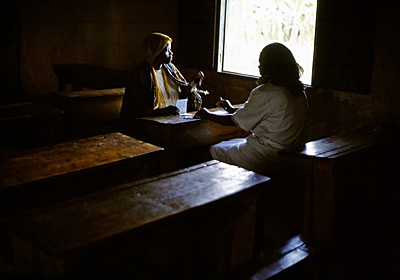
Rwanda - Kibileze - Theogene Niyongana gives a lecture on HIV and AIDS to a group of people waiting to be tested for the virus at Kibayi Health Centre. By addressing their status, sufferers learn how to increase their life expectancy.
Rwanda - Kibayi - A woman receives her AIDS test result with shock at Kibayi Health Centre. The result is 'undetermined' which means she will have to be re-tested
Rwanda - Kibileze - A woman is given the results of her HIV test at Kibayi Health centre
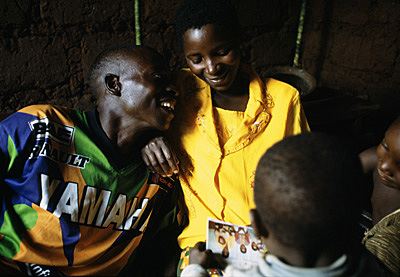
Rwanda - Kibileze - Jean Pierre Sibomana (31) who is HIV positive, laughs with his wife and children (all HIV negative) about his wedding photographs. Kanage village

Rwanda - Kibileze - Teacher Potamienne Komezusenge (37) plays with her youngest child. She contracted HIV from her husband who died of the diesase and is buried in the back garden under a wooden cross. She says "As long as I feel strong, I feel OK emotionally... sometimes there is stigma here... but the biggest problem is money". Kibileze, Rwanda
Rwanda - Kibileze - Emmanuel Singizumakiza, a health educator shows a boy how to use a condom
Rwanda - Kibileze - Narcisse, who is HIV positive and the president of his local AIDS Association - Girimpuhwe ('Have compassion') - prays with his family at home at dawn before they start work in the fields. Kibileze, Rwanda
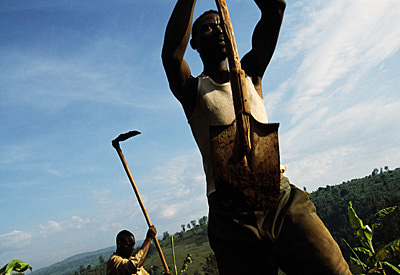
Rwanda - Kibileze - Narcisse, who is HIV positive and the president of his local AIDS Association - Girimpuhwe ('Have compassion') works in his fields

Without labouring the point, it was a pleasure to be taking pictures that weren’t simply showing people dying. I see so many photographers making work that purports to show an explanation of a subject but actually is little more than graphic cliche of a situation. That, at a time of crisis for visual journalism, isn’t enough. It isn’t enough to simply point a camera at someone and say ‘how terrible’. It says much that everybody has a camera and thinks that they have a right to call themselves a journalist by photographing the nearest horror without context or understanding. We earn a dubious and tenuous ‘right’ to report the world to itself by entering into a dialogue with it: an impossible covenant with a subject that tries not to perpetuate stereotype, easy answers or sloppy conclusions. It isn’t enough to go and photograph beggars on the streets of India for example to further our own purposes under the cover of journalism. We had better have a damn good reason to invade people’s spaces and lives. If you need an example of what is decent and committed about documentary practice look no further than that of my former Network Photographer colleague, Gideon Mendel who has spent more than a decade committed to the portrayal of HIV/AIDS in exactly the way I am talking about.

It’s just not cricket

Oh dear. If there’s one  thing that unites Pakistani’s it’s cricket, so it’s with great sadness that I read about the twists and turns of the latest betting scandal involving the touring team at the moment. I never really ‘got’ cricket: I’m a Spurs fan (it’s a world of pain…) and grew up playing football. I did however make two reportage features about Imran Khan over the years. As for trying to actually photograph cricket – or any other sport for that matter – it’s a fantastic skill that I don’t possess.

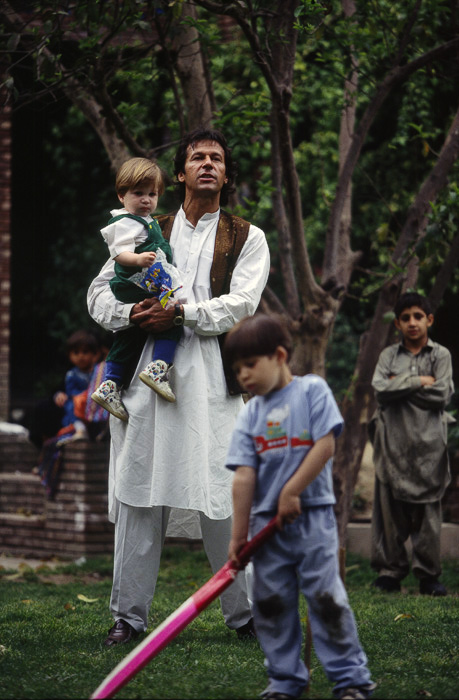
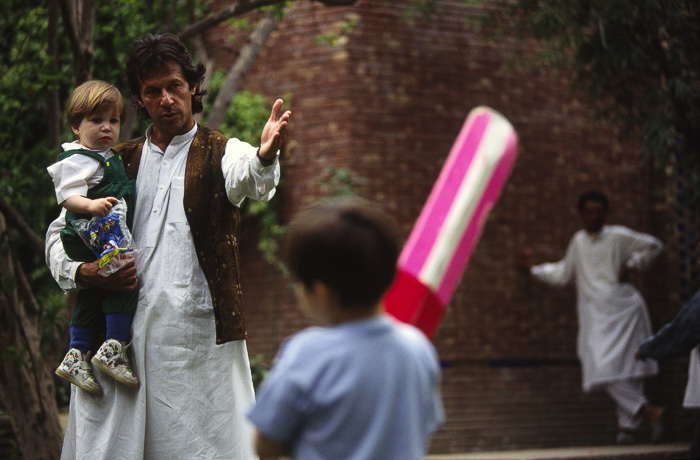
Here’s a couple of images of him at home in Lahore (in more peaceful days) explaining the intricacies of the game to his nephews…

Pakistan - Lahore - Imran Khan the former Pakistan International Cricket player at home with his nephews playing cricket
Pakistan - Lahore - Imran Khan the former Pakistan International Cricket player at home with his nephews playing cricket.

The women and the mountain

In an extraordinary and wonderful turn of events, I have just heard that India’s Environment Minister Jairam Ramesh has blocked Vedanta Resources’ controversial plan to mine bauxite on the sacred hills of the Dongria Kondh tribe.

Vedanta Resources, a UK-registered ftse -100 company wanted to mine The Niyamgiri Hills in Orissa which are sacred to  Dongria Kondhs, a protected tribal group of ‘original’ Aboriginal peoples.

According to Survival International, Mr Ramesh said Vedanta has shown a ’shocking’ and ‘blatant disregard for the rights of the tribal groups’. The Minister has also questioned the legality of the massive refinery Vedanta has already built below the hills.

I wrote about this back in May 2009 (India – Vedanta’s shame) and also for Tehelka in late 2007 (Knocked Out by Bauxite).

Here are some images from the story.

India - Orissa - Dabu Limajhi, a Dongria Kondh tribal woman in Kankasarpa village, shares a joke with friends in her house
India - Orissa - Dabu Limajhi, a Dongria Kondh tribal woman in Kankasarpa village
India - Orissa - A Dongria Kondh woman carries a pot of water on her head in front of the Vedanta plant, Lanjigargh

India - Orissa - sunset over the Niyamgiri hills. The hills are sacred to the Dongria Kondh and are worshipped as a deity

Iraq Inc. or how a withdrawl is really not…

Today’s newspapers are full of jubilant American troops leaving Iraq after completing their mission to bring peace, democracy and their ‘way of life’ to the uncivilised. A tremendous success. The ‘surge’ worked and all those Allied soldiers didn’t die in vain.

Well, not true. The war, born of a lie, born of greed and evil has been a disaster for America and for the world. There is also no end to the violence: more civilians died last month in Iraq than in Afghanistan. There is no political settlement and the Iraqi Resistance is as strong as it ever was. The Occupation hasn’t ended, it’s just been privatised. Apparently there around 10000 armed mercenaries in the country working in the State Department’s interests and the American’s want this increased (Blackwater helpfully calls this ‘the coming surge’). Of course the advantages of having cheap mercenary armies made up of contractors (notably from the Developing World) are clear: cost and (non) accountability. In any case, someone has to patrol the oil fields under (long, probably illegal) contract to the Americans and their friends joyfully raping Iraq’s natural resources.

Still, we haven’t really seen this. What we have seen is the war as viewed from the back of American and (sometimes) British armoured cars. It’s rare to see or hear Iraqi voices despite the war lasting seven years and we’ve generally had to endure the war through embedding and spin. The few cracks in the information blackout have been enlightening but as rare and as elusive as peace itself.

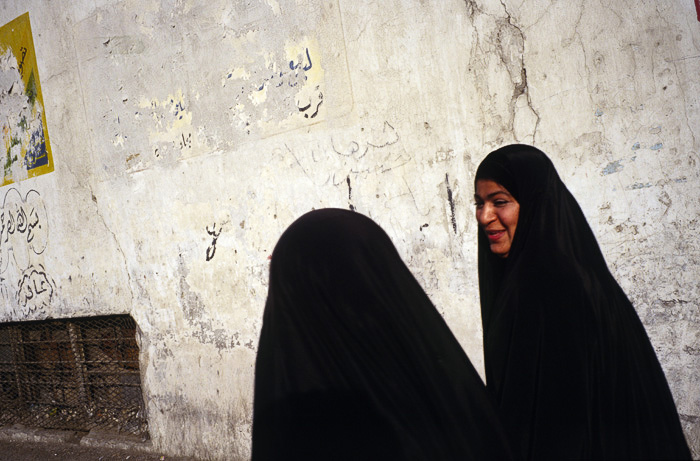
Iraq - Baghdad - Two women wearing chador gossip and laugh on the street

Iraq- Basra - Boys climb what is know locally as the tree of Adam at Al Qurnah near Basra. The Holy Tree, according to the legend marked the Garden of Eden, at the convergence of the Euphrates and the Tigris Rivers

Iraq- Baghdad - A man in the Oum Kalsoum cafe

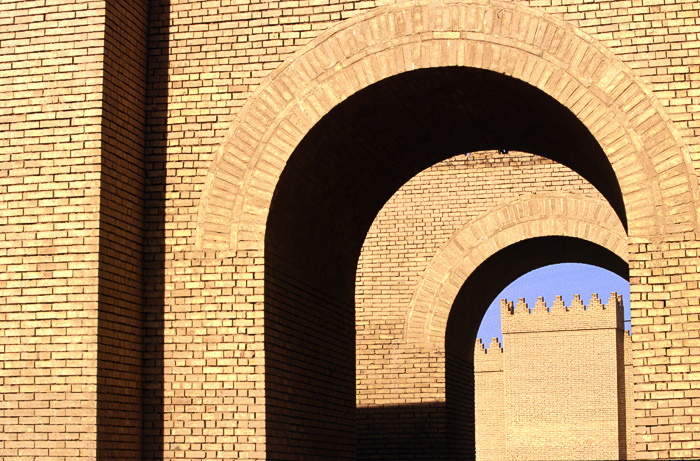
Iraq - Babylon - The restored walls of the Temple complex. Babylon, an ancient city when mention in the Bible is dated at around the 24th Century BC. In 1985, Saddam Hussein started rebuilding the city on top of the old ruins (because of this, artifacts and other finds may well be buried under the city), investing in both restoration and new construction. To the dismay of archaeologists, he inscribed his name on many of the bricks in imitation of Nebuchadnezzar. One frequent inscription reads: "This was built by Saddam Hussein, son of Nebuchadnezzar, to glorify Iraq".

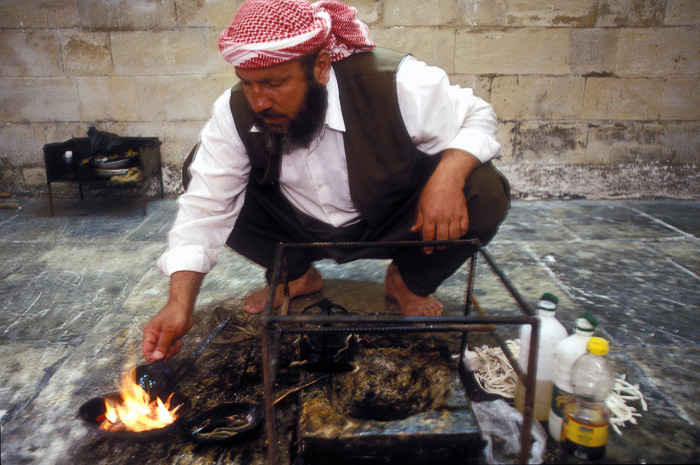
Iraq - Mosul - A Yezidi priest lights a lamp in a religious service at a Yezidi temple. The Yazidis believe in God as creator of the world, which he placed under the care of seven angels the chief of whom is Melek Taus - the Peacock Angel. Speculation that worship of Melek Taus was worship of Satan (who fell) have resulted in Yezidi's being persecuted as 'devil worshippers' throughout their history and persecuted.

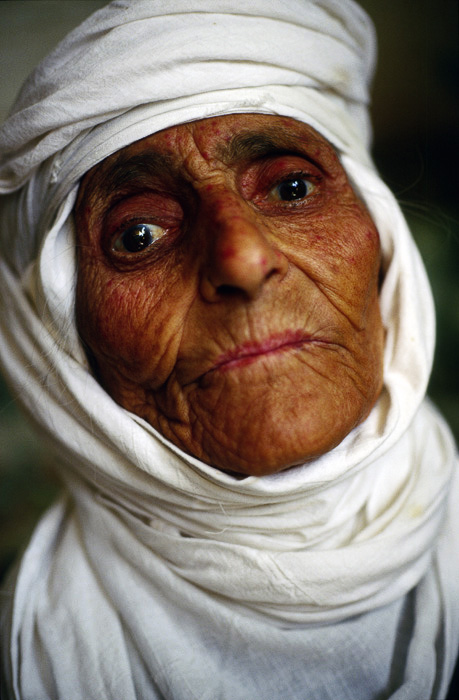
Iraq - Mosul - An old Yezidi woman

Iraq - Ur- A man walks past the ziggurat at Ur, supoosedly the city of the prophet Abraham's birth. Ur was a principal city of ancient Mesopotamia. The Ziggurat was dedicated to the moon and was built approximately in the 21st century BC by king Ur-Namma. In Sumerian times it was called Etemennigur.

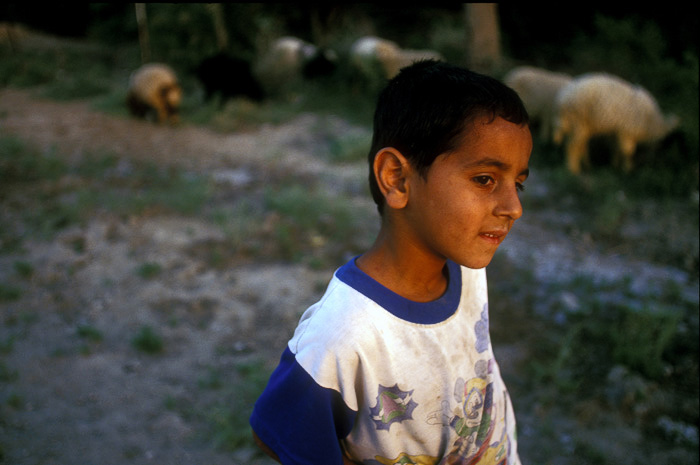
Iraq - Basra - A shepherd boy and his flock
Iraq- Basra - A shepherd boy and his flock

Iraq - Samarra - A man climbs the minaret of the Al-Mutawakkil mosque. The first mosque, built in 836, has now disappeared; it was replaced in 849-852 by a new mosque built on a grand scale, which for a long time was the largest mosque of the Islamic world. It continued to be used until the end of the 11th century.

Iraq - Basra - A boat on the River Euphrates at sunset

Shadow People

A taste of a new project that I started to work on this year about the mental health crisis in Delhi is showcased by my agency Panos here.

The poor have fallen out of the narrative of modern India. Delhi, the nation’s capital, has been transformed into a vibrant, wealthy metropolis. But where extremes of wealth tread, illness and despair follow, and Delhi is today in the grip of a mental health crisis.

An estimated 20 million Indians suffer from serious mental disorders, many of them hidden from public view by their families. Delhi is a city of migrants and every day thousands more arrive to try to escape the poverty of the village. Many will remain homeless, divorced from the traditional family structure and culture. Delhi’s army of homeless is conservatively estimated to number around 100,000 people. Mental illness in this group is treated either by violence from the rest of the community or traditional ‘quack’ or faith healers. Delhi has had a traumatic history. The city was destroyed by the British in 1857, by Partition nearly a century later and riven by anti-Sikh violence in 1984 after Indira Gandhi’s murder. It seems to me that Delhi has lost a great deal of its culture and sense of itself; a dangerous thing to lose. A psychiatrist might contend that by its rampant consumerism it is trying to ‘feed itself’ an identity.

Nimesh Desai, head of psychiatry at the New Delhi-based Institute of Human Behaviour and Allied Sciences, estimates that India has fewer than 4,000 psychiatrists, and even fewer general mental health professionals. ‘The lack of psychiatrists is bad and the shortage of psychologists, social workers and councellors is even more alarming,’ Desai told me. ‘It meets about five to seven percent of the projected need.’ Desai has however attempted a solution. After eight years of intense lobbying, his team have started to conduct weekly open air surgeries for the mentally ill homeless in Old Delhi. He is accompanied by a High Court judge who assesses each patient to decide whether or not Desai can inject them with anti-psychotic drugs. On rare occasions he sections them to his mental hospital in the east of the city.

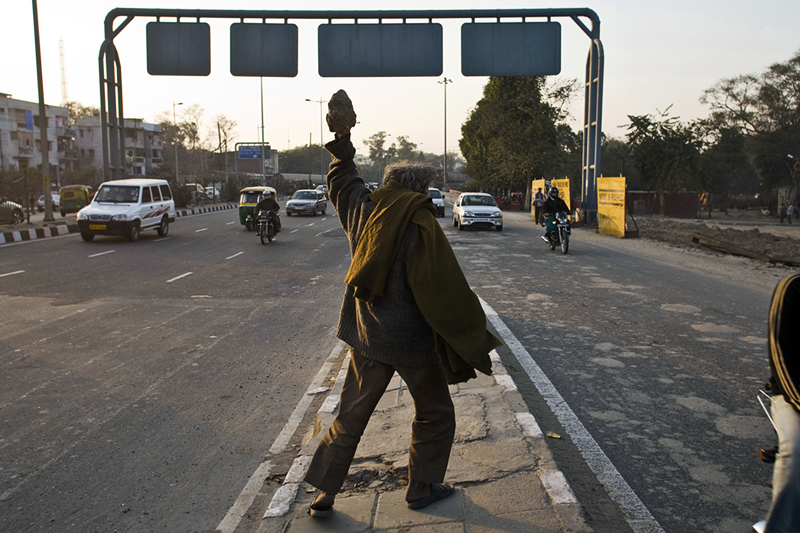
India - Delhi - A homeless mentally ill man picks up a rock to throw at passing traffic

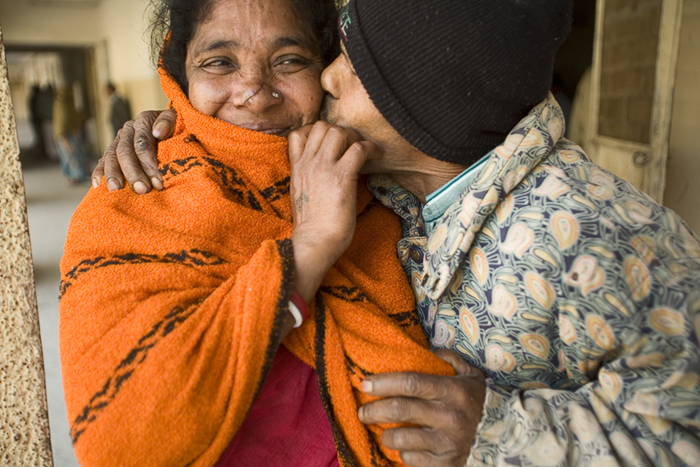
India - Delhi - A mentally ill man kisses his wife who visits him in the secure ward

India - New Delhi - A Pir, exorcises a spirit from a mentally troubled who believes herself possessed at a dargah (shrine) in South Delhi