The Indian Coffee House to close…again…again

The Hindustan Times has reported that the Indian Coffee House in New Delhi, my favourite haunt for a dozen or more years, will now finally close because of unpaid rent. According to the ‘paper, “…the civic agency has finally told them to vacate the premises by the end of the month.” Pratap Singh, manager of Indian Coffee House is quoted as saying “We owe them nearly Rs 55 lakh as rent and interest apart from the monthly rent. We don’t have so much of money as our sales have dipped over a period of time.”

I first wrote about the Coffee House on this blog in June 2009 when I compared it to the great post-war classic cafes in London. Only last month Effillee magazine in Germany published a spread of my work shot over two years in the place. In that piece I tried to explain how I felt that the Coffee House was a kind of critical aide-memoire to Post Independence Delhi. I said that:

The Indian Coffee House is buried deep in the collective memory of Delhi. Perhaps never as flamboyant as its cousins in Calcutta on Bankim Chatterjee Street and Chittaranjan Avenue where Satyajit Ray et al held court, its presence is like a reincarnating deity. Stuck on a corner of one of the radials of the Colonial city, seen from above it is like a spur, preventing the wheel of Connaught Place fully turning and making itself into a Western High Street. It locks down an older geometry like a portal to the past. It will not let Delhi, always a city of trauma (from the destruction of Old Delhi to the Sikh riots of 1984) forget itself. Delhi is a palimpsest of cities (seven, eight, nine?) and if you look carefully the past is barely below the surface.

I am sad that a place that I cherished so dearly will close but sadder – and more concerned for the staff – cut adrift in a cruel city that has no time for the poor and those down on their luck. I am also sad because the Coffee House with a little imagination could  have worked. Malvika Singh, that most extraordinary of Delhi-wallahs (and publisher of Seminar) who I interviewed for the Effillee piece argued, quite simply that with a little imagination (and a bit of a paint-job) someone could turn the place into something special and profitable whilst preserving the character of the place. Only last week I ate in Dishoom – a very good pastiche of a Mumbai street cafe in London. Someone recognised that people will pay good money to eat somewhere that is not an Americanised chain selling plastic, mediocre food and expensive coffee. Someone obviously realised that people might want to spend time in places like this that have at least a stab at a cultural resonance…

The loss I think will be keenly felt – the last time they tried to close the cafe there was a minor public outcry. I can only hope that this will happen again and someone will step into the breach. I suspect however, that, as the unnamed official in the Hindustan Times piece salivated, “Once they vacate we will start the procedure of renting it out and we are hoping to get a rent at a rate of at least R400 per sq ft”, this really will be the end. The shame is of course that the coffee shop’s closing is a metaphor for what India and Delhi in particular, is running headlong into: a mishmash of Market-led, corporate half-truths that will be the disaster that this short term, only-for-profit thinking has brought all across the world. Delhi doesn’t need another fake Western, air conditioned soulless hang-out that caters for the tiny minority that can afford to eat there living out some 1980’s fantasy of wealth. It has plenty of those already.

The plain truth is that the closure marks the victory for an imported mindset that knows the price of everything but the value of nothing.
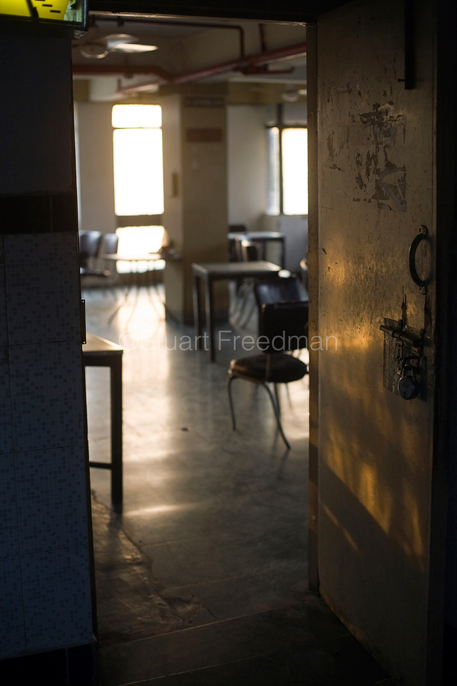
 

India - New Delhi - The door to the Indian Coffee House


India - New Delhi - A stained, wet table in the Indian Coffee House


India - New Delhi - A waiter's rag in a pool of late afternoon sunlight


India - New Delhi - Mr Baldev Kumar, smoking in the afternoon in the Indian Coffee House


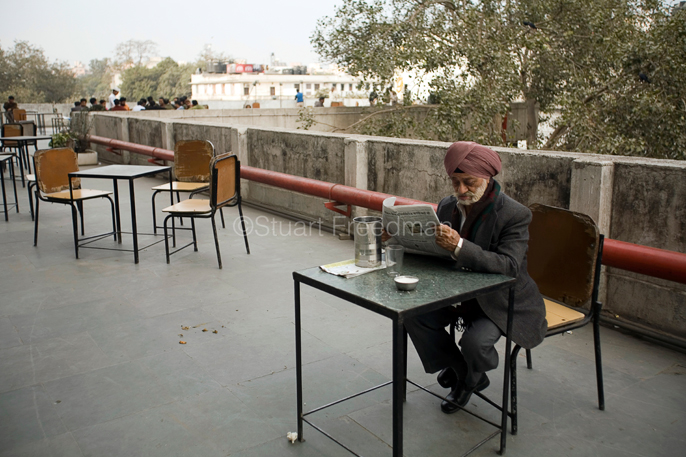
India - New Delhi - A man reads his morning newspaper on the terrace of the Indian Coffee House

The most expensive of cities…

For the second year in a row, The Mercer Group has confirmed that the world’s most expensive city to live in is Luanda in Angola. What the report didn’t make clear was that the city was also one of the most savagely segregated cities in terms of wealth: a tiny native elite and foreign nationals working in oil, sitting atop a mountain of desperate poverty.

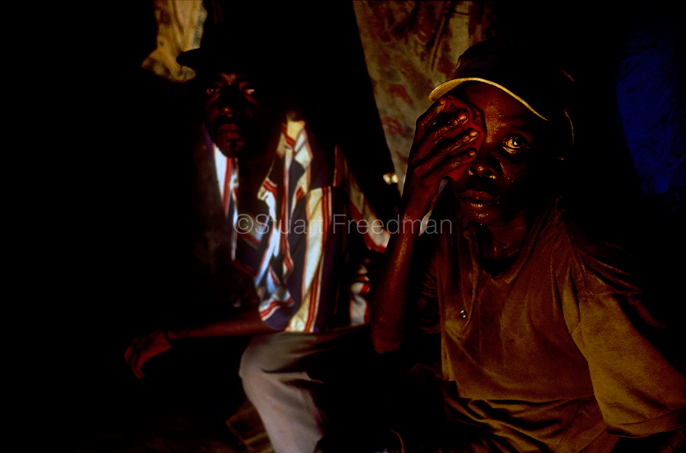
I’ve worked in Angola a couple of times and was always shocked at the disparity.  I had, until I looked back at these images, forgotten spending an hour watching Dasilio and his mate fruitlessly begging rich Luandans for small change. I had forgotten the smell inside the tent of Bule’s eye, hanging by a thread, rotten and useless in his head. I had forgotten Engracia sitting in the ruins of her home, destroyed illegally by property developers. I had forgotten the harsh light and the long shadows. Shame on me for forgetting.

My few good memories come, as they often do, by listening to the music on the streets. A decade ago I discovered the delightfully named Bonga via a very talkative taxi driver in the city. That led me in search of saudade – a very difficult Portuguese word that translates roughly as a longing for something lost: a melancholy. You can hear it in the husky Morna of Cesária Évora and you can certainly hear it in the Fado of Carlos do Carmo. You can hear it on the breaking Atlantic waves whispering along the shore of the Marginal where both the rich and poor promenade – but for different reasons…

Here are some images.


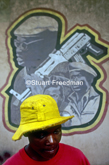
Angola - Luanda - A street boy stands in front of a poster of Agostinho Neto, a hero of the Angolan revolution


Angola - Luanda - Two friends, Bule Manuel (r) from Uige and Joachim from Huambo live together in a tented camp for Internally displaced persons (IDP's) just outside of Luanda, in Viana. Both have lost their sight due to the war and Bule's eye is rotten in it's socket. The two men care for each other as best they can


Angola - Luanda - Engracia Lourenco in the ruins of her home in a middle-class suburb known as Golfe 2. In December 2002, men, presumably from the government forcibly demolished privately owned homes on this land. The land titles legally held by the occupants were ignored.


Angola - Luanda - A man walks through a shaft of sunlight on a Luandan street


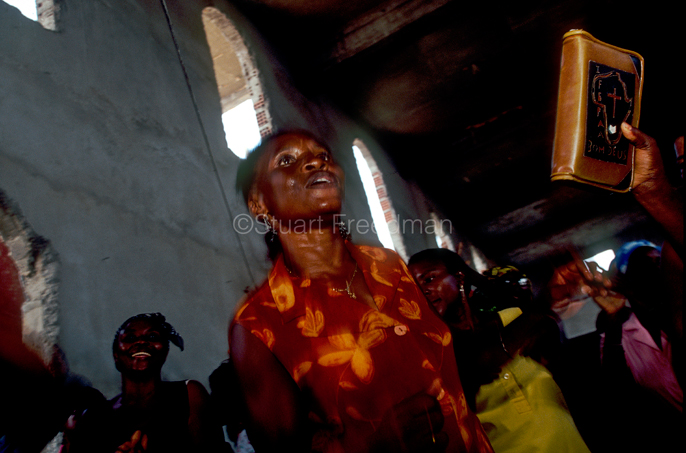
Angola - Luanda - A woman works herself to a religious frenzy during an evangelical service in the Prenda slum


Angola - Luanda - Dasilio and his friend, both injured during the Civil War, beg from wealthy Luandans


Angola - Luanda - Wealthy Luandans dance the night away at Xavaroti's nightclub in the Vila Alice area of Luanda.


No Pasaran

This Saturday, July 2nd 2011 marks the 75th anniversary of the Spanish Civil War and events will be held at memorials all across the UK. This annual commemoration honours the 2,500 men and women from the British Isles who served in the International Brigades as soldiers or medics, of whom 526 were killed in Spain. They were among 35,000 volunteers from around the world who rallied to the Spanish Republic as it tried to put down the fascist-backed military revolt.

In the London ceremony on the South Bank, I believe that two surviving veterans plan to attend. They are David Lomon, who was captured with other members of the British Battalion during fighting in Aragón in the spring of 1938 and spent six months in the notorious prison camp of San Pedro de Cardeñas, near Burgos, and Thomas Watters, who served in the Madrid-based Scottish Ambulance Unit. I hope I can be there.

In 1996 I wrote and photographed a piece for the Independent Magazine about the veterans of that war.

Here are three images that I found from my archive.

No Pasaran


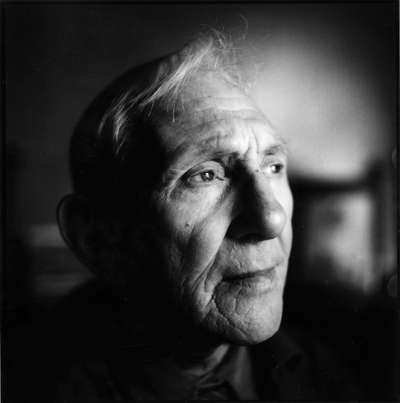
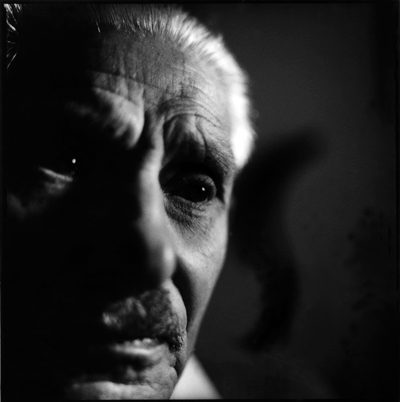
UK - London - Alf, Spanish Civil War veteran
UK - London - Michael Economides, Spanish Civil War veteran
UK - London - Max Collins, Spanish Civil War veteran

Copy.Right?

I’m a big fan of The Travel Photographer’s blog and indeed I’ve been lucky enough to have my work featured there several times. It’s a lovely showcase.

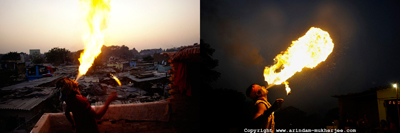
Imitation as they say, is the sincerest form of flattery. So imagine how flattered I felt when I saw a similar set to one that I’d previously had shown on that blog on a link to another photographer’s archive page who has also just been featured. Lovely. And published too – in M Magazine, the weekend supplement of The National in the UAE.

I shot my story about a decade ago on transparency film… seems like another age really, though I see that one of subjects, the wonderful Bhagwan Das Bhatt has lost a bit of hair. Obviously not his love of life (or a drop of the hard stuff – of which I remember joining him for one morning…) although I see he has decorated…

Actually, from the selection that I have here – my images are on the left by the way – very little seems to have changed. In fact what struck me was how similar, how… familiar they looked. An homage I’m sure…

Of course I am not suggesting that I am the only photographer that has ever shot in Shadipur – far from it –  Zackary Canepari shot it recently as I am sure have lots of people. For me though, the much underrated Australian photographer Philip Gostelow did it best (and before me) in black and white.

What links them though is their unique vision. Their ability to see things their way.

It was all their own work too… and so easy to find on the internet…


I suppose if you were interested in seeing original work then you could look at the set on my website here and you could also read my reportage here… all the words are, please note ©Stuart Freedman.

That’s copyright Stuart Freedman.

Thank you for your time.


M F Husain

It’s with great sadness that I heard this morning that the rather wonderful Indian artist MF Husain passed away during the night. I wrote about him last year as he’d taken Qatari citizenship but continued to keep a house in London. Doubtless those shrill self-appointed, hateful voices from the Hindu religious right will be celebrating his demise – and how brave they were from keeping a old man from dying in his own country. I remember him as a courteous and thoughtful subject, delightfully playful during the evening I spent with him in apartment in Mumbai a decade ago. A charming man and an astonishing talent.


India - Mumbai - MF Husain, India's greatest modernist painter at his studio in Bombay. Before him is a picture of his muse Maduri Dixit, a film actress


The cruel radiance…

Some of my images have been published in a new book on politics and photography called the Cruel Radiance by Susie Linfield.

In it, Linfield attempts to refute the argument that engagement with violent imagery makes the reader turn away. She argues that only by engaging with photojournalism and it’s unsettling commitment to documenting atrocity can we understand the world. It is an interesting time to take this line. Modern photojournalism has in the last few years, experienced a bleeding-into from the art world. I’ve written before about a cold un-connectedness that portrays people as butterflies under glass: a seeing that examines every facial detail but tells us nothing about context or the subject’s humaness. Linfield uses the example of Nachtwey, Peress and Capa in what I see as an unabashed attempt to reassert a traditional documentarian’s engaged position against the argument that all journalism of this kind is voyeuristic. Despite my work being included here, I do have reservations about documenting atrocity, but maybe the pendulum has swung far enough the other way: our sanitised, modern media tells us that only celebrity and money and excess are important. What happens over there is just not understandable. Linfield says that it is and it must be. Photojournalism is in need of a defender who can reclaim a moral relevance against Postmodern criticism that has done much to discredit the voracity of photography. We should not “drown in bathos or sentimentality,” Linfield says but “integrate emotion into the experience of looking.” We “can use emotion as an inspiration to analysis rather than foment an eternal war between the two.”