Growing Old in India


I have, for a long time been photographing around aspects of a changing India. These images, currently being syndicated, show a gentle side of a huge demographic change in that country. It is estimated that by 2020, the elderly population in India will nearly double to 150 million people. Better medical care and low fertility rates have made the elderly the fastest growing section of society. New wealth and urbanisation are starting to erode the foundations of traditional values and kinship. Today fewer than 40 percent of Indians live in so-called “joint families” where brothers share the family home with their parents even after they are married. In a country where only 10 per cent has any form of pension, “old people have to work till they die” says Mathew Cherian, Help Age India’s chief executive. Even specialised medical care is rare, as India has only two medical colleges in the entire country teaching geriatric care. After the Asian Tsunami, HelpAge India set up a pioneering experimental scheme called the Tamaraikulam Elders’ Village (TEV) in Tamil Nadu that initially cared for elderly people displaced by the tragedy. Today, the village is a self-sustaining community providing a family environment where more able-bodied residents assist the less able-bodied. The village provides 100 older people with a safe place to live, free healthcare, emotional security, a good diet and professional support.

I was fortunate enough to visit for a few days and make some work there. Work that for personal reasons has an enormous resonance for me.

Despite great effort (especially on the part of Jon Jones at the Sunday Times Magazine) they remain unpublished. Of all the stories that I have shot over the last few years, I really want to see this run somewhere: not because my images are so wonderful but rather because of what they show and the issue that they address.

My agency, Panos is syndicating a 35 image set that can be viewed here.

Here are seven of my favourites.
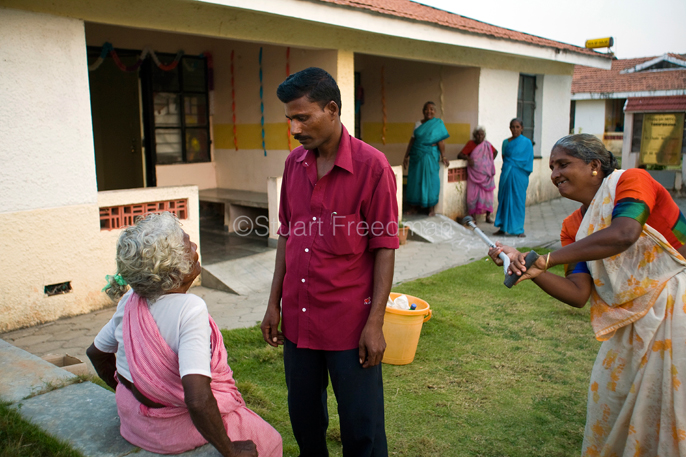


India – Tamil Nadu – Meena, 65 pretends to hit a male nurse with a crutch after he teased Janagi, 76 who is always cleaning around the village. Tamaraikulum Elders village, Tamil Nadu, India


India – Tamil Nadu – Manjani, 75 inside his room.


India – Tamil Nadu – An elderly resident shares a joke with her social worker in her room.


India – Tamil Nadu – Ganapadi and his wife, Khrisaveni residents in their room.


India – Tamil Nadu – A daily exercise class for residents.


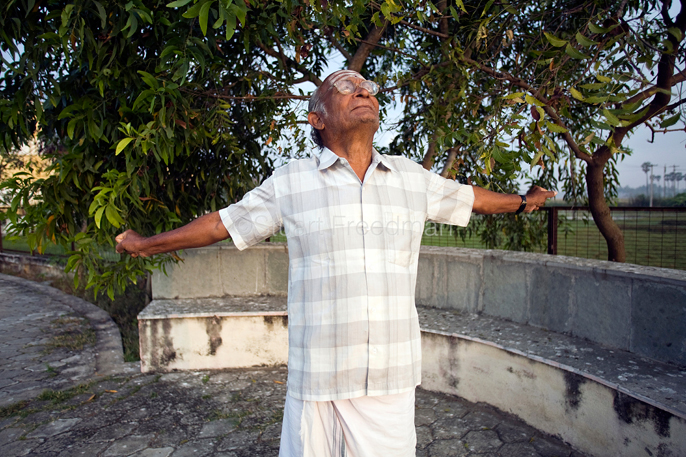
India – Tamil Nadu – An elderly resident stretches and takes the morning air at dawn by the lake at the Tamaraikulam Elders’ Village


India – Tamil Nadu – Meena, 65, an elderly resident, makes a fuss of one of the villages two dogs


Smithsonian Magazine – Cycle Opera

Earlier this year, I was commissioned by Smithsonian Magazine to photograph a really interesting story – an opera based on the life of Albert ‘Lal’ White an Olympic cycling champion in the 1920s.

Because of the magazine’s schedule the rehearsals were photographed long before costumes or props were really ready and unfortunately, none of these images (some of my favourites) were included in the final spread.

I work vary rarely in England and have never been to Scunthorpe (or Hull for that matter) but had a wonderful time largely due to James Beale‘s great company, Sue Hollingsworth‘s boundless enthusiasm and Kirsty Halliday‘s great organisational skills. Lastly, I should thank Smithsonian’s Associate Photo Editor, Jeff Campagna for sticking with me when I expressed disbelief that they actually wanted to send me to Scunthorpe… (which was pretty nice to be fair) when I was convinced he must have meant Sri Lanka…


UK – Scunthorpe – Jamie Beale, director of Cycle Song an opera about Albert ‘Lal’ White a champion cyclist photographed in front of the town’s steelworks


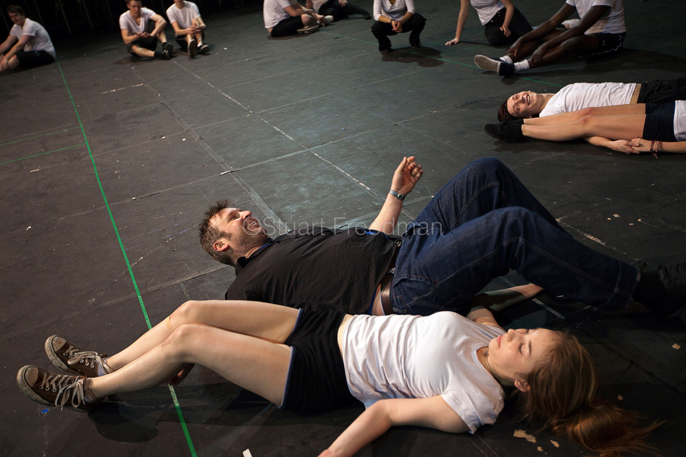
UK – Hull – Director Jamie Beale rehearses drama students from Hull University for their parts in the forthcoming production of Cycle Song in the Gulbenkian Theatre


UK – Hull – Drama students from Hull University rehearse for their parts in the forthcoming production of Cycle Song in the Gulbenkian Theatre


UK – Scunthorpe – Sue Hollingsworth, head of the Scunthorpe Cooperative Junior Choir leads a rehearsal for a production of Cycle Opera at Henderson Avenue Primary School


UK – Scunthorpe – A young girl forgets her lines at an audition for the production of Cycle Opera at Henderson Avenue Primary School


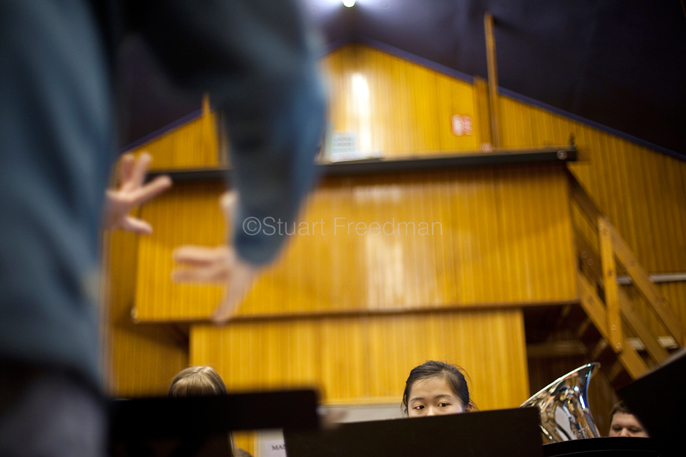
UK – Scunthorpe – Andrew Garbutt, Head of Music at the John Leggot Centre conducts members of the Youth Concert Band during rehearsals of Cycle Song. John Leggot Centre


UK – Scunthorpe – A young musician, part of the Youth Concert Band pulls faces during rehearsals of Cycle Song at the John Leggot College


UK – Scunthorpe – Erica Hardy leader of the Second Concert Band of the Youth Concert Band leads rehearsals of Cycle Song at the John Leggot College


UK – Scunthorpe – Two schoolgirls laugh and chat after gaining choir parts during auditions for a production of Cycle Opera at Henderson Avenue Primary School


UK – Scunthorpe – Schoolgirls chosen for the choir as part of the production of Cycle Opera practice for the first time in costume in the playground at Henderson Avenue Primary School after a thunderstorm


The future of the rag-pickers


According to a piece in the Guardian, it seems that authorities in Delhi are piloting a project to tackle the city’s enormous waste problem but the solution may affect those whose livelihood depends on it. Currently, waste is sorted manually by an informal army of men, women and children and then passed on to middle-men to sell or recycle. Three new plants (one at Ghazipur) will, it is hoped, sort the 8000 tonnes of Delhi’s daily waste automatically. It is estimated that more than 50,000 people work in this informal sector (known as ‘rag-pickers’) in and around the capital. The work is terrible and dangerous but for a significant section of the transient population of one of the world’s fastest growing cities, it is at least a living.

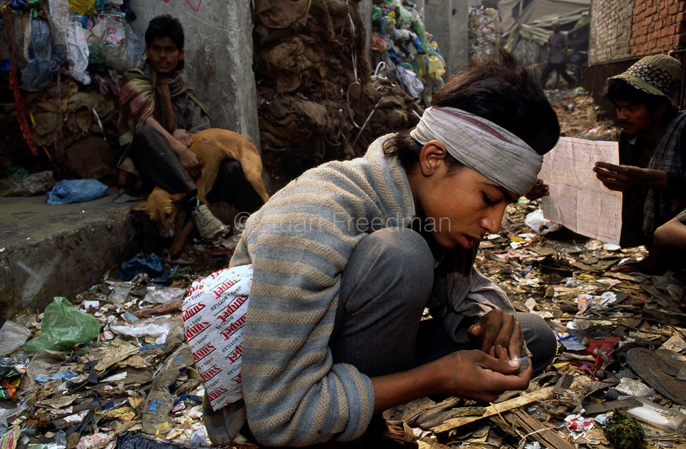
Over the years, I’ve photographed and written about many of the city’s rag pickers who exist in a twilight, Dickensian world ignored by almost everyone, quietly making the city function in a most human but terrible way.


India – New Delhi – Buddhi Lal, 30, a rag-picker, works before dawn collecting refuse to recycle and resell. On a good day he can make perhaps Rs150-200


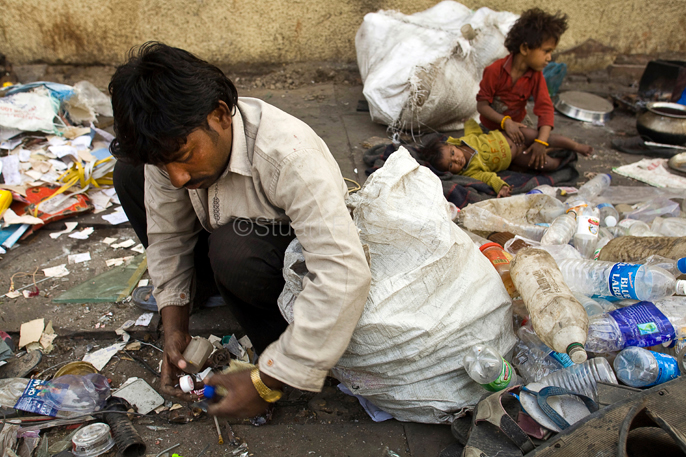
India – New Delhi – Buddhi Lal, 30, a rag-picker with his small children playing behind him on the pavement, sorts the refuse that he has collected during his dawn round to sell


India – New Delhi – A child rag-picker collecting plastic bottles (and anything else he can scavenge) from the carriage of a train at New Delhi Railway station


India – Delhi – A child rag-picker cleans his fingernail with an old razor blade at a rubbish depot in Old Delhi


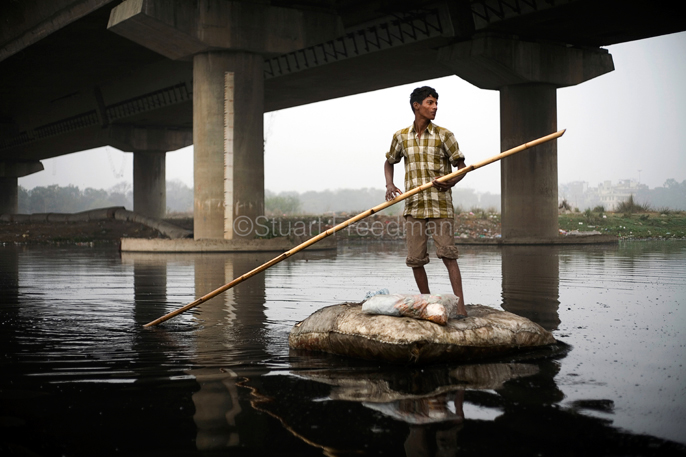
India – Delhi – A boy scavenger on the Yamuna River on a home-made raft of sacking and polystyrene. By dragging a magnet through the filthy water he collects scrap metal to sell


London sees a rise in rough sleepers

UK – London – Friends, Claire, 36 and Edwin, 61, both homeless, talk after a soup run organised by a Christian Charity on the Strand


The Broadway Homeless charity have just reported that London has seen a 43% increase on people sleeping rough in the capital from last year. The only glimmer of home in this figure is that 70% of those aren’t sleeping out for the second night due largely to the actions of charities like Broadway and increased work from outreach teams. This, despite Boris Johnson’s pre-election pledge to ‘end rough sleeping by 2012’. According to a Guardian report in April this year, £5m – underwritten by central government – was diverted from the Mayor’s budget for rough sleepers, to ‘other purposes’. Expect worse to come if proposals to remove housing benefit for under 25’s come to fruition.

There is a clear link between London’s rents becoming more and more unaffordable for large sections of the population and these figures. London is often referred to as a divided city. It isn’t. It is now many cities. Extraordinarily wealth in the centre, guarded and cosseted by technology and private security (tested and honed on the battlefields of Iraq and Afghanistan) swimming in an ocean of increasing poverty – material and aspirational – that finds its dreams impossible. All of this underwritten by a facetious, poisonous narrative of unfulfilled personal responsibility and fecklessness.
According to Stuart Hall, cities of the nineteenth century and twentieth centuries were monuments to Imperial power: motors of industrial production and trade. Globalisation has significantly reshaped London and the people sleeping on its streets (or the thousands a breath away from it) as inconvenient dislocations from an industrial to a service economy dictated to by modern day robber barons fixated on personal wealth and profit. I write so much about the Developing World, Delhi in particular (and recently Athens) that it is easy to neglect what is literally under my feet.


Alhambra


Spain – Grenada – Detail of the hammam in the Palace of the Alhambra


Spain – Grenada – Architectural detail of the Palace at the Alhambra


Spain – Grenada – Details of Arabesque columns inside the Alhambra Palace


Spain – Grenada – Detail of a stone path


Spain – Grenada – Detail of an arch in the Court of the Lions, Alhambra Palace


Spain – Grenada – Detail of Arabesque arch, Alhambra Palace


Spain – Grenada – Detail of Arabesque arch, Alhambra Palace


Spain – Grenada – Detail of the pool of the Partal in the Alta Alhambra


Spain – Grenada – Shadow of roof tiles on a wall at the Alhambra Palace

Delhi’s water mafia

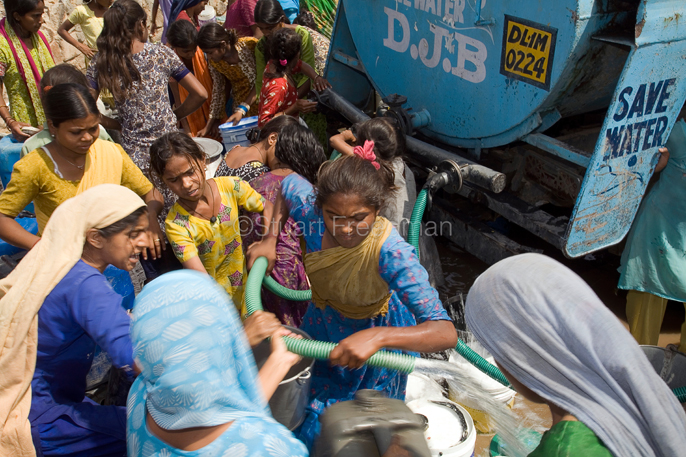
As Delhi labours under relentless 45 degree heat, the availability of water is as ever, a battleground. According to India Today (quoting an investigation by The Mail) reporters have uncovered a nexus of corrupt Delhi Jal Board (the local authority that looks after water in the city) employees and private tanker operators offering water for sale at inflated prices. Delhi, like many Developing World cities has a particularly rickety infrastructure when in comes to water supply. Illegal drilling of underground aquifers and horrendous pollution mean that at the best of times water supply is erratic. Add in seemingly endless low-level corruption and you have a perfect storm. I made a film about Delhi’s water wars a couple of years ago for Channel 4. You can see it here. As I said at the time, for the middle classes, access to water is an expensive and miserable inconvenience but to the poor and the slum dwellers, it is literally a daily fight. As my images show…


India – New Delhi – Slum dwellers scramble for water in Jai Hind Camp. The camp is home to perhaps 3000-4000 migrant workers from all over India. It has no water supplies at all so once a day, the Municipal JAL Board truck delivers some water. There is never enough for the expanding population to go around and some are left with nothing.


India – New Delhi – Women at the Kusumpur Pahari slum fight for water after a tanker delivery. Built more than thirty years ago the slum has no running water or sewage facilities. The only water supply come from the Municipal JAL Board water trucks that visit several times a day. The deliveries are supposed to be free but in reality, residents must pay bribes to have the water delivered.


India – New Delhi – A woman pushes her bike home after filling many cans from a water tanker in Kusumpur Pahari.


India – New Delhi – Middle class housewives in the Vasant Kunj area wait for water to be pumped into their water tanks from a JAL Board tanker. Vasant Kunj is one of many places in New Delhi that has frequent loss of mains water and relies on such infrequent tanker deliveries