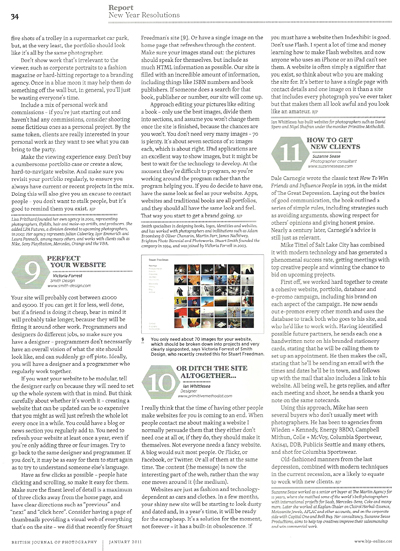
Pleased that the BJP has used my new website designed by Smiths as an example of one of it’s New Year Resolutions of how to ‘survive and prosper’ in 2011… Here’s the page
Category: Blog


The fine people at Photoshelter (which hosts my archive) have an interesting discussion at the moment called Getting Photographers and Non Profits together that mentions my work in Lebanon via PhotoPhilanthropy.org.
It’s always good to feel that you may have contributed something positive…
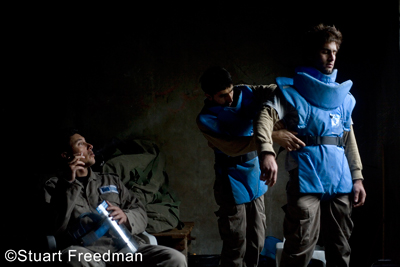
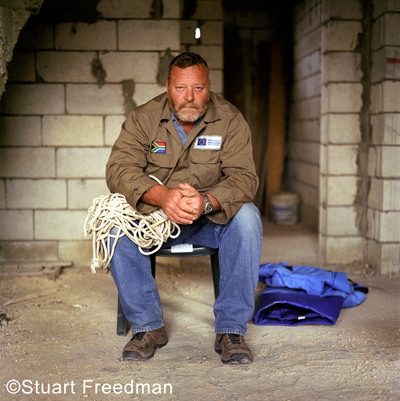
Stuart Freedman Photographs the work Handicap International to affect Lebanese Policy Change
“Handicap International prides itself on having collaborated with Stuart Freedman on several occasions, the last one to date being his reportage in south Lebanon in 2007 that resulted in a book and an exhibition, both titled ‘Clearing for Peace’. We have granted Stuart Freedman permission to use freely the outcome of this collaboration, hoping that this fantastic body of work receives as much recognition as possible.
Stuart Freedman’s photographic work about the cluster munition issue in south Lebanon has been instrumental for us to lobby decision-makers, diplomats and governmental authorities so that they decide to ban these weapons. The exhibition has traveled to major cities of the world, when and where international negotiations on cluster munitions took place. On such occasions, the book was also distributed to the people involved in the discussions and to media representatives. This series of international conferences came to a conclusion in Oslo on 3 December 2008, when an international treaty banning cluster munitions was signed.”
Sylvain Ogier
External communications Manager
Handicap International
Here are a few images from the set:


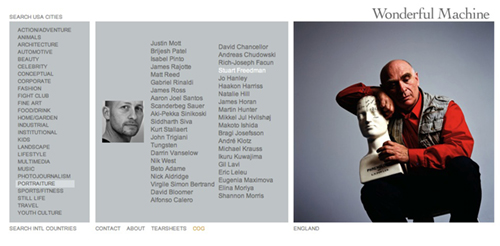
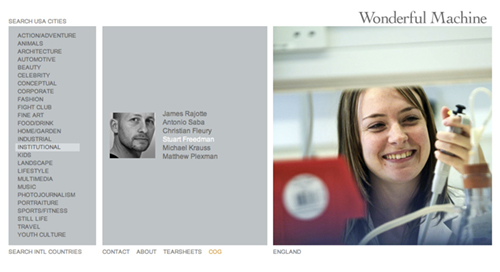
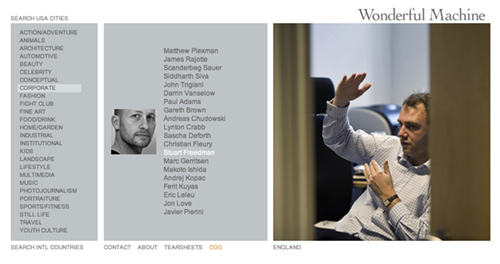
I’m very proud to announce that I am now represented commercially by Wonderful Machine in America.
I have a varied folio that includes work portraits, corporate, food/drink, travel and institutional.
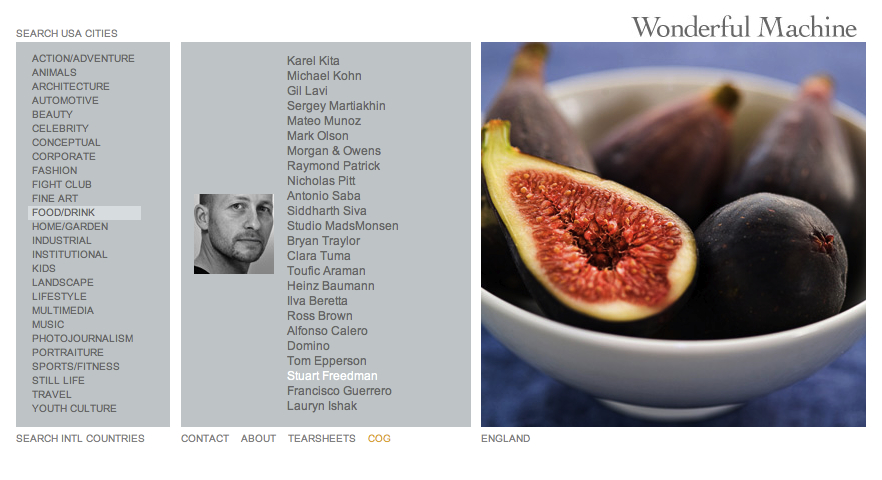
I’m looking forward very much to working with them. Here’s some screen shots of my online folio for them.


According to NATO’s senior civilian representative, Mark Sedwill, children are safer in Kabul than in Glasgow.
Of course the statement is nonsense – the NATO propaganda machine in full spin mode – but he actually raises some interesting points.
There is appalling child poverty in Glasgow (as there is in much of the UK) but little from bombs or direct warfare. As Justin Forsyth from the NGO Save the Children put it, one in four children living in Afghanistan will die before they reach the age of five.
“Last year was the deadliest for children since late 2001, with more than a thousand killed because of the conflict” and “a staggering 850 children die every day, many from easily preventable diseases such as diarrhoea or pneumonia, or because they are malnourished”.
Actually, what Sedwill meant was that significant and direct violence was not the greatest risk for (especially) Kabul’s children despite them living on the edge of a live war zone. In other respects of course Kabul children illustrate perfectly the issues of young lives in the Developing World. They are forced by and large to forego what a childhood looks like to us.
A significant issue that divides children in Glasgow and Kabul is work and Afghanistan has a large proportion of working children. The development of the idea of childhood as we know in the West is a product of the Enlightenment and Victorian social reform. For many of the world’s children, work is not a matter of choice and going to school is an unaffordable dream. Families send their children to work through economic necessity not profit. We may find this deeply unpalatable but the world is as it is, not as we wish it to be. In recognition of this situation, there are small scale moves to unionise child workers and give those who have no choice, a voice and some rudimentary protection. The National Movement of Street Boys and Girls in Brazil is one example, there is another in Delhi. A basic conviction of these movements is that through community participation and the development of democratic practice, poverty can be challenged. All of these schemes involve lengthy intervention by social workers but represent a real-life (if partial) solution to the reality of working children.
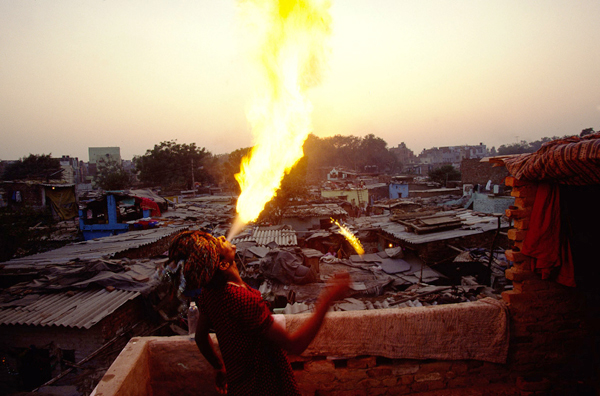
Here are some pictures from Kabul and Delhi that illustrate the issues…


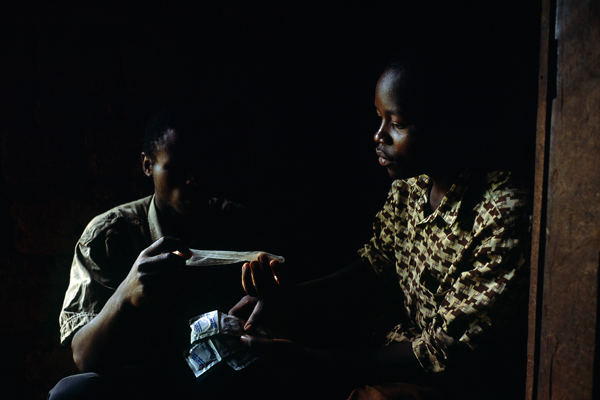
It seems that the Pope has signaled that condom use might be justified to stop the spread of HIV and AIDS. A brave, welcome and clearly significant decision that will certainly save thousands of lives.
A former colleague of mine from Network Photographers, Michael Amendolia has just started a blog called In the Moment.
Like Michael’s sensitive and understated work, it’s very good. Do have a look… His website showcases a very delicate eye and you can also see an interview with him here.
A very, very talented photographer.
Roger Tooth in today’s Guardian makes an excellent point when he comments about David Cameron, the Prime Minister appointing two visual journalists as ‘vanity photographers’.
“Yes, we know what their kitchens look like, thank you”
Quite. As if having the majority of the unquestioning press having bought into the ‘spending review’ to pay for an economic crisis caused by the gamblers of international finance wasn’t enough, Cameron’s ’embeds’ – both of whom have done extensive work for the Conservative Party – have been paid for from the public purse. At a time of alleged attrition. Both have been recruited as civil servants on short-term contracts thus avoiding the normal competitive employment process.
As the true heir to New Labour spin, Cameron (whose only other job was as a PR executive at Carlton) has similarly surrounded himself with ‘advisors‘. The issue here is that unlike the White House Press corp or Presidential photographers, there is little explanation about the context, the voracity or the quality of the ‘historical’ archive that these two will produce. Artists have always had wealthy patrons and the excuse is usually vanity, but to have such control of images at the heart of government seems to me a paranoia par excellence.
I’m sure that the images will be carefully crafted to show just how much the former PR man, married to an Astor and his chancellor (a man who will inherit a knighthood and the fortune of the present Baronet of Ballintaylor) are really just like us and are also having to tighten their belts. We are all in it together … I’m also sure that the images will be used by lazy picture desks clamouring for ‘intimacy’. Interesting though that the prevalence of military embedding in the wars in Iraq and Afghanistan has spread and, in the age of ‘citizen journalism’, just how much the Centre is able to get its message out in exactly the way that it wants.
Sometimes however, there are more important things than photography and journalism. At a time of the dismantling of the post-war consensus, the welfare state and perhaps the very idea of a society perhaps we as citizens should ask of these appointments: cui bono – who benefits?
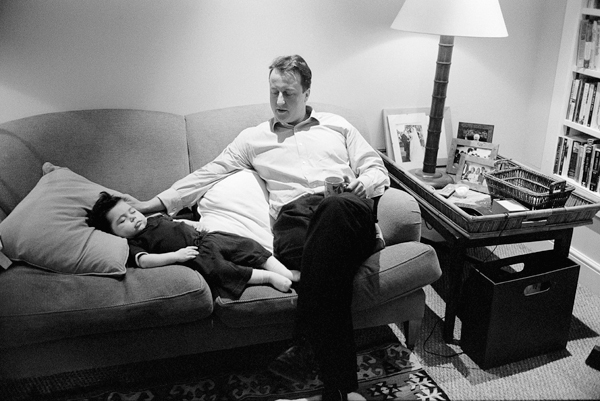
Here are some pictures from an assignment for the Times Magazine on David Cameron that I think were intimate, human and, despite my personal opinions, I gave what I felt to be a fair and balanced impression.
Because that was my job.
As a journalist.