So, for the second time in a few days I find myself writing about Pakistani militant attacks designed to destabilse religious harmony. On Thursday night, at least 42 people were killed and hundreds wounded when two suicide bombers attacked a the famous Data Ganj Baksh Sufi shrine in Lahore. The Lahore commissioner, Khusro Pervaiz, blamed the attack on a “conspiracy in which locals are being used” – a euphemism often used to point the finger at neighbouring India. A dangerous remark that even if true does nothing to answer the charge that Pakistan is actually at war with itself. The so-called Pakistani Taleban funded by Wahabi and other conservative sects (the same groups conveniently used by the Pakistani army in the 1990s to attack Indian troops in Kashmir) are the likely culprits for this and the recent attack on the Ahmadiyya community. Despite what fanatics in both Pakistan and the West would have us believe, the dominant tradition within Pakistani society is a tolerant, peaceful Sufistic based Islam. Wherever I have travelled within the Islamic world it is the presence of Sufis that has reassured me and added to my knowledge of religion. Sufism – a mystical, internalised form of Islamic worship that centres on love and prayer and charity seems to spring up to defend Islam when repression threatens. I have met many Sufis – often practising in secret – and my admiration of their practice is matched only by my hope that this will be the last outrage against all people who seek only to practice their religion peacefully as they see fit.
I’ve never worked in the Data Ganj Baksh shrine but here are some other images linked by ‘Sufism’ from my archive:
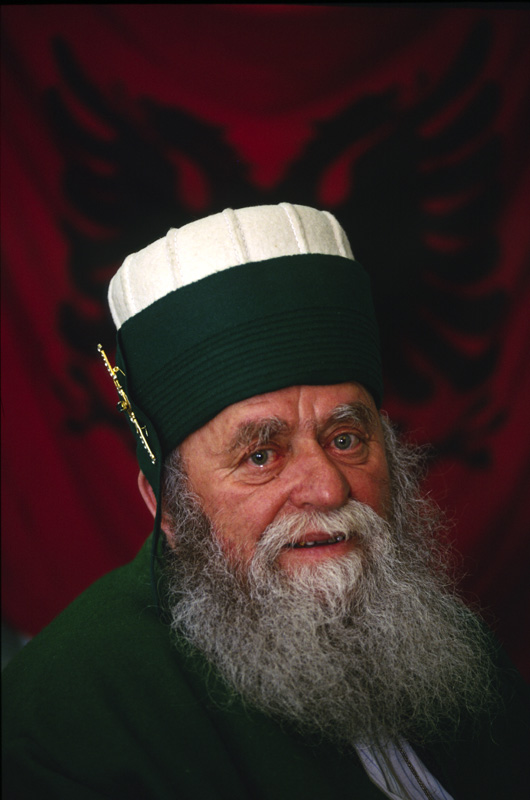
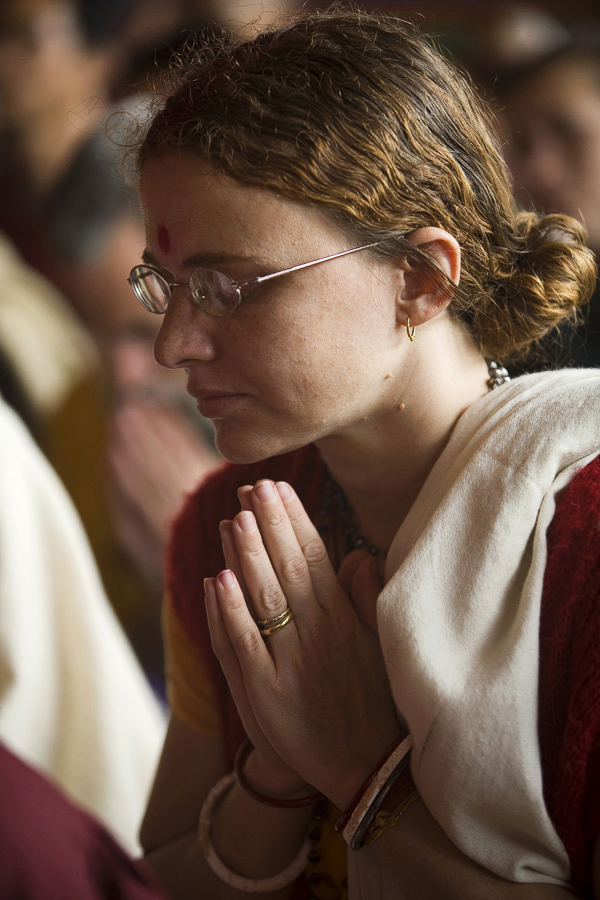
India - Delhi - Worshippers (both Hindu and Muslim) pray and make offerings over the tomb of Hazrat Nizamuddin Awlia, a famous Sufi of the Chisti Order India - Delhi - Musicians play and sing Qawwali (Sufi devotional songs) at the Hazrat Nizamuddin Awlia ShrineSomaliland - Hargeisa - Men perform Zikr (recitation of the name of Allah - a key Sufi practise) in secret at a house in Hargeisa, the capital of the Self Declared Independent country of Somaliland.Albania - Tirana - A Bektashi Dervish elder in the Order's mosque. in Tirana Albania. The Bektashi's, an order of Sufi's were persecuted along with all other religions under the Communist regime UK - London - A portrait of a young man in the Peckham Mosque who has converted to Islam in the Sufi tradition
Some years ago I travelled to Pakistan to make a set of images about religious persecution. I lasted only a few days – for the first time in my career, I left a story because I honestly felt that my presence was putting lives at risk.
I had been invited to Rabwah, the spiritual home of the Ahmadiyya community, a peaceful minority Islamic movement that questions the finality of the Prophet Mohammed. Pakistan is the only country to classify Ahmadiyya’s as non-Muslims.
In 1984 General Zia issued Ordinace XX supposedly to prevent “anti-Islamic activities”. It forbids Ahmadiyya’s to call themselves Muslims, call their places of worship mosques and worship publicly. It forbids them from quoting from the Koran, preaching in public, seeking converts, or producing, publishing, and disseminating their religious materials. To gain a passport, all Pakistanis must declare themselves non-Ahmadiyyas.
The repression is of course a smokescreen to hide Pakistan’s myriad social and political problems and the Ahmaidiyyas are a perfect scapegoat. This is not about religion, it’s about state power. As Tariq Ali wrote in the London Review of Books in 2007:
“Back in the heart of Pakistan the most difficult and explosive issue remains social and economic inequality. This is not unrelated to the increase in the number of madrassas. If there were a half-decent state education system, poor families might not feel the need to hand over a son or daughter to the clerics in the hope that at least one child will be clothed, fed and educated. Were there even the semblance of a health system many would be saved from illnesses contracted as a result of fatigue and poverty. No government since 1947 has done much to reduce inequality”.
Ali Dayan Hassan of Human Rights Watch told the BBC the worshippers were “easy targets” for militant Sunni groups who consider the Ahmadis to be infidels. The Pakistani state is in trouble however and Ahmadiyyas are not the only minority to suffer persecution. According to Minority Rights, Baluchis, Hindus, Mohhajirs, Pushtuns, Sindhis and Christians all suffer.
Today, I read with interest an opinion piece in Dawn by Moshin Hamid (an author whose Moth Smoke I read and enjoyed some time ago) called Fear and Silence from which I take the liberty of quoting from at length. I think it elegantly echoes Pastor Martin Niemöller’s famous (attributed) quote “First they came for the Jews…”. Hamid says:
“Because the heart of the issue isn’t whether Ahmadis are non-Muslims or not. The heart of the issue is whether Muslims can be silenced by fear.
Because if we can be silenced when it comes to Ahmadis, then we can be silenced when it comes to Shias, we can be silenced when it comes to women, we can be silenced when it comes to dress, we can be silenced when it comes to entertainment, and we can even be silenced when it comes to sitting by ourselves, alone in a room, afraid to think what we think.
That is the point. ”
One can only hope that all people of tolerance and faith will not be silenced.
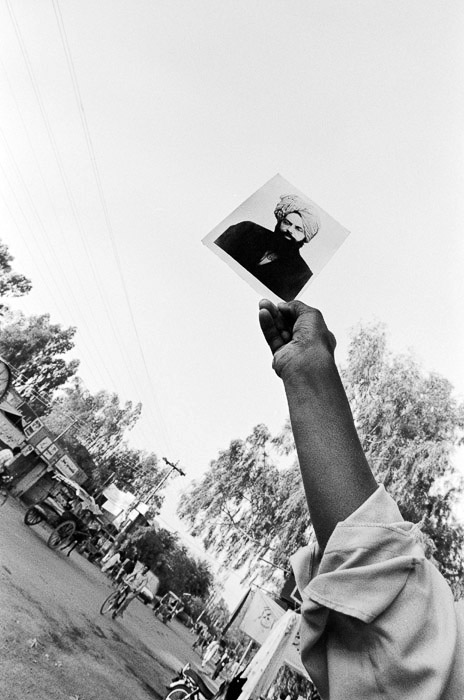
Pakistan - Rabwah - A man holds a portrait of the Ahmadiyya prophet, Ahmed. Also known as Qadiani's, the Ahmadiyyas are the followers of Hazrat Mirza Ghulam Ahmad Qadiani (1835-1908). According to his followers, he was the founder of the Ahmadiyya Muslim Jama'at and The Promised Messiah and Imam Mahdi. The Ahmadiyya (Qadiani) movement in Islam is a religious organisation with more than 30 million members worldwide. Ahmadiyyas are now banned from calling themselves Muslim in Pakistan and suffer terrible discrimination under anti-blasphemy laws and are regularly murdered for their faith.
Pakistan - Rabwah - Two Ahmadiyya men after prayers at their mosquePakistan - Rabwah - An Ahmadiyya imam leads his congregationPakistan - Rabwah - An Ahmadiyya woman weeps at the grave of her murdered childPakistan - Rabwah - An Ahmadiyya elder, blinded for his faithPakistan - Rabwah - A woman beneath a portrait of her murdered husbandPakistan - Rabwah - Ahmadiyyas praying at their mosquePakistan - Rabwah - After prayers, a boy plays ball in a mosque
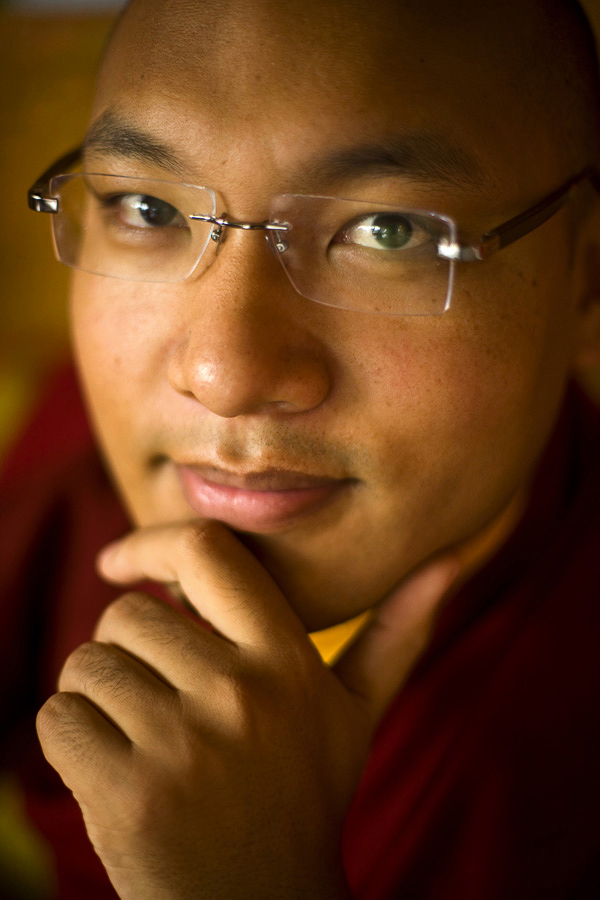
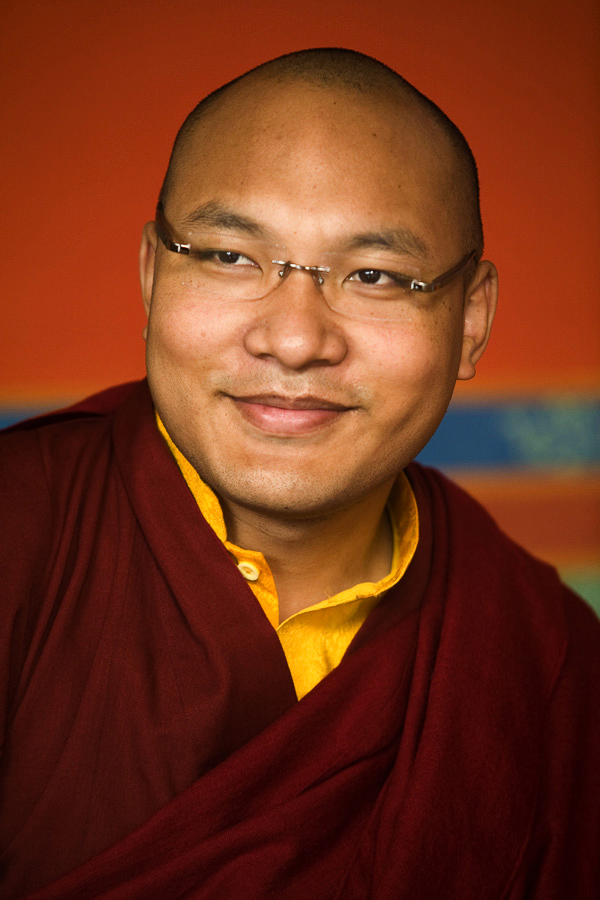
The French news magazine L’Express have just published an assignment I made for them in February on Ogyen Trinley Dorje, His Holiness, the seventeenth reincarnation of The Karmapa Lama in Sarnath, northern India. The Karmapa is head of the Karma Kagyu school of Tibetan Buddhism and predates the Dalai Lama’s lineage. This particular incarnation is disputed however and another candidate, Trinley Thaye Dorje has also been proclaimed and enthroned in another part of India. There’s a reasonable discussion on the succession issues here.
In any case, the assignment gave me a three-fold opportunity.
Firstly, I had the pleasure of meeting the Karmapa, a shy and I thought rather melancholy figure – a bird in a gilded cage if ever there was one – whose keen interest in photography was restricted to photographing the outside world from his window. The child of nomads, he ‘escaped’ from his Chinese hosts first to Nepal and then to India from where he was supposed to conduct a european tour this summer only to be thwarted by the refusal of the Indian authorities to grant him an exit visa. Which has of course nothing to do with Chinese pressure.
Secondly, I had the chance to go back to one of my favourite cities, Varanasi – one of its many names – I think the most intriguing of all north Indian cities.
Thirdly, I had the pleasure to work with Marc Epstein, the charming Foreign Editor of L’Express with whom I managed to put the world to rights over long walks along the ghats of a city we both hadn’t visited for a couple of years. I managed to explain the relative intricacies of cricket to a Frenchman who was curious of all the sporting activity along the river and made him an honoury Tottenham Hotspur fan for his trouble. For this of course, I apologised in advance: an inevitable entrée to a world of pain and disappointment…
Some pictures…
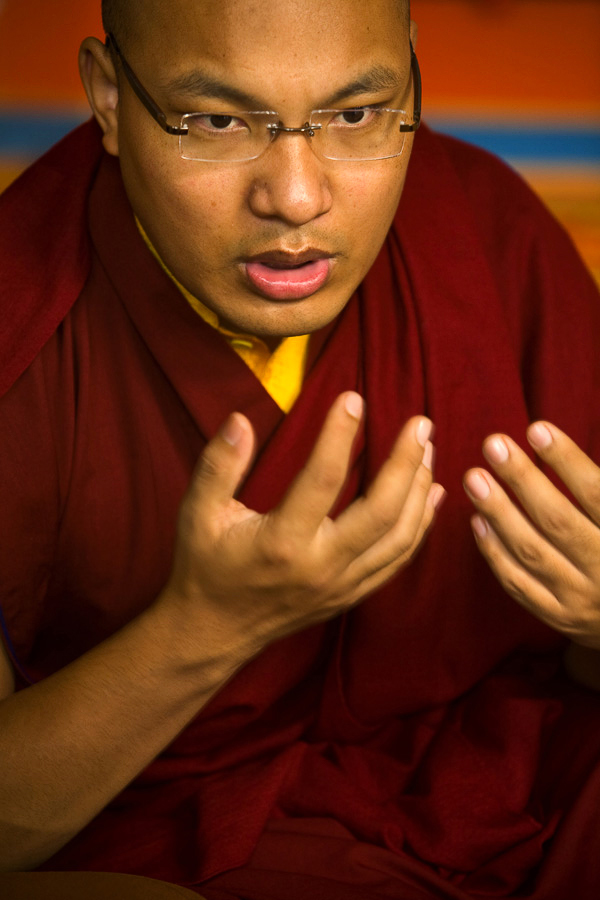
India - Sarnath - Ogyen Trinley Dorje, His Holiness, The seventeenth reincarnation of The Karmapa Lama at the Vajra Vidya Institute for Buddhist studies
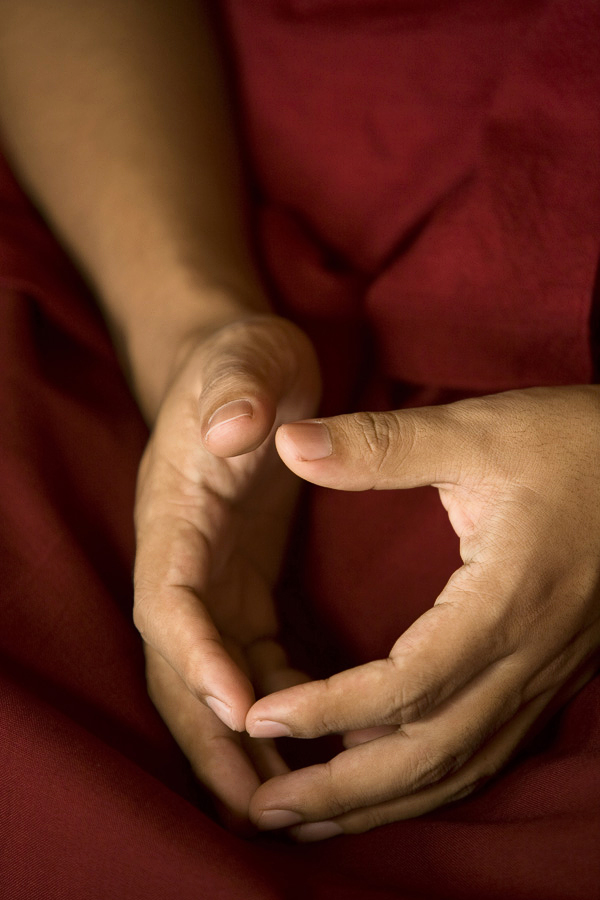
India - Sarnath - Ogyen Trinley Dorje, His Holiness, The seventeenth reincarnation of The Karmapa Lama at the Vajra Vidya Institute for Buddhist studies India - Sarnath - The hands of Ogyen Trinley Dorje, His Holiness, The seventeenth reincarnation of The Karmapa Lama at the Vajra Vidya Institute for Buddhist studies India - Sarnath - Ogyen Trinley Dorje, His Holiness, The seventeenth reincarnation of The Karmapa Lama at the Vajra Vidya Institute for Buddhist studies India - Sarnath - Ogyen Trinley Dorje, His Holiness, The seventeenth reincarnation of The Karmapa Lama at the Vajra Vidya Institute for Buddhist studies India - Sarnath - Buddhist prayer beads sit on top of a page of sutras at the Vajra Vidya Institute for Buddhist studiesIndia - Sarnath - Disciples listen to a lecture by Ogyen Trinley Dorje, His Holiness, The seventeenth reincarnation of The Karmapa Lama at the Vajra Vidya Institute for Buddhist studies
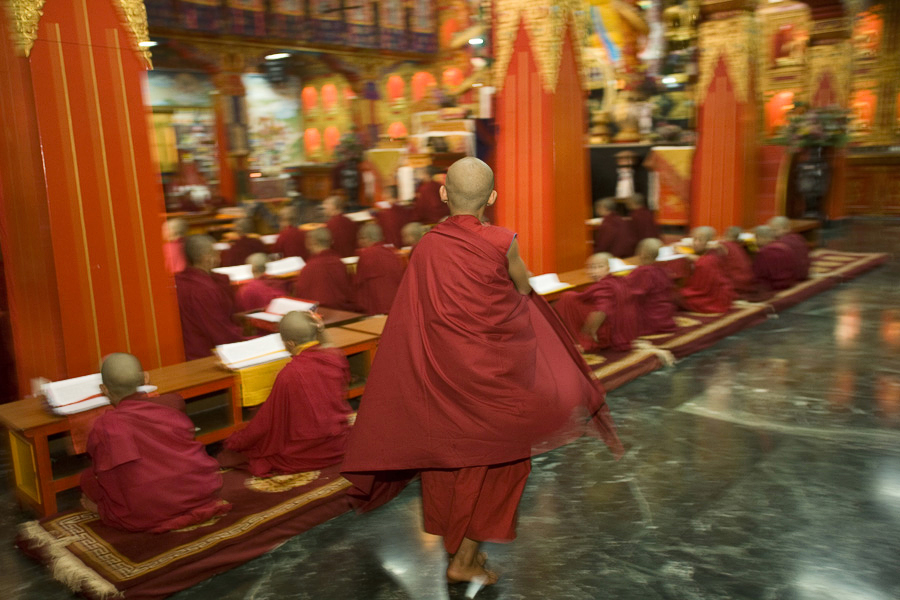
India - Sarnath - Detail of the feet of a disciple listening to a lecture by Ogyen Trinley Dorje, His Holiness, The seventeenth reincarnation of The Karmapa Lama at the Vajra Vidya Institute for Buddhist studiesIndia - Sarnath - Buddhist monks reading a newspaper at the Vajra Vidya Institute for Buddhist studiesIndia - Sarnath - Buddhist monks reading and chanting sutras at the Vajra Vidya Institute for Buddhist studiesIndia - Sarnath - A young monk rushes back to his place during a sutra chanting session at the Vajra Vidya Institute for Buddhist studies UK - Sarnath - Two Buddhist monks study a text at the Vajra Vidya Institute for Buddhist studiesIndia - Sarnath - Ogyen Trinley Dorje, His Holiness, The seventeenth reincarnation of The Karmapa Lama, Stuart Freedman (l) and Marc Epstein (r)
Tewfic El Sawy, aka The Travel Photographer Blog has once again very kindly featured my work on his site. This time, it’s the work on the idol makers that I wrote about here a month ago.
I was a little saddened to read this week that India’s oldest car maker, the Kolkota-based Hindustan Motors, said reduced demand and accumulated losses had wiped out over half its net worth.
Since the liberalisation of the Indian economy in the 1990’s India’s roads have been filled with gleaming new cars. I do sincerely hope that Hindustan’s most famous vehicle has some mileage in it yet.
The Ambassador is such a feature of the Indian landscape that it’s demise is almost unthinkable. I think it’s by far the most reliable and sturdy vehicle on the Indian roads and, by dint of its ubiquity, it can be repaired almost anywhere very quickly. Usually by a combination of hammers, tape and brute force.
The extraordinary Raghubir Singh who it is my great regret never to have met, used the car as a device in his wonderful, A Way into India.
Here’s a recent image of mine of an ‘Ambi’ parked on a quiet street in Tamil Nadu with a rather lovely garland hanging from the mirror
India - Tamil Nadu - A garland of flowers hang from the mirror of an Hindustan Ambassador car in the town of Swamimalai
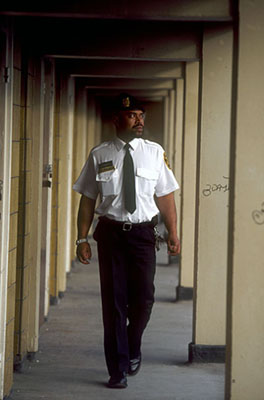
I have written before about the increasing use of private security and the erosion of liberty in public space so I was interested in a piece in today’s Guardian, ironically, the result of a Freedom of Information request:
It seems increasingly clear that unelected, untrained and under qualified security guards from private companies (operating for profit) are deciding who has freedom to walk the streets and carry out perfectly legal activities … like taking photographs in a public space.
Interestingly, the article asserts that both the Association of Chief Police Officers (Acpo) and John Yates, Britain’s most senior counter-terrorism officer, have warned that police risk losing the support of the public through the inappropriate use of section 44.
Surely not.
I first photographed the burgeoning private security industry in the late 1990s for several magazines and over the years have continued to have assignments to do so.
UK - London - A private security 'operative' patrols South London council estateUK - London - A security guard at a gated community monitors a bank of closed circuit television screens.
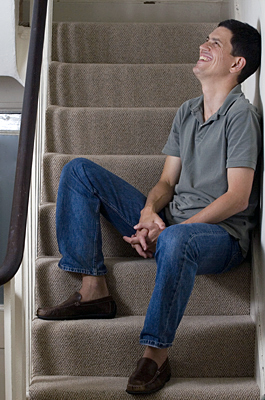
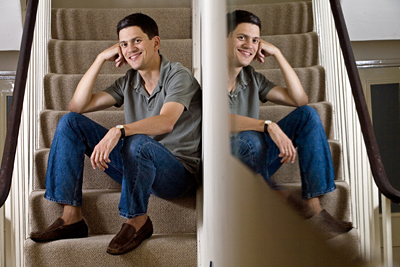
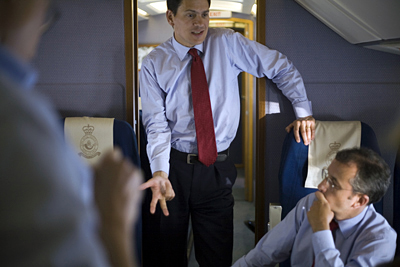
As the Labour government loses power and its party leader, the front runner to take the reins is David Miliband. I made a large story about him for the Times Magazine a little over a year ago.
UK - London - David Miliband, Secretary of State for Foreign and Commonwealth Affairs and Member of Parliament for South Shields, Tyne and Wear at his home in LondonUK - London - David Miliband, Secretary of State for Foreign and Commonwealth Affairs and Member of Parliament for South Shields, Tyne and Wear at his home in LondonBelgium - Brussels - David Miliband, Secretary of State for Foreign and Commonwealth Affairs and Member of Parliament for South Shields, Tyne and Wear during a live broadcast with a TV channel in the European Parliament, Brussels, BelgiumUK - London - David Miliband, Secretary of State for Foreign and Commonwealth Affairs and Member of Parliament for South Shields, Tyne and Wear at a meeting at his official residence with the Pakistani Foreign Minister, Mr Makhdoom Shah Mehmood Hussain QureshiUkraine - Kiev - David Miliband, Secretary of State for Foreign and Commonwealth Affairs and Member of Parliament for South Shields, Tyne and Wear with his staff on Board the Queen's flight bound for Kiev, Ukraine for talks with the Ukranian governmentUK - Birmingham - David Miliband, Secretary of State for Foreign and Commonwealth Affairs and Member of Parliament for South Shields, Tyne and Wear at a meeting in Birmingham with the Pakistani Foreign Minister, Mr Makhdoom Shah Mehmood Hussain Qureshi and members of the British Pakistani communityBelgium - Brussels - David Miliband, Secretary of State for Foreign and Commonwealth Affairs and Member of Parliament for South Shields, Tyne and Wear during an informal meeting with the former Prime Minister, Tony Blair in his office in the European Parliament, Brussels, BelgiumBelgium - Brussels - David Miliband, Secretary of State for Foreign and Commonwealth Affairs and Member of Parliament for South Shields, Tyne and Wear during an informal meeting with the Serbian Foreign Minister, Vuk JeremichBelgium - Brussels - David Miliband, Secretary of State for Foreign and Commonwealth Affairs and Member of Parliament for South Shields, Tyne and Wear holds his head in his hands during a live broadcast with a TV channel in the European Parliament, Brussels, Belgium