Kathputli Colony’s last stand


I’ve written several times over the last few years about Delhi’s Kathputli Colony (or as I knew it, Shadipur Depot) – that Dickensian maze of street performers and magicians that somehow floats on the imagination of the city. This time however, it looks like the city will finally swallow the place. According to Tehelka Magazine, residents of the ‘illegal’ slum – some 3500 families that have been there for forty years – may have to move soon to a re-development far to the North. The site at Shadipur where the land was once worthless is now, as the city grows, worth a fortune. It was sold by the the Delhi Development Authority in 2009 to the Mumbai-beased Raheja Builders however, at what Tehelka suggests was seriously undervalued price to make way for a high rise developments. These would, it was promised, include social housing for the performers families. It seems though that even on paper, the proposed number of dwellings for the artists is far short of the actual number needed. Perhaps with some good reason, the artists families don’t believe that the authorities will make good on their promises to allow them back to the area when it is developed. The project is now stuck in limbo as the Delhi Urban Arts Commission has objected to it. The traditional performers are caught. If they move, they lose their homes and their livelihoods. If they stay, they are likely to be evicted and from previous scenarios that may well be violent. They know however that they are simply powerless actors in a city’s development, caught as they are between tradition and a very cruel version of modernity. Since I made a story in Shadipur nearly a dozen years ago, quite a few photographers have worked here and a film was even made of the struggles of the residents. In some senses it was an easy story; a fairy tale in a bleak metropolis. Most people’s recent treatment of it completely ignored the fact that as Delhi grows and divides even more sharply between those that produce it’s wealth and those that exploit it, the story is no longer about a quaint tinsel-town slum. It is about how Delhi will look in the future. It is about what kind of society India wants for its cities and its people.

In 2010 I wrote about the city’s sweeping of street vendors off the pavements before the Commonwealth Games and I mentioned the excellent book, Trickster City, a collection of writings by those at the sharp end of the slum clearances. As I wrote then

The irony is that many countries celebrate their street culture … and make them a tourist attraction: one has only to think of Singapore and Vietnam. Delhi’s depressing desire to imitate a corporate driven monoculture is certain to lead to a lessening of the city’s heritage.

As I’ve said many times here, I have no sentimental attachment to poverty and no Raj-tinted spectacles through which I view Delhi. I both hate and love the city but the scales are now tipped so far against certain sections of its people that I find it difficult sometimes to walk it’s streets and look some people in the eye.

You can see my original set from Shadipur here

I’ve decided to show some less well known images from the set – some that I have rediscovered. I hope you like them.
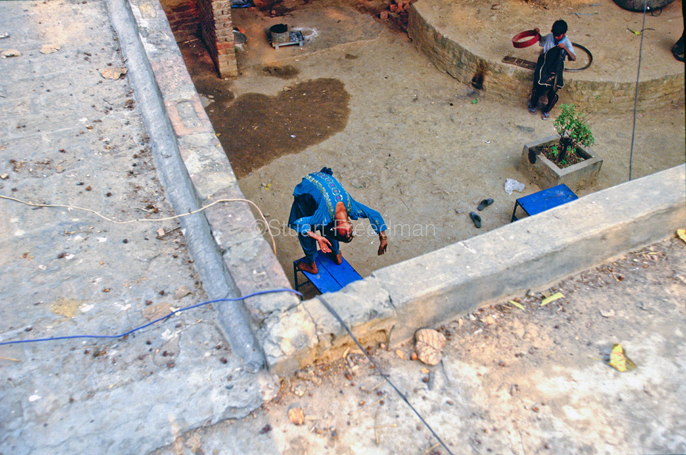
 

India - New Delhi - Reenu, 15 and her brother practice their contortions. Reenu and her family are trained by her mother, herself a former acrobat. The children, when babies, were stretched and contorted to make their bones pliable for the act. Shadipur Depot, New Delhi, India.The Kathiputli Colony in the Shadipur Depot slum is home to hundreds of (originally Rajasthani) performers. The artistes who live here - from magicians, acrobats, musicians, dancers and puppeteers are often international renowed by always return to the Shadipur slum.
India – New Delhi – Reenu, 15 and her brother practice their contortions. Reenu and her family are trained by her mother, herself a former acrobat. The children, when babies, were stretched and contorted to make their bones pliable for the act. The Kathiputli Colony in the Shadipur Depot slum is home to hundreds of (originally Rajasthani) performers. The artistes who live here – from magicians, acrobats, musicians, dancers and puppeteers are often international renowed but always return to the Shadipur slum.


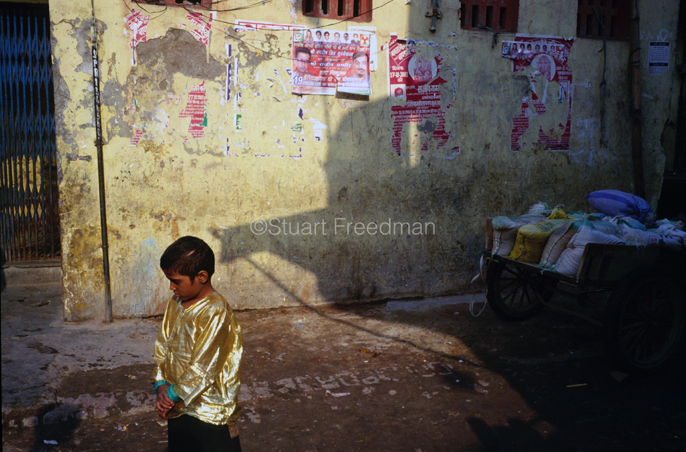
India - New Delhi - A performers son in a gold shirt, Shadipur Depot,
India – New Delhi – A performers son in a gold shirt, Shadipur Depot,


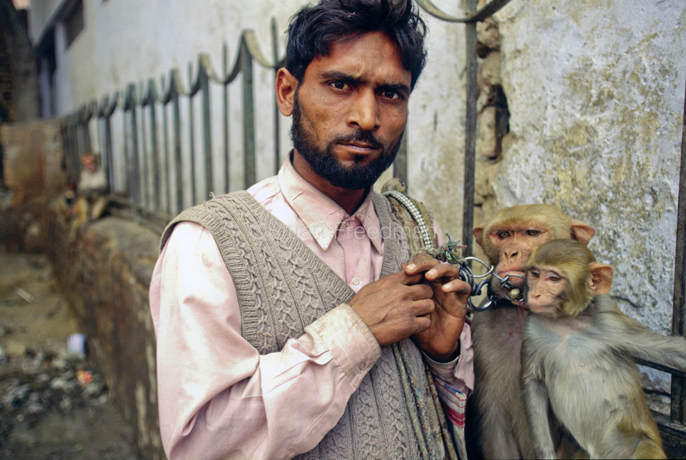
Indian - New Delhi - A man and his performing monkeys. The Kathiputli Colony in the Shadipur Depot
Indian – New Delhi – A man and his performing monkeys. The Kathiputli Colony in Shadipur Depot


India - New Delhi - Chand Pasha, a magician produces a bird from his sleeve
India – New Delhi – Chand Pasha, a magician produces a bird from his sleeve


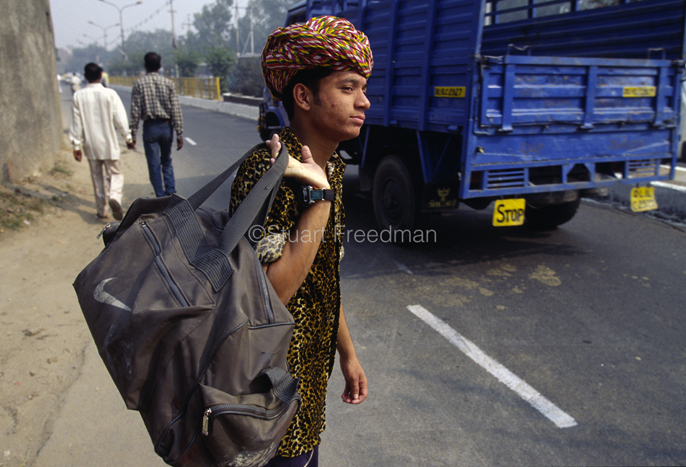
India - New Delhi - A boy on his way to perform his magic act at a wedding waits for a lift by the side of the road
India – New Delhi – A boy on his way to perform his magic act at a wedding waits for a lift by the side of the road, Shadipur Depot


The joy of the jellied eel?


According to a report in the Observer newspaper, Britain is again falling for the charms of the jellied eel. Apparently Tesco sales of the stuff have grown by “35% since the supermarket giant took a gamble and started selling them outside London”. The increase in consumption is being “attributed to a new, more austere environment”.

I’ve written and photographed jellied eels and the Pie and Mash shops of the East End a fair few times for different magazines over the last couple of years and I have to say reports that I have heard from there tell a completely different story. Very, very few people ask for eels in pie shops these days and those that do seem to fall into two categories. Firstly, older people that have always eaten them and remember their hayday pre-1950/60’s and secondly, young middle class emigres to the trendier spots of Hackney, that do so once for a bet.

What I suspect we might be seeing are the novelty buying habits of communities that still identify with the traditional accoutrement of a rosy, cosy fug of a dying white working class culture. These are to be found primarily in the post-war new towns of Hertfordshire and Essex. That would certainly explain the supermarket connection and why at least most pie and mash shops stopped killing and jellying their own eels years ago. Jellied eels are totemic of a simpler and now unrecognisable East End Victoriana but eels have long been a staple part of London food and were synonymous with the city and its people. In King Lear, Shakespeare’s Fool in his ramblings to the King, witters – “Cry to it, nuncle, as the Cockney did to the eels when she put ’em i’ the paste alive; she knapped ’em o’ the coxcombs with a stick, and cried ‘Down, wantons, down!’”

In a city dominated and bisected by the River Thames the eel’s popularity was that it was plentiful, cheap and when most meat or fish had to be preserved in salt, eel could be kept alive in puddles of water. The Victorian curate Reverend David Badham reports in his ‘Prose Halieutics; Or Ancient and modern fish tattle’ published in 1854 that –

“London steams and teems with eels alive and stewed. For one halfpenny a man of the million may fill his stomach with six or seven long pieces and wash them down with a sip of the glutinous liquid they are stewed in.”

Such was the demand that eels were brought over from The Netherlands in great quantities by Dutch eel schuyts and these were commended for helping feed London during the Great Fire in 1666. Although they were seen as inferior to domestic eels, the British government rewarded the Dutch for their charity by Act of Parliament in 1699 granting them exclusive rights to sell eels from their barges on the Thames. During the nineteenth century however, the Thames became increasingly polluted so that it could no longer sustain significant eel populations and the Dutch ships had to stop further upstream to prevent their cargo being spoiled.

The rise of the pie shops were a direct result of the adulteration of eels and pies sold on the streets. The shops were indicators of aspiration for sections of the urban working class and their physical rootedness. Their decoration and their hygiene were ways to ape ‘social betters’. The idea in the Observer article that jellied eels are traditionally austerity food is wrong. They were seen, certainly in the pie shops, as a treat. In wider society however, eating jellied eels and pies has a comedic value (but then the British always either laughed at or scorned its poor – except when it sent them off to die in the mud or Flanders or elsewhere) and a resonance with the ‘jolly’ Pearly Kings and Queens. Nowadays seen as quaint costumed charity workers, they were originally leading and respected costermongers that would settle often violent street disputes between gangs. A cartoon representation of poverty and tradition. The undoubted death of the pie mash and eel shops on the High Street is symptomatic of what the New Economics Foundation calls ‘clone town Britain’ where every High Street has the same shops. As Jane Jacobs argued in the Death and Life of Great American Cities (1960) communities are “created by myriad small daily encounters… the sum of such casual, public contact at local level is a feeling for the public identity… a web of public respect and trust”. It was that trust that made people flock to eel and pie shops in the late Nineteenth century because they knew that the food was ‘clean’ and somehow honest. It is what drives a more allegedly ‘sophisticated’ palate away today.

It’s what drives people to shop at Tesco. Even those whose families would describe themselves as ‘working-class East Enders’ whilst  living in more affluent suburbs.

When I interviewed Graham Poole, one of three brothers that run the authentic, remaining Manze pie and mash shops, he seemed to bear this out.

“We get emails at all times of night – after people have had a few drinks… old East Enders that have moved out, reminisce – they want their eels and pies”.

They want their memories.

Some memories are dangerous however. As much as I personally enjoy eating them, eels are endangered. In 2010 eel populations in the Thames had fallen by 98% in five years. Across the country there are similar issues. Nobody really understands why elvers aren’t spawning – but then nobody actually knows the precise mechanism for and the location of, the migration to the Sargasso Sea.

Catholic priest Father Oliver Kennedy, 80, has for forty years run one of the only remaining commercially viable wild eel fisheries in Europe (Lough Neagh in Northern Ireland). “Things are very bad (for the eel) in Germany, Holland and France… we on the other hand are relatively safe – we buy elvers out of the Severn (River in the UK) and they take between twelve and twenty years to mature so our crisis might be delayed”.

It is clear however that unless we find a way to farm eels like salmon or clear migratory paths, the European eel may not see the end of the century.


UK - London - A bowl of jellied eels in Cookes' Eel, Pie and Mash shop in Hoxton, London, UKEel, pie and mash shops are a traditional but dying business. Changing tastes and the scarcity of the eel has meant that the number of shops selling this traditional working class food has declined to just a handful mostly in east London. The shops were originally owned by one or two families with the earliest recorded, Manze's on Tower Bridge Road being the oldest surviving dating from 1908. Generally eels are sold cold and jellied and the meat pie and mash potato covered in a green sauce called liquor.
UK – London – A bowl of jellied eels in Cookes’ Eel, Pie and Mash shop in Hoxton. Pie and mash shops are a traditional but dying business. Changing tastes and the scarcity of the eel has meant that the number of shops selling this traditional working class food has declined to just a handful mostly in east London. The shops were originally owned by one or two families with the earliest recorded, Manze’s on Tower Bridge Road being the oldest surviving dating from 1908. Generally eels are sold cold and jellied and the meat pie and mash potato covered in a green sauce called liquor.


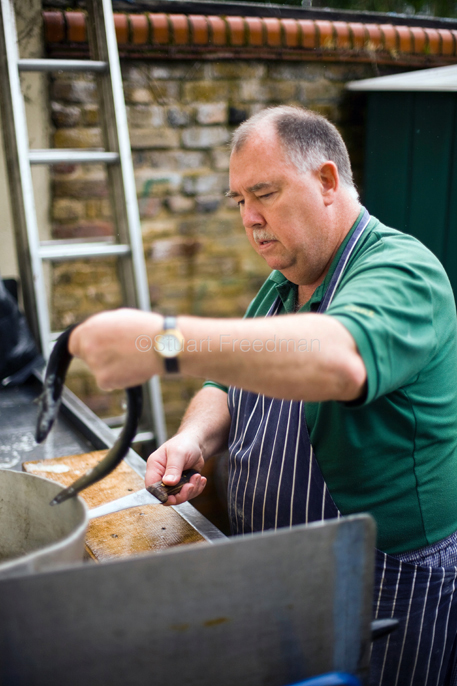
UK - London - Joe Cooke killing and gutting eels in the yard of Cookes' Eel, Pie and Mash shop in Hoxton
UK – London – Joe Cooke killing and gutting eels in the yard of Cookes’ Eel, Pie and Mash shop in Hoxton


UK - London - A bucket of eels ready to be killed and gutted at the rear of Cookes' Eel, Pie and mash shop in Hoxton
UK – London – A bucket of eels ready to be killed and gutted at the rear of Cookes’ Eel, Pie and mash shop in Hoxton


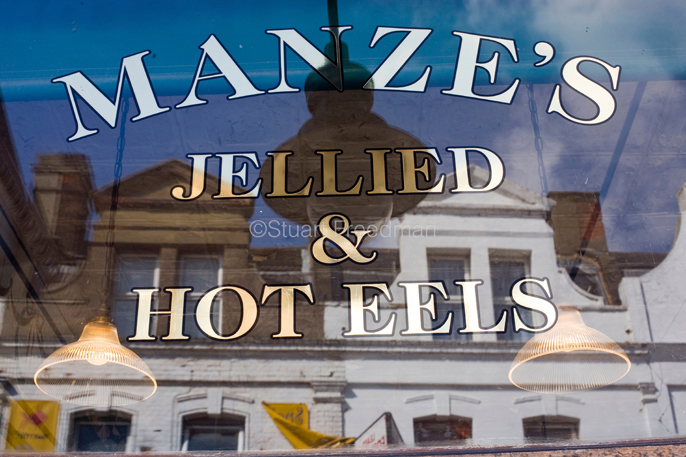
Manzes Pie and Mash shop now a listed building


I’m delighted that one of the traditional Pie and Mash shops that I was privileged to photograph a couple of years ago has been given Grade II Listed status.

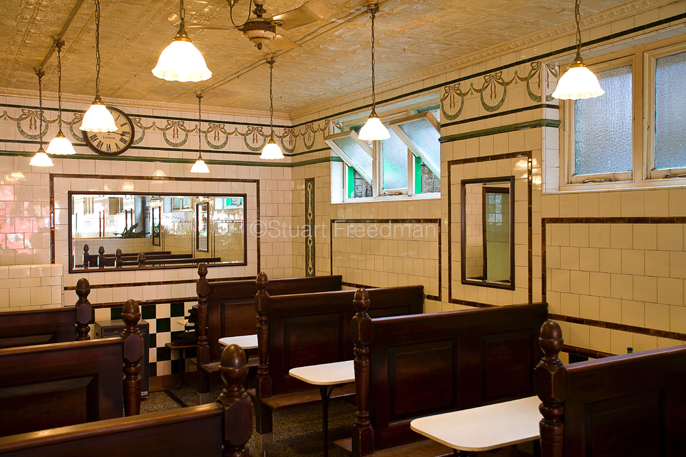
According to the citation, “The building, which was first opened to the public in 1929, has been given the accolade for its ‘beautifully preserved interiors’, which have never been replaced or modernised”

I wrote and photographed at length about London’s dying Pie and Mash shops (and jellied eels) on this blog last year. See here.

Here’s a small selection of images from Manzes in Walthamstow Market.


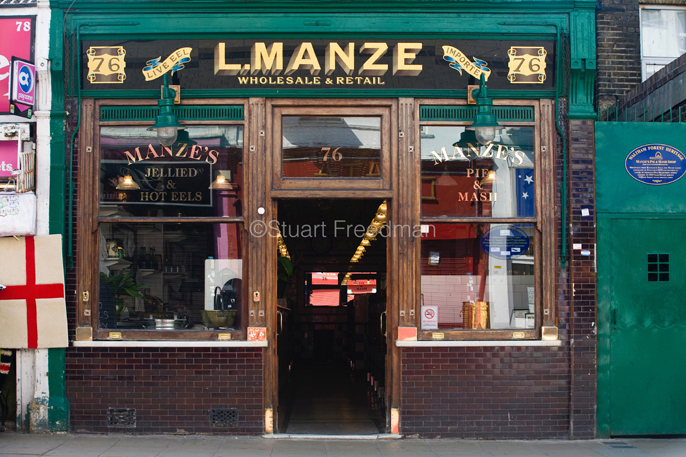
UK - London - L Manze
UK – London – L Manze Eel, Pie and Mash Shop in Walthamstow East London. Although the shop still trades under the Manze name it is now independently owned and no longer part of the Manze family business.


UK - London - Manze's Eel, Pie and Mash shop in Walthamstow, East London,
UK – London – Manze’s Eel, Pie and Mash shop in Walthamstow, East London,


UK - London - The interior (including the painted tin tiles on the ceiling) of Manze's Eel, Pie and Mash shop in Walthamstow,
UK – London – The interior (including the painted tin tiles on the ceiling) of Manze’s Eel, Pie and Mash shop in Walthamstow


UK - London - Manze's Eel, Pie and Mash shop in Walthamstow, East London, UK.Although the shop still trades under the original Manze name, it is now independently owned and no longer part of the Manze family. This resturant is a Grade-2 listed building with antique pressed-tin tiles on the ceiling
UK – London – Manze’s Eel, Pie and Mash shop in Walthamstow, East London, UK. Although the shop still trades under the original Manze name, it is now independently owned and no longer part of the Manze family. This resturant is a Grade-2 listed building with antique pressed-tin tiles on the ceiling


UK - London - Period tiling at Manze's Eel, Pie and Mash shop in Walthamstow, East London
UK – London – Period tiling at Manze’s Eel, Pie and Mash shop in Walthamstow, East London


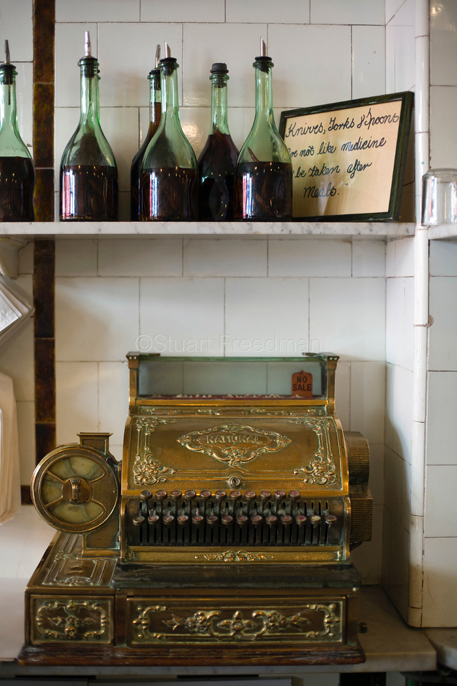
UK - London - Details of an antique cash register at Manze's Eel, Pie and Mash shop in Walthamstow,
UK – London – Details of an antique cash register at Manze’s Eel, Pie and Mash shop in Walthamstow,


Palermo Palavar


In a blog post yesterday, I showed a very quiet image of a priest reading and walking around a cloister. Below is perhaps a more typical image of Palermo and (southern) Italy in general. It’s said that Italians can only speak with their hands and the New York Times has a recent, rather prosaic piece here on that very subject.

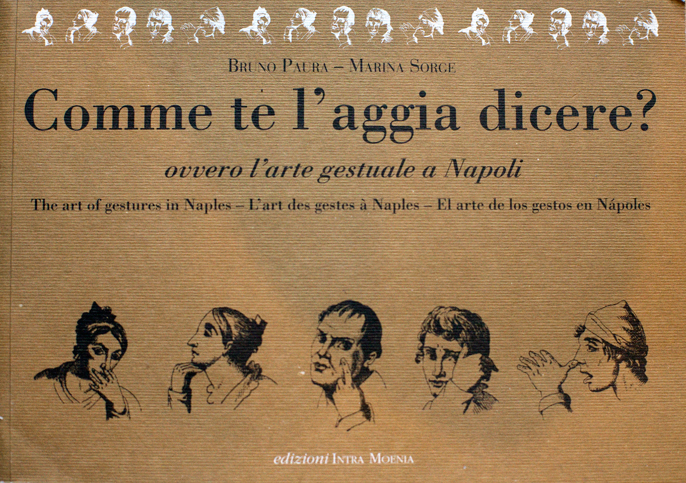
The consensus seems to be that somehow, in such crowded places people needed a further way to make themselves heard. Perhaps. Some years ago I stayed at a rather expensive hotel in Naples and they gave me as a gift, a lovely book (see below) about the secret meanings of Italian hand gestures. There are hundreds: some pleasant, some decidedly unpleasant. It occurred to me that in one sense it was a code, a language of the initiated in the way that rhyming slang was to the Victorian Cockney. A very real way to subvert authority (and of course the law) and build an identity that was separate and uncontrollable. Naples like Palermo are exquisite places full of art and beauty but are also brutal and fearful. Norman Lewis in his highly entertaining Naples ’44 recounting his time in the Intelligence Corp in that city remembers constantly being offered women by their families in order to eat. Peter Robb in his exquisite Midnight in Sicily (and later in his Street Fight in Naples) shows a labyrinthine society with bestial corruption at it’s very heart and violence meted out by mafiosi at every level. A society moved by an unofficial nod of the head, parallel governments. Secrets. Robb lived in Southern Italy, the Mezzogiorno for years. He immersed himself in the language and the culture and his writing shows the depth and commitment of that effort.

A photographer wandering the streets is usually a little different. He walks and sees a moment developing in the chaos of colour and movement and steps towards it. He takes two pictures and the image changes. He might have recorded something significant, something trivial but he has little hope of understanding anything on a deeper level than the symbol in the image – a gesture between two (or in this case three) people. The words he hears don’t mean anything – the gestures might be theatre. He might be ignored, or as in this case, sworn at and threatened. The language he is trying to communicate is equally symbolic as the hands of an Italian yet inevitably painted with a thicker, less subtle brush. He just sees the signs the hands make, not necessarily the subtlety of the meaning. He might interpret those signs as meaning something completely different – something as part of a visual culture that he has absorbed. Photography is as valuable but blunter than words. A more democratic code. Perhaps.

By the way, the title of this post comes from yet another language. Another collected word from another country. Palava(r). A word that I used to hear in West Africa all the time. Apparently it is Portuguese in origin. I didn’t know. Non capisco. So many words, so many countries. A mixture, an argument, a conversation. A beautiful mess. Just like Palermo.


Italy - Palermo - A man and a woman in a heated conversation in a lane behind the Capo Market
Italy – Palermo – A man and a woman in a heated conversation in a lane behind the Capo Market


jhvjhvdjhw
The Art of Gestures in Naples


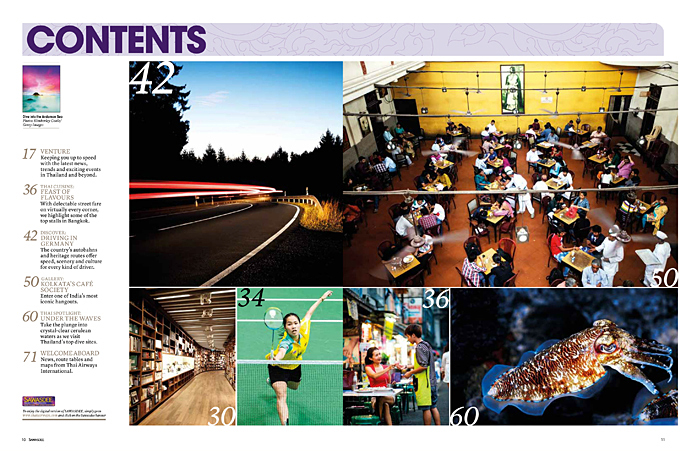
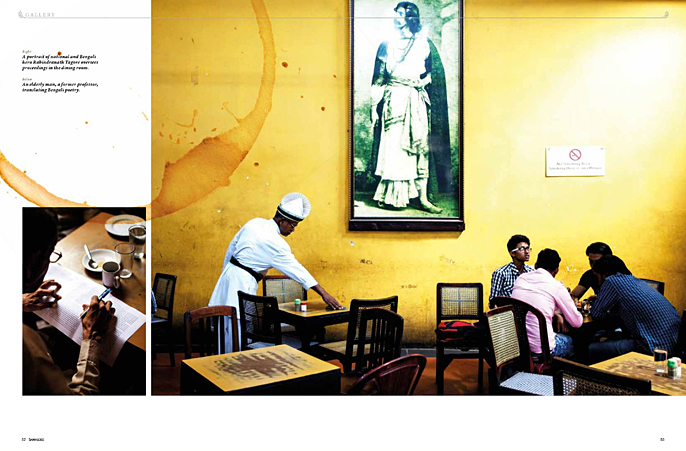
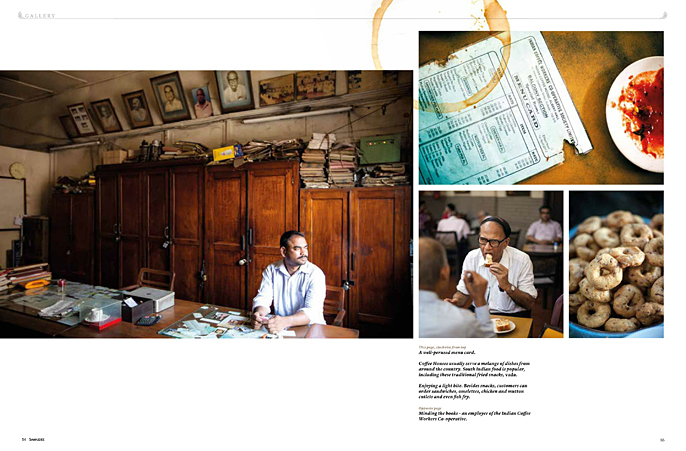
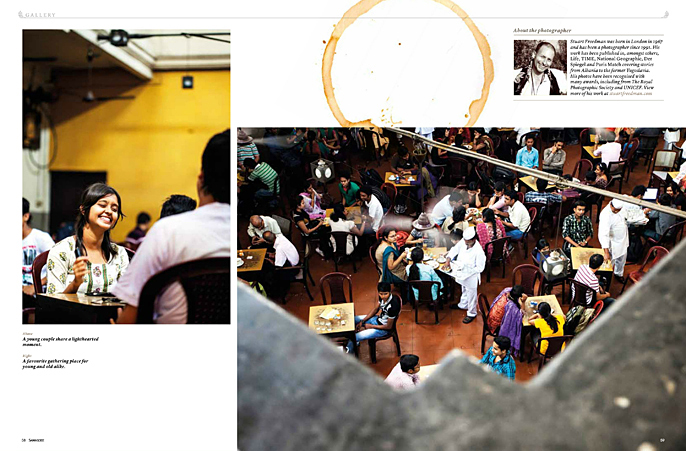
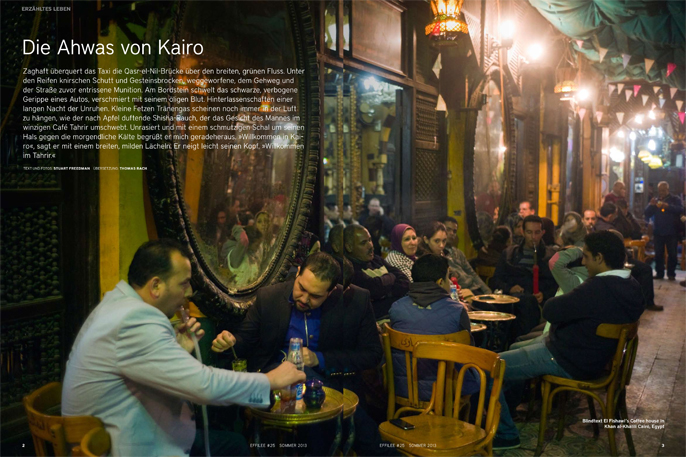
Tearsheet – The Ahwas of Cairo


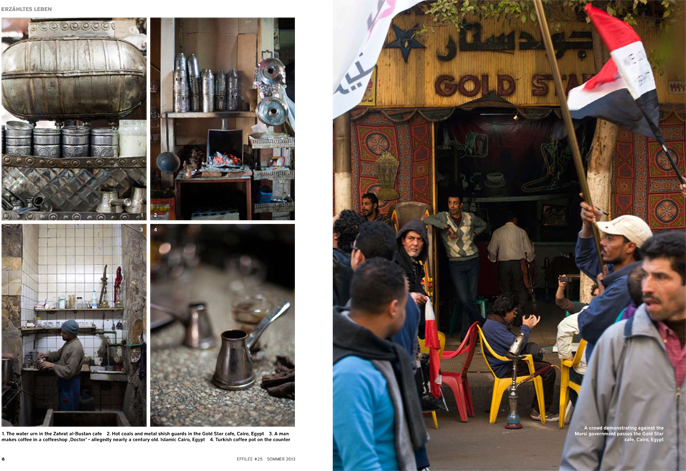
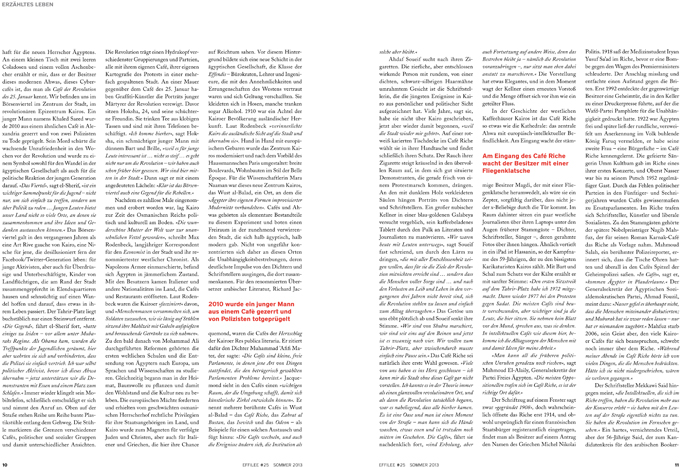
Here is a recent tearsheet from the wonderful Effilee Magazine for whom I wrote and photographed a really unusual piece about the Ahwas (coffeehouses) of Cairo. I wanted to write about the situation in Egypt without watching people fighting and using the prism of the Ahwas allowed me to examine protest and the way that the Revolution has evolved through them. The piece is an historical look at the heritage of the coffee houses and their resurgence after years of political repression. Under Nasser, Sadat and Mubarak, dissent and free thought were controlled. Networks of informers and secret policemen used cafes as an access point to the Arab Street. Novelists and poets like Naguib Mafouz still patronised them but had to write and speak in metaphor. Despite this coffeehouses had and continue to hold a significant rôle in Arab (and specifically) Egyptian literature and culture.
The Revolution of 2011 was sparked at least in part by the killing of a young man by the security forces outside an Ahwa that was used as an internet cafe. The cafes have become political again and, in this work, I’ve tried to explore the downtown splendour of the Art Nouveau, Cafe Riche that is home to a new generation of political activists, the street cafes of the Bourse (Cairo’s Left Bank during the Revolution) as well as a survey of Ahwas less well known – simple backstreet cafes and those of the Zaballeen (the Christian minority). Interviews include (amongst others) political commentator and Booker Prize nominated novelist Ahdaf Soueif, Arab Booker nominee (also head of Al-Dar publishing house) and flâneur Makkawi Said and Max Rodenbeck, the Economist’s correspondent and author of the encyclopaedic, ‘Cairo, the City Victorious’. Currently, a new Egyptian soap opera called Coffee Shop is attracting very negative attention from Egypt’s secularists about the way women are (or actually not) portrayed within the programme. The debate goes to the heart of what society was being created under the Morsi government.

Here’s the tearsheet:


11418_ahwa-copy-1a


11418_ahwa-copy-2


11418_ahwa-copy-3


11418_ahwa-copy-4


11418_ahwa-copy-5


11418_ahwa-copy-6

David beats Goliath


I was delighted to read over the weekend in a piece by Dean Nelson and Simon de Trey-White in the Daily Telegraph of the decision by Vedanta Mining to respect the wishes of the Dongria Kondh tribe and cease mining their sacred mountain for bauxite.

Vedanta Resources, a UK-registered ftse -100 company wanted to mine the Niyamgiri Hills in Orissa which are sacred to  Dongria Kondh, a protected tribal group of ‘original’ Aboriginal peoples. The Orissa state government had agreed to the destruction of the Tribal peoples land in 2005 but the decision was eventually overturned by the Supreme Court after a tortuous appeals process. The final decision was made by the Dongria Kondh themselves at a gathering at the weekend.

I covered the story in 2007 and wrote about it for the Indian magazine Tehelka (see here).

In a blog post on this site in 2009 I wrote that,

“I am no romantic when it come to India. I don’t share a Raj view of the colonial apologists (despite inevitably by dint of being British having reaped the indirect rewards of the subjugation of that country). I don’t yearn for quaint, underdeveloped communities full of poverty and colour. I want to see India progress. But I know the stink of international corporate power when I smell it… India had no colonies from which to steal resources so it’s stealing them from its own weak and vulnerable. The profits of this mine will not be spread evenly to benefit the Indian economy – it will be hoarded in the off-shore bank accounts of those corrupt politicians and corporate executives who already think that India is theirs by right.

A new middle class India has been brought up to believe that a successful society means a consumerist society. Greed and nationalism go hand in hand: it is not the poor of India calling for war with their brothers and sisters in Pakistan.”

It is a deeply significant victory for the Dongria Kondh but as Nelson correctly points out the flow of modernity is inevitable.

As I also wrote in 2009,

“Traditionally, Indians have protested injustice in a dignified Ghandian way with hunger strikes and marches. While the Western media and much of India has been marvelling at ‘Shining India’ it has failed to notice that a good deal of India is now under (mostly Maoist) rebel control. In Kashmir, Manipur, Nagaland, Bihar, Andhra Pradesh, Chhattisgarh and Jharkhand the Indian state is fighting a battle it might not win.”

I’ve used before Arundhati Roy‘s metaphor of India ‘eating its own people’ to describe that country’s unfettered race to Market Capitalism’. I hope that the Dongria Kondh’s victory for their peaceful, traditional way of life in harmony with the land of their fathers will last for as long it can.


India - Orissa - Dabu Limajhi, a tribal woman in her home in Kankasarpa village, India – Orissa – Dabu Limajhi, a tribal woman in her home in Kankasarpa village,

Greece and another summer of hunger


Helena Smith in today’s Guardian reports from Greece on the “unravelling social fabric” of that country. The draconian austerity imposed by the European Union has made beggars of many Greeks and according to a UNICEF report earlier this year, nearly 600,000 children live under the poverty line – more than half that number lack basic daily nutritional needs.

I wrote last summer (here and here) about the crisis interviewing academics, NGO’s and those queuing for meagre hand-outs recently impoverished by the cuts. I focused on community action and how people were feeding each other from their gardens – survival strategies against the onslaught of NeoLiberal bankers set on profit and punishment. Here was the shock in action, the management and manipulation of crisis, the confiscatory deflation (see Chile, Argentina, Mexico etc, etc); the revenge of the elites; here was the project to destroy social cohesion (because there is no such thing as Society).

Here’s a picture of that idea failing.

Volunteers prepare and serve potato soup for the poor and homeless in a Municipal Soup kitchen in Athens, Greece


My last paragraph tried to sketch the scene outside the Municipal Soup kitchen in a way that photography couldn’t.

“In the afternoon, the municipal soup kitchen has a slightly carnival atmosphere. Africans, Kurds, Arabs and Bangladeshis all congregate in their little groups talking animatedly about their troubles. Who knows their tortuous routes to Europe, but they are being fed. There is a blur of grubby children running this way and that. Women in headscarves picnic on the grass with chunks of Greek bread. Men of all shades discuss politics and perhaps wonder about the families that they have left in yet more difficult, dusty places.
Natassa has returned with her husband to help carry more potatoes home in a shopping basket on wheels. He is tired and a little resigned, never imagining that his dotage would be like this. “We are good people” he says. The lowing sun casts long, sharp shadows that cut the ground into the jagged shapes of the railings around the building. Arm in arm. Two old people as if on promenade. Then she turns and her face lights with something that is between pride and humour.


“I may be a beggar” she says, “but I am still a lady”

She is, for that moment, all of Greece.

©Stuart Freedman 2012

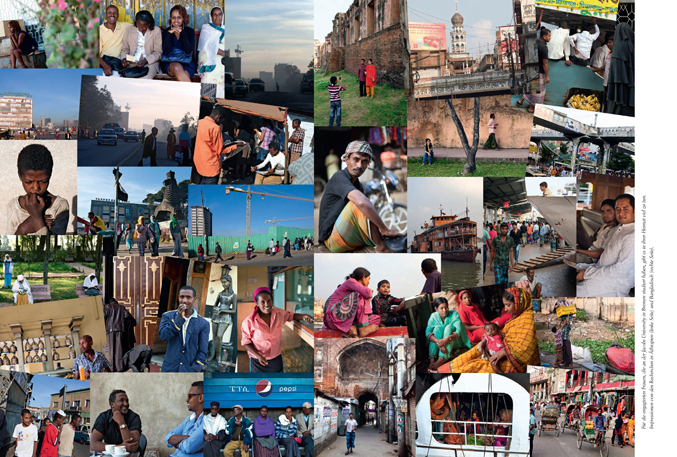
Tearsheet – Brand Eins (Neuland)

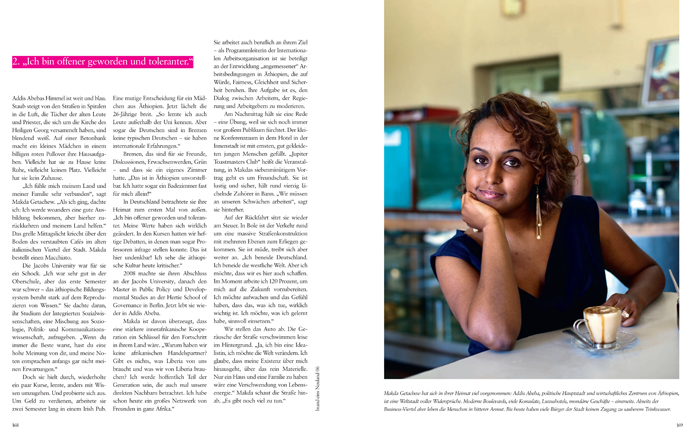
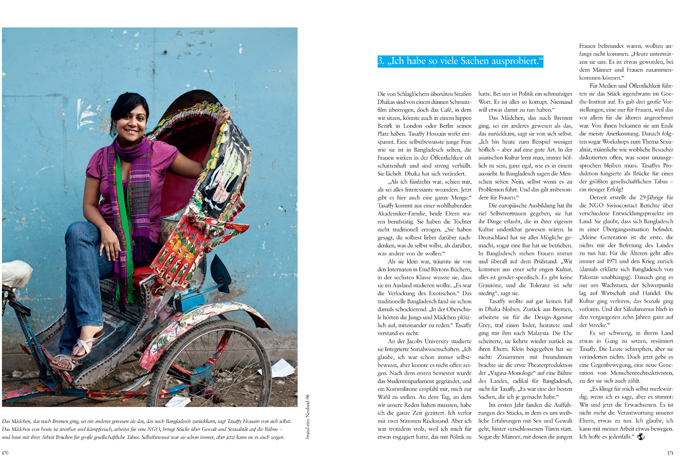
Here’s a recent tearsheet from the German Magazine Brand Eins Neuland. They commissioned me to interview three former alumni of Jacobs University for a special edition on the city of Bremen. I travelled to Ethiopia (Addis Ababa) and Bangladesh (Dhaka) to write the story and made a brief city reportage as well as the portraits.


162_171_NLBremen-3

162_171_NLBremen-4

162_171_NLBremen-5


Tearsheet – Eating Pests


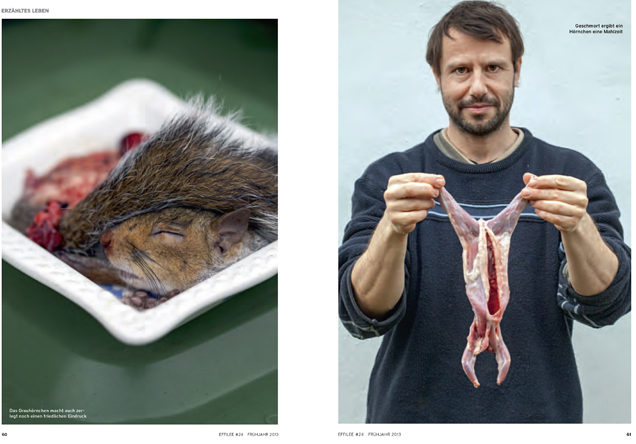
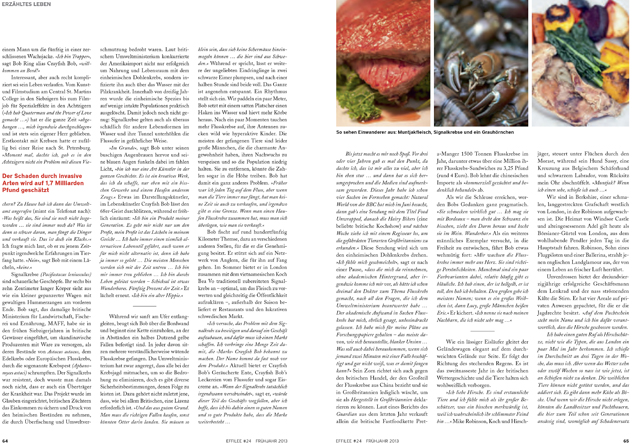
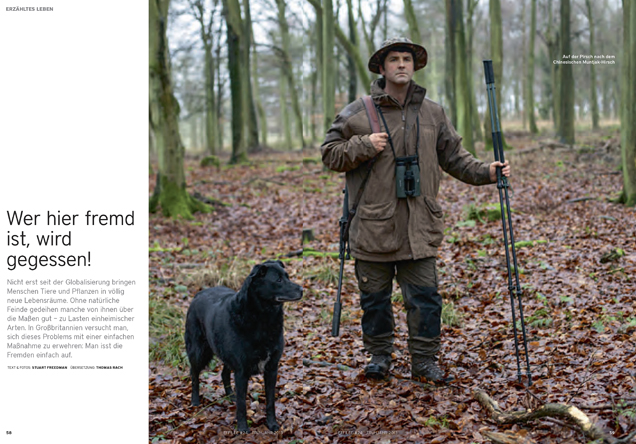
Here’s a recent tearsheet for the German Magazine, Effilee of an article that I wrote and photographed about a particular response to non-native invasive (alien) species – Muntjac Deer, Grey Squirrel and American Crayfish… the German headline has it best – something like, “Who is a stranger here is eaten”. Less sensationally, the piece explores the environmental fallout of introduced species and a discussion about both ‘speciesism’ and, the realization that we now live in an age that may come to be known as the Anthrocene.

Many thanks to the very excellent Crayfish Bob, Fergus Drennan (aka Fergus the Forager) and Mike Robinson


pest01

pest02 pest03 pest04