It’s not every day that I get a ‘phone call asking me to photograph a dinosaur, let alone one being cut up … but there’s a first time for everything.
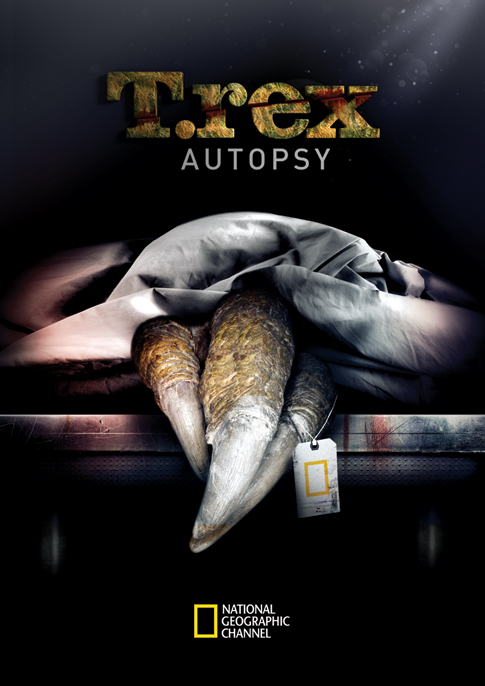
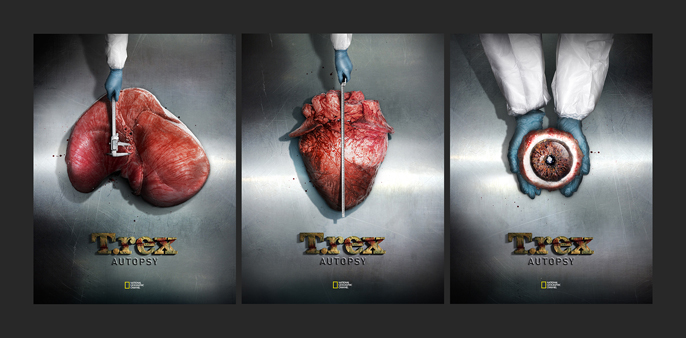
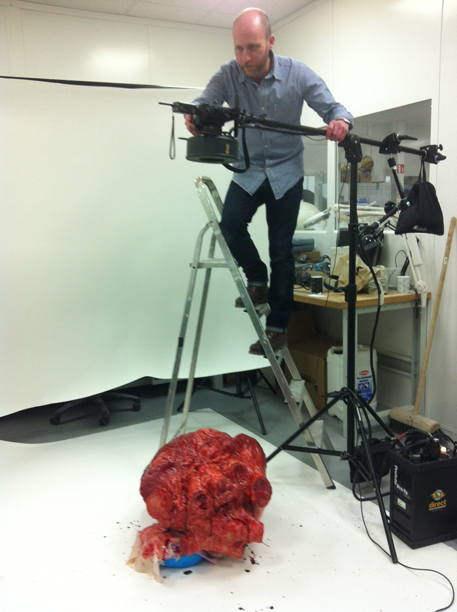
A couple of month’s ago, National Geographic Channels called and asked if I could do just that. The job, in two parts, was to photograph dinosaur ‘bits’ for the poster for the show and secondly, to photograph the unit stills. The ‘organs’ were crafted by the extraordinary Crawley Creatures company in Buckingham (responsible for models in Star Wars and a host of other screen productions) and photographed in their workshop which we (my assistant Tristan Fennel and I) converted into a makeshift studio. The client wanted a ring-flash to simulate a real forensic photography look to the images. Here’s the final poster and a set of various set-ups (with and without models and props) and one of me checking exposures and trying not to fall off a ladder.
And a gory one from the three days at Pinewood Studios with everyone knee-deep in (fake) blood.
In 2013, I made a story about the now sleepy town of Chandannagar on the banks of the Hooghly River near Kolkata.
Chandannagar (or Chandernagore) was first established as a French colony in 1673 when the Nawab of Bengal gave permission to establish a trading mission. By 1730 when Joseph Francois Dupleix was appointed governor, Chandannagar had more than two thousand brick built houses and was the main European entry to the subcontinent. The British East India Company inconveniently flattened a good deal of it during its capture in 1756 but returned it to French rule in 1816. It was governed as part of France until 1950 when the inhabitants voted to join with the newly independent India.
As part of my story, I wandered into the Institut de Chandernagar, now a museum that was the original governor’s palace. Inside, amongst Colonial French artifacts, I found a mystery – and one that I found very moving and upsetting.
Here is what I wrote:
“In another dusty room a harpsichord gently decays, its keys like broken teeth, watched over by a small bust of a stern Napoleon. In a case, the last French flag, dirty and a little tattered. Dupleix’s own bed is enormous but deeply uncomfortable looking. Time has stopped here and moulders in the sticky, wet heat. Perhaps saddest of all, the shattered spectacles of Dr J N Sen MB MRCS Private West Yorkshire Regiment and a son of Chandannagar, killed in action on the night of 22/23rd of May 1916 in France. His, the dubious honour of being the first Bengali to do so. Why he was fighting for a British regiment is a mystery but how sad to die so far from the verdant splendour of the steamy jungle and the smell of jasmine oil in a woman’s hair.”
I had quite forgotten about this until this morning when I heard a short piece on the BBC Radio 4 programme, Today (if you listen it’s at 02:53:51) where Santanu Das (a reader in English at King’s College London) explains why Dr Sen was there. There is also a piece here from BBC Leeds published a few days ago that reports the story.
I remember standing there in the heat of the room feeling so utterly moved by the spectacles that I didn’t take a photograph but just jotted some words down and had to leave.
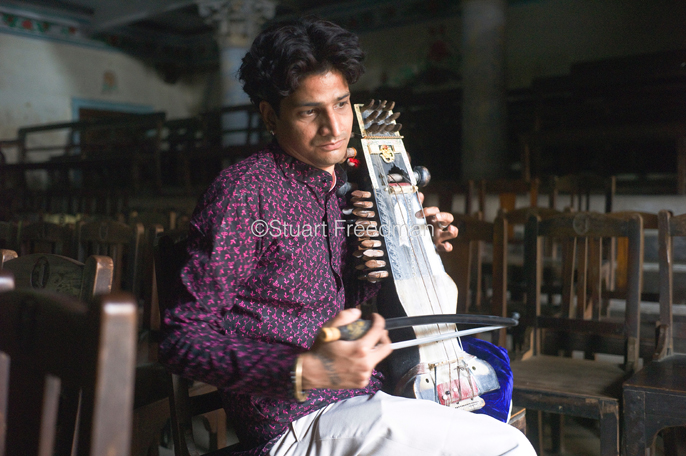
Here are some images from the story. The last frame shows the talented musician Umesh Mishra, playing his sarangi during a practice session for a concert he was giving that night in the town.
Perhaps that might be a fitting visual requiem for Sen.
India – Chandernaggar – Traffic passes the gates to the town of Chandannagar bearing the French inscription, Liberte, Egalite, Fraternite.
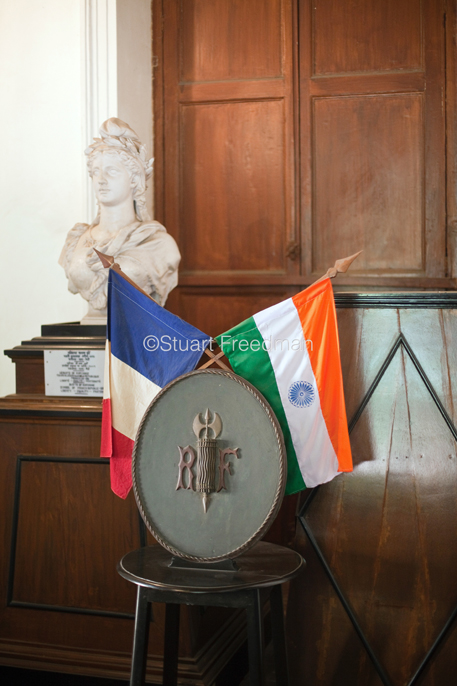
India – Chandannagar – A flag and a bust in the museum at Chandannagar, originally the home of Joseph François Dupleix who was appointed governor of the city in 1730.
India – Chandannagar – A statue of Liberty outside the museum in Chandannagar, originally the home of Joseph François Dupleix who was appointed governor of the city in 1730.
India – Chandannagar – Umesh Mishra, 26 a sarangi virtuoso tunes his instrument before a concert later that night at the Nrityagopal Smriti Mandir
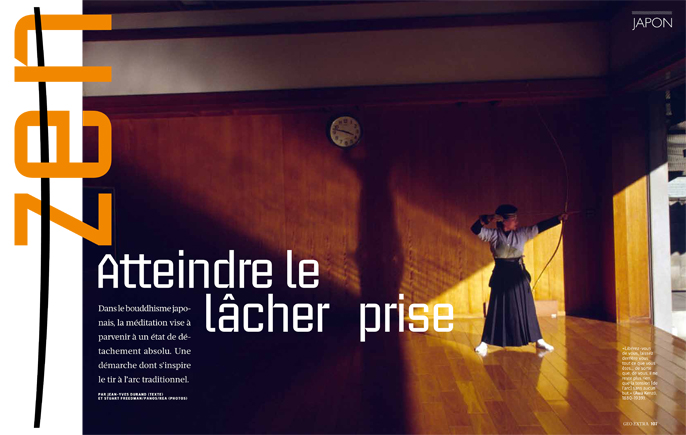
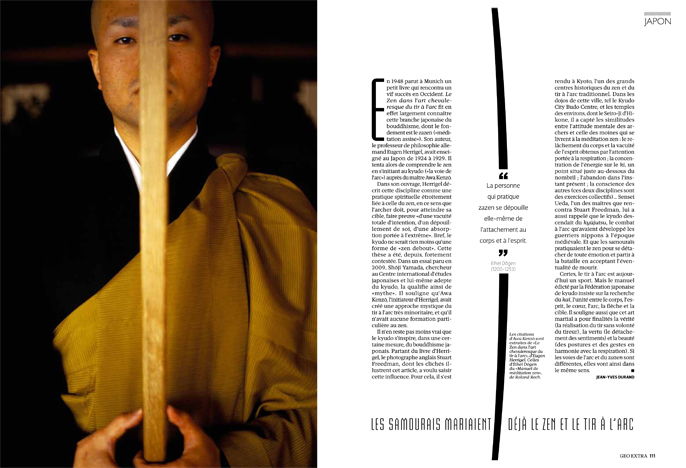
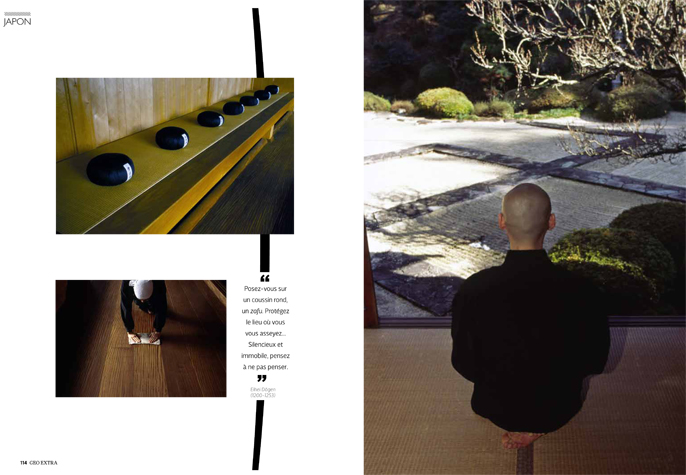
I have a lovely spread in the very first edition of this month’s Geo Extra (France) of my work on Kyudo in Japan. Focusing on the connection to Zen and the art of archery it is one of my favourite stories.
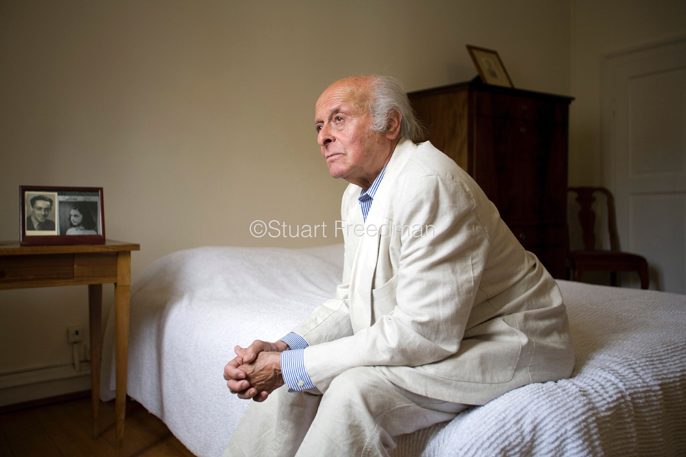
A few years ago I was delighted to photograph Anne Frank’s cousin, the mercurial Buddy Elias in Basel for the Times Magazine. Elias, the force behind the Anne Frank Foundation was charming and entertaining and we spent a very enjoyable day together.
His mood quietened only when I photographed him at his bedside where he keeps a photograph of Anne.
Switzerland – Basel – Bernhardt “Buddy” Elias, Anne Frank’s cousin. Elias sits on the bed in the room that was occupied by Otto, Frank’s father after World War Two. Behind him are photographs of Frank and himself before the war.
Here’s a recent portrait assignment for the French magazine L’Express in London. A very interesting hour chatting with British Arabist author James Barr.
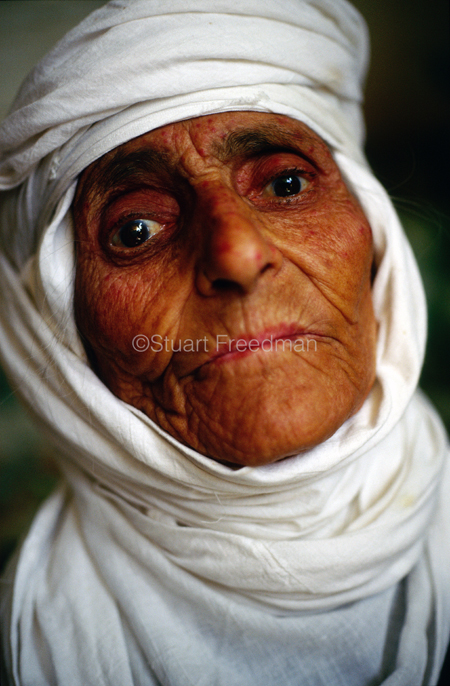
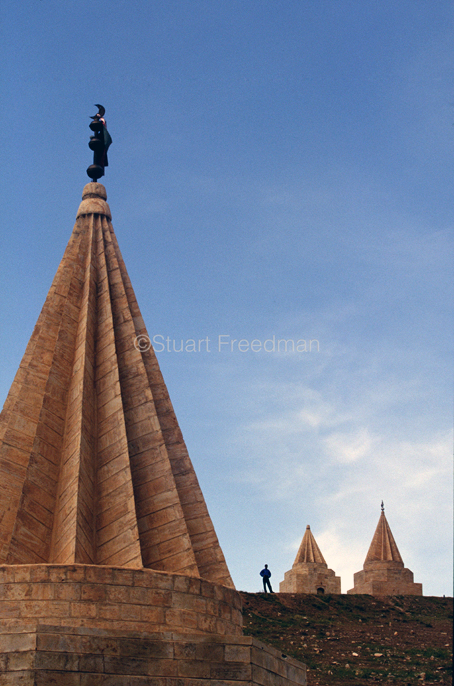
A dozen years ago I made a trip to Iraq in the company of writer Jonathan Glancey for a cover story for the Guardian Magazine. I’ve worked there a few times, but on this occasion we were trying to record the layers of civilisation, preserved as if in aspic under Saddam, that were about to be destroyed by the onslaught of NeoCon wars. By sheer luck we managed to travel the length and breadth of the country (albeit with very nervous security) from Basra in the South to Mosul up north. That is where I photographed (all too briefly) a nervous Yezidi community – a living link to a much earlier Assyrian culture religiously linked to Zoroastrianism. It seems so much that I photographed on that trip has now been destroyed or brutalised. Baghdad, Babylon, Basra, Shia shrines, the ziggurat at Ur, the mosque at Samarra – the list goes on. All broken in the name of a privatised campaign of Imperial plunder. The more I look, the more the work becomes an historical vault of how things were and, like a glance back to the past in a cracked mirror, how they will never be again. Which brings me back to the last remnants of the peaceful Yezidi community exposed and dying on a mountain surrounded by Gulf-backed, anti-Shia jihadis dreaming their fantasies of an empire of blood and slaughtering their way back to a new age of darkness. This Caliphate now ‘rules’ over at least six million people and is consolidating its positions, not imploding despite the West’s best hopes. As I wrote in 2010 about the US ‘withdrawl’ from Baghdad, “The war, born of a lie, born of greed and evil has been a disaster for America and for the world”. Not that the architects of that Crusade will care of course, neither will they spare a thought to the inevitable carnage on Mount Shingal.
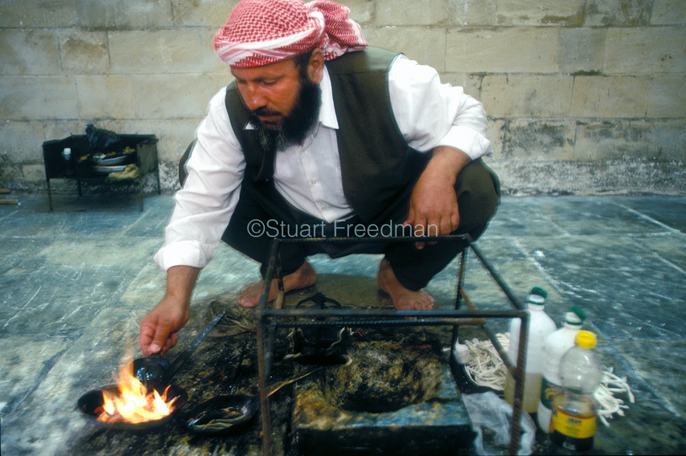
Iraq – Mosul – A Yezidi priest lights a lamp in a religious service at a Yezidi temple. The Yazidis believe in God as creator of the world, which he placed under the care of seven angels the chief of whom is Melek Taus – the Peacock Angel. Speculation that worship of Melek Taus was worship of Satan (who fell) have resulted in Yezidi’s – wrongly – being persecuted as ‘devil worshippers’ throughout their history and persecuted.
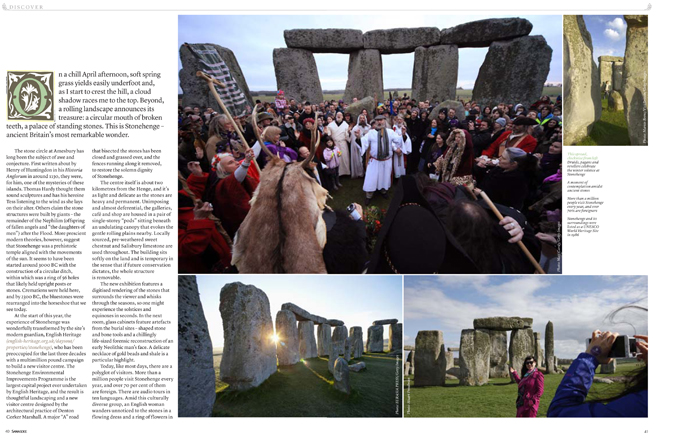
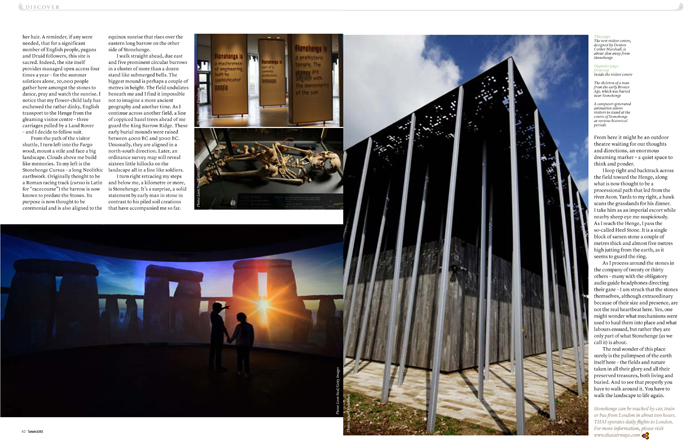
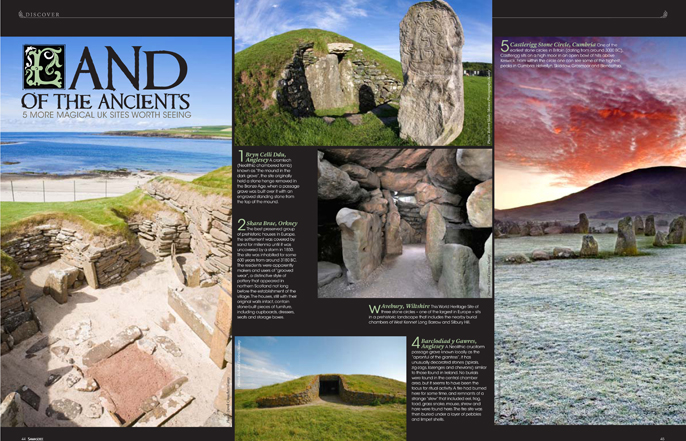
Here’s a recent writing tearsheet commissioned for Thai inflight Magazine Sawasdee about Stonehenge and the new visitor centre. Two thousand words, a lovely day out amongst the stones and the very evocative, magical landscape.