I’m quite a traditional photographer. To the surprise of many who see me working, I still expose my digital images the way I shot transparency film: carefully and with a hand-held meter. In this way, I’ve always had a problem with photographers that shoot real life and then work on their files afterwards to create a different, almost hyper reality. For photojournalists I find this very difficult to deal with and, as I’ve said before, I believe it can create a serious problem of authenticity and voracity. I find myself however at a stage of my career where I want to learn new things. I also find myself increasingly shooting personal projects with an eye to more commercial markets. Recently I’ve been trying to learn how to create a look that I feel happy with and that I can manipulate for a new project (that’s under wraps for now). After some deliberation and a lot of help from my friends – I have something I’m happy with. This may not be a very big step for some – very old hat to some people – but for me it’s an enormous one.
And it’s always good to learn something new. When was the last time we can honestly say that we have?
I won’t be shooting anything serious like this (in the sense of documentary work) but I may change and evolve a new process to reinvigorate things a bit on another front. Old dog/new tricks. Here’s one I made earlier.
What do you think?
before
India – Jaipur – An old man working as a scribe outside a shop in a Jaipur Bazaar
and after
India – Jaipur – An old man working as a scribe outside a shop in a Jaipur Bazaar
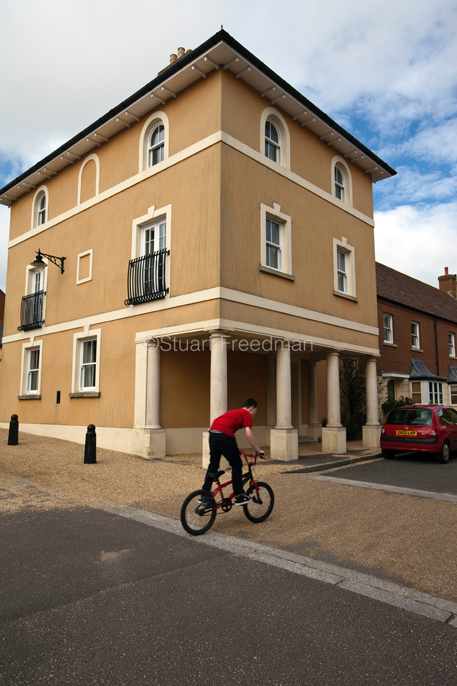
Britain has a housing crisis. The Queen’s speech yesterday underlined the current government’s commitment to develop Ebbsfleet as a Garden City – an idea ironically propounded in the early twentieth century by the Socialist-leaning Ebenezer Howard in Letchworth.
A year or so ago, I wrote a piece for a special edition of the German Magazine, Brand Eins (Brand Eins Wissen) where I traced the history of the British planned communities from the earliest industrial worker’s housing to Prince Charles’ architectural monstrosity, Poundbury. The piece, The Strange Death of the British Utopia (or how Britain lives in her own past) can be found on the writing section of my website here.
UK – Dorset – A boy rides his bicycle past a traditionally styled building in Poundbury. Poundbury on Duchy of Cornwall land is Prince Charles’ attempt to create an urban extension to Dorchester famed for Its pastiche of traditional architecture.
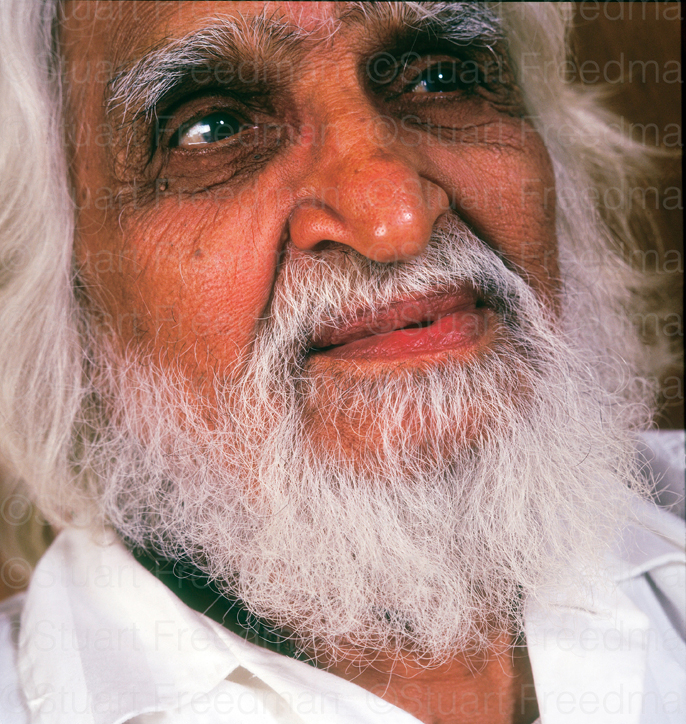
I’m delighted that the V&A in London will be hosting a new show of MF Husain’s work this Summer.
I photographed Husain many years ago in his Bombay studio (I’ve previously written about him here and here) and he was as charming as he was prolific. How awful then that his work, a mixture of European Modernism and Indian imagery, is unlikely to be seen again anytime soon in his home country. He had to flee India in 2006 as Hindu militants put a bounty on his head, charging him with “offending religious sentiment”. The London show is, in a sense, a farewell to Husain but perhaps moreover, potentially to the ideas to which his art spoke: of a secular, tolerant India. As India rushes headlong into the clutches of corporations and those that seek to divide it’s people against one another (rigidly defining those who are and who aren’t an ‘acceptable’ Indian), it ironically may take the legacy of an elderly millionaire painter to act as a metaphor for the freedoms that ordinary Indians – indeed perhaps the idea of India itself – are in danger of losing.
India – Mumbai – MF Husain (b. 1915, Maharashtra) India’s foremost modernist painter at his studio in Mumbai (formerly Bombay). In the 1990s some of Husain’s works became controversial because of their portrayal of naked Hindu deities. Charges were brought against him by Hindu Nationalists but were dismissed by the Delhi High Court. Husain died in exile but his painting continue to command prices of several million dollars at auction.
By tomorrow night, according to Human Rights Watch, more than 1,800 children will have died from preventable, treatable diarrhea, largely linked to lack of clean water and sanitary conditions.
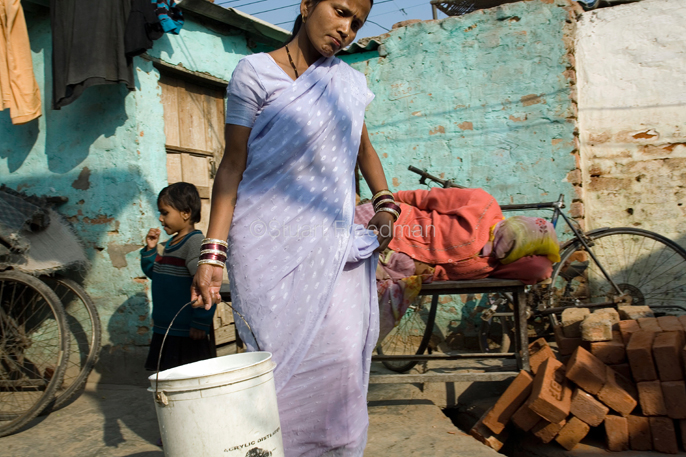
I’ve written several times about Delhi’s water wars and the struggle for its people to find any water, let alone clean water – (see here and here for a start). Here’s an image from the Kusumpur Pahari slum where that struggle for water is a daily one.
India – Delhi – A woman carries water delivered by tanker back to her home in the slum of Kusumpur Pahari. The slum, built more than thirty years ago has no running water or sewage facilities. The only water supply come from the Municipal JAL Board water trucks that visit several times a day. The deliveries are supposed to be free but in reality, residents must pay bribes to have the water delivered.
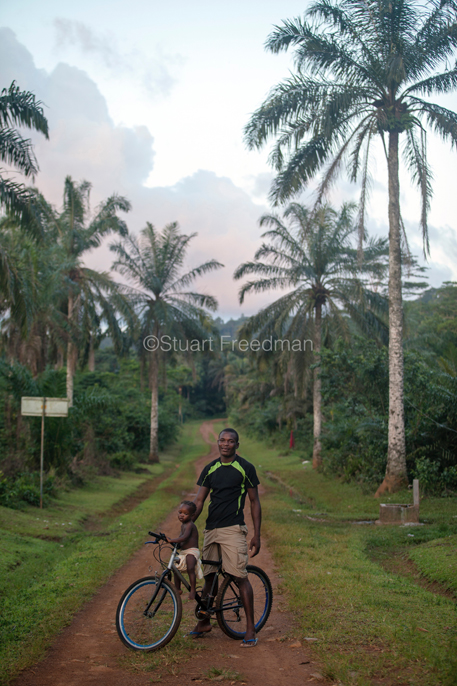
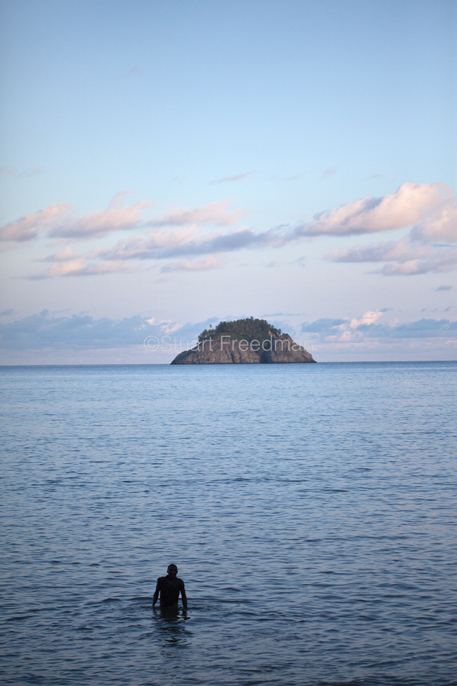
Yesterday was Martyr’s Day in São Tomé and Príncipe, the island nation that I visited last year on assignment for Conde Nast Traveller Magazine. I’ve posted quite a few favourite images from that assignment before (here, here, here and here) but I thought I’d show a little set of images that didn’t make the magazine cut – but that I liked …
Sao Tome – Sao Tome – Boys sit on the wall of the Avenue Marginal 12 Julho
Sao Tome and Principe – Principe – A man poses with his child and his bike, having just ridden out of the jungle
Sao Tome – Sao Tome – Young men swim towards the Isla Sebastao at dusk
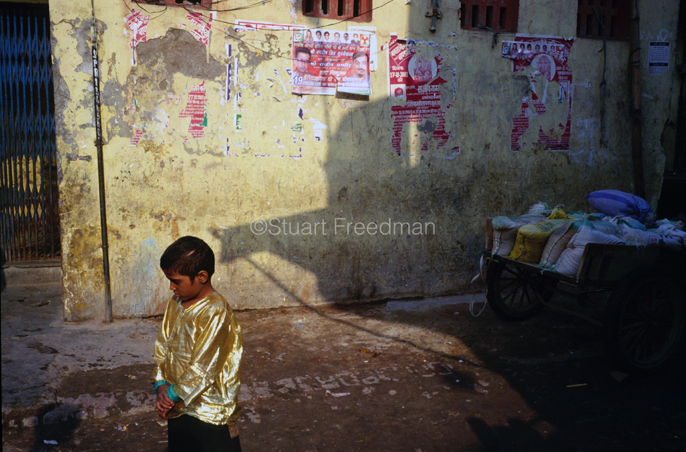
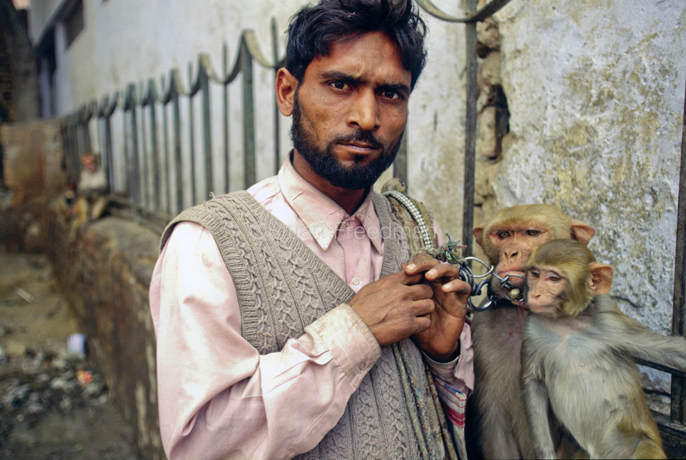
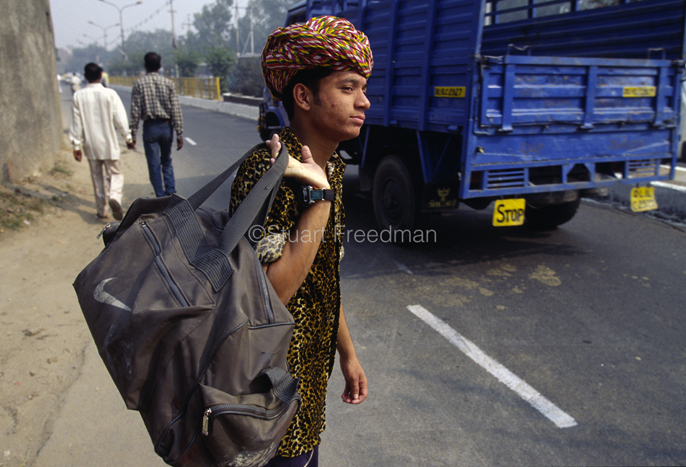
I’ve written several times over the last few years about Delhi’s Kathputli Colony (or as I knew it, Shadipur Depot) – that Dickensian maze of street performers and magicians that somehow floats on the imagination of the city. This time however, it looks like the city will finally swallow the place. According to Tehelka Magazine, residents of the ‘illegal’ slum – some 3500 families that have been there for forty years – may have to move soon to a re-development far to the North. The site at Shadipur where the land was once worthless is now, as the city grows, worth a fortune. It was sold by the the Delhi Development Authority in 2009 to the Mumbai-beased Raheja Builders however, at what Tehelka suggests was seriously undervalued price to make way for a high rise developments. These would, it was promised, include social housing for the performers families. It seems though that even on paper, the proposed number of dwellings for the artists is far short of the actual number needed. Perhaps with some good reason, the artists families don’t believe that the authorities will make good on their promises to allow them back to the area when it is developed. The project is now stuck in limbo as the Delhi Urban Arts Commission has objected to it. The traditional performers are caught. If they move, they lose their homes and their livelihoods. If they stay, they are likely to be evicted and from previous scenarios that may well be violent. They know however that they are simply powerless actors in a city’s development, caught as they are between tradition and a very cruel version of modernity. Since I made a story in Shadipur nearly a dozen years ago, quite a few photographers have worked here and a film was even made of the struggles of the residents. In some senses it was an easy story; a fairy tale in a bleak metropolis. Most people’s recent treatment of it completely ignored the fact that as Delhi grows and divides even more sharply between those that produce it’s wealth and those that exploit it, the story is no longer about a quaint tinsel-town slum. It is about how Delhi will look in the future. It is about what kind of society India wants for its cities and its people.
In 2010 I wrote about the city’s sweeping of street vendors off the pavements before the Commonwealth Games and I mentioned the excellent book, Trickster City, a collection of writings by those at the sharp end of the slum clearances. As I wrote then…
The irony is that many countries celebrate their street culture … and make them a tourist attraction: one has only to think of Singapore and Vietnam. Delhi’s depressing desire to imitate a corporate driven monoculture is certain to lead to a lessening of the city’s heritage.
As I’ve said many times here, I have no sentimental attachment to poverty and no Raj-tinted spectacles through which I view Delhi. I both hate and love the city but the scales are now tipped so far against certain sections of its people that I find it difficult sometimes to walk it’s streets and look some people in the eye.
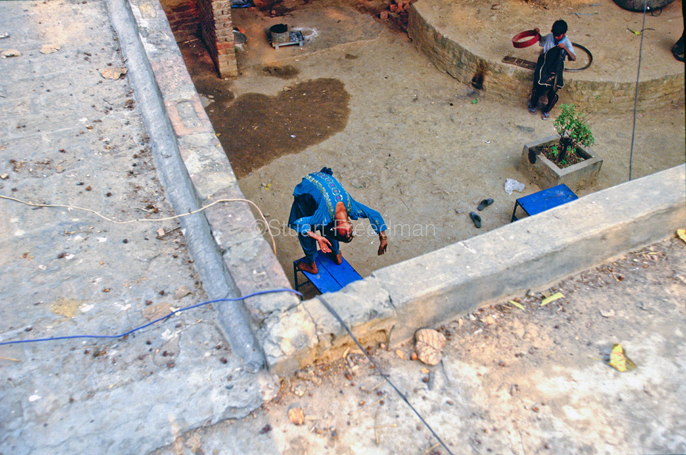
I’ve decided to show some less well known images from the set – some that I have rediscovered. I hope you like them.
India – New Delhi – Reenu, 15 and her brother practice their contortions. Reenu and her family are trained by her mother, herself a former acrobat. The children, when babies, were stretched and contorted to make their bones pliable for the act. The Kathiputli Colony in the Shadipur Depot slum is home to hundreds of (originally Rajasthani) performers. The artistes who live here – from magicians, acrobats, musicians, dancers and puppeteers are often international renowed but always return to the Shadipur slum.
India – New Delhi – A performers son in a gold shirt, Shadipur Depot,
Indian – New Delhi – A man and his performing monkeys. The Kathiputli Colony in Shadipur Depot
India – New Delhi – Chand Pasha, a magician produces a bird from his sleeve
India – New Delhi – A boy on his way to perform his magic act at a wedding waits for a lift by the side of the road, Shadipur Depot
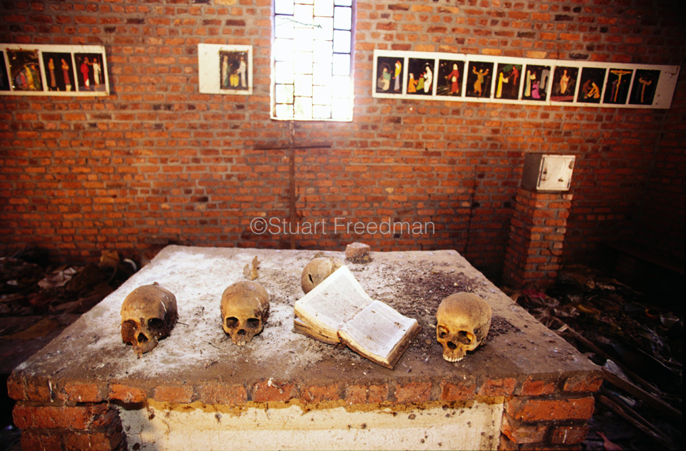
Rwanda – Kigali – Skulls on the alter of the church at Ndera that is now a national monument to those who were murdered inside by Hutu militias during the 1994 genocide