London sees a rise in rough sleepers

UK – London – Friends, Claire, 36 and Edwin, 61, both homeless, talk after a soup run organised by a Christian Charity on the Strand


The Broadway Homeless charity have just reported that London has seen a 43% increase on people sleeping rough in the capital from last year. The only glimmer of home in this figure is that 70% of those aren’t sleeping out for the second night due largely to the actions of charities like Broadway and increased work from outreach teams. This, despite Boris Johnson’s pre-election pledge to ‘end rough sleeping by 2012’. According to a Guardian report in April this year, £5m – underwritten by central government – was diverted from the Mayor’s budget for rough sleepers, to ‘other purposes’. Expect worse to come if proposals to remove housing benefit for under 25’s come to fruition.

There is a clear link between London’s rents becoming more and more unaffordable for large sections of the population and these figures. London is often referred to as a divided city. It isn’t. It is now many cities. Extraordinarily wealth in the centre, guarded and cosseted by technology and private security (tested and honed on the battlefields of Iraq and Afghanistan) swimming in an ocean of increasing poverty – material and aspirational – that finds its dreams impossible. All of this underwritten by a facetious, poisonous narrative of unfulfilled personal responsibility and fecklessness.

According to Stuart Hall, cities of the nineteenth century and twentieth centuries were monuments to Imperial power: motors of industrial production and trade. Globalisation has significantly reshaped London and the people sleeping on its streets (or the thousands a breath away from it) as inconvenient dislocations from an industrial to a service economy dictated to by modern day robber barons fixated on personal wealth and profit. I write so much about the Developing World, Delhi in particular (and recently Athens) that it is easy to neglect what is literally under my feet.



Delhi’s water mafia

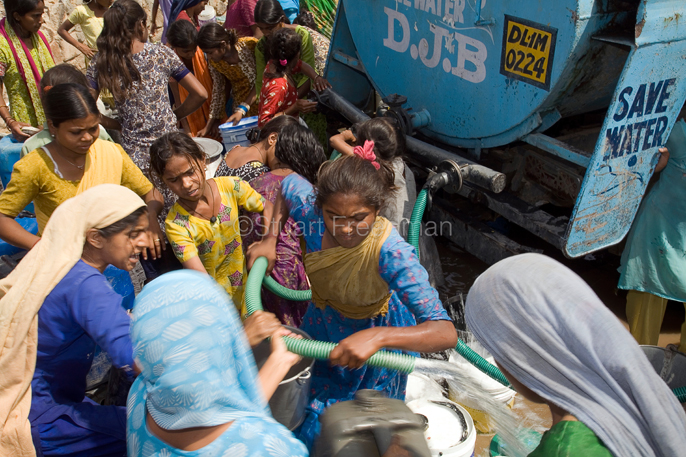
As Delhi labours under relentless 45 degree heat, the availability of water is as ever, a battleground. According to India Today (quoting an investigation by The Mail) reporters have uncovered a nexus of corrupt Delhi Jal Board (the local authority that looks after water in the city) employees and private tanker operators offering water for sale at inflated prices. Delhi, like many Developing World cities has a particularly rickety infrastructure when in comes to water supply. Illegal drilling of underground aquifers and horrendous pollution mean that at the best of times water supply is erratic. Add in seemingly endless low-level corruption and you have a perfect storm. I made a film about Delhi’s water wars a couple of years ago for Channel 4. You can see it here. As I said at the time, for the middle classes, access to water is an expensive and miserable inconvenience but to the poor and the slum dwellers, it is literally a daily fight. As my images show…


India – New Delhi – Slum dwellers scramble for water in Jai Hind Camp. The camp is home to perhaps 3000-4000 migrant workers from all over India. It has no water supplies at all so once a day, the Municipal JAL Board truck delivers some water. There is never enough for the expanding population to go around and some are left with nothing.


India – New Delhi – Women at the Kusumpur Pahari slum fight for water after a tanker delivery. Built more than thirty years ago the slum has no running water or sewage facilities. The only water supply come from the Municipal JAL Board water trucks that visit several times a day. The deliveries are supposed to be free but in reality, residents must pay bribes to have the water delivered.


India – New Delhi – A woman pushes her bike home after filling many cans from a water tanker in Kusumpur Pahari.


India – New Delhi – Middle class housewives in the Vasant Kunj area wait for water to be pumped into their water tanks from a JAL Board tanker. Vasant Kunj is one of many places in New Delhi that has frequent loss of mains water and relies on such infrequent tanker deliveries


Dart Centre Retreat

Some weeks ago I was invited by the Dart Centre, an extraordinary resource for journalists who cover trauma in their work, to participate in a long weekend retreat in peaceful hotel the English countryside. The Dart Centre is a project of the Columbia University Graduate School Programme and seeks to promote best practice in the fields of reporting and understanding of trauma, human rights and conflict world wide. I was accompanied by a lovely group of very experienced journalists from amongst others, the BBC, Channel 4, Al Jazeera, The Sunday Times and The Associated Press. It was an honour to be part of this and my thanks to Dart for inviting me on such an informative and helpful weekend.

My special thanks to my colleague Lefteris Pitarakis who kindly provided an image of me during my presentation talk.


Dart Centre Europe weekend retreat in Weymouth, England, Saturday April 27, Sunday April 28, 2012. (Photo ©Lefteris Pitarakis)


Sarajevo

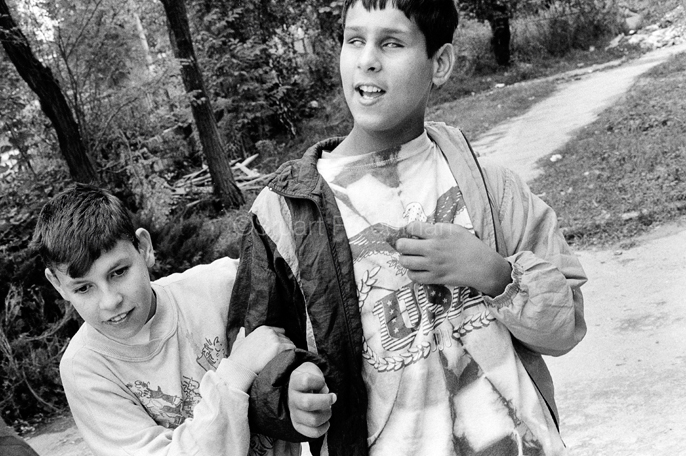
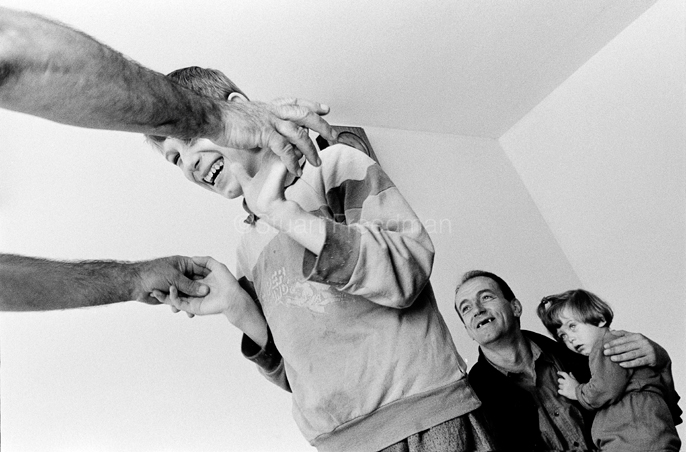
Today marks the twentieth anniversary of the start of the war in Bosnia. Cities, like people can produce strange feelings in visitors – leave tiny traces of discomfort and Sarajevo always struck me as being a little odd; a little schizophrenic… of course I never knew it before the war as a place of civility and culture. The work I made there was always conditioned by conflict but I thought I’d take this opportunity to show a small selection of work from the city taken almost a decade apart that show two different sides. The work from 1997 was made as I’d just returned from a near fatal trip to Sierra Leone and I came back to a landscape of a bitter and fragile winter. I remember the dark coffee and the sleet, the ominous surrounding mountains and the deep, jagged gouges in the buildings – and in the people. I photographed the Blind School, devastated by shelling but trying slowly to come back to life. I photographed children learning to use their canes on a path that the instructor, Borko swore was surrounded by unexploded ordnance. It made the children – and me – very diligent. A decade later I came again in better weather and better spirits with an old friend of mine from Delhi, the critic and writer Meenakshi Shedde to make a story on the Sarajevo Film Festival. Clearly, for me and the city, most of our visible scars had healed.


Bosnia – Sarajevo – Two friends navigate their way to school through a possible minefield, Sarajevo.The Blind School was the only centre in the region for visually impaired children and young adults. It was extensively damaged during the civil war and was used by the Bosnian Serb army as a military position from which to snipe and shell the city. The few teaching staff left during the war managed to visit some of their blind pupils and continue a limited education. The school reopened after the war ended but conditions remained dire.


Bosnia - Sarajevo - A boy makes his way to class in the destroyed Blind School.
Bosnia - Sarajevo - Two friends walk together at the Blind School


Bosnia - Sarajevo - A teacher pays a home visit to a deaf-blind boy and his family


Bosnia - Sarajevo - The Peace Statue and the Orthodox cathedral, Sarajevo


Bosnia - Sarajevo - A square in Sarajevo's Old Town showing the Sebilj and the minaret of the Gazi Husrev-beg Mosque


Bosnia - Sarajevo - Men play outsize chess in a park, Sarajevo


Bosnia - Sarajevo - A couple enjoy drinks in the late afternoon sun at the Sarajevo Film Festival, Sarajevo, Bosnia

Kony 2012

I’m coming late to this because I’ve been away but…

The Kony 2012 project is a film that ‘seeks to make Joseph Kony famous’ and in doing so, expose his deeds to a wider world. All very laudable but the entire thing makes me feel deeply uncomfortable. Certainly, exposure for such dreadful stories are generally to be welcomed however this enterprise bears all the hallmarks of an emotionally manipulative Hollywood fantasy that a crazed warlord just appeared from nowhere. I’m all for people changing the world but perhaps we might have prequel (I’m not sure that’s a word either) explaining exactly how something as awful as Kony came about. Perhaps we might talk about how Kony fits into the post-Amin world of Acholi politics (Kony’s early pronouncements on Museveni and his ‘Tutsi empire’); we might talk about disengagement in American Foreign policy in the nineties in Africa shaped in part by the New Barbarism thesis. We might talk about the allegation that the Ugandan security forces had an incentive to keep the war going to keep themselves in power. We might also talk about how the discovery of potentially billions of dollars worth of oil has made (especially) the US sit up and look at how the situation might be pacified.

Crucially we might try and work out why the film makers are doing this now when in fact the LRA aren’t currently operating in Northern Uganda. A cursory glance at the African and NGO press show that people who have worked in Northern Uganda on development and reconstruction are generally surprised; this story has moved on (and that’s not to deny the suffering involved). Not only that, they are arguing that efforts should be made to rebuild and that rather than these children being ‘invisible’, they are, certainly to people like Glenna Gordon (the author of the notorious and extraordinary photograph of Russel, Poole and Bailey holding weapons) and others who knows the situation, ‘pretty visible’. It is certainly true that this story was difficult to place in the mainstream media – although that didn’t stop a stream of Western photographers in the early 2000’s going and photographing the ‘night commuters’ as the children were called. In that respect the film certainly manages to circumvent traditional media outlets that wouldn’t want poor African kids getting in the way of their advertising. My point though is that if you want to defeat something, you have to understand it. And that is where this film, devoid of a good deal of context and seen through the distorting sentimental prism of a well meaning white film maker and his child (At 07:35 the white narrator says that ‘we are going to stop them’) falls down very badly indeed.

Something strikes me as deeply patronising in portraying this as a fight between good and evil. I spent a few years in Africa in the late 1990’s trying to make the point that the perpetrators of disgusting violence in the guise of child soldiers – were as much sinned against as sinning. An attempt – however flawed – to expose the mental landscape/legacy of exactly these situations of Post Colonial devastation that led to the rise of people like Kony and Taylor and Sankoh rushing in to fill a space that the State could not (or didn’t want to) hold.

I’m sad to relay to those people urging others to be ‘awesome’ and blindly support this campaign that if we blunder in, as well meaning as we might be, we might just make this situation worse. If a generation of American youth think that by capturing Kony and giving him up to the Hague, we can sort this out they are very much mistaken. Doesn’t that sound like the warnings that we were fed about the ‘madmen’ Saddam Hussein and Osama Bin Laden? And didn’t that turn out well? Kony is clearly a product of the political situation in Post Independence Africa. You deal with that by dealing with the ramifications of poverty, politics and corruption. If you take away the justifications for Kony, you take away his legitimacy and his means of survival. And no, that isn’t as sexy and as easily reduceable to sound-bite length for the YouTube generation – but maybe that means the YouTube generation is the one that needs to remove itself from the tit of ‘info-tainment’ and decontextualised explanations. Ugandans aren’t stupid – they aren’t waiting for the White man to come and save them – they are, against very great odds trying to save themselves. They just need the tools to do that without people either exploiting their country or their situation.


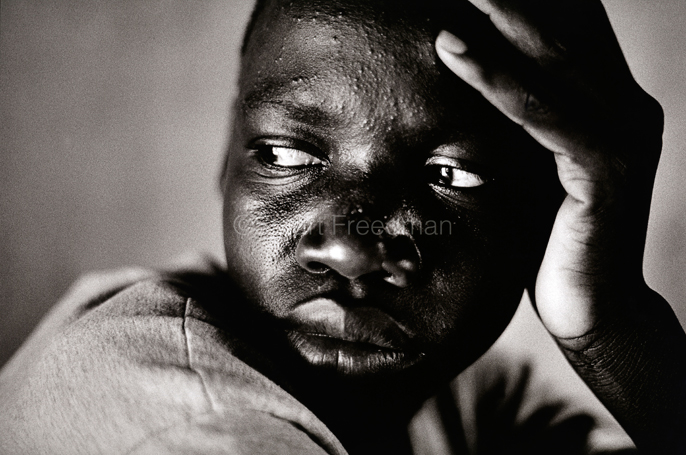
Uganda - Gulu - 'Edward', 16 is so deeply traumatised by what he has done and witnessed as a.soldier for the Lords Resistance Army that he is unable to mix with other children. At night like many of his contemporaries, he wets the bed and recounts his experiences as he sleeps. Gulu, Uganda, August 1997


Uganda - Gulu - A former child combatant for the Lords Resistance Army gives confession to an Italian priest, Father Guido. Gulu, Uganda, August 1997


Uganda - Gulu - 'Andrew', 17. Whilst having to fight with the Lords Resistance Army, he remembers killing at least twelve people... but only two with a machete... Gulu, Uganda, August 1997...'We are the miracles that God made to taste the bitter fruits of Time' Ben Okri from An African Elegy.


Uganda - Gulu - A young man with obvious trauma is reunited with his mother and sisters after almost two years in the bush with the Lords Resistance Army. Gulu, Uganda


Athens

I just returned from almost a week in Athens on assignment for a magazine writing about how Greeks are coping on a personal level with the rape of their country by international finance. I found many things – a grinding poverty for some – more akin to the Developing World than to Europe but also small stories of hope; of people learning again what community and solidarity mean. Small stories, beautiful stories.

I had barely a couple of hours over a day or so to make some images and none of them reflect the immediate situation, but they were a therapy – going out and photographing people and their lives in the markets and on the streets.

My special thanks to journalist and fixer extraordinaire, Helen Skopis for patiently putting up with me and making all the ‘phone calls – and to two young and very talented photographers, Angelos Tzortinis and Alkis Konstantinidis who were generous enough to share their time and considerable experience to give me some background as only photographers can.

Thanks to all.


Greece - Athens - A child in costume plays in front of a sentry during the Changing of the Guard in front of the Tomb of the Unknown Soldier, Syntagma Square


Greece - Athens - A fishmonger looks indulgently on a Greek Orthodox priest as he buys seafood from a stall in the Athens Central Market on Athinas Street

Dickensian Delhi


I visited the Dickens exhibition at the Museum of London yesterday – a really powerful evocation of the writer and his times.

What always struck me about Dickens was his ability to convey the despair and misery that the city around him housed: no stranger to debt, his past was marked by the fear of slipping back into poverty. I think that the exhibition gave me a very apt adjective to describe the dark underside of a city that I have worked in so much, namely Delhi. Perhaps all societies lurching through such painful Capitalist development are like this – but certainly Delhi is Dickensian in its mercilessness and its cruelty. The lack of a safety net and not-so-subtle machinations of caste mean that the people who produce the city’s wealth by selling their labour are completely at the mercy of the vagaries of the Market and the violence of the street. In a similar fashion to Dickens’ time they must struggle against a whole moral code that tells them they are nothing if they have no status. I’ve mentioned here before a slim volume of reportage and writing from those at the bottom of the dark underbelly of this metropolis called Trickster City and the more that I looked at the exhibition yesterday, the more I thought of Delhi.

Dickens’ “slime and ooze of the Thames” is the realm of the boy who picks bits of detritus out of the poisoned Yamuna River on a pathetic raft of polystyrene and rags. Budi Lal, pouring through other people’s filth and rubbish and ignored by all except the snarling dogs and his debtors is Boffin, the Rag Picker from Our Mutual Friend. The men burning plastic bags could be from the slum in Bleak House; Tom-All-Alone’s.

All of them would recognise Victorian London.


India - New Delhi - A young scavenger on a raft, beneath the road bridge across the Yamuna River by the Kudsia Ghat, New Delhi. Scavengers trawl the filth of the river to find objects to sell. The river is so polluted that it can no longer support life, however a community still live and work on it's banks.


India - New Delhi - Buddhi Lal, 30 works before dawn collecting refuse to recycle and resell. Known as 'rag-picking' he can make perhaps Rs150-200 a day and is often chased and attacked by stray dogs because of the smell of his work


India - Delhi - Destitute men gather around a fire made from refuse and plastic bags to try and keep warm. It is estimated that around 100000 people are homeless in the city


Delhi’s century and the case of the missing statues…


“We are pleased to announce to Our People that on the advice of Our Ministers tendered after consultation with Our Governor-General in Council, We have decided upon the transfer of the seat of the Government of India from Calcutta to the ancient Capital Delhi….” (Quoted in New Delhi Making of a Capital, Malvika Singh and Rudrangshu Mukherjee, Roli Books, 2009)

With that on 12 December 1911, George V sealed Calcutta’s fate as British India’s capital city. Delhi, itself a city of seven (perhaps more) kingdoms became the new political centre of India.

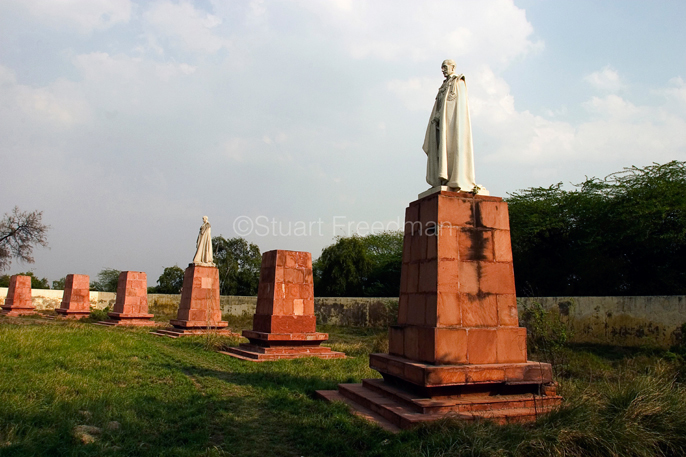
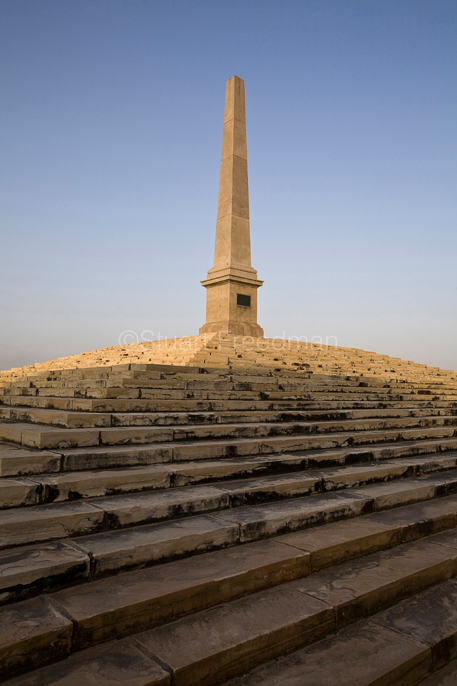
Today, a forgotten, dusty patch of land is all that remains of the Delhi Durbar site; an obelisk marking the spot where George made his speech, Ozymandias like now in its echo. Most Delhi-wallahs know nothing about it, nor the park adjacent which holds statues of Imperial notables and a likeness of the King himself that, until the 1960s, stood beneath a Chhatri next to India Gate.

I first visited the place in 2005 and found, with some difficulty, a silent park off a minor road next to the main highway. Last week, in search of story about New Delhi’s first century as capital I drove out again only to find the place in ruins. Much to my and my taxi driver’s amazement the place was being demolished by hand by day labourers. It seemed to me that some of the statues had gone or were at least moved (although I cannot confirm if this is true or indeed how many) and certainly some of the plinths had been destroyed.

I am by no means a fan or apologist for the Raj – indeed as I’ve written before I hold very little truck with romantic India but I was  dismayed that such a crucial piece of India’s history looked so … desolate. I haven’t had chance to ascertain exactly what the plans for this remote graveyard of empire might be but I sincerely hope that they are, as the foreman told me, to restore the place. If true, it is, like the Commonwealth Games building saga, a very furiously last minute – very Indian – job.

It could all of course be a dastardly case for Delhi’s detective extraordinaire, Vish Puri


The first image was taken in 2005 – the rest are as I found the site last week:

India - Delhi - Statues of British Imperial notables, with Lord Hardinge, Viceroy Of India (1911-1916) to the right at the Coronation Park next to the site of the Delhi Durbar of 1911


India - Delhi - Commemorative obelisk at the Coronation Park marking the throne of George V during the Delhi Durbar of 1911
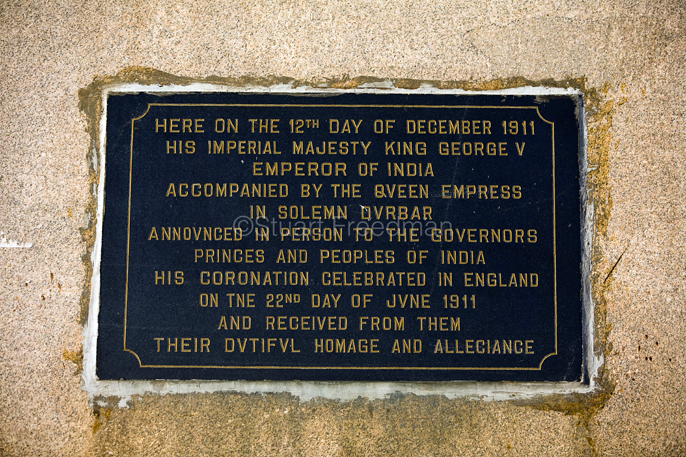
India - Delhi - Commemoration Plaque below the Obelisk that gives the date of the Delhi Durbar of 1911


India - Delhi - Statue of Sir Guy Fleetwood Wilson at the Coronation Park next to the site of the Delhi Durbar of 1911


India - Delhi - Women construction workers demolishing the Coronation Park next to the site of the Delhi Durbar of 1911


India - Delhi - Security guards watched over by the statue of George V next to the site of the Delhi Durbar of 1911


Finally, the Chhatri that originally housed the statue of George V in the shadow of India Gate –


India - New Delhi - The empty canopy next to India Gate that originally held the statue of George V

Ten glorious years…


According to General Stanley McChrystal, America’s war in Afghanistan began with a “frighteningly simplistic” view of the country.

An illegal, arrogant, NeoCon invasion was premised on a basic misunderstanding?

No shit

As our colonial masters in the White House might say.


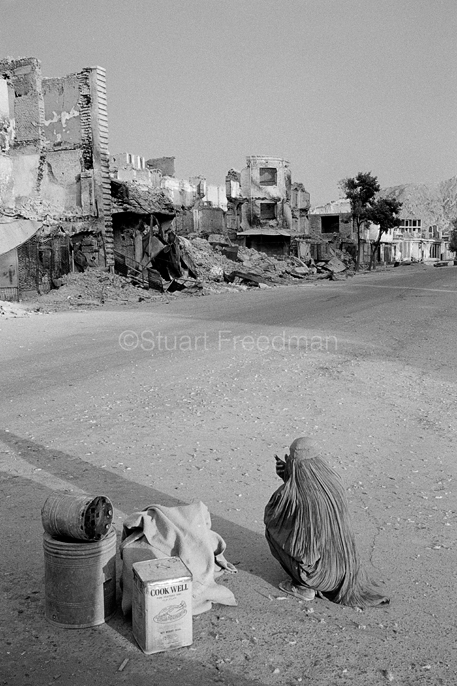
Afghanistan - Kabul - A woman begs on the street

Andrzej Krauze

After visiting Hackney twice in the last month for the first time in several years (once to work on a story and once to mentor a young photographer), I’m currently re-reading Patrick Wright‘s excellent ‘On living in an old country‘. Wright’s one of those brilliant cultural commentators who should be far better known and the edition I’m reading (because I lost my original copy) has illustrations by another underrated genius, the Polish cartoonist, Andrzej Krauze. I knew Krauze from his biting satire in the Guardian and a few years ago, I got to photograph him for a magazine. I remember that I had very little time (it wasn’t his fault) and that I didn’t have chance to put up the usual lighting rig. Anyway, here are two images from the job… I remembering noticing the label that reads ‘Mr Pen’ at the top right of the chest of drawers he kept his work in…

UK - London - Polish cartoonist Andrzej Krauze at his studio