Afghan Boy

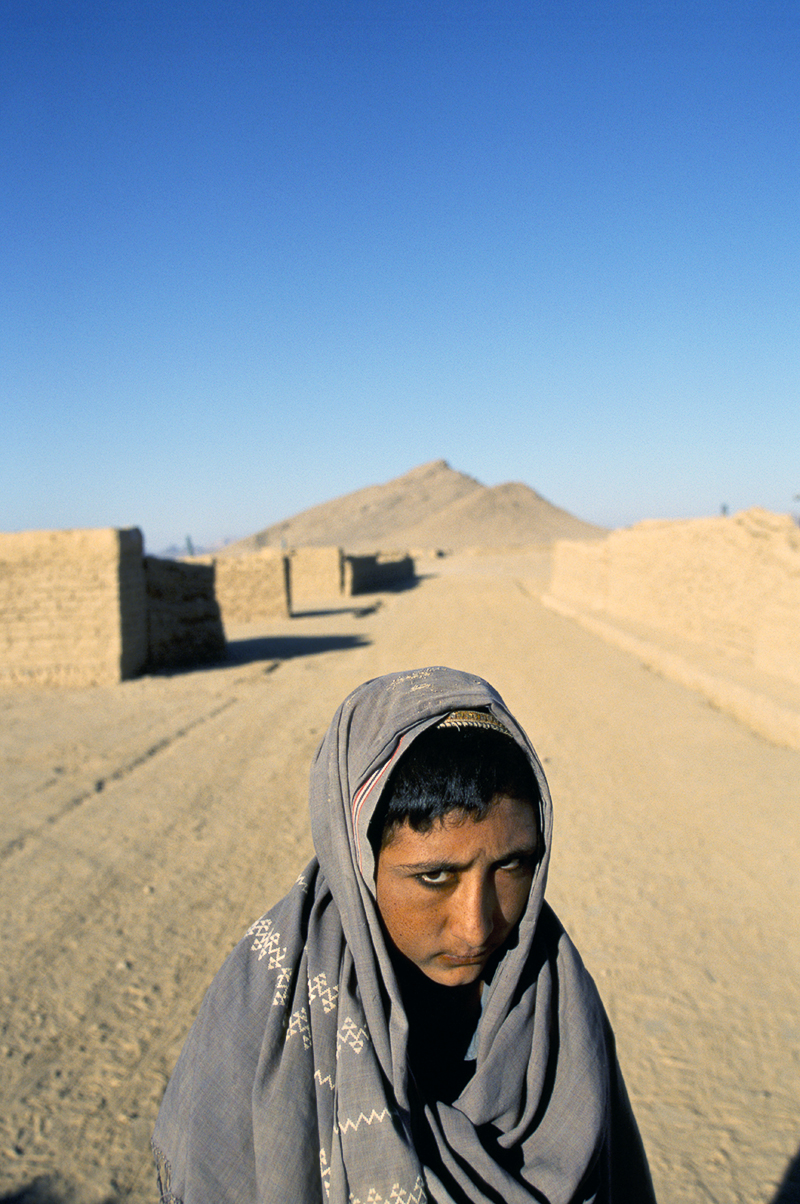
Afghanistan - Kandahar - A portrait of an Afghan boy

I had been debating for days whether to post something on Afghanistan (in light of our Great Leader’s brilliantly orchestrated ‘outburst’ about Pakistan’s involvement) when Time Magazine produced its most blatantly propogandist cover story for decades. The piece cynically manipulates Jodi Bieber‘s (a friend and ex-collegue from Network Photographers) dignified image of a mutilated woman to suggest that a withdrawl from this illegal, NeoCon war would lead to more barbarity. Presumably similar barbarity to the drone attacks killing countless civilians in both Pakistan and Afghanistan and the illegal, drug-infested, torture-soaked, Karzai government.

Let’s make no mistake here, the excuse that the brave forces of democracy are in South Asia to prevent another 9/11 is entirely spurious. Afghanistan did not attack America. The majority of those that did came from our staunch ally, Saudi Arabia – known for its robust defence of human, especially women’s rights. That a minority of Islamicists may have had bases in Afghanistan is more the result of Indo-Pak (and therefore CIA) intelligence machinations. Afghanistan has been raped and used by every invading army since the British had a go twice in the Nineteenth century. Are we surprised that such actions have spawned amongst the Pashtun tribes a spiteful and extreme Islam? I’m more surprised that it hasn’t been worse. My visits to Afghanistan (starting in 1994 to cover the Siege of Kabul for Der Spiegel) have consistently shown Afghans to be peaceful and kind – not that you’d get that from a whole generation of photographers and writers who have covered this forago ’embedded’ courtesy of the American Industrial-Military Complex. Surely they are all turban headed (‘rag-heads’ are Iraqis… obviously) women-hating, primitives. Still, if we can’t understand ’em and they don’t want our democracy, let’s bomb them, eh? Bomb them ‘back to the Stone Age…’.

According to Matthew Hob, the former US Marine who resigned his post as Political Officer in 2009, “The Pashtun insurgency, which is composed of multiple, seemingly infinite, local groups, is fed by what is perceived by the Pashtun people as a continued and sustained assault, going back centuries, on Pashtun land, culture, traditions and religion by internal and external enemies … I have observed that the bulk of the insurgency fights not for the white banner of the Taliban, but rather against the presence of foreign soldiers and taxes imposed by an unrepresentative government in Kabul.”

This campaign is lost as is the Mirage of the Good War.

Minor celeb not feeling well shock

I was indebted to learn from every single media outlet today that a minor British celebrity who used to be married to a footballer and apparently sings, has contracted malaria. And on holiday too…

Apparently she’ll live. Unlike the approximate 850000 people still die from malaria every year even though simple insecticide-treated mosquito nets could significantly reduce mortality if made readily available to all people in regions where the disease is endemic. This according to Ann Veneman, head of UNICEF speaking on World Malaria day on April 25th. No – funny I didn’t hear much about that either.

According to Veneman, 90 per cent of those afflicted live in sub-Saharan Africa, and the majority of those deaths are children under five years old. “This shocking disparity is even more unacceptable” she concludes. I completely agree. Thankfully I am no longer cynical about how the media works (…) and certainly wish no-one to be ill… however – on recovery, expect brave celeb to do more charity work on said disease with full media coverage and nothing to change.

Burundi - Ruyigi - Jean, an orphan of Burundi's ethnic conflict at Shalom House shivers under a blanket with malaria. Shalom House was founded by Marguerite Barankitse (known as the 'Angel of Burundi') in 1994. During the genocide, Barankitse, at great personal risk, managed to save 25 orphans, Hutu, Tutsi and Twa and built a home for them. Currently, she has helped more than 10,000 orphans and separated children who can grow up in an "extended adopted family" in security, education and love.

More virgins

My usual response to a magazine (or indeed anyone these days) asking for images for nothing usually elicits a response that is better left unwritten. However I was recently approached by a very interesting Dutch academic journal in the Hague called Donau who were making a special about sex and money… specifically permission to use the Albanian Virgin images in relation to a fascinating article by Gerda Dalipaj. Of course I said yes. It’s here.

You can see my last posting about the Avowed Virgins here

The Ahmadiyyas – Fear and Silence

Some years ago I travelled to Pakistan to make a set of images about religious persecution. I lasted only a few days – for the first time in my career, I left a story because I honestly felt that my presence was putting lives at risk.

I had been invited to Rabwah, the spiritual home of the Ahmadiyya community, a peaceful minority Islamic movement that questions the finality of the Prophet Mohammed. Pakistan is the only country to classify Ahmadiyya’s as non-Muslims.

In 1984 General Zia issued Ordinace XX supposedly to prevent “anti-Islamic activities”. It forbids Ahmadiyya’s to call themselves Muslims, call their places of worship mosques and worship publicly. It forbids them from quoting from the Koran, preaching in public, seeking converts, or producing, publishing, and disseminating their religious materials. To gain a passport, all Pakistanis must declare themselves non-Ahmadiyyas.

The repression is of course a smokescreen to hide Pakistan’s myriad social and political problems and the Ahmaidiyyas are a perfect scapegoat. This is not about religion, it’s about state power. As Tariq Ali wrote in the London Review of Books in 2007:

“Back in the heart of Pakistan the most difficult and explosive issue remains social and economic inequality. This is not unrelated to the increase in the number of madrassas. If there were a half-decent state education system, poor families might not feel the need to hand over a son or daughter to the clerics in the hope that at least one child will be clothed, fed and educated. Were there even the semblance of a health system many would be saved from illnesses contracted as a result of fatigue and poverty. No government since 1947 has done much to reduce inequality”.

On 28 May 2010, 93 Ahmaiddyas were murdered in Lahore by gunmen who attacked two of their mosques during Friday prayers.

Ali Dayan Hassan of Human Rights Watch told the BBC the worshippers were “easy targets” for militant Sunni groups who consider the Ahmadis to be infidels. The Pakistani state is in trouble however and Ahmadiyyas are not the only minority to suffer persecution. According to Minority Rights, Baluchis, Hindus, Mohhajirs, Pushtuns, Sindhis and Christians all suffer.

Today, I read with interest an opinion piece in Dawn by Moshin Hamid (an author whose Moth Smoke I read and enjoyed some time ago) called Fear and Silence from which I take the liberty of quoting from at length. I think it elegantly echoes Pastor Martin Niemöller’s famous (attributed) quote “First they came for the Jews…”. Hamid says:

“Because the heart of the issue isn’t whether Ahmadis are non-Muslims or not. The heart of the issue is whether Muslims can be silenced by fear.

Because if we can be silenced when it comes to Ahmadis, then we can be silenced when it comes to Shias, we can be silenced when it comes to women, we can be silenced when it comes to dress, we can be silenced when it comes to entertainment, and we can even be silenced when it comes to sitting by ourselves, alone in a room, afraid to think what we think.

That is the point. ”

One can only hope that all people of tolerance and faith will not be silenced.

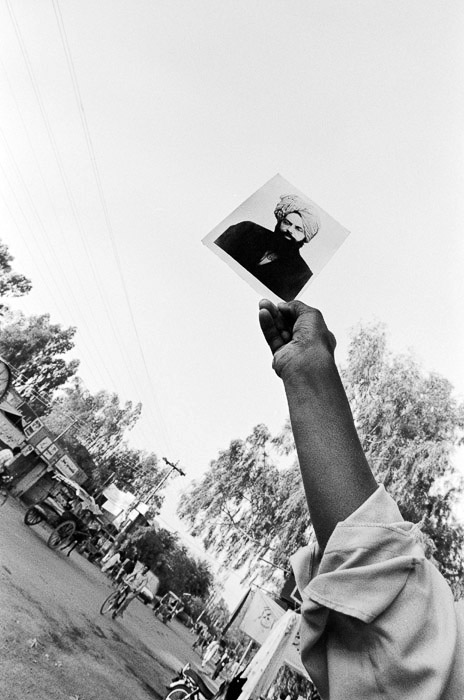
Pakistan - Rabwah - A man holds a portrait of the Ahmadiyya prophet, Ahmed. Also known as Qadiani's, the Ahmadiyyas are the followers of Hazrat Mirza Ghulam Ahmad Qadiani (1835-1908). According to his followers, he was the founder of the Ahmadiyya Muslim Jama'at and The Promised Messiah and Imam Mahdi. The Ahmadiyya (Qadiani) movement in Islam is a religious organisation with more than 30 million members worldwide. Ahmadiyyas are now banned from calling themselves Muslim in Pakistan and suffer terrible discrimination under anti-blasphemy laws and are regularly murdered for their faith.

Pakistan - Rabwah - Two Ahmadiyya men after prayers at their mosque
Pakistan - Rabwah - An Ahmadiyya imam leads his congregation
Pakistan - Rabwah - An Ahmadiyya woman weeps at the grave of her murdered child
Pakistan - Rabwah - An Ahmadiyya elder, blinded for his faith
Pakistan - Rabwah - A woman beneath a portrait of her murdered husband
Pakistan - Rabwah - Ahmadiyyas praying at their mosque
Pakistan - Rabwah - After prayers, a boy plays ball in a mosque

The Karmapa Lama

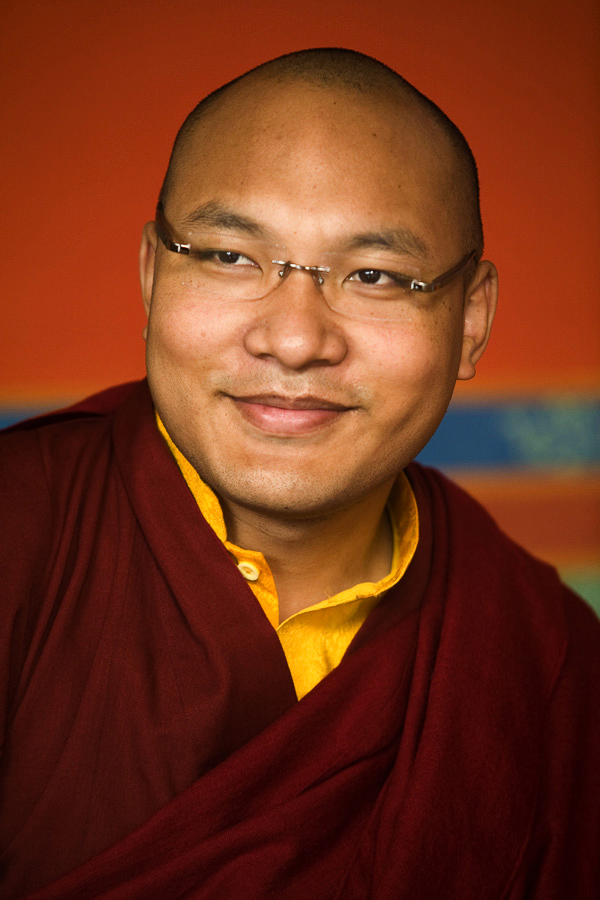
The French news magazine L’Express have just published an assignment I made for them in February on Ogyen Trinley Dorje, His Holiness, the seventeenth reincarnation of The Karmapa Lama in Sarnath, northern India. The Karmapa is head of the Karma Kagyu school of Tibetan Buddhism and predates the Dalai Lama’s lineage. This particular incarnation is disputed however and another candidate, Trinley Thaye Dorje has also been proclaimed and enthroned in another part of India. There’s a reasonable discussion on the succession issues here.

In any case, the assignment gave me a three-fold opportunity.

Firstly, I had the pleasure of meeting the Karmapa, a shy and I thought rather melancholy figure – a bird in a gilded cage if ever there was one – whose keen interest in photography was restricted to photographing the outside world from his window. The child of nomads, he ‘escaped’ from his Chinese hosts first to Nepal and then to India from where he was supposed to conduct a european tour this summer only to be thwarted by the refusal of the Indian authorities to grant him an exit visa. Which has of course nothing to do with Chinese pressure.

Secondly, I had the chance to go back to one of my favourite cities, Varanasi – one of its many names – I think the most intriguing of all north Indian cities.

Thirdly, I had the pleasure to work with Marc Epstein, the charming Foreign Editor of L’Express with whom I managed to put the world to rights over long walks along the ghats of a city we both hadn’t visited for a couple of years. I managed to explain the relative intricacies of cricket to a Frenchman who was curious of all the sporting activity along the river and made him an honoury Tottenham Hotspur fan for his trouble. For this of course, I apologised in advance: an inevitable entrĂ©e to a world of pain and disappointment…

Some pictures…

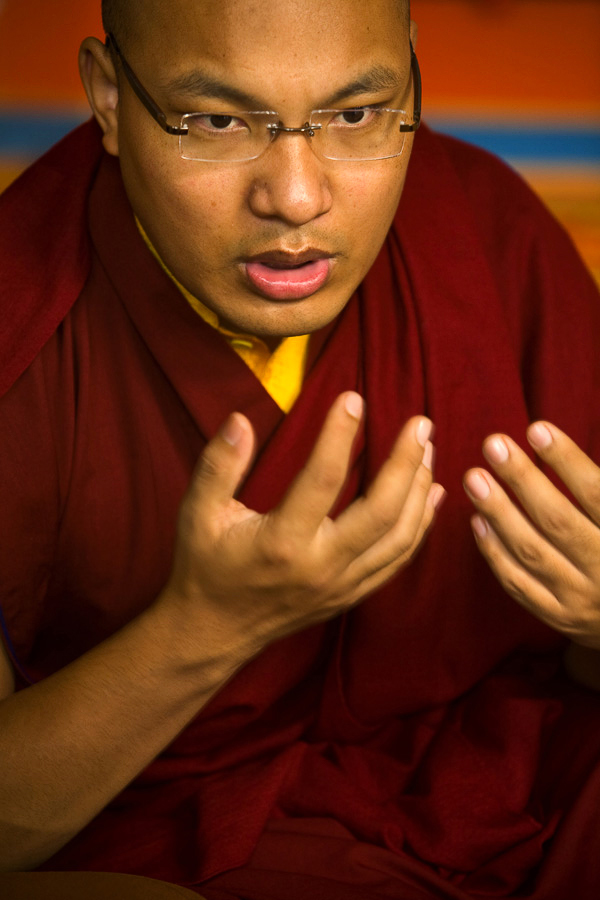
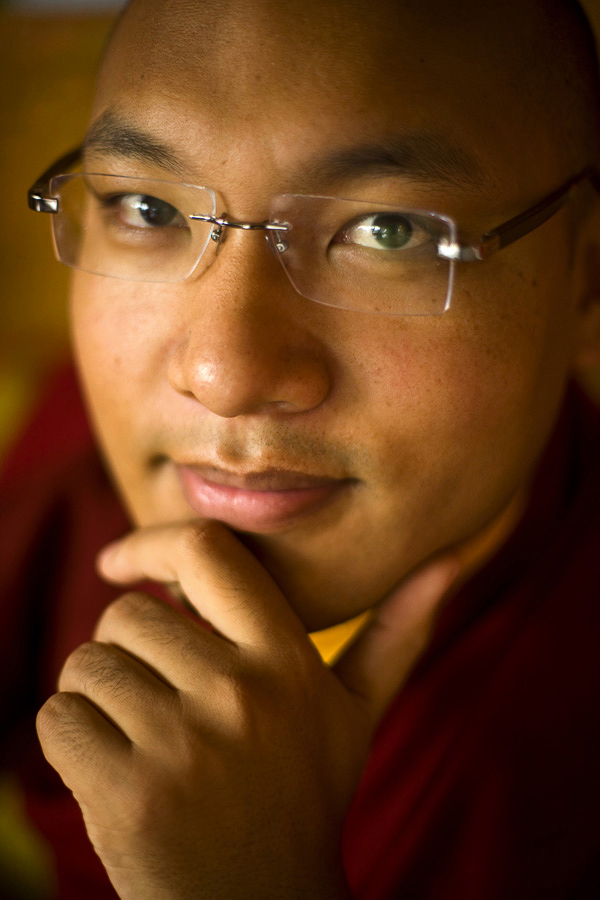
India - Sarnath - Ogyen Trinley Dorje, His Holiness, The seventeenth reincarnation of The Karmapa Lama at the Vajra Vidya Institute for Buddhist studies

India - Sarnath - Ogyen Trinley Dorje, His Holiness, The seventeenth reincarnation of The Karmapa Lama at the Vajra Vidya Institute for Buddhist studies
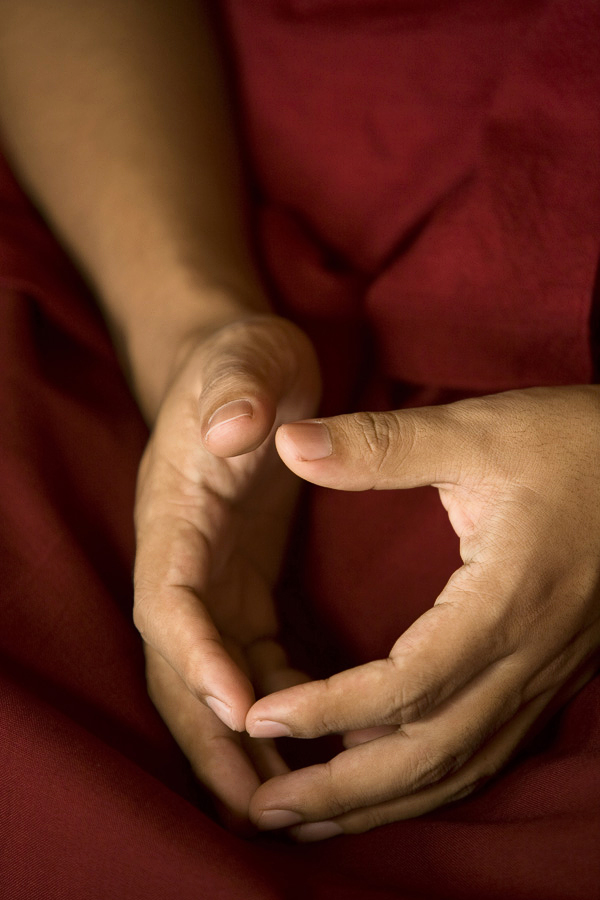
India - Sarnath - The hands of Ogyen Trinley Dorje, His Holiness, The seventeenth reincarnation of The Karmapa Lama at the Vajra Vidya Institute for Buddhist studies
India - Sarnath - Ogyen Trinley Dorje, His Holiness, The seventeenth reincarnation of The Karmapa Lama at the Vajra Vidya Institute for Buddhist studies
India - Sarnath - Buddhist prayer beads sit on top of a page of sutras at the Vajra Vidya Institute for Buddhist studies
India - Sarnath - Disciples listen to a lecture by Ogyen Trinley Dorje, His Holiness, The seventeenth reincarnation of The Karmapa Lama at the Vajra Vidya Institute for Buddhist studies

India - Sarnath - Detail of the feet of a disciple listening to a lecture by Ogyen Trinley Dorje, His Holiness, The seventeenth reincarnation of The Karmapa Lama at the Vajra Vidya Institute for Buddhist studies
India - Sarnath - Buddhist monks reading a newspaper at the Vajra Vidya Institute for Buddhist studies
India - Sarnath - Buddhist monks reading and chanting sutras at the Vajra Vidya Institute for Buddhist studies
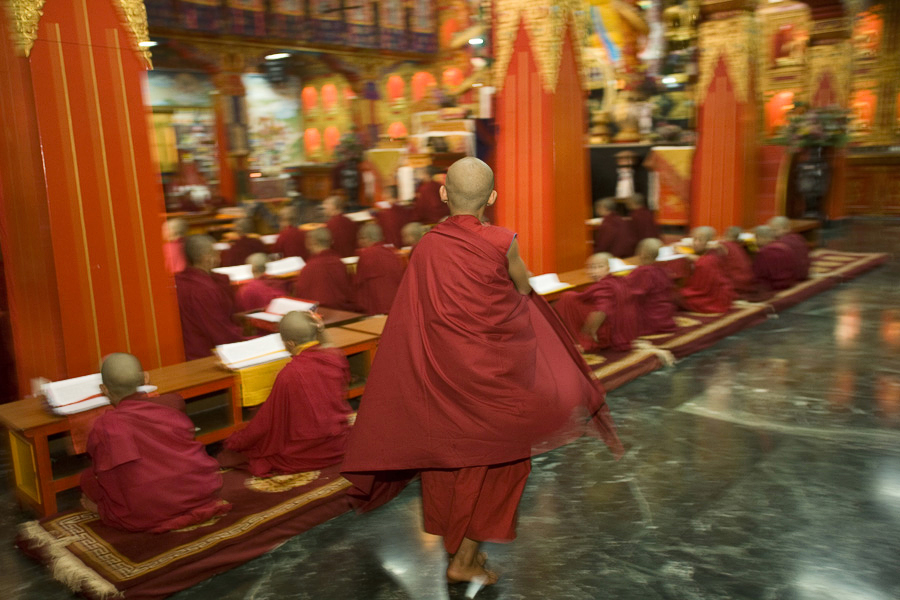
India - Sarnath - A young monk rushes back to his place during a sutra chanting session at the Vajra Vidya Institute for Buddhist studies
UK - Sarnath - Two Buddhist monks study a text at the Vajra Vidya Institute for Buddhist studies
India - Sarnath - Ogyen Trinley Dorje, His Holiness, The seventeenth reincarnation of The Karmapa Lama, Stuart Freedman (l) and Marc Epstein (r)

‘The Ambassador will see you now…’

I was a little saddened to read this week that India’s oldest car maker, the Kolkota-based Hindustan Motors, said reduced demand and accumulated losses had wiped out over half its net worth.

Since the liberalisation of the Indian economy in the 1990’s India’s roads have been filled with gleaming new cars. I do sincerely hope that Hindustan’s most famous vehicle has some mileage in it yet.

The Ambassador is such a feature of the Indian landscape that it’s demise is almost unthinkable. I think it’s by far the most reliable and sturdy vehicle on the Indian roads and, by dint of its ubiquity, it can be repaired almost anywhere very quickly. Usually by a combination of hammers, tape and brute force.

The extraordinary Raghubir Singh who it is my great regret never to have met, used the car as a device in his wonderful, A Way into India.

Here’s a recent image of mine of an ‘Ambi’ parked on a quiet street in Tamil Nadu with a rather lovely garland hanging from the mirror

India - Tamil Nadu - A garland of flowers hang from the mirror of an Hindustan Ambassador car in the town of Swamimalai

The enemy within

I have written before about the increasing use of private security and the erosion of liberty in public space so I was interested in a piece in today’s Guardian, ironically, the result of a Freedom of Information request:

City of London security guards told to report ‘suspicious’ photographers

It seems increasingly clear that unelected, untrained and under qualified security guards from private companies (operating for profit) are deciding who has freedom to walk the streets and carry out perfectly legal activities … like taking photographs in a public space.

Interestingly, the article asserts that both the Association of Chief Police Officers (Acpo) and John Yates, Britain’s most senior counter-terrorism officer, have warned that police risk losing the support of the public through the inappropriate use of section 44.

Surely not.

I first photographed the burgeoning private security industry in the late 1990s for several magazines and over the years have continued to have assignments to do so.

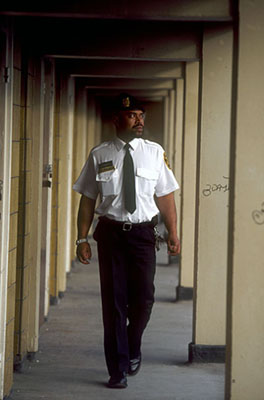
UK - London - A private security 'operative' patrols South London council estate
UK - London - A security guard at a gated community monitors a bank of closed circuit television screens.

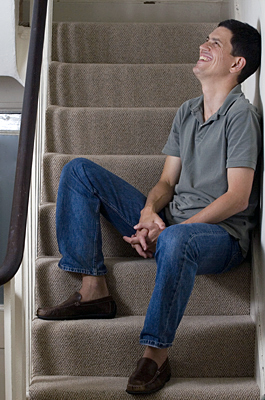
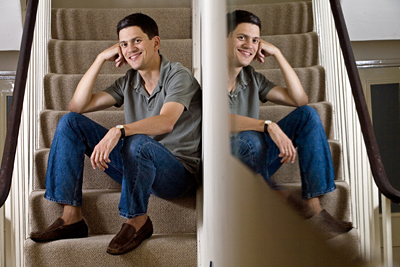
David Miliband

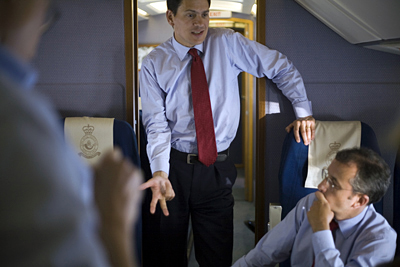
As the Labour government loses power and its party leader, the front runner to take the reins is David Miliband. I made a large story about him for the Times Magazine a little over a year ago.

UK - London - David Miliband, Secretary of State for Foreign and Commonwealth Affairs and Member of Parliament for South Shields, Tyne and Wear at his home in London
Belgium - Brussels - David Miliband, Secretary of State for Foreign and Commonwealth Affairs and Member of Parliament for South Shields, Tyne and Wear during a live broadcast with a TV channel in the European Parliament, Brussels, Belgium
UK - London - David Miliband, Secretary of State for Foreign and Commonwealth Affairs and Member of Parliament for South Shields, Tyne and Wear at a meeting at his official residence with the Pakistani Foreign Minister, Mr Makhdoom Shah Mehmood Hussain Qureshi
Ukraine - Kiev - David Miliband, Secretary of State for Foreign and Commonwealth Affairs and Member of Parliament for South Shields, Tyne and Wear with his staff on Board the Queen's flight bound for Kiev, Ukraine for talks with the Ukranian government
UK - Birmingham - David Miliband, Secretary of State for Foreign and Commonwealth Affairs and Member of Parliament for South Shields, Tyne and Wear at a meeting in Birmingham with the Pakistani Foreign Minister, Mr Makhdoom Shah Mehmood Hussain Qureshi and members of the British Pakistani community
Belgium - Brussels - David Miliband, Secretary of State for Foreign and Commonwealth Affairs and Member of Parliament for South Shields, Tyne and Wear during an informal meeting with the former Prime Minister, Tony Blair in his office in the European Parliament, Brussels, Belgium
Belgium - Brussels - David Miliband, Secretary of State for Foreign and Commonwealth Affairs and Member of Parliament for South Shields, Tyne and Wear during an informal meeting with the Serbian Foreign Minister, Vuk Jeremich
Belgium - Brussels - David Miliband, Secretary of State for Foreign and Commonwealth Affairs and Member of Parliament for South Shields, Tyne and Wear holds his head in his hands during a live broadcast with a TV channel in the European Parliament, Brussels, Belgium

Hang Parliament…

So, as two further national newspapers swing their support away from Gordon Brown, all indications a week before the election point to a hung Parliament controlled by the Tories. My views on this are complicated: when all the parties represent the Market and the status quo there IS no choice, however my formative political years were formed under the Thatcher government and so I reserve a particular dread for the Bullingdon Club‘s entry into Number 10.

I haven’t photographed elections – or much British politics – for a long time. I do however remember a particularly depressing April dawn dropping rolls of film off at Der Spiegel’s office after photographing John Major celebrating victory in 1992.

Subsequent years of PR-dominated press conferences and stage-managed photo opportunities made me less interested and I turned my attention to the world outside the UK. I do occasionally get to photograph politicians however. Here’s one of the Man that would be King taken a couple of years ago on assignment for the Times Magazine.

UK - Oxfordshire - David Cameron, Conservative Party Leader and Conservative MP for Whitney in his constituency office

I leave my final thoughts to one of my favourite essayists, Emma Goldman, whose views on the subject echo my own:

“If voting changed anything, they’d make it illegal…”

No gods, no masters.

Happy May Day.