Good news from Africa

I was heartened by the news on Friday that Sub-Saharan Africa is leading the global decline in new HIV cases. It seems that countries in this region have seen an infection rate drop of 25% apparently due to better education and preventative measures.

A few years ago, I was commissioned by Positive Lives to spend a month on the Rwandan/Burundian border looking at the lives of those affected. The Rwandan government had made great strides in their efforts to get people tested and educated about the risks but crucially about how to live and cope with the illness. The work won the Amnesty International Award in 2006.

As I said at the time, it seemed to me that the Rwandese, packed tightly into their borders, had learned the real meaning of forgiveness and acceptance.

Rwanda - Kibileze - Saidi Ruhimbana (40) comforts his wife Anastasie Hwamerera (40). Both have AIDS but Anastasie is very sick. In order to pay for medicine for their treatment they have spent their savings and taken some of their children out of school. Saidi was formerly a builder but is now too weak to lift anything heavy
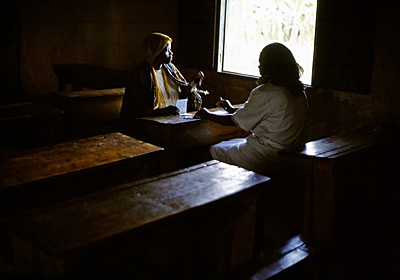
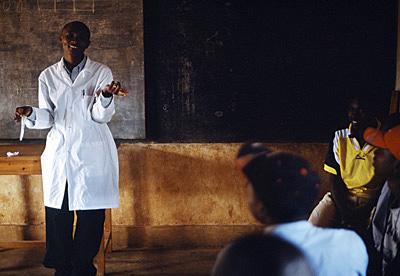
Rwanda - Kibileze - Theogene Niyongana gives a lecture on HIV and AIDS to a group of people waiting to be tested for the virus at Kibayi Health Centre. By addressing their status, sufferers learn how to increase their life expectancy.
Rwanda - Kibayi - A woman receives her AIDS test result with shock at Kibayi Health Centre. The result is 'undetermined' which means she will have to be re-tested
Rwanda - Kibileze - A woman is given the results of her HIV test at Kibayi Health centre
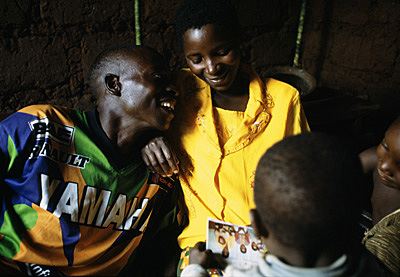
Rwanda - Kibileze - Jean Pierre Sibomana (31) who is HIV positive, laughs with his wife and children (all HIV negative) about his wedding photographs. Kanage village

Rwanda - Kibileze - Teacher Potamienne Komezusenge (37) plays with her youngest child. She contracted HIV from her husband who died of the diesase and is buried in the back garden under a wooden cross. She says "As long as I feel strong, I feel OK emotionally... sometimes there is stigma here... but the biggest problem is money". Kibileze, Rwanda
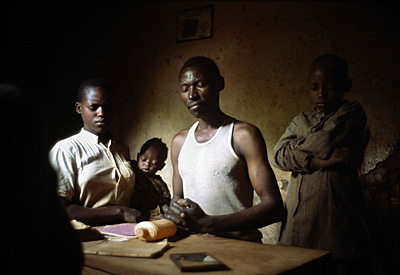
Rwanda - Kibileze - Emmanuel Singizumakiza, a health educator shows a boy how to use a condom
Rwanda - Kibileze - Narcisse, who is HIV positive and the president of his local AIDS Association - Girimpuhwe ('Have compassion') - prays with his family at home at dawn before they start work in the fields. Kibileze, Rwanda
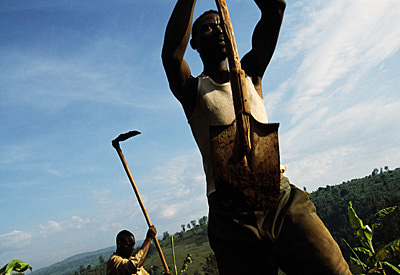
Rwanda - Kibileze - Narcisse, who is HIV positive and the president of his local AIDS Association - Girimpuhwe ('Have compassion') works in his fields

Without labouring the point, it was a pleasure to be taking pictures that weren’t simply showing people dying. I see so many photographers making work that purports to show an explanation of a subject but actually is little more than graphic cliche of a situation. That, at a time of crisis for visual journalism, isn’t enough. It isn’t enough to simply point a camera at someone and say ‘how terrible’. It says much that everybody has a camera and thinks that they have a right to call themselves a journalist by photographing the nearest horror without context or understanding. We earn a dubious and tenuous ‘right’ to report the world to itself by entering into a dialogue with it: an impossible covenant with a subject that tries not to perpetuate stereotype, easy answers or sloppy conclusions. It isn’t enough to go and photograph beggars on the streets of India for example to further our own purposes under the cover of journalism. We had better have a damn good reason to invade people’s spaces and lives. If you need an example of what is decent and committed about documentary practice look no further than that of my former Network Photographer colleague, Gideon Mendel who has spent more than a decade committed to the portrayal of HIV/AIDS in exactly the way I am talking about.
It’s just not cricket

Oh dear. If there’s one  thing that unites Pakistani’s it’s cricket, so it’s with great sadness that I read about the twists and turns of the latest betting scandal involving the touring team at the moment. I never really ‘got’ cricket: I’m a Spurs fan (it’s a world of pain…) and grew up playing football. I did however make two reportage features about Imran Khan over the years. As for trying to actually photograph cricket – or any other sport for that matter – it’s a fantastic skill that I don’t possess.

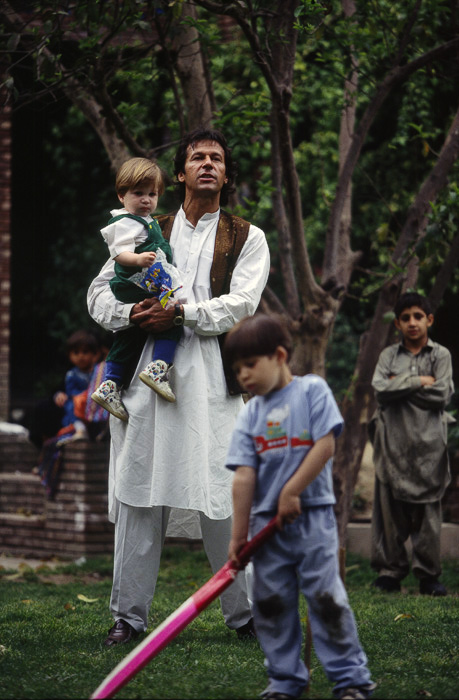
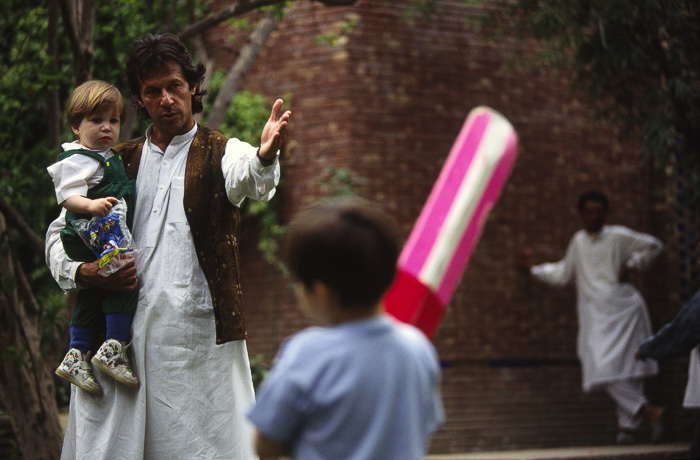
Here’s a couple of images of him at home in Lahore (in more peaceful days) explaining the intricacies of the game to his nephews…

Pakistan - Lahore - Imran Khan the former Pakistan International Cricket player at home with his nephews playing cricket
Pakistan - Lahore - Imran Khan the former Pakistan International Cricket player at home with his nephews playing cricket.

The end of Delhi’s street culture?

I was saddened but entirely unsurprised to see in a recent BBC report that Delhi’s excellent street hawkers were being evicted before the Commonwealth Games. With grinding monotony it seems that vegetable sellers, cobblers, presswallahs, hawkers and other undesirables that the city depend on are being moved off – often despite applying for licenses that never come.

According to the National Association of Street Vendors, Delhi has something like 350000 hawkers that sell their wares on the streets. Most live a hand-to-mouth existence and, if they are the main breadwinners in families of perhaps five people, the economic fallout from a large section of Delhi’s working class will be enormous.

The streetwallah’s plight follows Delhi’s drive to evict as many beggars and ‘undesirables’ from the city as it can. Andrew Buncombe’s piece for the Independent here is worth reading.

Earlier this year I read a fascinating book, Trickster City; an anthology of writings from the ‘belly of the metropolis’ by young, working class writers dealing with slum life and eviction. A voice rarely heard – an almost Dickensian cityscape rarely seen by Westerners and desperate to be hidden by the State authorities.

The irony is that many countries celebrate their street culture – especially food – and make them a tourist attraction: one has only to think of Singapore and Vietnam. Delhi’s depressing desire to imitate a corporate driven monoculture is certain to lead to a lessening of the city’s heritage.

My images start with Kishori Lal and his family. Lal, a tailor from Rajasthan, set up his little stall outside the wall of a ‘big man’ twenty two years ago. He takes up the story: “There was no footpath here then. The tree that you see on the footpath is standing on a narrow strip of land between two sewage lines that run underneath. I asked the maali (gardener) to plant it there and got
the sapling for him. If I have any trouble, the Saheb helps me out. After so many years here, like this tree I have also taken roots in Delhi. But who belongs to this place? Even the sahibs are from outside.”

India - New Delhi - Kishori Lal, a tailor and his family under an Ashoka tree

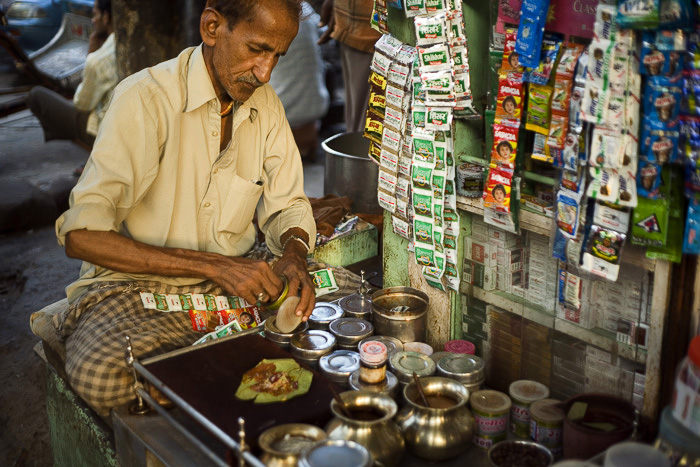
India - Delhi - A paan wallah making paan in Old Delhi. Paan consists of chewing Betel leaf (Piper betle) combined with the areca nut. It is chewed as a palate cleanser and a breath freshener. It is also commonly offered to guests and visitors as a sign of hospitality and as an "ice breaker" to start conversation. It also has a symbolic value at ceremonies and cultural events in south and southeast Asia. Paan makers may use mukhwas or tobacco as an ingredient in their paan fillings. Although most types of paan contain areca nuts as a filling, some do not. Other types include what is called sweet paan, where sugar, candied fruit and fennel seeds are used.
India - Delhi - A street vendor frying potato cakes on a stall
India - Delhi - A Chai Wallah or tea maker makes tea in Old Delhi, India. Traditionally Indian tea is a mixture of tea leaves, water, sugar and sometimes spices boiled together and strained into cups
India - Delhi - A man eats a plate of street food
India - Delhi - A man eats street food bought from a hawker

The women and the mountain

In an extraordinary and wonderful turn of events, I have just heard that India’s Environment Minister Jairam Ramesh has blocked Vedanta Resources’ controversial plan to mine bauxite on the sacred hills of the Dongria Kondh tribe.

Vedanta Resources, a UK-registered ftse -100 company wanted to mine The Niyamgiri Hills in Orissa which are sacred to  Dongria Kondhs, a protected tribal group of ‘original’ Aboriginal peoples.

According to Survival International, Mr Ramesh said Vedanta has shown a ’shocking’ and ‘blatant disregard for the rights of the tribal groups’. The Minister has also questioned the legality of the massive refinery Vedanta has already built below the hills.

I wrote about this back in May 2009 (India – Vedanta’s shame) and also for Tehelka in late 2007 (Knocked Out by Bauxite).

Here are some images from the story.

India - Orissa - Dabu Limajhi, a Dongria Kondh tribal woman in Kankasarpa village, shares a joke with friends in her house
India - Orissa - Dabu Limajhi, a Dongria Kondh tribal woman in Kankasarpa village
India - Orissa - A Dongria Kondh woman carries a pot of water on her head in front of the Vedanta plant, Lanjigargh

India - Orissa - sunset over the Niyamgiri hills. The hills are sacred to the Dongria Kondh and are worshipped as a deity

Shadow People

A taste of a new project that I started to work on this year about the mental health crisis in Delhi is showcased by my agency Panos here.

The poor have fallen out of the narrative of modern India. Delhi, the nation’s capital, has been transformed into a vibrant, wealthy metropolis. But where extremes of wealth tread, illness and despair follow, and Delhi is today in the grip of a mental health crisis.

An estimated 20 million Indians suffer from serious mental disorders, many of them hidden from public view by their families. Delhi is a city of migrants and every day thousands more arrive to try to escape the poverty of the village. Many will remain homeless, divorced from the traditional family structure and culture. Delhi’s army of homeless is conservatively estimated to number around 100,000 people. Mental illness in this group is treated either by violence from the rest of the community or traditional ‘quack’ or faith healers. Delhi has had a traumatic history. The city was destroyed by the British in 1857, by Partition nearly a century later and riven by anti-Sikh violence in 1984 after Indira Gandhi’s murder. It seems to me that Delhi has lost a great deal of its culture and sense of itself; a dangerous thing to lose. A psychiatrist might contend that by its rampant consumerism it is trying to ‘feed itself’ an identity.

Nimesh Desai, head of psychiatry at the New Delhi-based Institute of Human Behaviour and Allied Sciences, estimates that India has fewer than 4,000 psychiatrists, and even fewer general mental health professionals. ‘The lack of psychiatrists is bad and the shortage of psychologists, social workers and councellors is even more alarming,’ Desai told me. ‘It meets about five to seven percent of the projected need.’ Desai has however attempted a solution. After eight years of intense lobbying, his team have started to conduct weekly open air surgeries for the mentally ill homeless in Old Delhi. He is accompanied by a High Court judge who assesses each patient to decide whether or not Desai can inject them with anti-psychotic drugs. On rare occasions he sections them to his mental hospital in the east of the city.

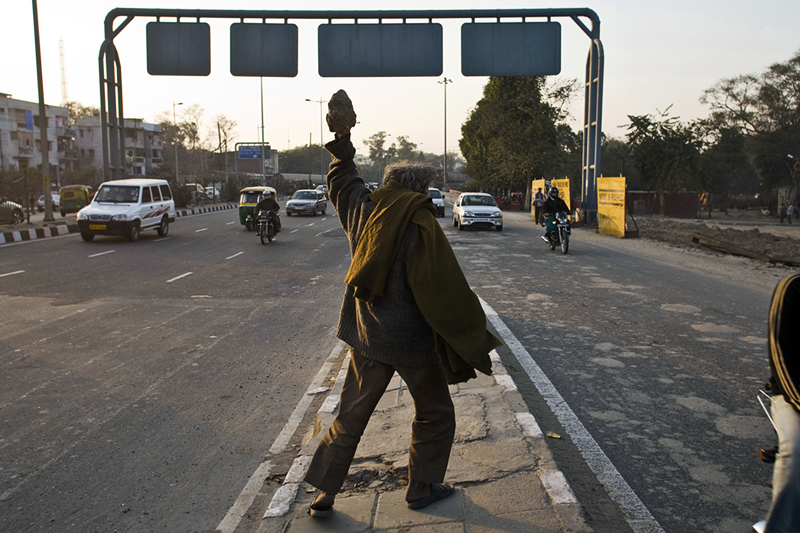
India - Delhi - A homeless mentally ill man picks up a rock to throw at passing traffic

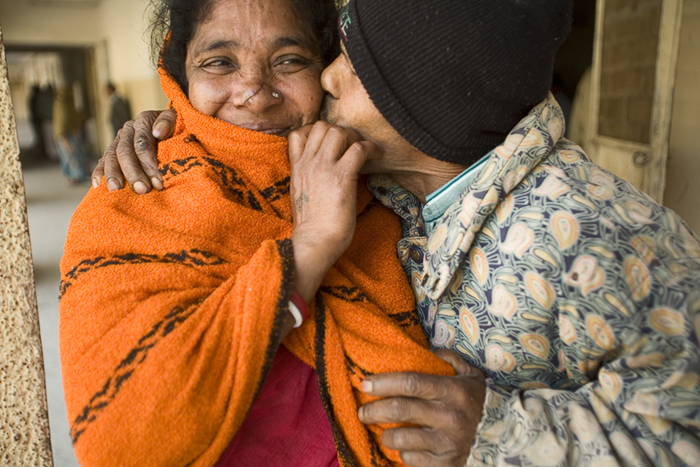
India - Delhi - A mentally ill man kisses his wife who visits him in the secure ward

India - New Delhi - A Pir, exorcises a spirit from a mentally troubled who believes herself possessed at a dargah (shrine) in South Delhi

The Word

It’s amazing what you find in the ‘papers these days. I opened the Grauniad this morning and found a cover feature on The Word.

The Word was a ground breaking (in terms of taste and errr… editorial judgement) British ‘yoof’ television show that showcased music and heralded the ‘reality’ concept that you find everywhere on television nowadays.

I was assigned by the Times Magazine to do a feature about the show in the mid-nineties. I stumbled upon the trannies (or most of them) a couple of years ago and managed to scan perhaps a dozen. I put them onto my archive. And them forgot about them. Until this morning. Now, I suppose the hard working busy picture desk on G2 could have searched for them but instead, they simply ran an entire feature with screengrabs…

Here’s a bit of a selection…

UK - London - Terry Christian in rehearsals for the cult British Television show, "The Word"

UK - London - A stage hand raises signage before transmission of the cult British TV show, "The Word"
UK - London - Members of the audience prepare to dance on the cult British television show, "The Word"
UK - London - Mark Lammar lights a cigarette in his dressing room before an edition of the cult British television show, "The Word"
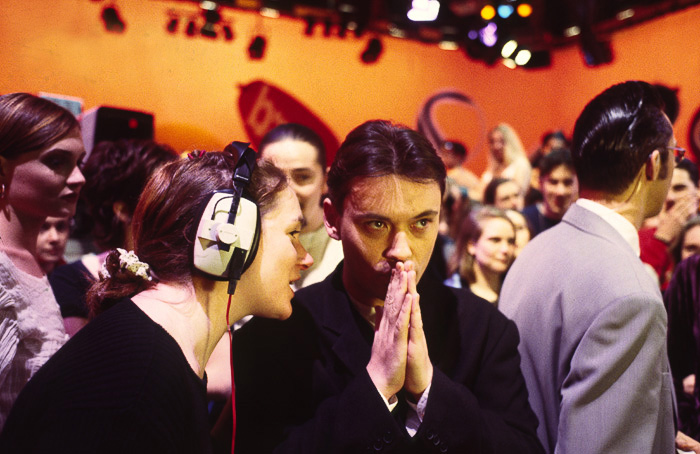
UK - London - Audience members before transmission of the cult TV show "The Word"
UK - London - Mark Lammar in rehearsals for the cult British Television show, "The Word"

“This is a big inconvenience for me…”

So, apparently, it was a “big inconvenience” for Naomi Campbell to appear before the International War Crimes Tribunal in the Hague yesterday… words fail me. Sometimes perhaps it’s just best to let people hang themselves by their own words: their own ignorance (“I’d never heard of Liberia…”) and their own selfishness. Of course it’s also a “little inconvenient” to have your arms/legs/noses/genitals hacked off with machetes by rebels financed by illegal diamond mining. But I digress… here are some more “inconveniences”…

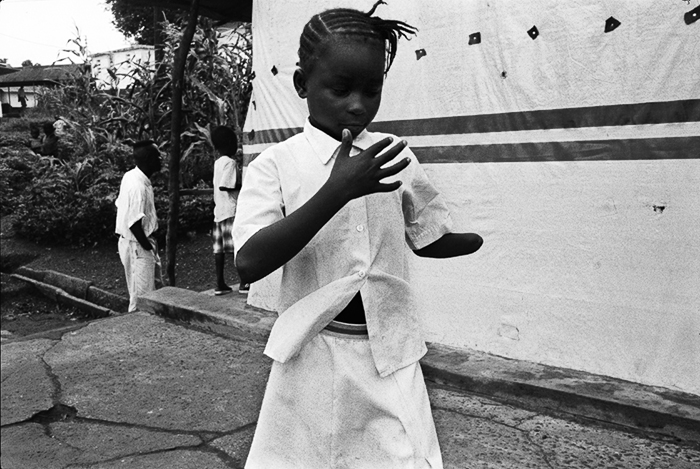
Sierra Leone - Freetown - A young girl, with obvious trauma, constantly counts her remaining fingers after rebels cut off her left hand as part of a campaign of terror directed against the civilian population. Murraytown Amputee Camp.

Sierra Leone - Makeni - A woman brutally injured by rebels in an unsuccessful attempt to cut off her arm. The arm is now completely lifeless. The amputees carry the visible scars of the Sierra Leonian conflict on their bodies - a constant and painful reminder of the cruelty and damaged psyches of the years of war

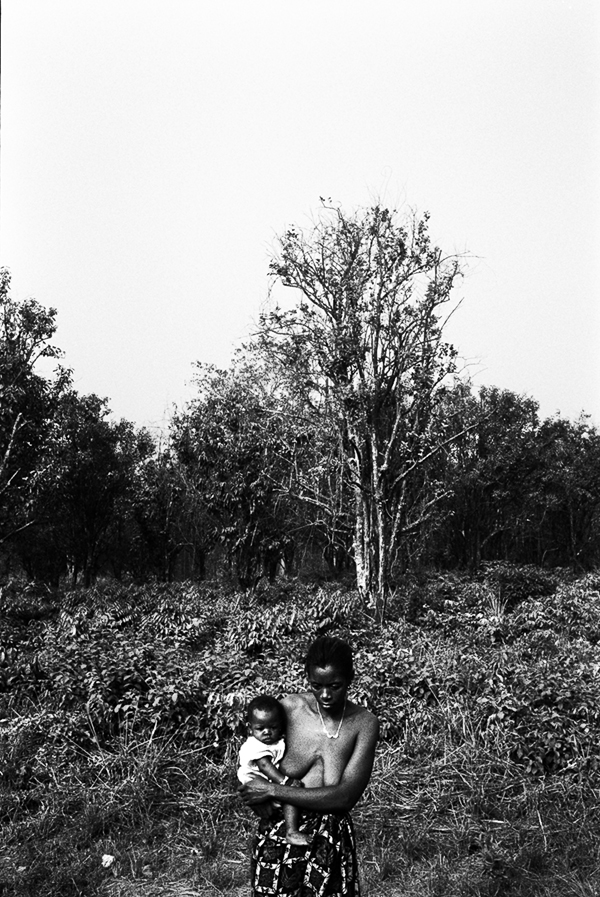
Sierra Leone - Makeni - Isatu, 34, shot through the vagina by rebels after rape.

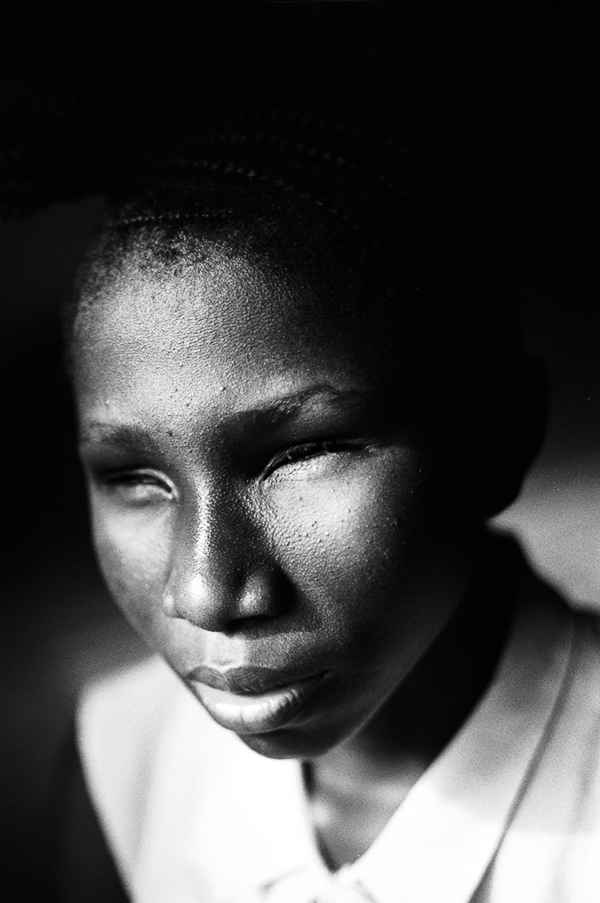
Sierra Leone - Freetown - Safia, 14 was forced to watch her father murdered. Because she cried, the rebels dripped molten plastic into her eyes. Milton Margai School for the Blind

“I’ll read my bloody ‘paper where I want to…”

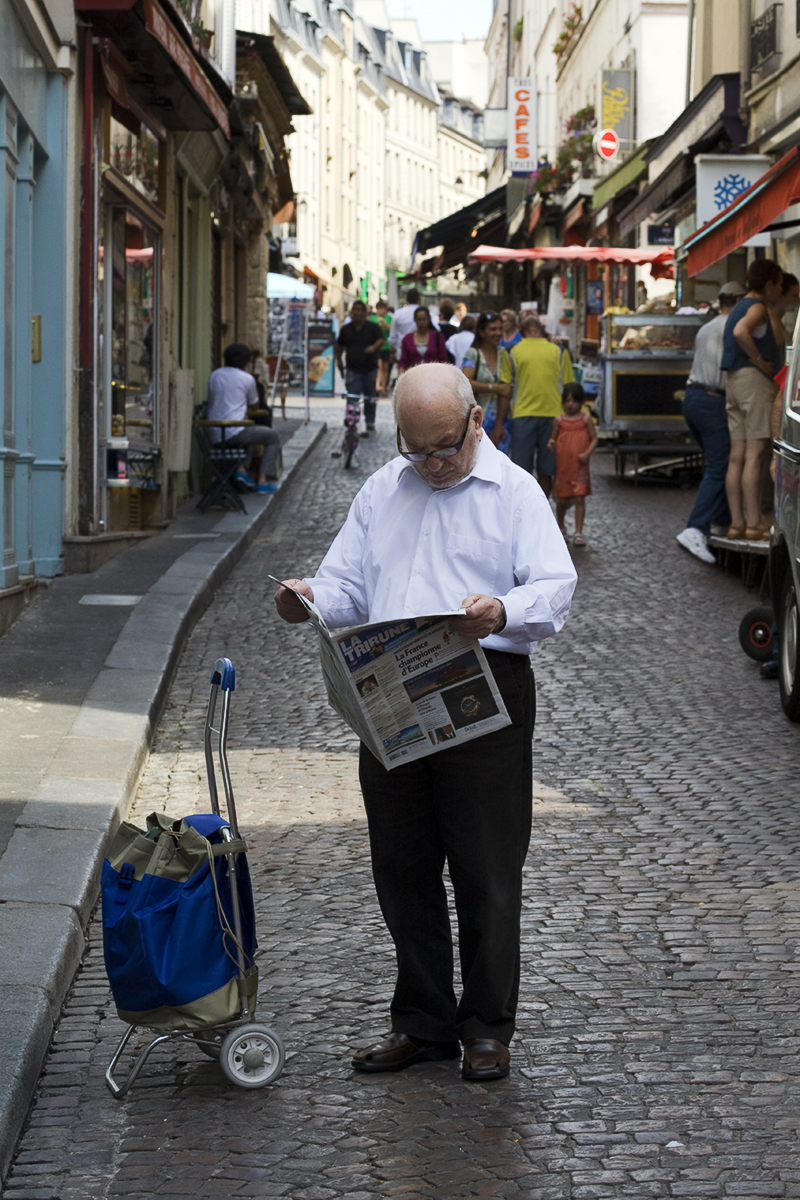
I spotted this chap defiantly reading his morning ‘paper in the middle of the street in Paris recently on assignment for a magazine. He’s reading La Tribune, so maybe he’s playing the markets…

France - Paris - An elderly man reads his newspaper on the street on the Rue Mouffetard.

Here’s a couple of more images – not from the edit set – that I liked from the same job.

France - Paris - Graffitti and apples on a stall in the market on the Rue Mouffetard.

France - Paris - A baker pulls croissants from the oven at the Maison Morange Patisserie on the Rue Mouffetard

Archives – rediscovered images 1

I’m currently going through a rather time consuming process with a really excellent editor, to upgrade my website and portfolios (more about this another time). The project involved going back over many of my stories and looking beyond the initial edit to images that were discarded or forgotten. Unfortunately, many of my originals have been lost or damaged over the years but I seem to have made some interesting discoveries: pictures that I’d forgotten about or simply overlooked. During the next weeks, I thought I might post some significant finds. I start with an image from a story in Mauritania about the wind and the desert.

Mauritania - Chinguetti - A sad woman in a house in Chinguetti.

I remember photographing this woman in a house and her looking terribly forlorn, distant and sad. I never could find out why. My notebook tells me that I was with her and her husband for only ten minutes. Sometimes, perhaps its better not to know…