Just take five…

Some good news from Pakistan. The BBC reported today on the success of Sachal Orchestra in Lahore that is thriving by reinterpreting classic jazz standards – like Brubeck’s Take Five – and giving them a South Asian twist. Pakistani musicians have seen their livelihoods collapse in recent years: musical tastes, instability and a growth of religious criticism have all impacted on them.

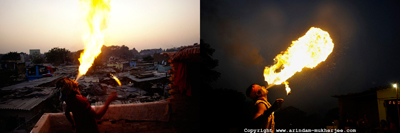
Their Indian cousins have also to a lesser extent seen their craft disappear and it’s from them that I find a picture in my archive taken on an Old Delhi roof.


India - Delhi - Traditional musicians play on a roof top in Chandni Mahal, Old Delhi, India. Once patronised by the Mughal rulers many now scrape a living playing weddings and social functions. Violinist Afzaal Zahoor leads Zeeshan Ahmad, a singer, Shankat Qureshi (tabla) and Shakeel Ahmad (Harmonia).

The most expensive of cities…

For the second year in a row, The Mercer Group has confirmed that the world’s most expensive city to live in is Luanda in Angola. What the report didn’t make clear was that the city was also one of the most savagely segregated cities in terms of wealth: a tiny native elite and foreign nationals working in oil, sitting atop a mountain of desperate poverty.

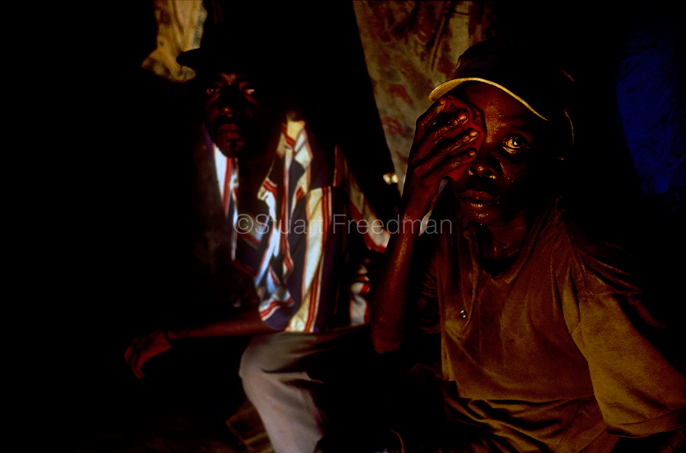
I’ve worked in Angola a couple of times and was always shocked at the disparity.  I had, until I looked back at these images, forgotten spending an hour watching Dasilio and his mate fruitlessly begging rich Luandans for small change. I had forgotten the smell inside the tent of Bule’s eye, hanging by a thread, rotten and useless in his head. I had forgotten Engracia sitting in the ruins of her home, destroyed illegally by property developers. I had forgotten the harsh light and the long shadows. Shame on me for forgetting.

My few good memories come, as they often do, by listening to the music on the streets. A decade ago I discovered the delightfully named Bonga via a very talkative taxi driver in the city. That led me in search of saudade – a very difficult Portuguese word that translates roughly as a longing for something lost: a melancholy. You can hear it in the husky Morna of Cesária Évora and you can certainly hear it in the Fado of Carlos do Carmo. You can hear it on the breaking Atlantic waves whispering along the shore of the Marginal where both the rich and poor promenade – but for different reasons…

Here are some images.


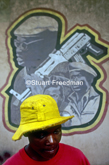
Angola - Luanda - A street boy stands in front of a poster of Agostinho Neto, a hero of the Angolan revolution


Angola - Luanda - Two friends, Bule Manuel (r) from Uige and Joachim from Huambo live together in a tented camp for Internally displaced persons (IDP's) just outside of Luanda, in Viana. Both have lost their sight due to the war and Bule's eye is rotten in it's socket. The two men care for each other as best they can


Angola - Luanda - Engracia Lourenco in the ruins of her home in a middle-class suburb known as Golfe 2. In December 2002, men, presumably from the government forcibly demolished privately owned homes on this land. The land titles legally held by the occupants were ignored.


Angola - Luanda - A man walks through a shaft of sunlight on a Luandan street


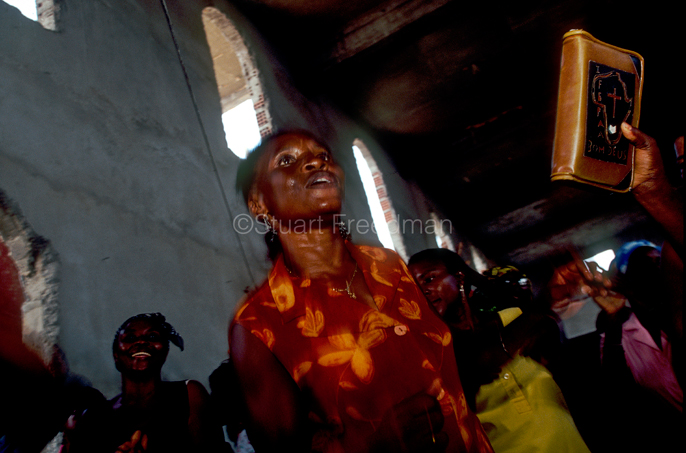
Angola - Luanda - A woman works herself to a religious frenzy during an evangelical service in the Prenda slum


Angola - Luanda - Dasilio and his friend, both injured during the Civil War, beg from wealthy Luandans


Angola - Luanda - Wealthy Luandans dance the night away at Xavaroti's nightclub in the Vila Alice area of Luanda.


Copy.Right?

I’m a big fan of The Travel Photographer’s blog and indeed I’ve been lucky enough to have my work featured there several times. It’s a lovely showcase.

Imitation as they say, is the sincerest form of flattery. So imagine how flattered I felt when I saw a similar set to one that I’d previously had shown on that blog on a link to another photographer’s archive page who has also just been featured. Lovely. And published too – in M Magazine, the weekend supplement of The National in the UAE.

I shot my story about a decade ago on transparency film… seems like another age really, though I see that one of subjects, the wonderful Bhagwan Das Bhatt has lost a bit of hair. Obviously not his love of life (or a drop of the hard stuff – of which I remember joining him for one morning…) although I see he has decorated…

Actually, from the selection that I have here – my images are on the left by the way – very little seems to have changed. In fact what struck me was how similar, how… familiar they looked. An homage I’m sure…

Of course I am not suggesting that I am the only photographer that has ever shot in Shadipur – far from it –  Zackary Canepari shot it recently as I am sure have lots of people. For me though, the much underrated Australian photographer Philip Gostelow did it best (and before me) in black and white.

What links them though is their unique vision. Their ability to see things their way.

It was all their own work too… and so easy to find on the internet…


I suppose if you were interested in seeing original work then you could look at the set on my website here and you could also read my reportage here… all the words are, please note ©Stuart Freedman.

That’s copyright Stuart Freedman.

Thank you for your time.

 

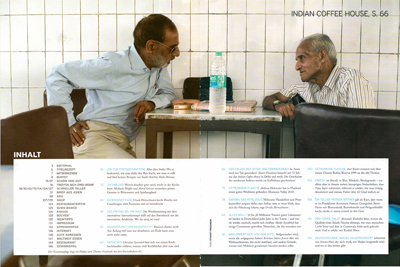
Effilee Magazine spread

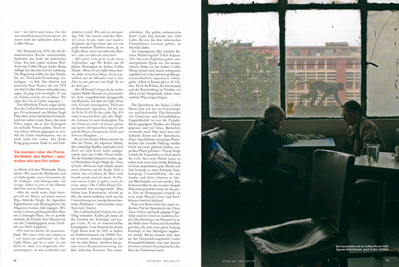
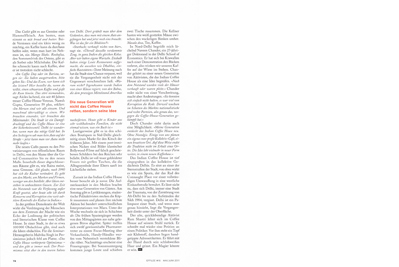
Here’s a recent tearsheet from the May/June 2011 edition of the rather lovely German Magazine, Effilee with my long term piece about the Indian Coffee House in New Delhi.

Effilee is a food and lifestyle magazine who commissioned the images and a 5000-word piece from me. The English translation can be found under the Writings section of my website here.

The piece is called The Palace of Monkeys and Memory


Delhi’s Red… errr… White Fort…

Well, according to the Daily Telegraph, conservation architects in Delhi have discovered that originally, a good deal of the Red Fort was originally… white. Quoting KK Mohammad, head of the Architectural Survey of India said the ‘Red Fort’ is a “misconception” because although its exterior ramparts are red sandstone “more of the Red Fort is white than people realise.” Apparently, the giant red stone sundial that is the Jantar Mantar was also originally all white too… ooops.


India - Delhi - Judduchkra Iqbal, a magician from the Kathiputli Colony in the Shadipur Depot slum dresses for a show behind the Red Fort
India - New Delhi - A garden seen through the arches of the Janar Mantar

Vesak

Happy Vesak (Vesakha) … not exactly the same date across all of the world but never mind…


Japan - Hikone - The shaved head of a Zen monk of the Soto School meditates at the Seiryu-ji Temple. In Zen Buddhism, zazen (literally "seated meditation") is a meditative discipline practitioners perform to calm the body and the mind and experience insight into the nature of existence and thereby gain enlightenment (satori).
Vietnam - Hue - A young monk writes in the early morning dew on a pillar at the monastery at the Thienmu Pagoda
India - Sarnath - A Buddhist monk blows a trimpet during a service at the Vajra Vidya Institute for Buddhist studies