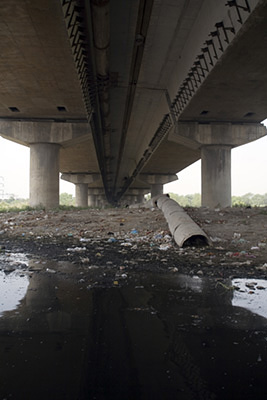
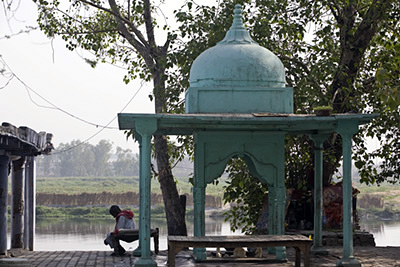
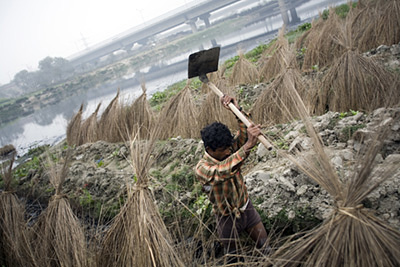
A taste of a new project that I started to work on this year about the mental health crisis in Delhi is showcased by my agency Panos here.
The poor have fallen out of the narrative of modern India. Delhi, the nation’s capital, has been transformed into a vibrant, wealthy metropolis. But where extremes of wealth tread, illness and despair follow, and Delhi is today in the grip of a mental health crisis.
An estimated 20 million Indians suffer from serious mental disorders, many of them hidden from public view by their families. Delhi is a city of migrants and every day thousands more arrive to try to escape the poverty of the village. Many will remain homeless, divorced from the traditional family structure and culture. Delhi’s army of homeless is conservatively estimated to number around 100,000 people. Mental illness in this group is treated either by violence from the rest of the community or traditional ‘quack’ or faith healers. Delhi has had a traumatic history. The city was destroyed by the British in 1857, by Partition nearly a century later and riven by anti-Sikh violence in 1984 after Indira Gandhi’s murder. It seems to me that Delhi has lost a great deal of its culture and sense of itself; a dangerous thing to lose. A psychiatrist might contend that by its rampant consumerism it is trying to ‘feed itself’ an identity.
Nimesh Desai, head of psychiatry at the New Delhi-based Institute of Human Behaviour and Allied Sciences, estimates that India has fewer than 4,000 psychiatrists, and even fewer general mental health professionals. ‘The lack of psychiatrists is bad and the shortage of psychologists, social workers and councellors is even more alarming,’ Desai told me. ‘It meets about five to seven percent of the projected need.’ Desai has however attempted a solution. After eight years of intense lobbying, his team have started to conduct weekly open air surgeries for the mentally ill homeless in Old Delhi. He is accompanied by a High Court judge who assesses each patient to decide whether or not Desai can inject them with anti-psychotic drugs. On rare occasions he sections them to his mental hospital in the east of the city.
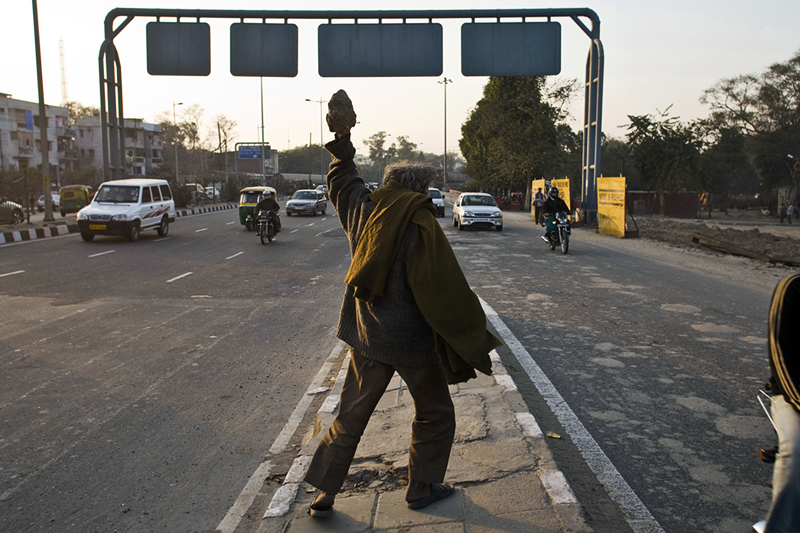
India - Delhi - A homeless mentally ill man picks up a rock to throw at passing traffic
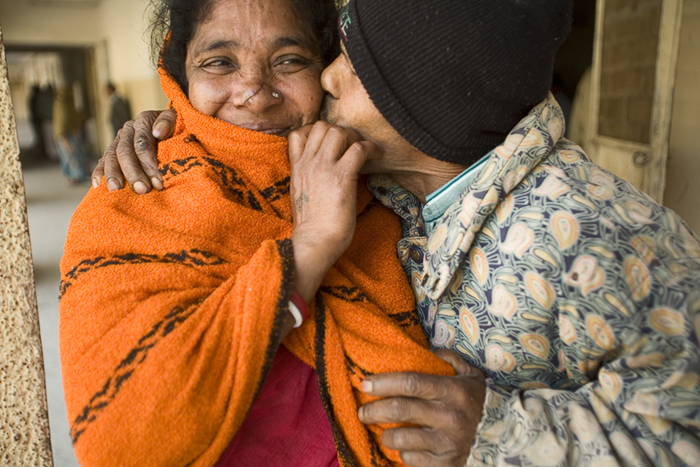
India - Delhi - A mentally ill man kisses his wife who visits him in the secure ward
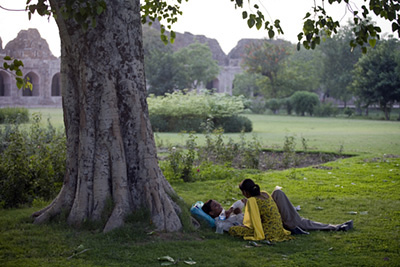
India - New Delhi - A Pir, exorcises a spirit from a mentally troubled who believes herself possessed at a dargah (shrine) in South Delhi
So, for the second time in a few days I find myself writing about Pakistani militant attacks designed to destabilse religious harmony. On Thursday night, at least 42 people were killed and hundreds wounded when two suicide bombers attacked a the famous Data Ganj Baksh Sufi shrine in Lahore. The Lahore commissioner, Khusro Pervaiz, blamed the attack on a “conspiracy in which locals are being used” – a euphemism often used to point the finger at neighbouring India. A dangerous remark that even if true does nothing to answer the charge that Pakistan is actually at war with itself. The so-called Pakistani Taleban funded by Wahabi and other conservative sects (the same groups conveniently used by the Pakistani army in the 1990s to attack Indian troops in Kashmir) are the likely culprits for this and the recent attack on the Ahmadiyya community. Despite what fanatics in both Pakistan and the West would have us believe, the dominant tradition within Pakistani society is a tolerant, peaceful Sufistic based Islam. Wherever I have travelled within the Islamic world it is the presence of Sufis that has reassured me and added to my knowledge of religion. Sufism – a mystical, internalised form of Islamic worship that centres on love and prayer and charity seems to spring up to defend Islam when repression threatens. I have met many Sufis – often practising in secret – and my admiration of their practice is matched only by my hope that this will be the last outrage against all people who seek only to practice their religion peacefully as they see fit.
I’ve never worked in the Data Ganj Baksh shrine but here are some other images linked by ‘Sufism’ from my archive:
India - Delhi - Worshippers (both Hindu and Muslim) pray and make offerings over the tomb of Hazrat Nizamuddin Awlia, a famous Sufi of the Chisti Order India - Delhi - Musicians play and sing Qawwali (Sufi devotional songs) at the Hazrat Nizamuddin Awlia ShrineSomaliland - Hargeisa - Men perform Zikr (recitation of the name of Allah - a key Sufi practise) in secret at a house in Hargeisa, the capital of the Self Declared Independent country of Somaliland.Albania - Tirana - A Bektashi Dervish elder in the Order's mosque. in Tirana Albania. The Bektashi's, an order of Sufi's were persecuted along with all other religions under the Communist regime UK - London - A portrait of a young man in the Peckham Mosque who has converted to Islam in the Sufi tradition
It’s with some relief that I read today in the Times of India that proposals to institute identity cards and entry fees to Bangalore parks have been scrapped.
The extraordinary idea, the brainchild of Horticulture Minister, Umesh Katti was to restrict entry to two of the ‘Garden City’s’ finest public spaces, Lalbagh and Cubbon Park to those that could afford, as he put it, the ‘paltry sum’ of Rs.200/-“. Further, identity cards would only be issued to those that had been ‘vetted’ over security concerns.
Lalbagh (Red Garden) is around two hundred and fifty years old. Cubbon Park, a British creation, is a century old. Both are a counterweight to the modernist, business friendly theme park that are the suburbs of modern Bangalore. Like most Indian parks they are populated by walkers, joggers, lovers, hawkers and the poor, sometimes untidily sleeping where they can. Oh, and Bangalore has a Laughter Club (a very Indian get-together where people laugh in groups to improve their health). Subversives all. Dangerous, anti-social elements that need checking and vetting and searching.
The case is interesting as it touches something that I have been photographing in Delhi for a while – Indian public space. Because cities are so crowded, public spaces become part of the personal, private sphere – a microcosm of Indian society. India has a profound love of gardens and greenery. I have written previously that all the major religions of this country have in some part a great reverence of nature – whether the gardens of the Mughals or the significance of the Bodhi tree for Buddhists or the garlanded offerings of Hindus. To privatise such public spaces for spurious ‘security concerns’ seems to me to be a very profound political statement. As Bhargavi Rao and Leo Saldanha of the local ‘Environment Support Group’ said. “It is an effort to showcase Bangalore as an elite, investment-friendly city where public spaces are out of bounds for local residents, especially the poor.”
“… the era of the Free Market has led to the most successful secessionist struggle ever waged in India – the secession of the middle and upper classes to a country of their own… where they merge with the rest of the world’s elite”.
The poor and those that don’t quite fit into a corporate strategy are an untidy blemish and need to be excluded.
In fact it is entirely analogous to what is happening in much of the Western (well, read the US and the UK) world. Britain is the most spied-on country in the world in terms of CCTV and legislation passed over the last twelve years has meant that fundamental freedoms that we took for granted – like being able to photograph in public where we pleased – are no longer guaranteed. Extensions to pre-charge detention means that suspects in the UK can expect to be detained for periods exceeding those of other comparable democracies. As Simon Jenkins wrote in the Guardian yesterday, since 1997, the UK government has created more than 3000 new offences. 1,472 at the last count were imprisonable. You can be jailed for not having a licence for a church concert, smoking in a public place, selling a grey squirrel, trans-shipping unlicensed fish, or disobeying a health and safety inspector. All underpinned by a profit motive for private companies who have interests in surveillance, security operatives and prisons. If we make citizens afraid of each other they will be more pliable: I know photographers in the UK that have admitted to self-censoring in public. Taking pictures of children, of property, of the police are now likely to lead to confrontation with authority. A company has already found a way to ‘monetise’ this by paying ordinary people to watch CCTV footage and report anything ‘suspicious’.
Section 44 of the Terrorism Act in the UK no longer requires authorities to have reasonable suspicion to search people for such subversive activities as photographing on the streets. We are all suspects that have to be monitored. All the time. For our own good. Usually by private security. For profit.
Soon there will be nothing public left of all our public spaces.
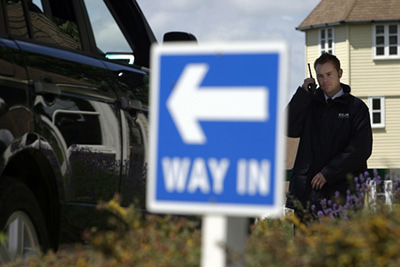
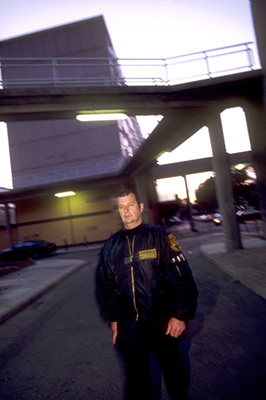
India - New Delhi - a bench in the early morning mist in Nehru ParkIndia - New Delhi - A yoga class in Lodi Gardens in front of the Bara Gumbad TombIndia - New Delhi - A couple in the grounds of the Purana Qila, New Delhi, India. Such parks are often the only place where young lovers can meet away from their parents and familiesIndia - New Delhi - Men play cards on a traffic island in New Delhi, India whilst one of their friends sleep. The traffic islands in the centre of the city often have manicured lawns and are well cared for. Many people sleep here at night but in the daytime they are used as small parks by workersUK - Cirencester - A private Security Guard examines the licence plate of a vehicle outside a Gated Community, UK - London - A Private Security Operative patrols South London council estate
After writing about Delhi street food a few days ago, I was pleased to see that Pamela Timms on her blog, Eat and Dust has posted a very informative article about Daulat ki chaat the chilled milk sweet that I mentioned. There’s even a phone number for one of the elusive wallahs. See the whole story here.
I was intrigued to read this morning on the BBC website that National Curry Week ends in couple of days. I had no idea that there was such a thing but as I was talking about Pie and Mash the other day being snubbed in favour of fast food at the Olympics, I thought I should pay attention.
Britain’s first Indian restaurant, The Hindoostani, was opened by a fascinating character called Dean Mahomed in Portman Square in London in 1810. It was essentially a coffee house where one could smoke hookah and enjoy authentic Indian food. Perfect for the Colonial English gentleman missing his exotic spices. The restaurant, certainly ahead of its time, went bankrupt and Mahomed ended up running a rather successful baths in Brighton – but that’s another story.
It does seem a cliche but curry is often called Britian’s national dish and, although I have no issue with that, nearly all of the UK’s ‘Indian’ food is actually a Bangladeshi hybrid of dishes from all over the sub continent. Strangely, I’m going to be teaching in Bangladesh in January (more later) and so I’ll be able to judge just what authentic Bangla food is like as I eat my way around the country…
‘Curry’ is a shorthand for lots of dishes that is relatively meaningless. India itself (not counting Afghanistan, Pakistan, Bangladesh, Nepal and Sri Lanka) is extraordinarily culturally diverse. Hundreds of ethnic groups divided into thousands of sub-groups have such a multiplicity of recipies and I’m sure it’s possible to never eat the same thing twice if you tried. ‘Curry’ seems to have been coined to catch everything that is cooked in a gravy. Some people seem to contend that it comes from the Tamil ‘kari‘ but there doesn’t seem to be a definite answer. Like so much in India…
By the way, if you are interested in the synthesis of English and ‘Indian’ you could do worse than buy a copy of ‘Hanklin Janklin’ a fascinating study of ‘Hinglish’ words by the late and sadly missed Nigel B Hanklyn a long time Delhi wallah.
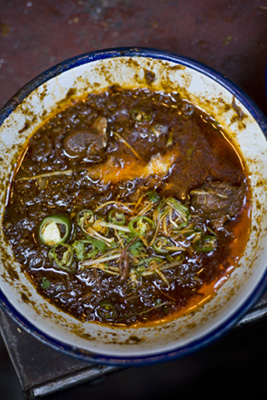
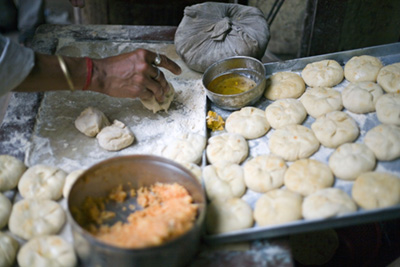
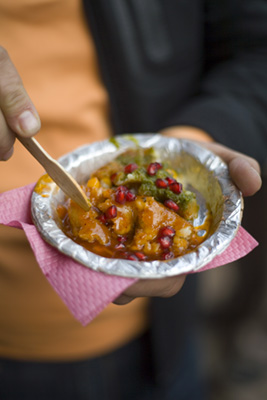
Last year I had the good fortune to be on assignment in Delhi photographing some of the lesser known dishes the city has to offer. I am indebted to Hemanshu Kumar who runs the Eating Out in Delhi blog for his extraordinary insights and his re-discoveries of several dishes. I don’t pretend to know very much about Delhi street food – it’s a vast subject – but I do know how wonderful much of it is. Some of that work is below. Not a balti in sight. Happy eating…
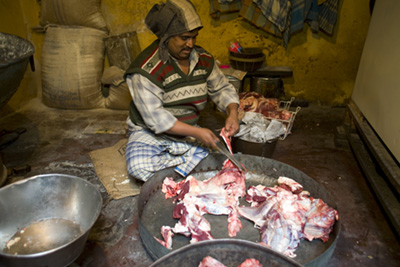
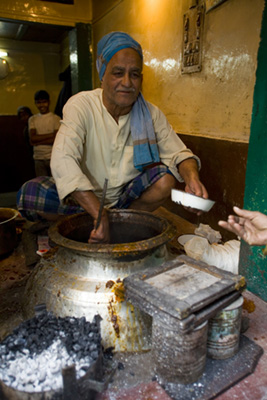
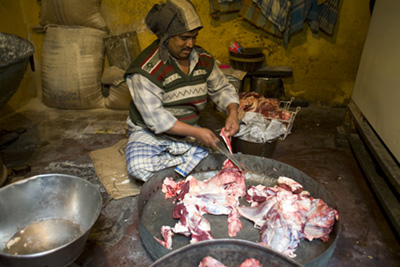
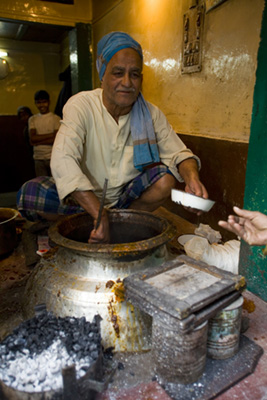
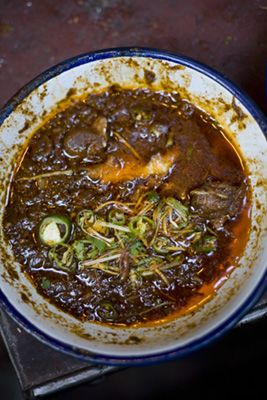
India - Delhi - A butcher cuts up meat for Nihari (a breakfast stew made mostly from Buffallo meat but with some mutton brains) India - Delhi - A vendor serves Nihari from a pot outside his shop. Nihari is a breakfast stew made mostly from Buffallo meat but with some mutton brains.India - Delhi - A dish of Nihari
India - Delhi - A street vendor fries potato cakes on a griddleIndia - Delhi - a street vendor kneads filled dough ready for cookingIndia - Delhi - A dish of Daulat Ki Chaat, a chilled milk froth considered an ancient Delhi delicacyIndia - Delhi - A man eats a small pot of strteet chaat
A couple of days ago, I read an article in Open Magazine about Indian performance artist, Inder Salim cutting off his finger.
“One hot April morning, I chopped off the little finger of my left hand and threw it into the dead river called Yamuna. They call me crazy. But I call it art.”
Well quite.
It seemed quite a brave thing to do to make a point and I’m not going to give him a hard time for being so literal about highlighting the state of Delhi’s famous river.
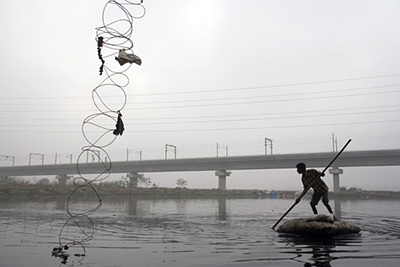
The Yamuna is one of India’s greatest rivers. Holy to Hindus, The Imperial Gazetteer of India in 1909 mentions the waters of Yamuna distinguishable as “clear blue” as compared to silt-ridden yellow of the Ganges. Unfortunately, the Yamuna that runs through present day Delhi is an open sewer and clinically dead.
I was so intrigued by Delhi’s water situation a couple of years ago and made some work around it that became a film for More4 news. You can see the piece here.
The point was that Delhi’s water wasn’t in this hellish state as the result of appalling poverty – all those pesky poor people washing and cremating themselves in it – rather a complete lack of infrustructure around water management and wholescale pollution by industry. That hasn’t stopped the Delhi authorities evicting thousands of poor Delhi-wallahs that lived on its banks over the last few years.
There are perfectly sensible answers to the state of the Yamuna – Indian answers too. Brilliantly articulated by Sunita Narain, Director for the Centre for Science and Environment, she says: ‘A city will be more efficient if it collects water locally, supplies it locally and disposes waste locally’. There’s an excellent piece by her here.
Anyway, as Delhi looks forward to the 2010 Commonwealth Games, I’m hoping that someone will finally listen to Narain and the other Indian environmentalists, too numerous to mention, whose message about water, the city and sustainability has yet to seep into the murky waters of government. But I’m sure they will be able to smell it…
India - Delhi - A scavenger looks for discarded waste to sell on a home made raft of rags in the Yamuna River by the Kudsia Ghat in Delhi. The river is so polluted it can no longer support life yet a community live and work on it's banks. This boy uses a powerful magnet to dredge for coins and other metals which he can sell.India - Delhi - A man made homeless by slum clearance in a shack on the middle bank of the Yamuna River in Delhi by the Kudsia Ghat. An entire settlement was destroyed by the Municipal authorities in December 2006 to clear the bank of people that made a living from scavaging on the river which is so polluted it can no longer support lifeIndia - Delhi - A religious icon half submerged on the banks of the Yamuna River in Delhi by the Kudsia Ghat.India - Delhi - Rubbish on the banks of the Yamuna River by the Kudsia Ghat in DelhiIndia - Delhi - A sewer pipe flowing straight into the Yamuna by the Kudsia Ghat, New Delhi, IndiaIndia - Delhi - An old man sits by a temple at the Nigambodh Ghat on the banks of the River Yamuna in New Delhi IndiaIndia - Delhi - A man cultivates land by the Yamuna River in Delhi by the Kudsia Ghat.India - Delhi - Methane bubbles through the water of the filthy Yamuna River, New Delhi. The river is so polluted that it can no longer support life, however a community still live and work on it's banks.India - Delhi - A group of men come to perform a ritual of casting ashes into the Yamuna River, after a cremation of a family member. Nigambodh Ghat, New Delhi, IndiaIndia - Delhi - A man ritually bathes in the Yamuna River at dawn
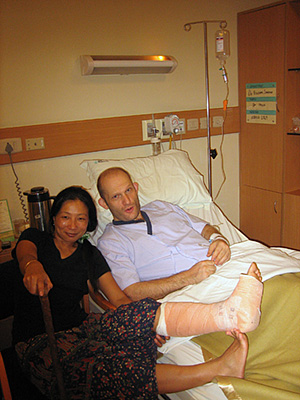
I’m not a superstitious person but I am currently looking over my shoulder rather warily… One day last week, AFP’s finest Findlay Kember had a temperature of 105 and at dawn, annoyingly, started shaking like a leaf. Somewhat perturbed by this, his wife, the lovely Athing, managed to stumble in the dark to my door for assistance whereupon I went and gave him a stern talking to for disturbing us both. In the process, she managed to fracture a bone in her foot… The two patients are pictured here in their lovely room in Delhi’s Max Hospital, Saket.
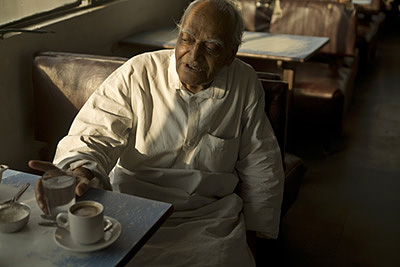
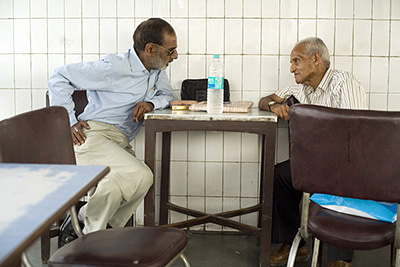
I have the pleasure to report that on a recent assignment back in Delhi, I again sampled the delights of the Indian Coffee House on Baba Karak Singh Marg that I wrote about some time ago. Despite the threats to it’s existence, it seems in rude and shambolic health and I can attest to the power of it’s rather watery coffee and good conversation. I whipped in for an hour, as usual after shooting something else and the general opinion from the clientelle was, “… Close? Over my dead body…”.
In a packed hour, I met a man called Achilles, was lectured on peace in Nagaland and inevitably answered the question ‘from which country are you from’. I answer as always, ‘not Australia’ (many people take my strangulated East London drawl to be from the Outback for some reason…).
Anyway, here’s some quick pictures:
India - New Delhi - An elderly man in the Indian Coffee House, Baba Kharak Singh MargIndia - New Delhi - Regular customers sit and talk in the Indian Coffee House, Baba Kharak Singh MargIndia - New Delhi - A waiter holding a tray with a coffee cup and spoons in the Indian Coffee House, Baba Kharak Singh Marg
I’ve been associated with Delhi in one way and another almost fourteen years. I’m sometimes based there for months on end and, although it is perhaps one of the most frustrating and brutal cities I can think of, I find endless fascination with it. Like London, Delhi is a palimpsest of perhaps nine, perhaps more cities built, destroyed and rebuilt. It’s usually recorded, with some notable exceptions (and again) as unknowable and unloveable. Choked with people and displaying more violence than India would like to admit, journalists tend to concentrate on its chaos poverty and pollution. I’ve done those pieces myself, most recently a film for More4 News about Water in the city that you can see here. But Delhi is certainly more than that. During that film I was working in Kusumpur Pahari, a thirty year old slum or jhuggi cluster. The slum is entirely illegal but is home to thousands of people. Some have rather nice houses and of course some have tried to beautify them as best they can. Many have little flat roofs where they have gardens made of pot plants. It struck me that this didn’t really fit with the poverty stricken Dickensian idea that we in the West have of helpless slum-dwellers and I started to photograph them. That led me onto an as yet unfinished body of work about imaging Delhi in a different way. I wanted to look at Delhi’s relationship with Gardens and space and so for the last couple of years have been trying to photograph not only the acres and acres of green space in the city but crucially in such a crowded conservative place, people’s relationship to it. A couple of weeks ago I was approached by Fabiano Busdraghi who publishes online the small but beautifully formed Camera Obscura magazine/blog. He asked me if I’d write something and I immediately thought of this project. You can see the piece, The Gardens of Delhi – Public Spaces, Private Lives, here. I hope that you enjoy it.
The text on the Camera Obscura site is pretty explanatory about the project so I won’t bang on about it here. Instead, here are some more images that I like from it.
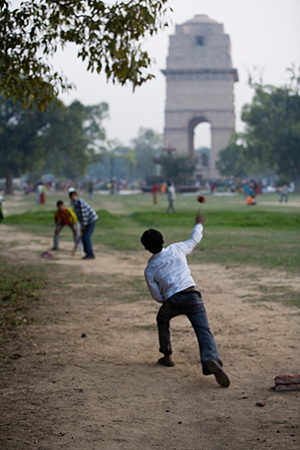
India - New Delhi - Boys play cricket in the park at India Gate.
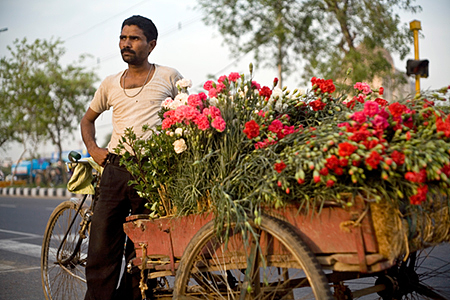
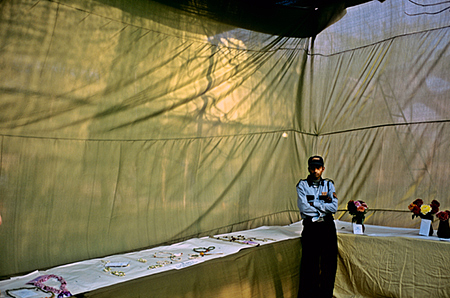
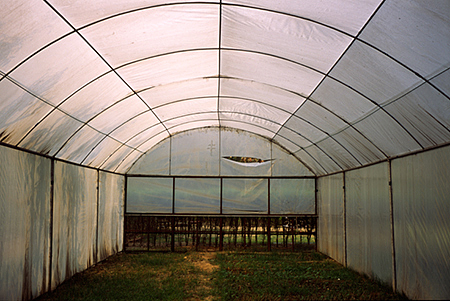
India - New Delhi - An early morning yoga class in Lodi Gardens in front of the Bara Gumbad TombIndia - New Delhi - A 'phool wallah' (or flower seller) delivering flowers on tricycle, MehrauliIndia - New Delhi - A guard in a judging tent at a particularly Raj style event, The Delhi Flower showIndia - New Delhi - The roots of a tree in the grounds of Humayan's Tomb in New Delhi, India. The tomb itself built in 1570, is of particular cultural significance as it was the first garden tomb on the Indian subcontinent. It inspired several major architectural innovations, culminating in the construction of the Taj Mahal.India - New Delhi - A tear in the plastic of a greenhouse in the Rose Garden that is behind Safdardjung's Tomb
It’s with great sadness that I read yesterday in The Times of India that the cafe on Baba Karak Singh Marg is going to close. The Delhi Walla blog has the full story with pictures here.
A strange little place, it was always a haven of quiet away from the tourist throngs of Connaught Place and was never, despite being in a couple of guidebooks a place where many travellers went because thankfully, they couldn’t find it. I was introduced to it maybe a decade or more ago and always made a point of hanging around there between assignments or when I felt the need to come into central Delhi. Tucked away on the roof of a rather downbeat shopping complex it was the kind of place that you had to know was there. The roof ‘garden’ was of course covered in dust and smog but it but it had lovely views if rather awful coffee. The regular clientelle was composed of distinguished older Indian gentleman who’d gather to read the papers and argue about the topic of the day. When I turned up I was usually ignored as it was assumed I was lost and my appalling Hindi seemed only to confirm the fact that I was an idiot. It didn’t matter and I loved it. The staff, unfailingly polite, would always deliver a very ‘masala’ masala dosa which required a second cup of coffee to soothe the heat of the chillies. I unfortunately never tried the ‘humbergers’ nor the milk shakes but I am sure that whatever their culinary achievement I would have enjoyed them.
The coffee shop for me was Delhi – a Delhi that for better and worse is disappearing fast. The place evoked a gentler, simpler time and a city where people read large newspapers, where motor cars (…any car so long as it’s a white Ambassador) were a rarity and the bicycle was what people rode to work. I’ve written before about not romanticising India but there seemed something about the place that actually spoke to me of a bygone London: the (then) chic shopping area, the red velour interiors of Connaught Place’s United Coffee House (now revamped) and the Embassy. A time where you could cross the road in Delhi without being killed.
The whole saga reminds me of the slow death of one of my favourite places in London, The New Piccadilly. I could write a whole piece about the ‘Cathedral of Cafes’ as Adrian Maddox would have it but suffice to say, despite all best efforts, the developers got their way and it closed. I can only recommend the Classic Cafes website and its book as a homage to past glories. Suffice to say there are few places now in London where you can drink a cup of tea and just think without listening to ‘muzak‘ and enduring overpriced coffees sold in incomprehensible sizes as ‘grande’ or ‘tall’. Coincidently, I read today in the Daily Telegraph about a Californian software engineer on a mission to visit every Starbucks in the World. Well good luck with that: I’m still holding out for a world that isn’t based on a greedy corporate propoganda that sucks the individuality and taste (both literal and metaphorical) out of every attempt at difference in order to leverage the last drop of profit.
Tea stains, cigarettes, chipped cups, formica, worn seats, warmth on a cold day, company, a sense of history, courtesy, civility, conversation, ideas. But I digress…
Back in Delhi, the The Times reports Head Waiter Gopal Singh as saying, “If this place closes, our families will land on the streets. If it’s true that rent has not been paid for years, we are willing to pay 50% of our salaries if that will help”. Delhi is a brutal city and I don’t doubt for a second that that would happen.
I never photographed the Coffee House in Delhi, it somehow always seemed like a little bit of home and a liberty to start taking pictures. I retired there sometimes after photographing at the Flower Market on Baba Karak Singh for my project on Delhi. It’s an image from that set that I leave you with.
I wish all those at the Coffee House my best and my sincere gratitude (I was that heavily sweating firangi with the cameras…). Shukriya.
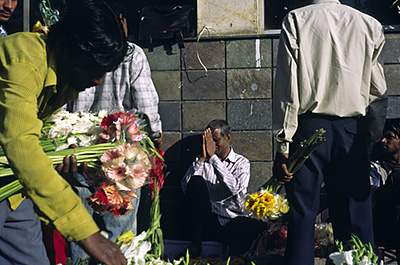
India - New Delhi - A man greets another buying flowers with a gesture of Namaste at the Flower Market, Baba Kharak Singh Margh
A very old photo of me on the roof of the cafe
Ps… if you want to find rather wonderful places to eat in Delhi you could do worse that seek out Hemanshu Kumar and his fantastic blog, Eating out in Delhi