Happy Diwali…
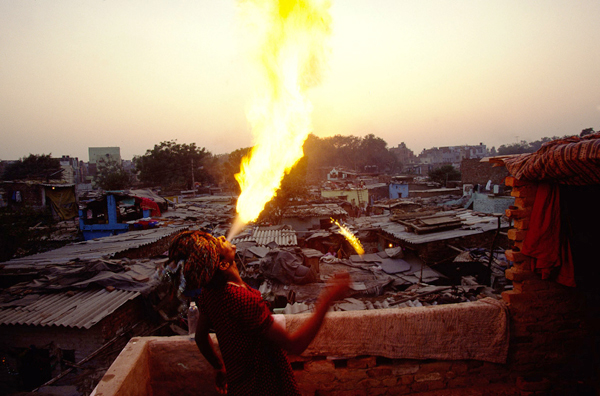
 Umbra Sumus
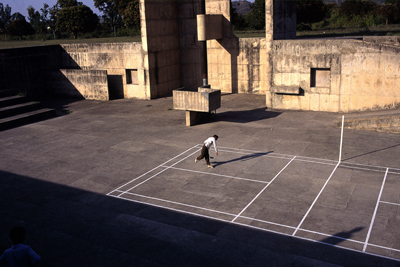
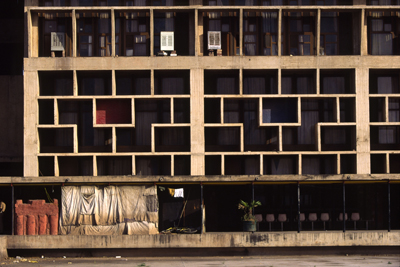
I first went to Chandigarh in 1996 to shoot a story for the Independent on Sunday Magazine. A fascinating place, it was chosen as the capital of the Punjab after India lost Lahore to Pakistan after Partition. Nehru famously said that Chandigarh should to be “unfettered by the traditions of the past, a symbol of the nation’s faith in the future.” The originally commissioned architect, Matthew Nowicki, died in a ‘plane crash and the rather difficult Charles-Édouard Jeanneret-Gris replaced him. Jeanneret-Gris was better known as Le Corbusier. He made a bold modernist statement of concrete and angles and by the time I got there, it had started to decay nicely under the unforgiving Indian sun. It was however a rather wondrous if slightly odd beauty to behold: a thoroughly Indianised but planned city that worked. Recently it has transformed itself again into a successful metropolis of New India: plush bars, hotels and now has India’s highest per capita income. However, shortly after I left (and I had nothing to do with this, honestly) some enterprising wags started selling off anything that wasn’t bolted down to Western collectors desperate for anything Corbusier. Lamps, manhole covers and as much furniture as could be, ahem… ‘lost’ have been turning up in auction houses mostly in the UK. Andrew Buncombe in today’s Independent has a good write up on it and how many in the Indian government have been trying to lobby to stop this rather sad episode.
Anyway, here’s some of my favourite pictures…

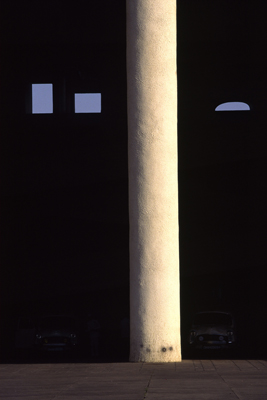


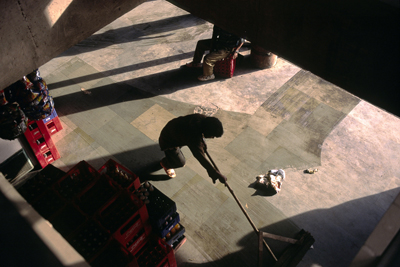
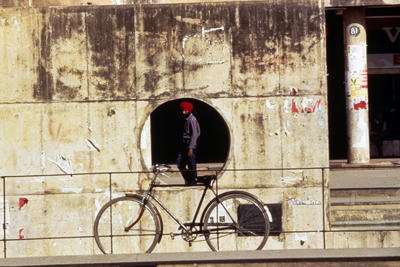


Amidst all the hullaballoo about building the Commonwealth Games venues in Delhi, there has been much talk of corruption, mismanagement and chaos. All true I’m sure but I just read an interesting article by Amanda Hodge in the Australian who makes a very good point when she says:
“But those who come to Delhi must also remember that a vast number of people in this host city live on less than $2 a day. Dirty toilets, poorly fitted doors, faulty electricity and taps are not an issue for people who have no bathroom, running water or power”.
I couldn’t agree more. Whatever the logic of the Commonwealth Games (a pointless colonial anachronism if ever there was one) you can’t blame the poor who have actually borne the brunt of the construction (in terms of both building and eviction) for not making a job worthy of ‘star athletes’. In that sense (and that sense only) I agree with Lalit Bhanot who said that the unfinished state of some of the flats at the athletes’ village was simply a matter of “differing perceptions”.
I couldn’t care less for the Commonwealth Games (nor for the Olympics coming to the UK for that matter) – all corporate machination as far as I am concerned – but I do hope that people coming to Delhi get to see beyond the show and the cracks and the security. If they got to meet the people on a dollar a day – most of the people of Delhi – that would be a cultural exchange more valuable than any sporting event.

In an extraordinary and wonderful turn of events, I have just heard that India’s Environment Minister Jairam Ramesh has blocked Vedanta Resources’ controversial plan to mine bauxite on the sacred hills of the Dongria Kondh tribe.
Vedanta Resources, a UK-registered ftse -100 company wanted to mine The Niyamgiri Hills in Orissa which are sacred to Dongria Kondhs, a protected tribal group of ‘original’ Aboriginal peoples.
According to Survival International, Mr Ramesh said Vedanta has shown a ’shocking’ and ‘blatant disregard for the rights of the tribal groups’. The Minister has also questioned the legality of the massive refinery Vedanta has already built below the hills.
I wrote about this back in May 2009 (India – Vedanta’s shame) and also for Tehelka in late 2007 (Knocked Out by Bauxite).
Here are some images from the story.


A taste of a new project that I started to work on this year about the mental health crisis in Delhi is showcased by my agency Panos here.
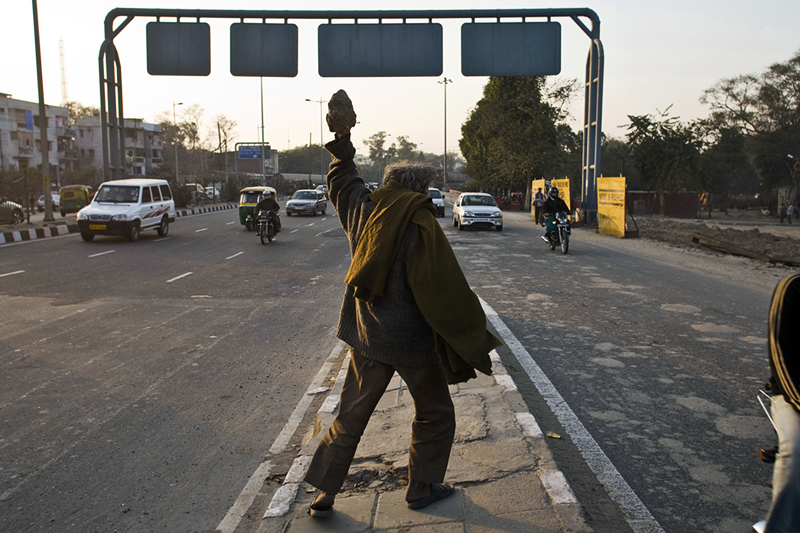
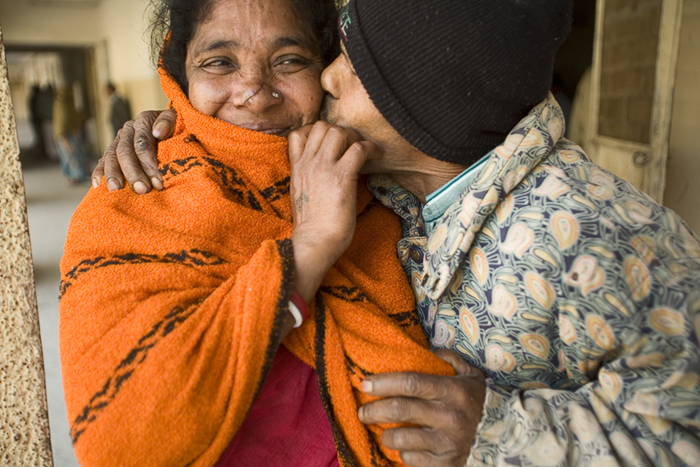
The poor have fallen out of the narrative of modern India. Delhi, the nation’s capital, has been transformed into a vibrant, wealthy metropolis. But where extremes of wealth tread, illness and despair follow, and Delhi is today in the grip of a mental health crisis.
An estimated 20 million Indians suffer from serious mental disorders, many of them hidden from public view by their families. Delhi is a city of migrants and every day thousands more arrive to try to escape the poverty of the village. Many will remain homeless, divorced from the traditional family structure and culture. Delhi’s army of homeless is conservatively estimated to number around 100,000 people. Mental illness in this group is treated either by violence from the rest of the community or traditional ‘quack’ or faith healers. Delhi has had a traumatic history. The city was destroyed by the British in 1857, by Partition nearly a century later and riven by anti-Sikh violence in 1984 after Indira Gandhi’s murder. It seems to me that Delhi has lost a great deal of its culture and sense of itself; a dangerous thing to lose. A psychiatrist might contend that by its rampant consumerism it is trying to ‘feed itself’ an identity.
Nimesh Desai, head of psychiatry at the New Delhi-based Institute of Human Behaviour and Allied Sciences, estimates that India has fewer than 4,000 psychiatrists, and even fewer general mental health professionals. ‘The lack of psychiatrists is bad and the shortage of psychologists, social workers and councellors is even more alarming,’ Desai told me. ‘It meets about five to seven percent of the projected need.’ Desai has however attempted a solution. After eight years of intense lobbying, his team have started to conduct weekly open air surgeries for the mentally ill homeless in Old Delhi. He is accompanied by a High Court judge who assesses each patient to decide whether or not Desai can inject them with anti-psychotic drugs. On rare occasions he sections them to his mental hospital in the east of the city.

So, for the second time in a few days I find myself writing about Pakistani militant attacks designed to destabilse religious harmony. On Thursday night, at least 42 people were killed and hundreds wounded when two suicide bombers attacked a the famous Data Ganj Baksh Sufi shrine in Lahore. The Lahore commissioner, Khusro Pervaiz, blamed the attack on a “conspiracy in which locals are being used” – a euphemism often used to point the finger at neighbouring India. A dangerous remark that even if true does nothing to answer the charge that Pakistan is actually at war with itself. The so-called Pakistani Taleban funded by Wahabi and other conservative sects (the same groups conveniently used by the Pakistani army in the 1990s to attack Indian troops in Kashmir) are the likely culprits for this and the recent attack on the Ahmadiyya community. Despite what fanatics in both Pakistan and the West would have us believe, the dominant tradition within Pakistani society is a tolerant, peaceful Sufistic based Islam. Wherever I have travelled within the Islamic world it is the presence of Sufis that has reassured me and added to my knowledge of religion. Sufism – a mystical, internalised form of Islamic worship that centres on love and prayer and charity seems to spring up to defend Islam when repression threatens. I have met many Sufis – often practising in secret – and my admiration of their practice is matched only by my hope that this will be the last outrage against all people who seek only to practice their religion peacefully as they see fit.
I’ve never worked in the Data Ganj Baksh shrine but here are some other images linked by ‘Sufism’ from my archive:



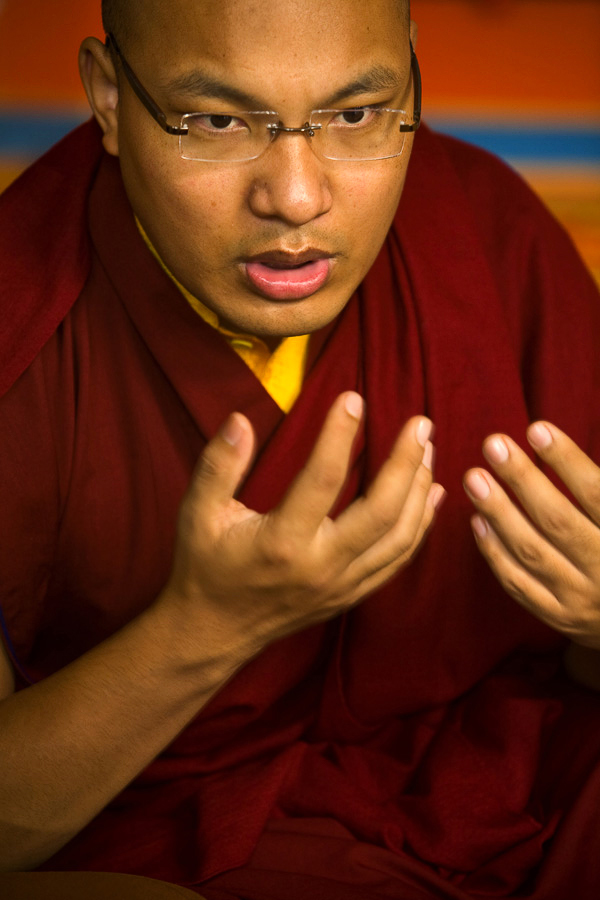
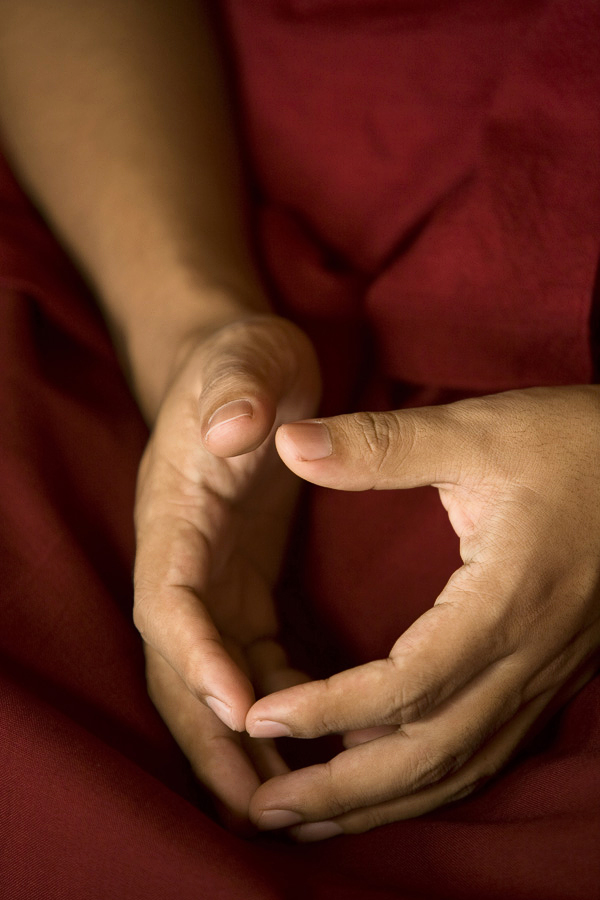
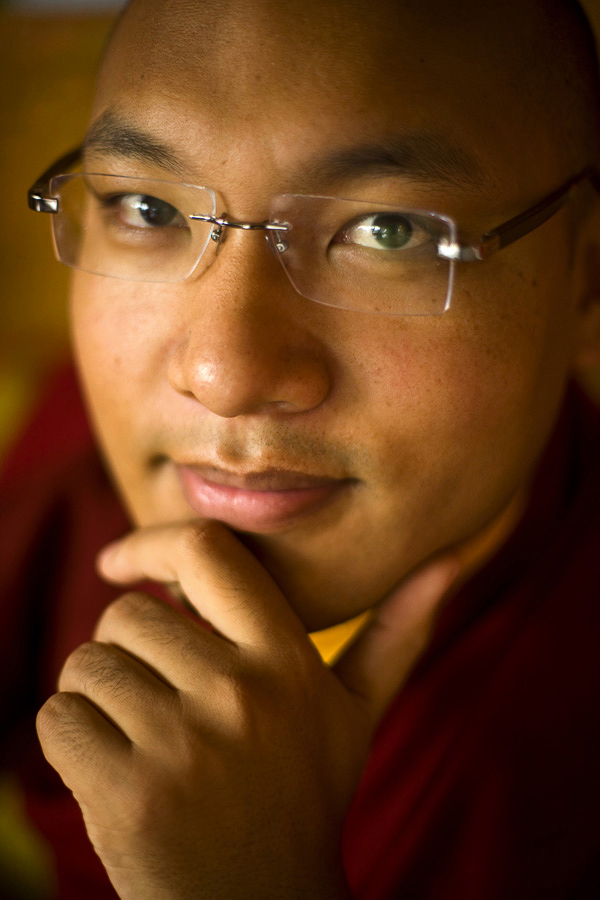
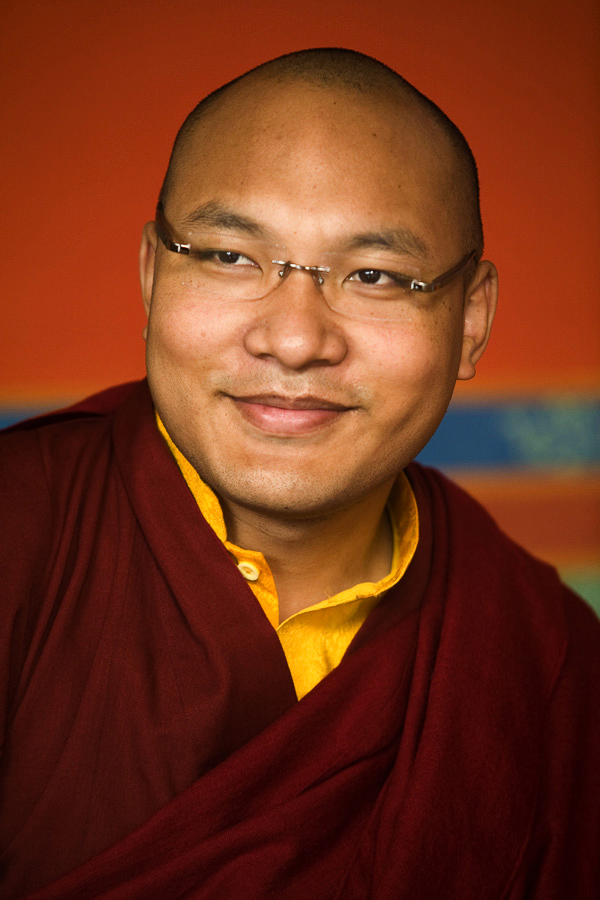
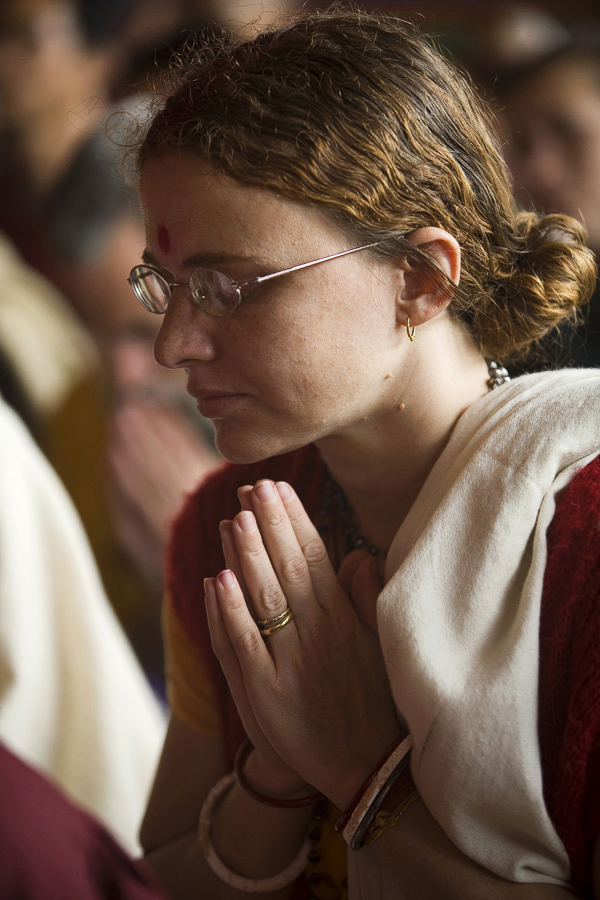
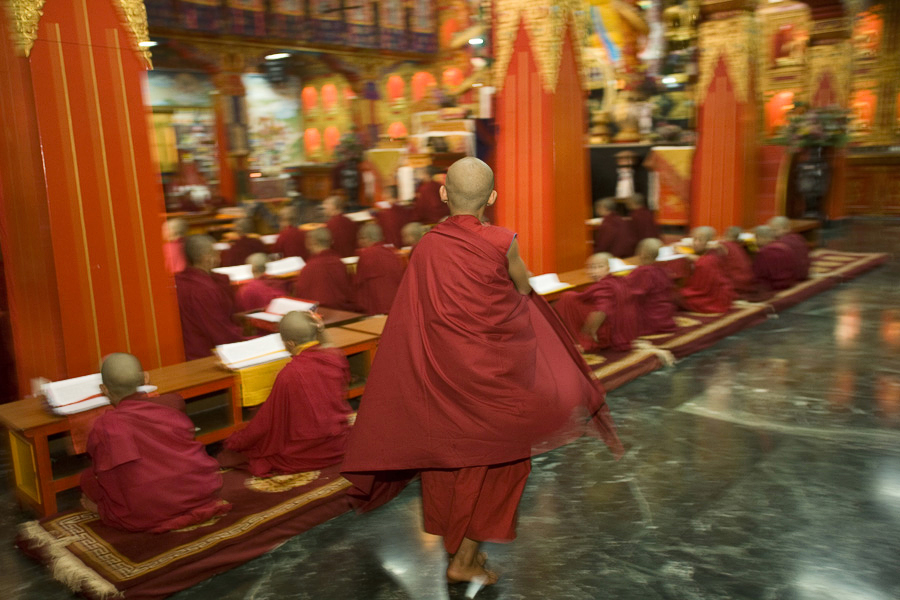
The French news magazine L’Express have just published an assignment I made for them in February on Ogyen Trinley Dorje, His Holiness, the seventeenth reincarnation of The Karmapa Lama in Sarnath, northern India. The Karmapa is head of the Karma Kagyu school of Tibetan Buddhism and predates the Dalai Lama’s lineage. This particular incarnation is disputed however and another candidate, Trinley Thaye Dorje has also been proclaimed and enthroned in another part of India. There’s a reasonable discussion on the succession issues here.
In any case, the assignment gave me a three-fold opportunity.
Firstly, I had the pleasure of meeting the Karmapa, a shy and I thought rather melancholy figure – a bird in a gilded cage if ever there was one – whose keen interest in photography was restricted to photographing the outside world from his window. The child of nomads, he ‘escaped’ from his Chinese hosts first to Nepal and then to India from where he was supposed to conduct a european tour this summer only to be thwarted by the refusal of the Indian authorities to grant him an exit visa. Which has of course nothing to do with Chinese pressure.
Secondly, I had the chance to go back to one of my favourite cities, Varanasi – one of its many names – I think the most intriguing of all north Indian cities.
Thirdly, I had the pleasure to work with Marc Epstein, the charming Foreign Editor of L’Express with whom I managed to put the world to rights over long walks along the ghats of a city we both hadn’t visited for a couple of years. I managed to explain the relative intricacies of cricket to a Frenchman who was curious of all the sporting activity along the river and made him an honoury Tottenham Hotspur fan for his trouble. For this of course, I apologised in advance: an inevitable entrée to a world of pain and disappointment…
Some pictures…






Tewfic El Sawy, aka The Travel Photographer Blog has once again very kindly featured my work on his site. This time, it’s the work on the idol makers that I wrote about here a month ago.
I was a little saddened to read this week that India’s oldest car maker, the Kolkota-based Hindustan Motors, said reduced demand and accumulated losses had wiped out over half its net worth.
Since the liberalisation of the Indian economy in the 1990’s India’s roads have been filled with gleaming new cars. I do sincerely hope that Hindustan’s most famous vehicle has some mileage in it yet.
The Ambassador is such a feature of the Indian landscape that it’s demise is almost unthinkable. I think it’s by far the most reliable and sturdy vehicle on the Indian roads and, by dint of its ubiquity, it can be repaired almost anywhere very quickly. Usually by a combination of hammers, tape and brute force.
The extraordinary Raghubir Singh who it is my great regret never to have met, used the car as a device in his wonderful, A Way into India.
Here’s a recent image of mine of an ‘Ambi’ parked on a quiet street in Tamil Nadu with a rather lovely garland hanging from the mirror