Dickensian Delhi


I visited the Dickens exhibition at the Museum of London yesterday – a really powerful evocation of the writer and his times.

What always struck me about Dickens was his ability to convey the despair and misery that the city around him housed: no stranger to debt, his past was marked by the fear of slipping back into poverty. I think that the exhibition gave me a very apt adjective to describe the dark underside of a city that I have worked in so much, namely Delhi. Perhaps all societies lurching through such painful Capitalist development are like this – but certainly Delhi is Dickensian in its mercilessness and its cruelty. The lack of a safety net and not-so-subtle machinations of caste mean that the people who produce the city’s wealth by selling their labour are completely at the mercy of the vagaries of the Market and the violence of the street. In a similar fashion to Dickens’ time they must struggle against a whole moral code that tells them they are nothing if they have no status. I’ve mentioned here before a slim volume of reportage and writing from those at the bottom of the dark underbelly of this metropolis called Trickster City and the more that I looked at the exhibition yesterday, the more I thought of Delhi.

Dickens’ “slime and ooze of the Thames” is the realm of the boy who picks bits of detritus out of the poisoned Yamuna River on a pathetic raft of polystyrene and rags. Budi Lal, pouring through other people’s filth and rubbish and ignored by all except the snarling dogs and his debtors is Boffin, the Rag Picker from Our Mutual Friend. The men burning plastic bags could be from the slum in Bleak House; Tom-All-Alone’s.

All of them would recognise Victorian London.


India - New Delhi - A young scavenger on a raft, beneath the road bridge across the Yamuna River by the Kudsia Ghat, New Delhi. Scavengers trawl the filth of the river to find objects to sell. The river is so polluted that it can no longer support life, however a community still live and work on it's banks.


India - New Delhi - Buddhi Lal, 30 works before dawn collecting refuse to recycle and resell. Known as 'rag-picking' he can make perhaps Rs150-200 a day and is often chased and attacked by stray dogs because of the smell of his work


India - Delhi - Destitute men gather around a fire made from refuse and plastic bags to try and keep warm. It is estimated that around 100000 people are homeless in the city


Imran Khan… again

It seems that Imran Khan, who I’ve photographed a couple of times on assignment (and previously written about) is finally making a breakthrough in the murky and dangerous world of Pakistani politics with a large rally on Christmas Day. I was delighted therefore to see that his new book, Pakistan, a personal history includes a couple of my images of him.

Here’s one they unfortunately missed…


Pakistan - Lahore - Imran Khan the former Pakistan International Cricket player at prayer in a mosque in Lahore, Pakistan

Action Aid Photos of the Year

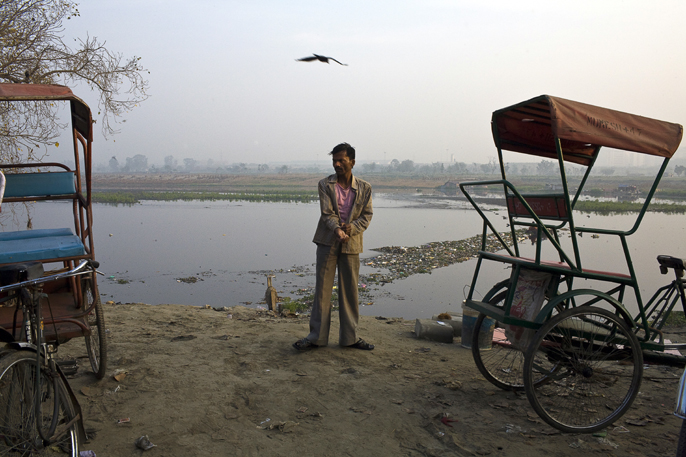
India - Delhi - A homeless cycle rickshaw driver dresses at a parking lot next to the Yamuna River where he sleeps


I’m delighted to say that this image has just been chosen as one of Action Aid’s images of the Year. The full set is here.


Delhi at 100

There’s a rather charming slideshow on the BBC here on the changing face of Delhi by one of its elderly residents. A shame that the city authorities haven’t made more of this to be honest. Delhi remains an enigmatic and petulant youth amongst other capitals: certainly for me infuriating and engaging at the same time.


Of course, as Kanika Singh, Convener of Delhi Heritage Walks told Tehelka magazine, not everyone shares that view, “Only last year, we evicted all street hawkers while preparing for the Commonwealth Games—and now we are celebrating their contributed (sic.) to our ‘heritage’. I don’t feel like celebrating this occasion. Whose Delhi are we celebrating?”.

The point is surely that cities only belong to their inhabitants when they feel they have some stake in them. I agree that most of Delhi is too busy trying to earn a crust to survive to be bothered about the anniversary but surely (and, if you’ve read this blog before you will know that I am the very last person to romanticise or excuse the Raj) the city is the sum of it’s parts: Hindu, Muslim and the British all have legacies that has made Delhi what it is and decrying any of those for some neo-nationalist point is surely counter-productive. Delhi is what it is and pretending that the city – or indeed much of India for that matter, doesn’t have some English blood is as pointless and saying it isn’t a melting pot of past empires. Selective cultural memory is a very dangerous thing for all societies (remember Ayodya?) and only by melding the various strains in a city (certainly one as large and anarchic as Delhi) can you hope to create a genuinely inclusive society…

Anyway, lecture over. Here’s one I made earlier…

India - Gurgaon - Bricklayers constructing a house in the shadow of an exclusive new development


The light…


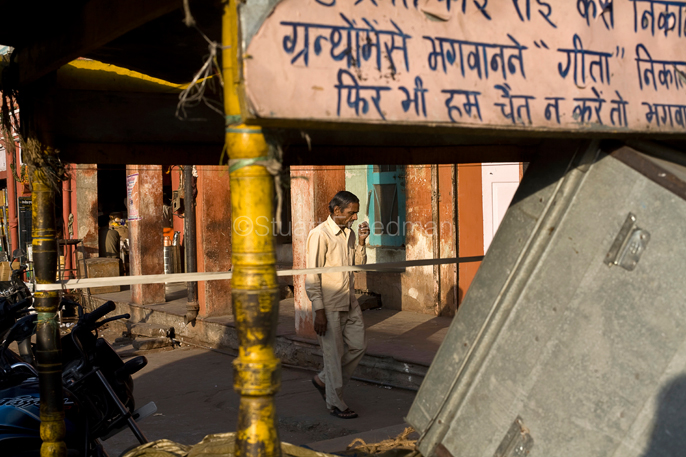
India - Jaipur - A man walks through the streets of the Old City at dusk


I have just finished a lovely four day travel assignment in one of India’s most tourist-heavy cities, Jaipur. Ironically I was tasked to write and photograph about the quiet spots, the quirky and the unusual and I’m pleased to say that there were many. I stayed an extra day and a half in order to edit and write the piece and on the last afternoon, took myself out to shoot on the streets. I always used to do this kind of work on Leica’s and tranny. That process was very freeing but I find it incredibly difficult these days to shoot this kind of work on DSLR’s. Perhaps it’s just me but one looks so much like a photographer that the process becomes a cliche: two big heavy cameras with two big heavy prime lenses. A long way from the classic rangefinder. It is more than that however – purely in terms of seeing, those little cameras allowed you to examine spatial relationships through the viewfinder. You could pre-focus and just walk into the picture. I feel very removed when I try to do these kind of things with my current kit. There’s a sort of rhythm that works on the street and it’s really difficult to do with such a big, noisy machine pressed to your face. I have, over the years in India gone back to my M6 rangefinders as it’s still relatively cheap and easy to process film here.  However, then you have the laborious task of scanning – a process which, after spending the best part of two years feeding my archive (in the form of little plastic squares) through various machines, I’d rather die than attempt again. The irony is of course that I used to be sponsored by Leica (and Kodak for that matter) but who, apart from dentists (meaning rich hobbyists) as Simon Norfolk said a few years ago can afford a couple of M9’s? Or perhaps I’m just not working hard enough…


Another Effilee Magazine spread


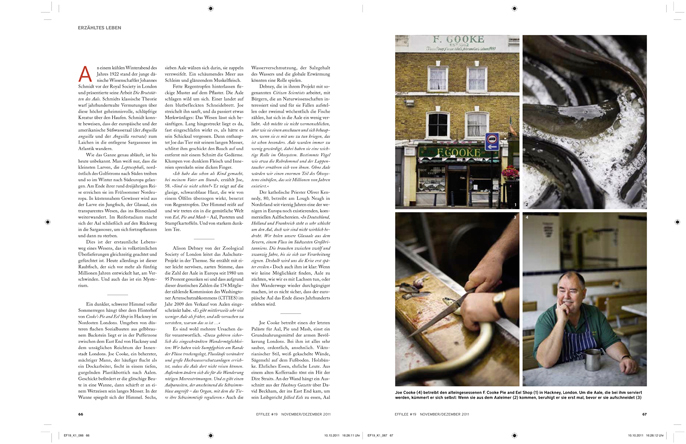
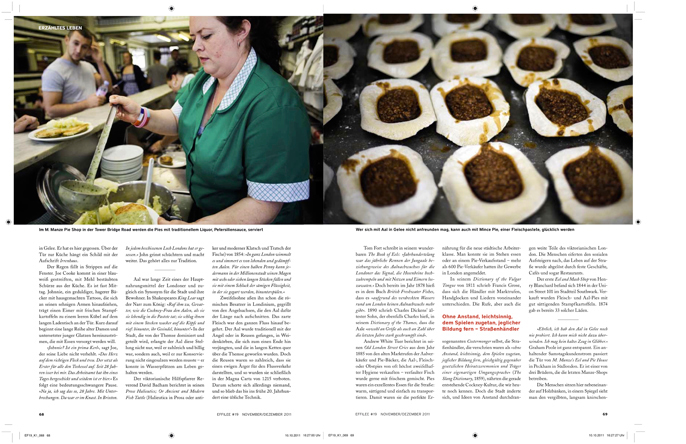
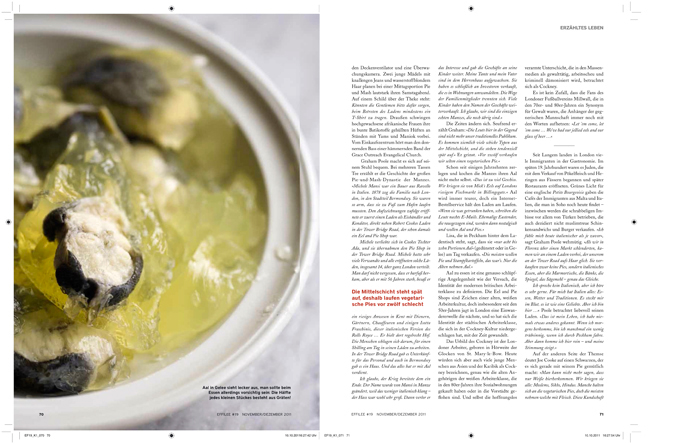
I’m delighted to see another of my pieces running in this month’s excellent Effilee Magazine. It’s a story I shot and wrote for them a couple of months ago called The Englishman and the Eel. It deals with the traditional London food (which is not fish and chips) of eels, pie and mash.

The piece attempts to look at (amongst other things) the significance and the decline of the eel and its fading from the changing London consciousness. For the story I photographed those palaces of Cockney culture, the Pie and Mash shops.

I will post the 5500 word piece on my website in the near future.


Mehrauli Flower Market

I’m sad to report that the Mehrauli Flower Market seems to have finally closed. There had been rumours that this and the one in central Delhi were to be moved to an industrial area in Okhla but I’m certain this hasn’t happened. A real shame – not least for those poor people that worked here. I’d photographed the Mehrauli market a little bit for my ongoing work Public Spaces, Private Lives and here are two of my favourite images from there from the set.


India - New Delhi - A bag of petals in a sack at the end of the day at the Mehrauli Flower Market


India - New Delhi - A phoolwallah on his tricycle collecting a delivery of flowers from the Mehrauli flower market

Sight

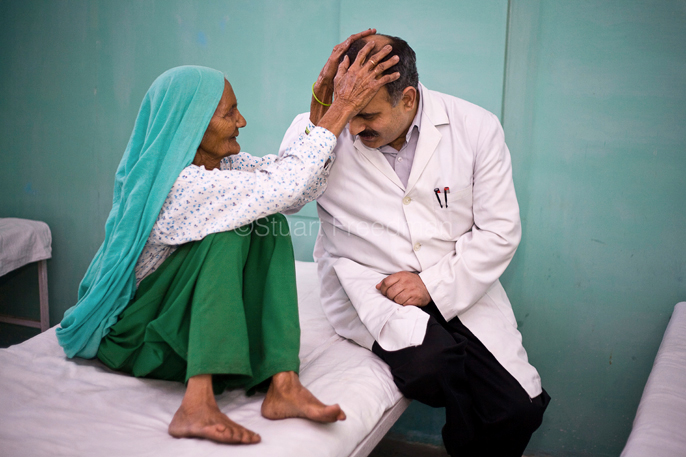
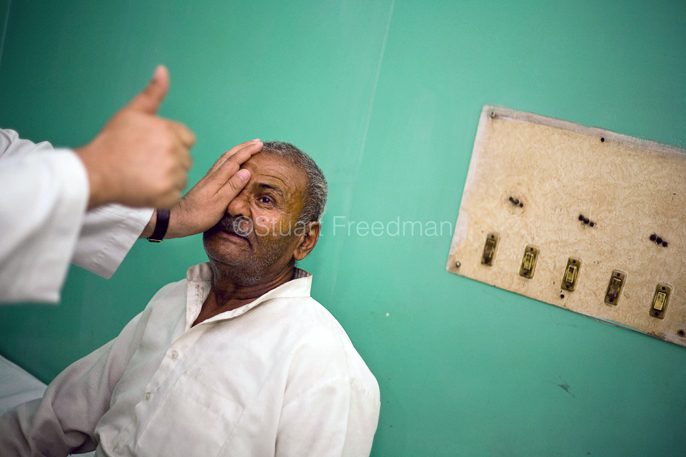
In honour of World Sight Day. I thought I’d publish a few of images to celebrate people having their sight restored. The surgeon, Doctor Rajendra Trishal is one of those unsung Indian doctors who work in very unglamorous surroundings but nevertheless change peoples lives by their work.

The last picture is not for the squeamish, so beware…


India - Ghaziabad - Doctor Rajendra Trishal is blessed by Palo Devi, whose cataracts the doctor removed the previous day.


India - Ghaziabad - Doctor Rajendra Trishal examines Rohatas Kale, 60, whose cataracts the doctor removed the previous day


India - Ghaziabad - Doctor Rajendra Trishal performs cataract surgery on a patient at the Ginni Modi Opthalmic Research Centre, Modinagar

Tearsheet – Digital Photography Magazine

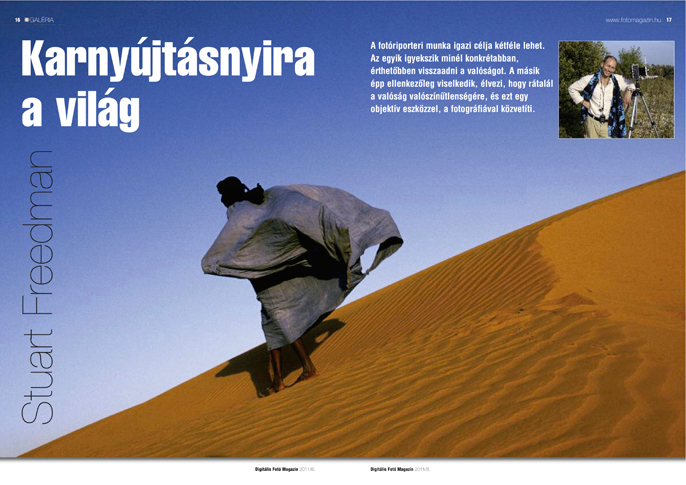
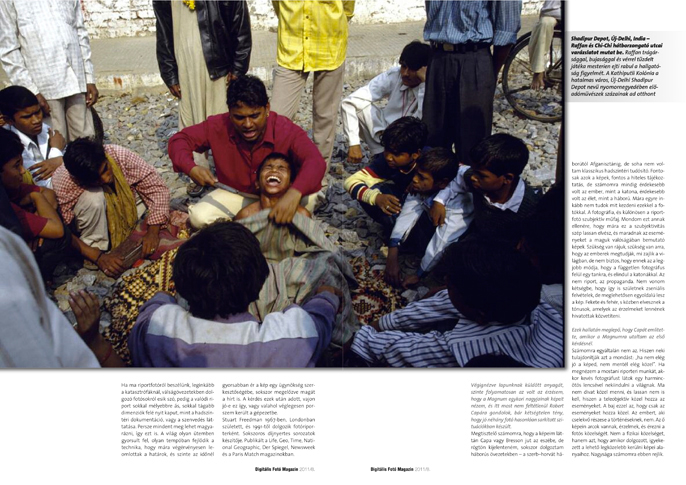
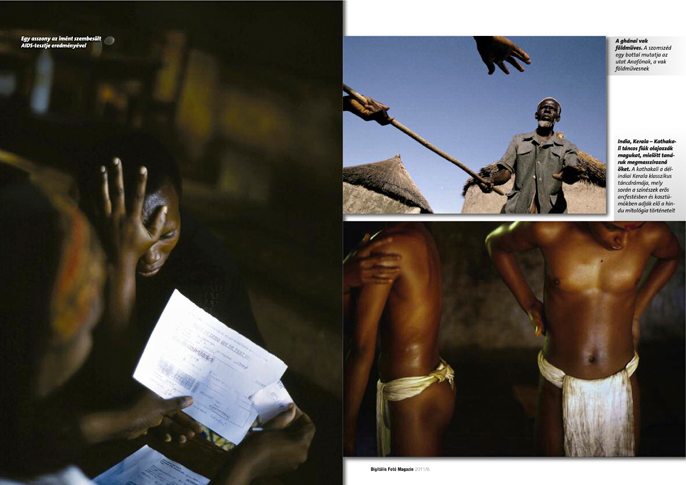
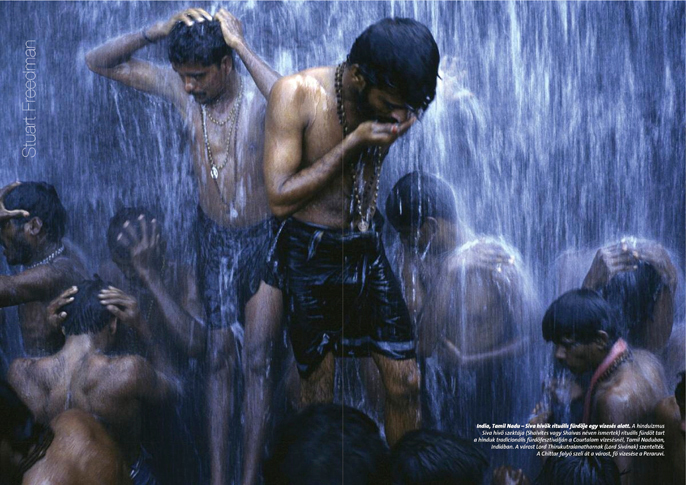
A couple of months ago I was contacted out of the blue by a Hungarian photo magazine – Digitalis Foto – wanting to show my work and conduct an interview. A very nice experience and lovely people – so many thanks to Varga Miklós and Nora Somogyi. The spread turned up this week and it was much larger than I expected – a cover and 14 pages…