Dickensian Delhi


I visited the Dickens exhibition at the Museum of London yesterday – a really powerful evocation of the writer and his times.

What always struck me about Dickens was his ability to convey the despair and misery that the city around him housed: no stranger to debt, his past was marked by the fear of slipping back into poverty. I think that the exhibition gave me a very apt adjective to describe the dark underside of a city that I have worked in so much, namely Delhi. Perhaps all societies lurching through such painful Capitalist development are like this – but certainly Delhi is Dickensian in its mercilessness and its cruelty. The lack of a safety net and not-so-subtle machinations of caste mean that the people who produce the city’s wealth by selling their labour are completely at the mercy of the vagaries of the Market and the violence of the street. In a similar fashion to Dickens’ time they must struggle against a whole moral code that tells them they are nothing if they have no status. I’ve mentioned here before a slim volume of reportage and writing from those at the bottom of the dark underbelly of this metropolis called Trickster City and the more that I looked at the exhibition yesterday, the more I thought of Delhi.

Dickens’ “slime and ooze of the Thames” is the realm of the boy who picks bits of detritus out of the poisoned Yamuna River on a pathetic raft of polystyrene and rags. Budi Lal, pouring through other people’s filth and rubbish and ignored by all except the snarling dogs and his debtors is Boffin, the Rag Picker from Our Mutual Friend. The men burning plastic bags could be from the slum in Bleak House; Tom-All-Alone’s.

All of them would recognise Victorian London.


India - New Delhi - A young scavenger on a raft, beneath the road bridge across the Yamuna River by the Kudsia Ghat, New Delhi. Scavengers trawl the filth of the river to find objects to sell. The river is so polluted that it can no longer support life, however a community still live and work on it's banks.


India - New Delhi - Buddhi Lal, 30 works before dawn collecting refuse to recycle and resell. Known as 'rag-picking' he can make perhaps Rs150-200 a day and is often chased and attacked by stray dogs because of the smell of his work


India - Delhi - Destitute men gather around a fire made from refuse and plastic bags to try and keep warm. It is estimated that around 100000 people are homeless in the city


The Englishman and the eel

Although I already featured a tearsheet of a recent assignment on London’s pie and mash shops (see here), I thought I’d take the opportunity to show some of the images that didn’t make the magazine edit. Although I’m certainly no interiors photographer, I’ve always been intrigued by the survival of period details in these shops – a palimpsest of past London lives. Crucially, none of the images that Effilee featured showed the interior of the Manze shop in Walthamstow market. I thought this had the best architectural details although, dating from the 1930’s, it wasn’t the oldest.

I saw the piece (and my accompanying text – a link that I will post soon) almost as a bit of visual archeology. Like the long closed Jewish Soup Kitchen that I photographed at the start of my career (see here) these places are disappearing year after year. As I’ve said before, the corporate, identikit British high street is a poorer place for the passing of traditional cafes and all manner of independent shops.

Whatever you’re preconceptions of this food – and I guarantee that they are likely wrong – I urge you to try it even if it’s just an excuse to rediscover something of the past that for now, is still with us.


UK - London - A customer eats a plate of eels, pie and mash in Cookes' Eel, Pie and mash shop in Hoxton


UK - London - A plate of stewed eels and mash at Manze's Pie and Mash shop in Tower Bridge Road


UK - London - An antique flower pot (with a typically 1930's aspidistra...), a broom and an umbrella by a door at Manze's Pie and mash shop in Walthamstow market. The interior is Grade 2 listed


UK - London - UK - London - Original tile details at Manze's Eel, Pie and Mash shop in Walthamstow


UK - London - The interior of Manze's Pie and Mash shop in Walthamstow market showing the rare pressed tin tile ceiling


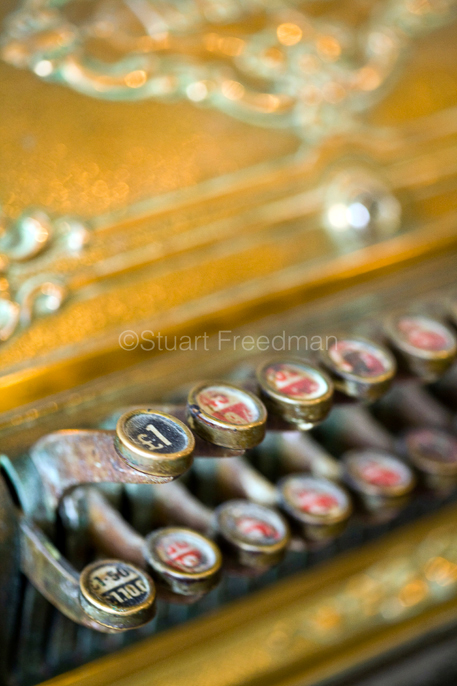
UK - London - A pre-decimal cash register at Manze's Eel, Pie and Mash shop in Walthamstow


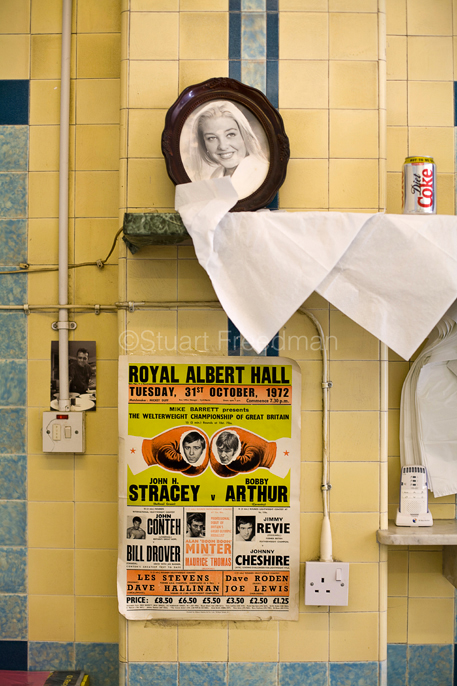
UK - London - Original tiles and a boxing poster from the 1970's in Cookes' Eel, Pie and Mash shop in London Fields


UK - London - UK - London - The interior of Cookes' Eel, Pie and Mash shop in London Fields


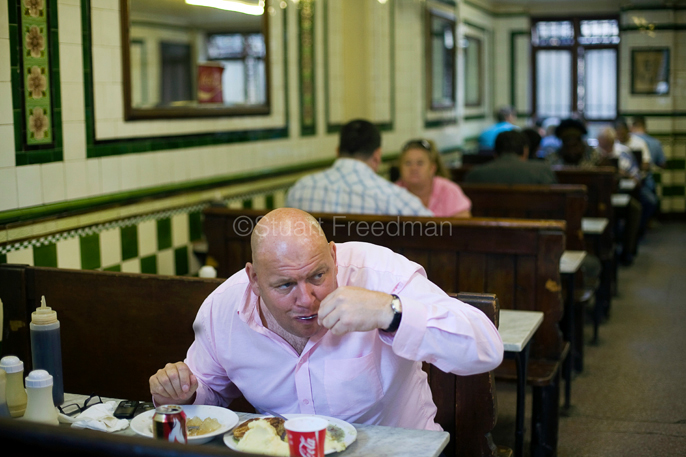
UK - London - A man eats a plate of eels, pie and mash at Manze's Eel, Pie and Mash on Tower Bridge Road, the oldest in London dating from 1902

Imran Khan… again

It seems that Imran Khan, who I’ve photographed a couple of times on assignment (and previously written about) is finally making a breakthrough in the murky and dangerous world of Pakistani politics with a large rally on Christmas Day. I was delighted therefore to see that his new book, Pakistan, a personal history includes a couple of my images of him.

Here’s one they unfortunately missed…


Pakistan - Lahore - Imran Khan the former Pakistan International Cricket player at prayer in a mosque in Lahore, Pakistan

Action Aid Photos of the Year

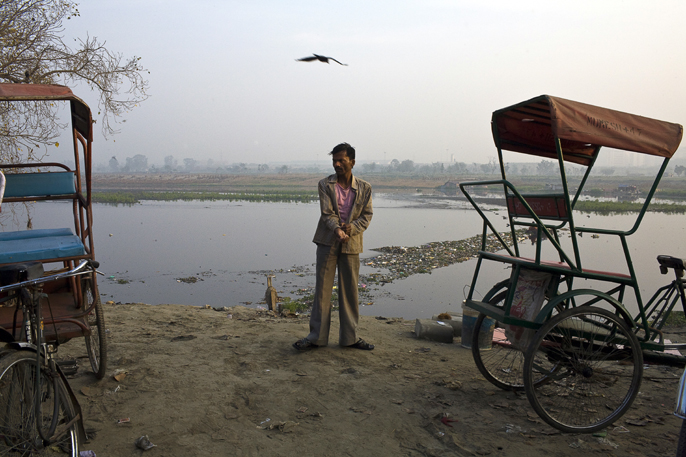
India - Delhi - A homeless cycle rickshaw driver dresses at a parking lot next to the Yamuna River where he sleeps


I’m delighted to say that this image has just been chosen as one of Action Aid’s images of the Year. The full set is here.


Delhi at 100

There’s a rather charming slideshow on the BBC here on the changing face of Delhi by one of its elderly residents. A shame that the city authorities haven’t made more of this to be honest. Delhi remains an enigmatic and petulant youth amongst other capitals: certainly for me infuriating and engaging at the same time.


Of course, as Kanika Singh, Convener of Delhi Heritage Walks told Tehelka magazine, not everyone shares that view, “Only last year, we evicted all street hawkers while preparing for the Commonwealth Games—and now we are celebrating their contributed (sic.) to our ‘heritage’. I don’t feel like celebrating this occasion. Whose Delhi are we celebrating?”.

The point is surely that cities only belong to their inhabitants when they feel they have some stake in them. I agree that most of Delhi is too busy trying to earn a crust to survive to be bothered about the anniversary but surely (and, if you’ve read this blog before you will know that I am the very last person to romanticise or excuse the Raj) the city is the sum of it’s parts: Hindu, Muslim and the British all have legacies that has made Delhi what it is and decrying any of those for some neo-nationalist point is surely counter-productive. Delhi is what it is and pretending that the city – or indeed much of India for that matter, doesn’t have some English blood is as pointless and saying it isn’t a melting pot of past empires. Selective cultural memory is a very dangerous thing for all societies (remember Ayodya?) and only by melding the various strains in a city (certainly one as large and anarchic as Delhi) can you hope to create a genuinely inclusive society…

Anyway, lecture over. Here’s one I made earlier…

India - Gurgaon - Bricklayers constructing a house in the shadow of an exclusive new development