Sarajevo

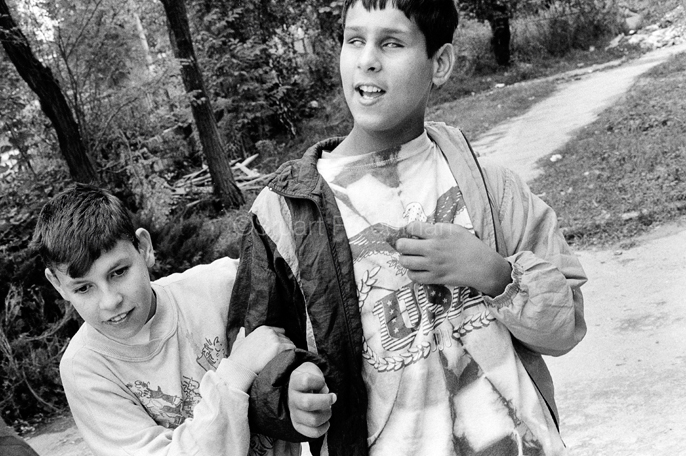
Today marks the twentieth anniversary of the start of the war in Bosnia. Cities, like people can produce strange feelings in visitors – leave tiny traces of discomfort and Sarajevo always struck me as being a little odd; a little schizophrenic… of course I never knew it before the war as a place of civility and culture. The work I made there was always conditioned by conflict but I thought I’d take this opportunity to show a small selection of work from the city taken almost a decade apart that show two different sides. The work from 1997 was made as I’d just returned from a near fatal trip to Sierra Leone and I came back to a landscape of a bitter and fragile winter. I remember the dark coffee and the sleet, the ominous surrounding mountains and the deep, jagged gouges in the buildings – and in the people. I photographed the Blind School, devastated by shelling but trying slowly to come back to life. I photographed children learning to use their canes on a path that the instructor, Borko swore was surrounded by unexploded ordnance. It made the children – and me – very diligent. A decade later I came again in better weather and better spirits with an old friend of mine from Delhi, the critic and writer Meenakshi Shedde to make a story on the Sarajevo Film Festival. Clearly, for me and the city, most of our visible scars had healed.


Bosnia – Sarajevo – Two friends navigate their way to school through a possible minefield, Sarajevo.The Blind School was the only centre in the region for visually impaired children and young adults. It was extensively damaged during the civil war and was used by the Bosnian Serb army as a military position from which to snipe and shell the city. The few teaching staff left during the war managed to visit some of their blind pupils and continue a limited education. The school reopened after the war ended but conditions remained dire.


Bosnia - Sarajevo - A boy makes his way to class in the destroyed Blind School.
Bosnia - Sarajevo - Two friends walk together at the Blind School


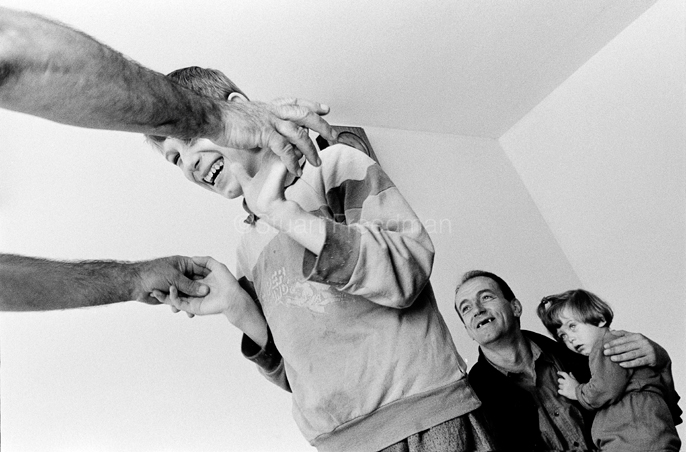
Bosnia - Sarajevo - A teacher pays a home visit to a deaf-blind boy and his family


Bosnia - Sarajevo - The Peace Statue and the Orthodox cathedral, Sarajevo


Bosnia - Sarajevo - A square in Sarajevo's Old Town showing the Sebilj and the minaret of the Gazi Husrev-beg Mosque


Bosnia - Sarajevo - Men play outsize chess in a park, Sarajevo


Bosnia - Sarajevo - A couple enjoy drinks in the late afternoon sun at the Sarajevo Film Festival, Sarajevo, Bosnia

Athens

I just returned from almost a week in Athens on assignment for a magazine writing about how Greeks are coping on a personal level with the rape of their country by international finance. I found many things – a grinding poverty for some – more akin to the Developing World than to Europe but also small stories of hope; of people learning again what community and solidarity mean. Small stories, beautiful stories.

I had barely a couple of hours over a day or so to make some images and none of them reflect the immediate situation, but they were a therapy – going out and photographing people and their lives in the markets and on the streets.

My special thanks to journalist and fixer extraordinaire, Helen Skopis for patiently putting up with me and making all the ‘phone calls – and to two young and very talented photographers, Angelos Tzortinis and Alkis Konstantinidis who were generous enough to share their time and considerable experience to give me some background as only photographers can.

Thanks to all.


Greece - Athens - A child in costume plays in front of a sentry during the Changing of the Guard in front of the Tomb of the Unknown Soldier, Syntagma Square


Greece - Athens - A fishmonger looks indulgently on a Greek Orthodox priest as he buys seafood from a stall in the Athens Central Market on Athinas Street

A website refreshed…

I’ve just completed a refresh of my website. Listening to clients it was clear that people wanted to see recent images much more often and so I’ve added a new section right at the top of the page called New Work. I’ll be updating regularly so I hope people will look in now and again.

In addition I’ve updated the Destinations section with some new images.

Here’s a screen grab. Click the image to go to the site


Meditation Flash Mob…

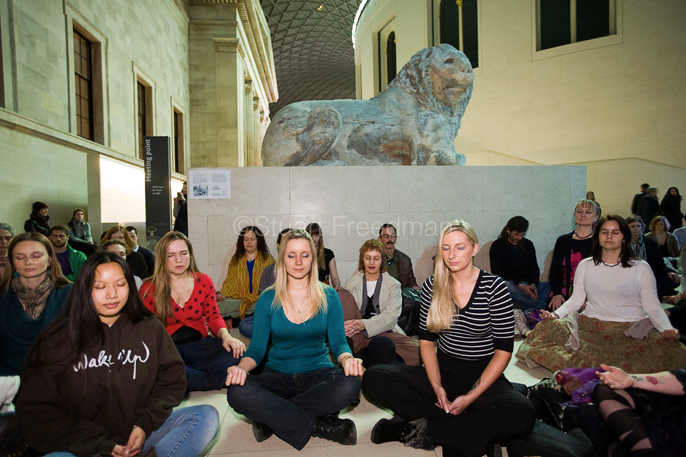
I’ve mentioned before about people finding private space for themselves in busy cities so here was a nice little thing – a meditation flash mob – perhaps a couple of hundred people or so came to sit by the stone lion in the great Court of the British Museum on Friday evening… shame I was photographing rather than being a part of it as it looked rather interesting…


UK - London - A man performs qi gong exercises as part of a meditation flash mob in the Great Court of the British Museum


UK - London - People taking part in a meditation flash mob in the Great Court of the British Museum


UK - London - A woman taking part in a meditation flash mob in the Great Court of the British Museum

Dickensian Delhi


I visited the Dickens exhibition at the Museum of London yesterday – a really powerful evocation of the writer and his times.

What always struck me about Dickens was his ability to convey the despair and misery that the city around him housed: no stranger to debt, his past was marked by the fear of slipping back into poverty. I think that the exhibition gave me a very apt adjective to describe the dark underside of a city that I have worked in so much, namely Delhi. Perhaps all societies lurching through such painful Capitalist development are like this – but certainly Delhi is Dickensian in its mercilessness and its cruelty. The lack of a safety net and not-so-subtle machinations of caste mean that the people who produce the city’s wealth by selling their labour are completely at the mercy of the vagaries of the Market and the violence of the street. In a similar fashion to Dickens’ time they must struggle against a whole moral code that tells them they are nothing if they have no status. I’ve mentioned here before a slim volume of reportage and writing from those at the bottom of the dark underbelly of this metropolis called Trickster City and the more that I looked at the exhibition yesterday, the more I thought of Delhi.

Dickens’ “slime and ooze of the Thames” is the realm of the boy who picks bits of detritus out of the poisoned Yamuna River on a pathetic raft of polystyrene and rags. Budi Lal, pouring through other people’s filth and rubbish and ignored by all except the snarling dogs and his debtors is Boffin, the Rag Picker from Our Mutual Friend. The men burning plastic bags could be from the slum in Bleak House; Tom-All-Alone’s.

All of them would recognise Victorian London.


India - New Delhi - A young scavenger on a raft, beneath the road bridge across the Yamuna River by the Kudsia Ghat, New Delhi. Scavengers trawl the filth of the river to find objects to sell. The river is so polluted that it can no longer support life, however a community still live and work on it's banks.


India - New Delhi - Buddhi Lal, 30 works before dawn collecting refuse to recycle and resell. Known as 'rag-picking' he can make perhaps Rs150-200 a day and is often chased and attacked by stray dogs because of the smell of his work


India - Delhi - Destitute men gather around a fire made from refuse and plastic bags to try and keep warm. It is estimated that around 100000 people are homeless in the city


The Englishman and the eel

Although I already featured a tearsheet of a recent assignment on London’s pie and mash shops (see here), I thought I’d take the opportunity to show some of the images that didn’t make the magazine edit. Although I’m certainly no interiors photographer, I’ve always been intrigued by the survival of period details in these shops – a palimpsest of past London lives. Crucially, none of the images that Effilee featured showed the interior of the Manze shop in Walthamstow market. I thought this had the best architectural details although, dating from the 1930’s, it wasn’t the oldest.

I saw the piece (and my accompanying text – a link that I will post soon) almost as a bit of visual archeology. Like the long closed Jewish Soup Kitchen that I photographed at the start of my career (see here) these places are disappearing year after year. As I’ve said before, the corporate, identikit British high street is a poorer place for the passing of traditional cafes and all manner of independent shops.

Whatever you’re preconceptions of this food – and I guarantee that they are likely wrong – I urge you to try it even if it’s just an excuse to rediscover something of the past that for now, is still with us.


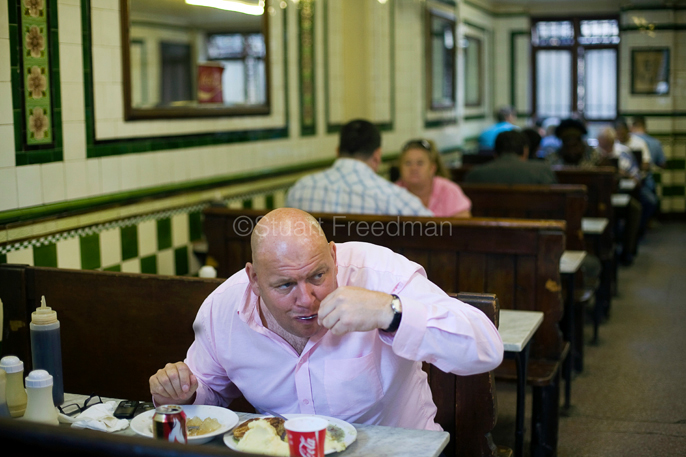
UK - London - A customer eats a plate of eels, pie and mash in Cookes' Eel, Pie and mash shop in Hoxton


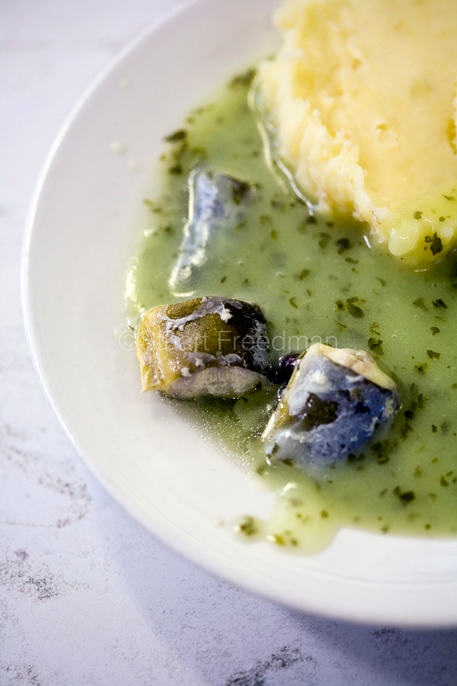
UK - London - A plate of stewed eels and mash at Manze's Pie and Mash shop in Tower Bridge Road


UK - London - An antique flower pot (with a typically 1930's aspidistra...), a broom and an umbrella by a door at Manze's Pie and mash shop in Walthamstow market. The interior is Grade 2 listed


UK - London - UK - London - Original tile details at Manze's Eel, Pie and Mash shop in Walthamstow


UK - London - The interior of Manze's Pie and Mash shop in Walthamstow market showing the rare pressed tin tile ceiling


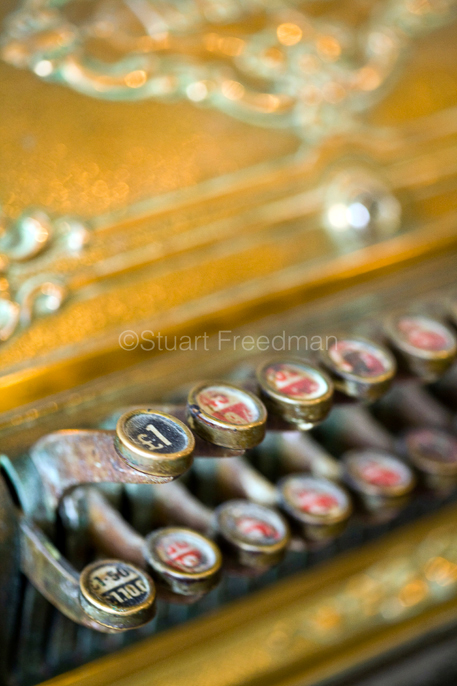
UK - London - A pre-decimal cash register at Manze's Eel, Pie and Mash shop in Walthamstow


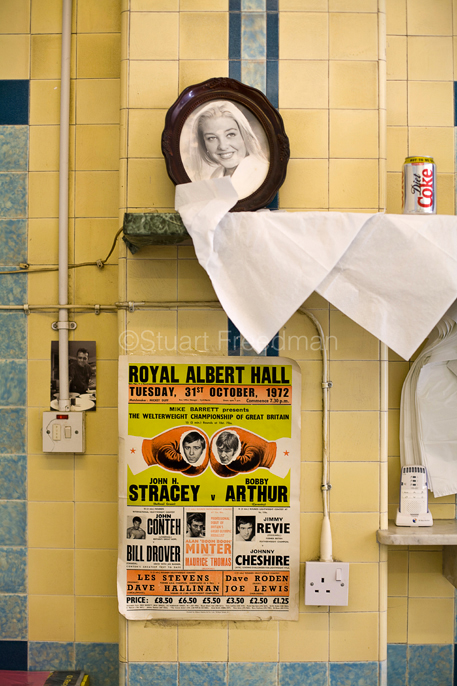
UK - London - Original tiles and a boxing poster from the 1970's in Cookes' Eel, Pie and Mash shop in London Fields


UK - London - UK - London - The interior of Cookes' Eel, Pie and Mash shop in London Fields


UK - London - A man eats a plate of eels, pie and mash at Manze's Eel, Pie and Mash on Tower Bridge Road, the oldest in London dating from 1902