Another one gone…


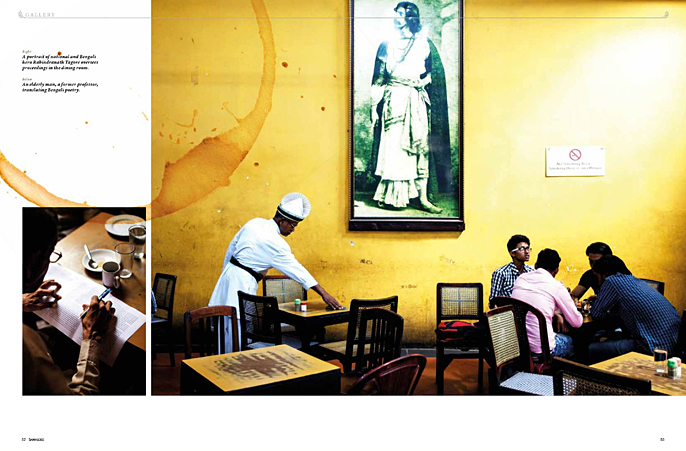
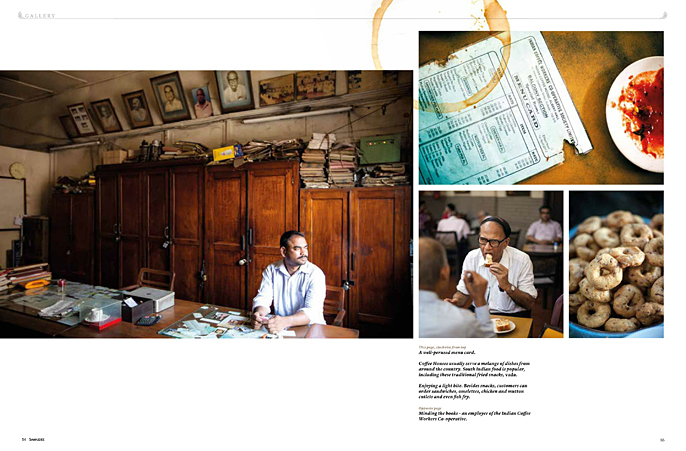
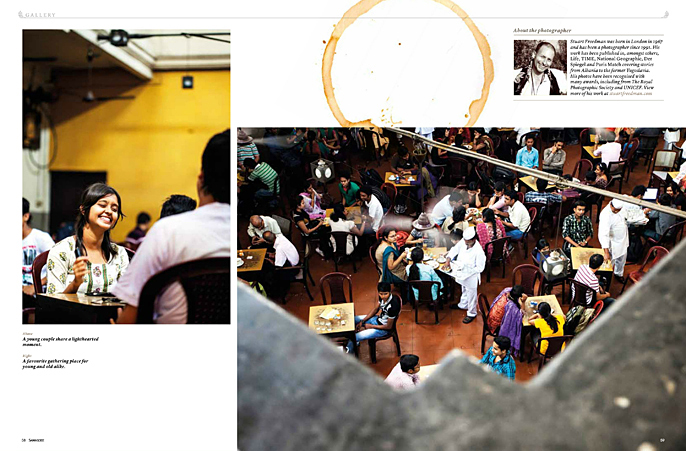
I’ve just discovered that one of my favourite Indian Coffee Houses, in Kollom, Kerala was closed in January.

I photographed there for an afternoon when I was working down there this time last year.

Over the years on this blog, I’ve written numerous times about my love for these places that hold a memory of an older, more gentle India…


India - Kollom - A waiter in the Indian Coffee House
India – Kollom – A waiter in the kitchen of the Indian Coffee House


India - Kollom - A waiter walks through the Indian Coffee House
India – Kollom – A waiter walks through the Indian Coffee House


Kathputli Colony’s last stand


I’ve written several times over the last few years about Delhi’s Kathputli Colony (or as I knew it, Shadipur Depot) – that Dickensian maze of street performers and magicians that somehow floats on the imagination of the city. This time however, it looks like the city will finally swallow the place. According to Tehelka Magazine, residents of the ‘illegal’ slum – some 3500 families that have been there for forty years – may have to move soon to a re-development far to the North. The site at Shadipur where the land was once worthless is now, as the city grows, worth a fortune. It was sold by the the Delhi Development Authority in 2009 to the Mumbai-beased Raheja Builders however, at what Tehelka suggests was seriously undervalued price to make way for a high rise developments. These would, it was promised, include social housing for the performers families. It seems though that even on paper, the proposed number of dwellings for the artists is far short of the actual number needed. Perhaps with some good reason, the artists families don’t believe that the authorities will make good on their promises to allow them back to the area when it is developed. The project is now stuck in limbo as the Delhi Urban Arts Commission has objected to it. The traditional performers are caught. If they move, they lose their homes and their livelihoods. If they stay, they are likely to be evicted and from previous scenarios that may well be violent. They know however that they are simply powerless actors in a city’s development, caught as they are between tradition and a very cruel version of modernity. Since I made a story in Shadipur nearly a dozen years ago, quite a few photographers have worked here and a film was even made of the struggles of the residents. In some senses it was an easy story; a fairy tale in a bleak metropolis. Most people’s recent treatment of it completely ignored the fact that as Delhi grows and divides even more sharply between those that produce it’s wealth and those that exploit it, the story is no longer about a quaint tinsel-town slum. It is about how Delhi will look in the future. It is about what kind of society India wants for its cities and its people.

In 2010 I wrote about the city’s sweeping of street vendors off the pavements before the Commonwealth Games and I mentioned the excellent book, Trickster City, a collection of writings by those at the sharp end of the slum clearances. As I wrote then

The irony is that many countries celebrate their street culture … and make them a tourist attraction: one has only to think of Singapore and Vietnam. Delhi’s depressing desire to imitate a corporate driven monoculture is certain to lead to a lessening of the city’s heritage.

As I’ve said many times here, I have no sentimental attachment to poverty and no Raj-tinted spectacles through which I view Delhi. I both hate and love the city but the scales are now tipped so far against certain sections of its people that I find it difficult sometimes to walk it’s streets and look some people in the eye.

You can see my original set from Shadipur here

I’ve decided to show some less well known images from the set – some that I have rediscovered. I hope you like them.


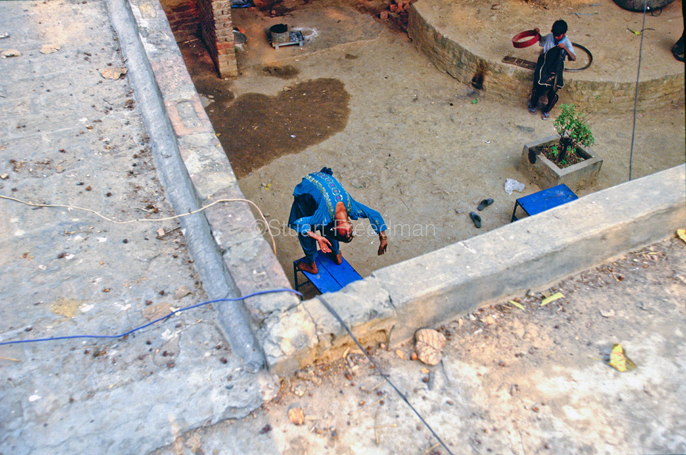
India - New Delhi - Reenu, 15 and her brother practice their contortions. Reenu and her family are trained by her mother, herself a former acrobat. The children, when babies, were stretched and contorted to make their bones pliable for the act. Shadipur Depot, New Delhi, India.The Kathiputli Colony in the Shadipur Depot slum is home to hundreds of (originally Rajasthani) performers. The artistes who live here - from magicians, acrobats, musicians, dancers and puppeteers are often international renowed by always return to the Shadipur slum.
India – New Delhi – Reenu, 15 and her brother practice their contortions. Reenu and her family are trained by her mother, herself a former acrobat. The children, when babies, were stretched and contorted to make their bones pliable for the act. The Kathiputli Colony in the Shadipur Depot slum is home to hundreds of (originally Rajasthani) performers. The artistes who live here – from magicians, acrobats, musicians, dancers and puppeteers are often international renowed but always return to the Shadipur slum.


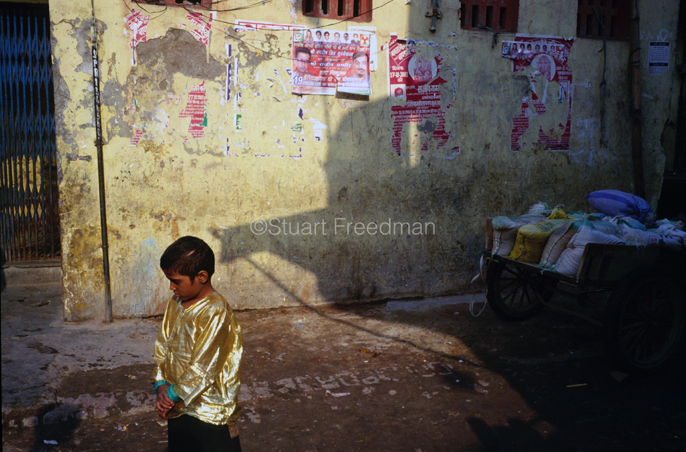
India - New Delhi - A performers son in a gold shirt, Shadipur Depot,
India – New Delhi – A performers son in a gold shirt, Shadipur Depot,


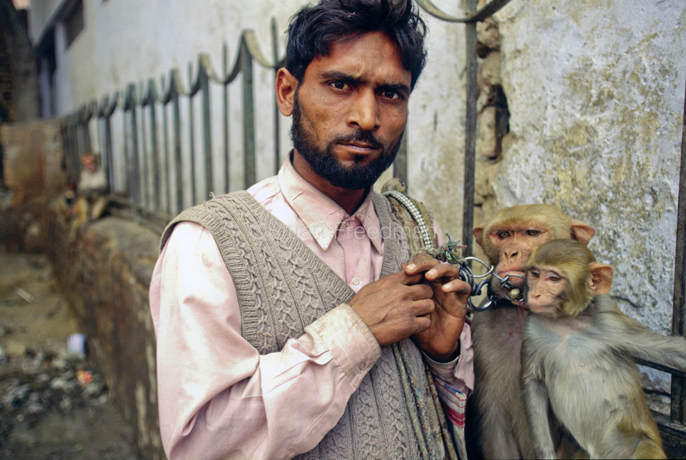
Indian - New Delhi - A man and his performing monkeys. The Kathiputli Colony in the Shadipur Depot
Indian – New Delhi – A man and his performing monkeys. The Kathiputli Colony in Shadipur Depot


India - New Delhi - Chand Pasha, a magician produces a bird from his sleeve
India – New Delhi – Chand Pasha, a magician produces a bird from his sleeve


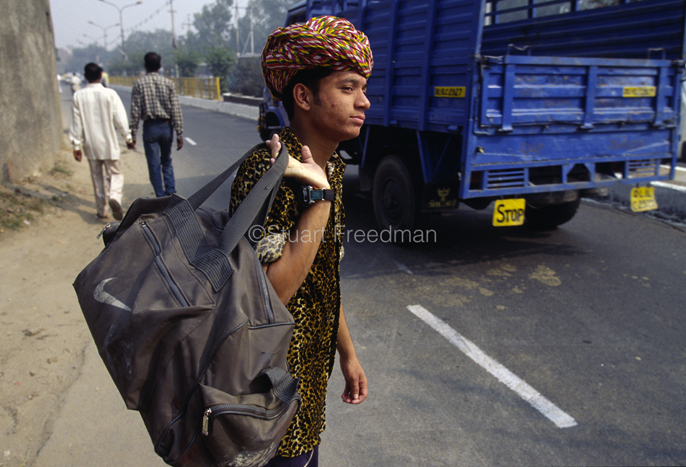
India - New Delhi - A boy on his way to perform his magic act at a wedding waits for a lift by the side of the road
India – New Delhi – A boy on his way to perform his magic act at a wedding waits for a lift by the side of the road, Shadipur Depot


A big lump of red


I feel the weather turning. The mornings are colder. I hate it. I need cheering up. Here’s a picture with a big lump of red in it to do that.


India - New Delhi - A stage set for a wedding with chairs and garlands
India – New Delhi – A stage set for a wedding with chairs and garlands


Why did I choose this image? Just chatting to Michael Regnier at Panos. Sparked a thought about a lyric – John Foxx’s Hiroshima mon amour. Wonderful… “Features fused like shattered glass, the sun’s so low/Turns our silhouettes to gold/Hiroshima mon amour”

No relation to Delhi of course, but that image of light… I can feel the warmth of the late afternoon sun in the big lump of red…


David beats Goliath


I was delighted to read over the weekend in a piece by Dean Nelson and Simon de Trey-White in the Daily Telegraph of the decision by Vedanta Mining to respect the wishes of the Dongria Kondh tribe and cease mining their sacred mountain for bauxite.

Vedanta Resources, a UK-registered ftse -100 company wanted to mine the Niyamgiri Hills in Orissa which are sacred to  Dongria Kondh, a protected tribal group of ‘original’ Aboriginal peoples. The Orissa state government had agreed to the destruction of the Tribal peoples land in 2005 but the decision was eventually overturned by the Supreme Court after a tortuous appeals process. The final decision was made by the Dongria Kondh themselves at a gathering at the weekend.

I covered the story in 2007 and wrote about it for the Indian magazine Tehelka (see here).

In a blog post on this site in 2009 I wrote that,

“I am no romantic when it come to India. I don’t share a Raj view of the colonial apologists (despite inevitably by dint of being British having reaped the indirect rewards of the subjugation of that country). I don’t yearn for quaint, underdeveloped communities full of poverty and colour. I want to see India progress. But I know the stink of international corporate power when I smell it… India had no colonies from which to steal resources so it’s stealing them from its own weak and vulnerable. The profits of this mine will not be spread evenly to benefit the Indian economy – it will be hoarded in the off-shore bank accounts of those corrupt politicians and corporate executives who already think that India is theirs by right.

A new middle class India has been brought up to believe that a successful society means a consumerist society. Greed and nationalism go hand in hand: it is not the poor of India calling for war with their brothers and sisters in Pakistan.”

It is a deeply significant victory for the Dongria Kondh but as Nelson correctly points out the flow of modernity is inevitable.

As I also wrote in 2009,

“Traditionally, Indians have protested injustice in a dignified Ghandian way with hunger strikes and marches. While the Western media and much of India has been marvelling at ‘Shining India’ it has failed to notice that a good deal of India is now under (mostly Maoist) rebel control. In Kashmir, Manipur, Nagaland, Bihar, Andhra Pradesh, Chhattisgarh and Jharkhand the Indian state is fighting a battle it might not win.”

I’ve used before Arundhati Roy‘s metaphor of India ‘eating its own people’ to describe that country’s unfettered race to Market Capitalism’. I hope that the Dongria Kondh’s victory for their peaceful, traditional way of life in harmony with the land of their fathers will last for as long it can.


India - Orissa - Dabu Limajhi, a tribal woman in her home in Kankasarpa village, India – Orissa – Dabu Limajhi, a tribal woman in her home in Kankasarpa village,

How I learned to love Bollywood


There’s a really interesting piece in the Guardian today by Amit Chaudhuri (the British media’s new go-to man for South Asian comment) about Bollywood – the catch-all term for Indian mainstream film. Chaudhuri relates his own personal journey back to an Indian past whilst watching classic Hindi cinema at university in Cambridge in the ’80s. It was a medium that he’d ignored partly because of his middle-class upbringing and partly because he’d grown up on Hollywood movies. Interestingly, as he says, “just as Bollywood seemed to become all gloss and syrup, there was another development.” This came in the form of Independent Hindi cinema. Movies like Maqbool and Omkara. It’s a shame for the outsider who doesn’t speak Hindi because it’s really tricky to find subtitled versions beyond the big blockbusters. I’m still trying to hunt down a version of the Gangs of Wasseypur that I can understand. For me, I remember sitting open mouthed the first time I saw some of the beautiful Satyajit Ray offerings in black and white that are pretty easy to find… but then also loving more modern ironic offerings like Quick Gun Murugan. In any case it will be interesting to see where ‘new’ Indian cinema will go in the next few years in a rapidly changing India.

I’ve never worked on a Bollywood movie (although I did shoot movie moghul Ronnie Screwvalla for the Sunday Times Magazine a few years ago – see here) but did photograph the rehearsals for The Merchants of Bollywood (again for the Sunday Times Magazine) in Mumbai a while back. As my own homage to Bollywood, here’s one of my favourite frames from the job…


Indian - Mumbai - Dancer Ashwini Iyer, 23, practices her routine at a rehearsal of the production of The Merchants of Bollywood in a studio in Mumbai, India
Indian – Mumbai – Dancer Ashwini Iyer, 23, practices her routine at a rehearsal of the production of The Merchants of Bollywood in a studio in Mumbai, India


Tearsheet – Independent Magazine


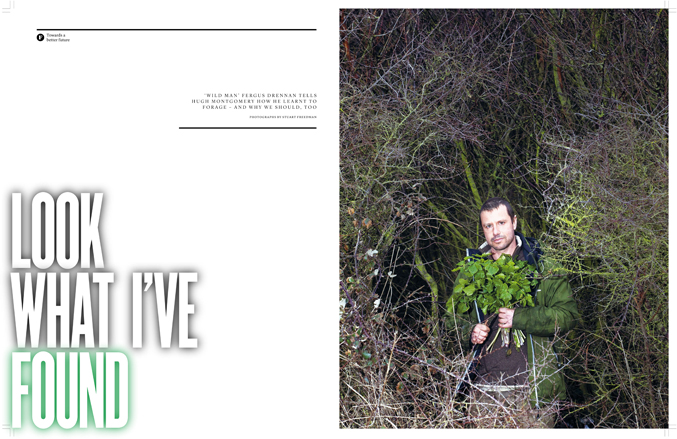
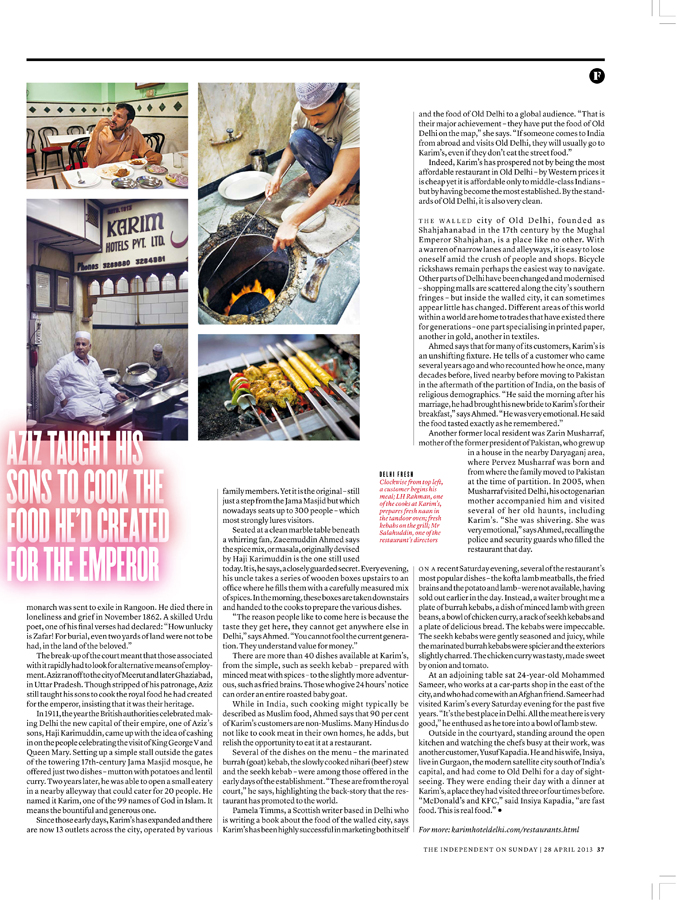
Here’s a recent tearsheet – a cover and two stories – from the Independent on Sunday Magazine. Firstly, a piece on Fergus Drennan, (also known a s Fergus the Forager who I’ve written about and photographed before) and a piece on Karims restaurant in Old Delhi.


Spring-food-covera

Fergus1a


Fergus2a


Fergus3a


Karims1a


Karims2a

Hooray for Bollywood…


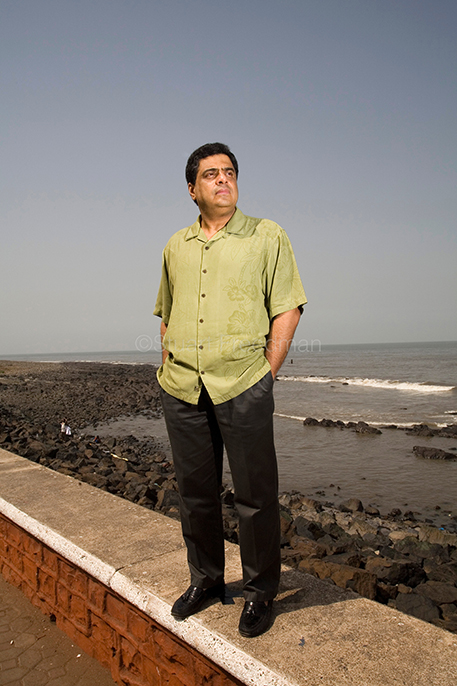
This month marks the centenary of Bollywood – the garish, larger-than-life dream factory that enraptures Indian audiences worldwide. Five years ago I was commissioned by the Sunday Times Magazine to photograph Ronnie Screwvalla, the millionaire film producer and founder of the UTV group over a couple of days in Mumbai. Screwvalla proved charming if extraordinarily busy. I photographed him at home and at his studios but realising that he would make a good potential cover, pursuaded his nervous PR staff (they’re always nervous aren’t they?) to let me have twenty minutes with him at a Mumbai beach near where he grew up. Originally, I’d wanted him walking along the beach but it soon became clear that that wasn’t going to happen. I arrived early and had my star-struck driver hold a single strobe as Screwvalla emerged from his limo. The picture lasted no more than five minutes before he had to leave. It never made the cover but I’ve always liked it.


India - Mumbai - Ronnie Screwvala, CEO of UTV, at Sea Face Bay  in Mumbai (formerly Bombay), India..As a producer and businessman, over the past five years Screwvala has led the transformation of India's prolific but chaotic film industry to become a crossover figure in Hollywood and Bollywood...
India – Mumbai – Ronnie Screwvala, CEO of UTV photographed at Sea Face Bay. As a producer and businessman over the past five years Screwvala has led the transformation of India’s prolific but chaotic film industry to become a crossover figure in Hollywood and Bollywood.

Pondicherry encore…


Following yesterday’s entry with the tearsheet from the Monocle assignment, I thought I’d show some images that I was pleased with but didn’t make the final edit.

Funnily enough, I’d just shot and written another piece about French involvement in India… hundreds of miles away – a strange coïncidence. More on that when it’s published later in the year…


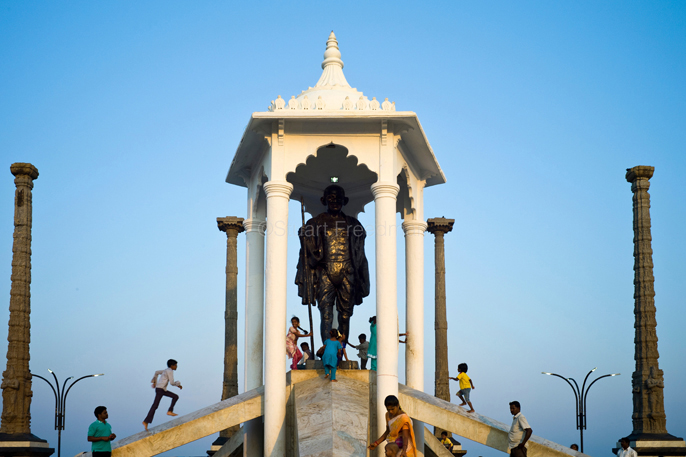
India - Pondicherry -
India – Pondicherry – Children play on the Gandhi statue along the Promenade


India -
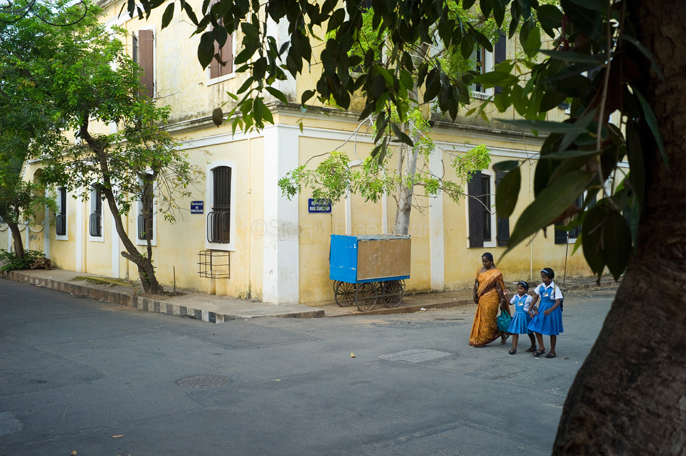
India – Pondicherry – A woman and her two daughters in school uniform cross a Colonial street


India -
India – Pondicherry – A couple in the Botanical Gardens


India -
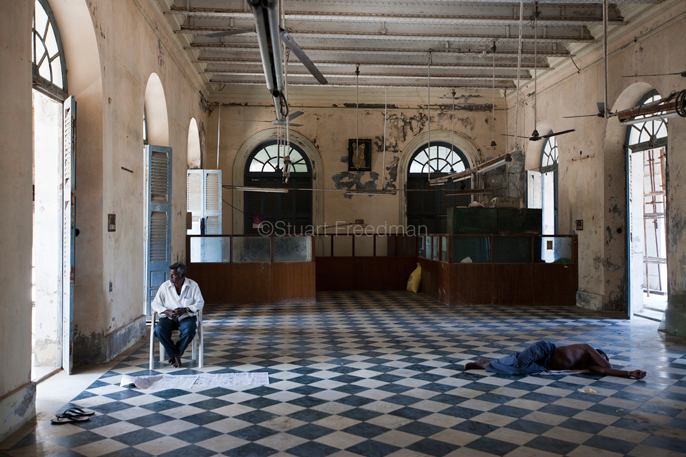
India – Pondicherry – A building worker asleep on a break inside the derelict Hotel du Ville that has been saved from demolition by INTACH (Indian National Trust for Art and Cultural Heritage)


India -
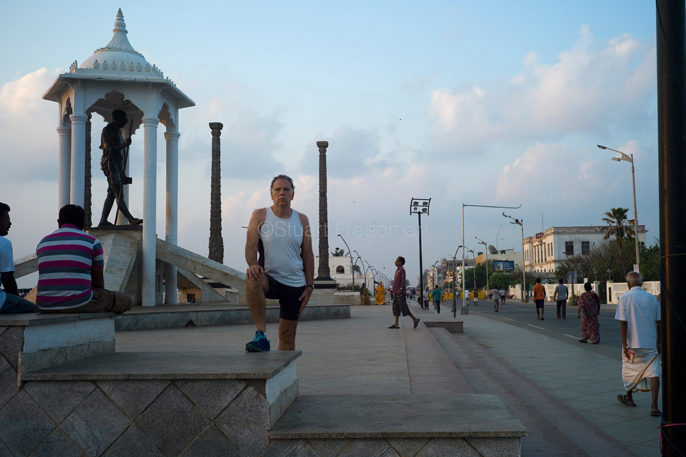
India – Pondicherry – A French expatriate limbers up just after dawn along the Promenade


India -
India – Pondicherry – Sister Marie Stella at the Embroidery Private House, a Catholic mission that looks after underprivileged women by have them sew exquisite linens


India -
India – Pondicherry – Mr Thrukumaran, a researcher studies ancient palm leaf manuscripts in the library of the Department of Indology at the French Institute


India -
India – Pondicherry – Geraldine Humeaun, manager at the Cafe Maison Rose